Boot Width & Sizing Calculator
Instructions: Stand barefoot on a piece of paper with your heel against a wall. Trace your foot and measure the widest part (across the ball) in centimeters.
Your Recommended Fit
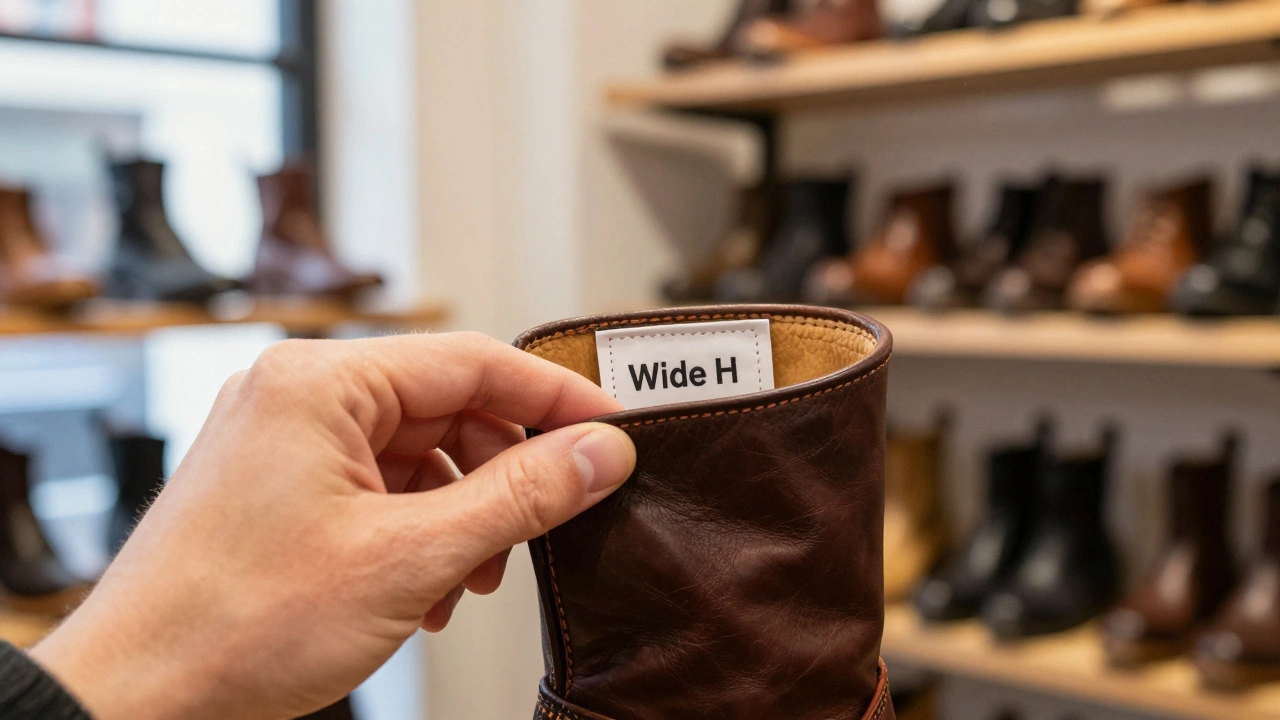
If you’ve ever stood in a fitting room in Dublin or browsed an online store from Cork and seen a label reading wide H, you might have paused. It’s a common point of confusion, especially when you’re trying to find the perfect pair of boots for our notoriously changeable weather. In Ireland, where we spend a significant portion of the year walking through rain-slicked streets or hiking muddy trails, getting your footgear right isn’t just about style-it’s about comfort and function. So, what does that mysterious 'H' actually stand for?
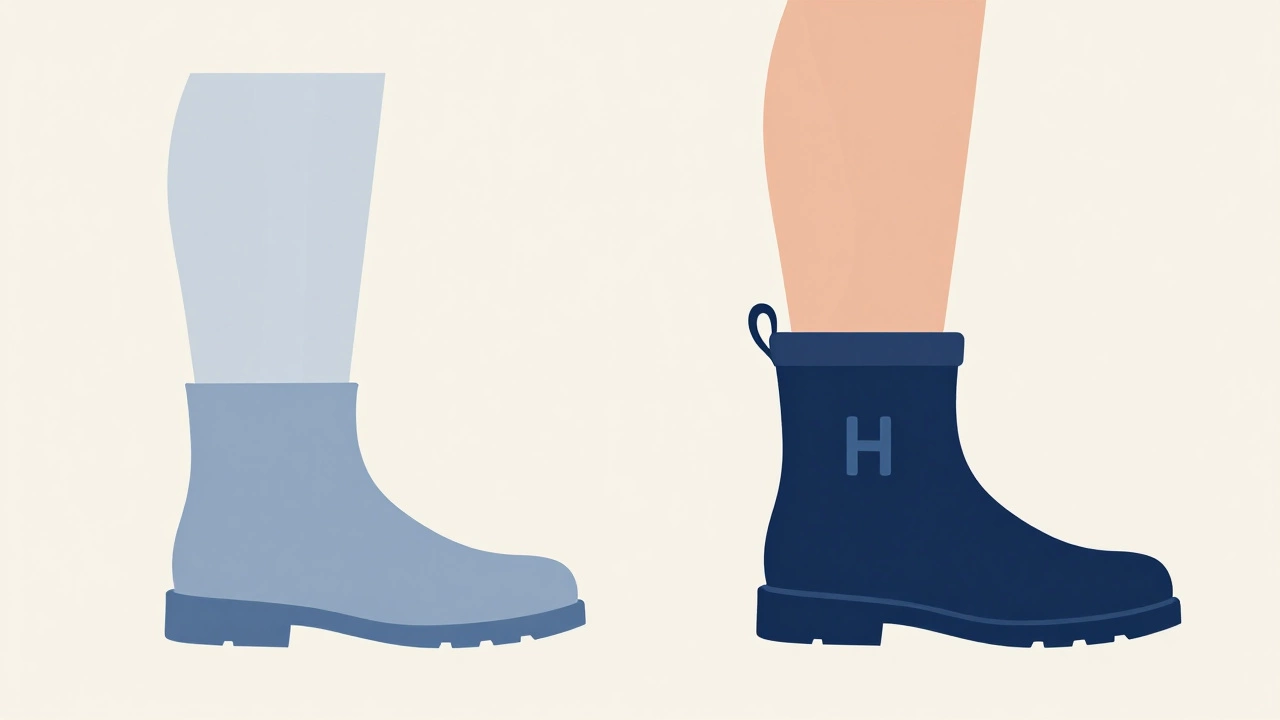
Simply put, 'H' is a standard width code used primarily in the UK and Ireland (and increasingly in Europe) to denote a wide fit. If you are used to US sizing, you might be looking for a 'W'. If you are used to European sizing, you might see a '4E' or '5E'. But here on the island, 'H' is the shorthand for a boot designed to accommodate a wider forefoot or higher instep without squeezing your toes.
The Anatomy of Boot Widths: Beyond Just Length
Most people focus entirely on the length of their foot-the numerical size like 6, 7, or 8. However, foot shape is just as critical. Imagine two people with size 7 feet; one has narrow, slender toes, while the other has broad feet with a high arch. A standard width boot will fit the first person perfectly but will feel like a vice on the second person’s feet.
| Width Code | Description | Typical Fit |
|---|---|---|
| N / B | Narrow | Tight fit, slim toe box |
| M / D | Medium / Standard | Average fit, most common |
| H / W | Wide | Extra room in forefoot and instep |
| XH / XW | Extra Wide | Significant extra volume |
In the context of women’s boots, which often run narrower by default to match fashion trends, finding an 'H' designation is a relief for many. It means the manufacturer has intentionally widened the last (the mold around which the shoe is built) at the ball of the foot and sometimes the heel. This prevents the painful pinching that leads to blisters-a real issue when you’re navigating the cobblestones of Temple Bar or walking up the steep inclines of Phoenix Park.
Why Width Matters More in Winter Footwear
You might think width only matters for running shoes, but it is crucial for boots, especially during the Irish winter. Here is why:
- Thick Socks: When temperatures drop below 10°C, you aren’t wearing thin cotton socks. You’re layering up with wool blends or thermal liners. A standard width boot leaves no room for these layers, cutting off circulation. A wide H boot provides that necessary buffer.
- Swelling Feet: Feet naturally swell throughout the day due to gravity and activity. If you buy tight boots in the morning, they will become unbearable by evening. Wider fits accommodate this natural expansion.
- Orthotics and Insoles: Many people use custom orthotics or cushioned insoles for support. These take up space inside the shoe. Without a wide H option, adding an insole effectively reduces your size by half a number, leading to discomfort.
Think about a typical day out in Galway or Limerick. You might walk several kilometers on uneven pavement. If your boots are too narrow, your feet will fatigue faster, and you’ll likely develop hotspots. Comfort isn’t a luxury here; it’s a necessity for daily life.
Where to Find Wide H Boots in Ireland
Finding wide-fit footwear in Ireland has improved significantly over the last decade. While you used to have to rely solely on specialized shops, now both high-street brands and online retailers offer dedicated wide ranges.
High Street Brands:
Stores like Clarks, Skechers, and New Balance have expanded their presence in major shopping centers such as Dundrum Town Centre in Dublin or The Mall in Cork. These brands often label their wide options clearly. For instance, Clarks frequently uses the 'H' marking in their UK/EU collections. Skechers, known for comfort, offers many styles in wide widths, which is great if you prioritize ease of wear over sleek aesthetics.
Specialist Retailers:
For more specific needs, local cobbler shops and independent footwear stores in towns like Kilkenny or Waterford often stock brands that specialize in comfort and width. Look for brands like Rockport or Ecco, which are popular in Ireland for their ergonomic designs. Some smaller boutiques may not display 'H' explicitly but can order wide sizes upon request.
Online Shopping: When buying online, always check the size guide. Reputable sites like ASOS, Amazon UK, or Irish-based retailers like Brown Thomas usually specify if a product comes in wide widths. Be cautious with generic descriptions; look for explicit mentions of "wide fit" or "H width."
How to Measure Your Foot for the Right Width
Don’t guess your width. Measuring it ensures you get the right fit every time. Here is a simple method you can do at home:
- Gather Tools: You need a piece of paper larger than your foot, a pen, a ruler, and a wall.
- Trace Your Foot: Stand barefoot on the paper with your heel against the wall. Trace the outline of your foot. Do this for both feet, as one is often slightly larger.
- Measure the Widest Part: Use the ruler to measure the distance across the widest part of the trace (usually across the ball of the foot, near the big toe joint).
- Compare to Charts: Most brand websites provide a width chart based on length and width measurements. If your width measurement exceeds the standard range for your length, you likely need a wide H fit.
Pro Tip: Measure your feet in the afternoon or evening. As mentioned earlier, feet swell during the day. Buying boots based on morning measurements can lead to a too-tight fit later.
Common Mistakes When Buying Wide Boots
Even with the right knowledge, shoppers often make errors that compromise comfort.
- Sizing Up Instead of Going Wide: Many people assume that if a size 7 is too tight, they should buy a size 8. This creates excess length, causing your foot to slide forward and creating blisters on your heels. Always try a wide H in your true length first.
- Igoring the Instep: Some boots are wide at the toe but tight across the top of the foot (instep). If you have a high instep, look for boots with adjustable laces or elastic panels that allow for vertical expansion.
- Assuming All Brands Are the Same: A size 7 wide H in Brand A might fit differently than a size 7 wide H in Brand B. Always read reviews from other customers in Ireland who mention their foot shape.
Caring for Your Wide-Fit Boots
Once you find the perfect pair, maintain them properly. Leather and suede boots stretch over time. If you buy a new wide H leather boot, it might feel slightly snug initially. Wear them indoors for short periods to break them in. Avoid using heat sources like hairdryers to stretch them, as this can damage the material. Regular conditioning keeps the leather supple, ensuring it molds to your foot rather than constricting it.
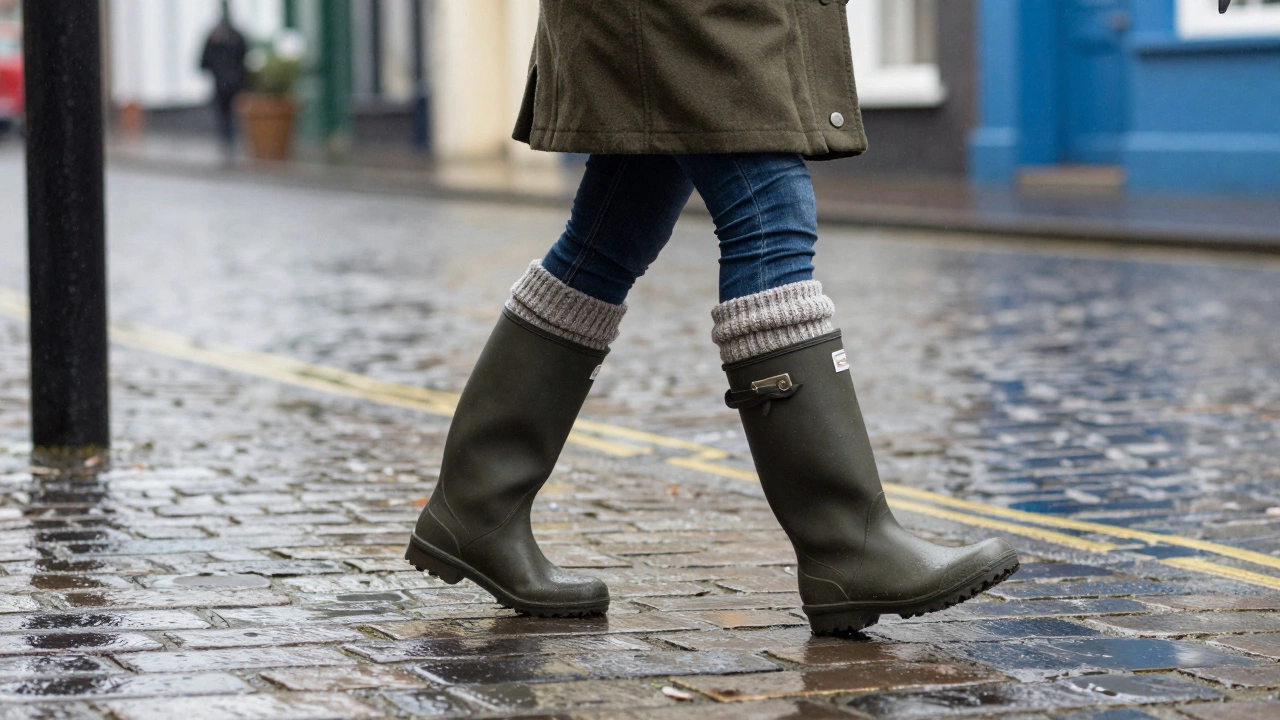
For waterproof boots, ensure the seams are sealed. In Ireland, rain is constant. A well-fitted wide boot combined with proper waterproofing means dry feet even during a heavy downpour in Kerry or Donegal.
Is H width the same as W width?
Yes, essentially. 'H' is the standard code used in the UK and Ireland for wide width, while 'W' is commonly used in the US. They represent the same level of width relative to the standard medium fit. If you are buying from an international site, look for 'W' if you are used to 'H'.
Do all women's boots come in wide H?
No, unfortunately. Fashion-forward brands often prioritize slim silhouettes and may only offer standard widths. Comfort-focused brands like Clarks, Skechers, and New Balance are more likely to offer wide H options. Always check the product specifications before purchasing.
Should I size up if I can't find a wide H boot?
It is better to size up than to suffer in a too-narrow boot, but it is not ideal. Sizing up adds length, which can cause slipping. If you must size up, use thick insoles or heel grips to fill the extra space and secure your foot. However, seeking out brands that specifically offer wide H is the best long-term solution.
What is the difference between H and XH width?
H stands for Wide, while XH stands for Extra Wide. If you have particularly broad feet or require significant room for medical reasons, XH will provide more volume in the forefoot and instep areas. Try H first; if it still feels tight across the ball of the foot, move to XH.
Are wide H boots available in ankle boots and knee-high boots?
Yes, wide H options are available in various boot styles, including ankle boots, Chelsea boots, and knee-high boots. However, availability varies by style and season. Ankle boots tend to have the widest selection of wide fits. For taller boots, ensure the shaft circumference is also suitable for your calf size, as width codes typically refer to the foot, not the leg.