Find Your Perfect Trainer for Ireland
Select your primary activity to discover which trainer type suits your needs best:
Running
Road or trail running, jogging
Walking/Hiking
Outdoor trails, countryside walks
Gym/Cross-Training
Weights, HIIT, indoor sports
Lifestyle/Street
Daily wear, commuting, casual
Key Features to Look For:
Irish Weather Considerations:
Quick Checklist
Living in Ireland means dealing with a specific kind of challenge: rain. It’s not just a weather forecast; it’s a lifestyle factor. Whether you’re commuting through the Liffey basin in Dublin or hiking the Wicklow Mountains, your footwear needs to work harder here than almost anywhere else in Europe. When people ask what are the four different types of trainers, they aren’t just looking for fashion advice. They are looking for survival gear that fits into their daily Irish life.
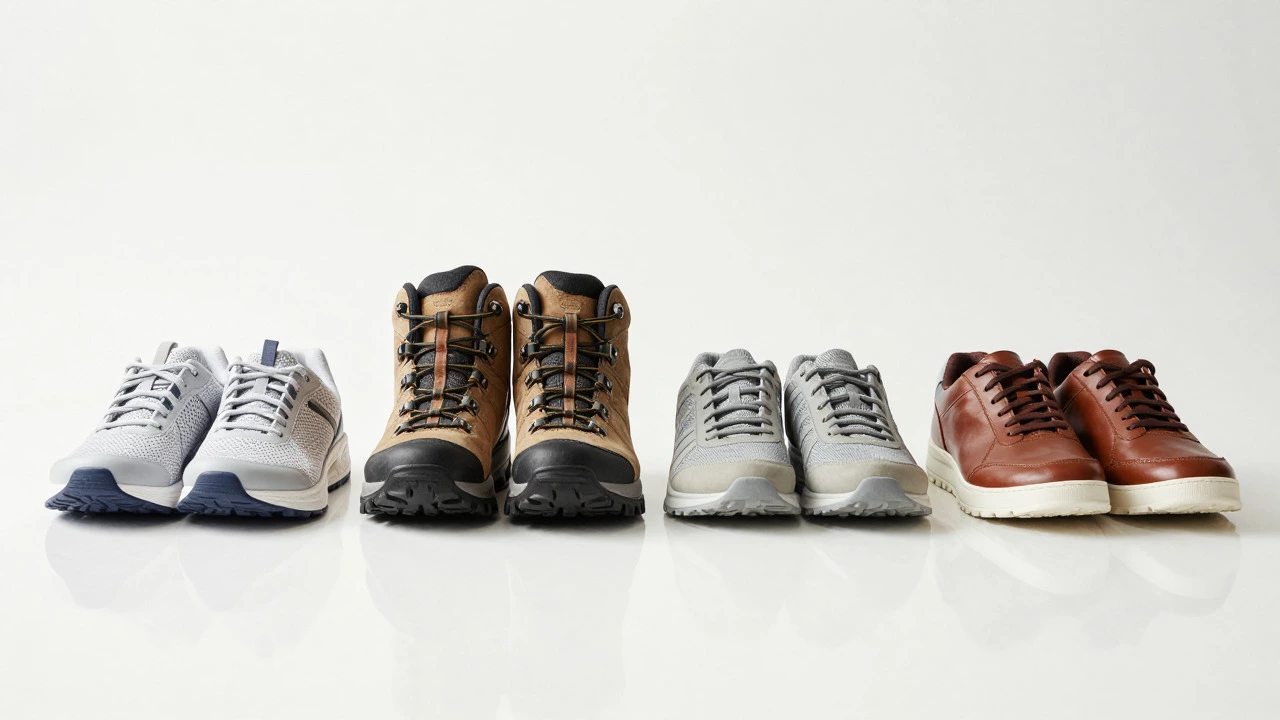
The term "trainers" is what we use here for athletic shoes. While the rest of the world might say sneakers or running shoes, the function remains the same: support, protection, and performance. But in the Emerald Isle, those functions have local nuances. You need grip on wet cobblestones, breathability for humid summers, and durability for muddy trails. Understanding the four main categories-Running, Walking/Hiking, Gym/Cross-Training, and Lifestyle/Street-helps you pick the right pair without wasting money on shoes that won’t last a single winter season.
1. Running Trainers: Built for Pace and Pavement
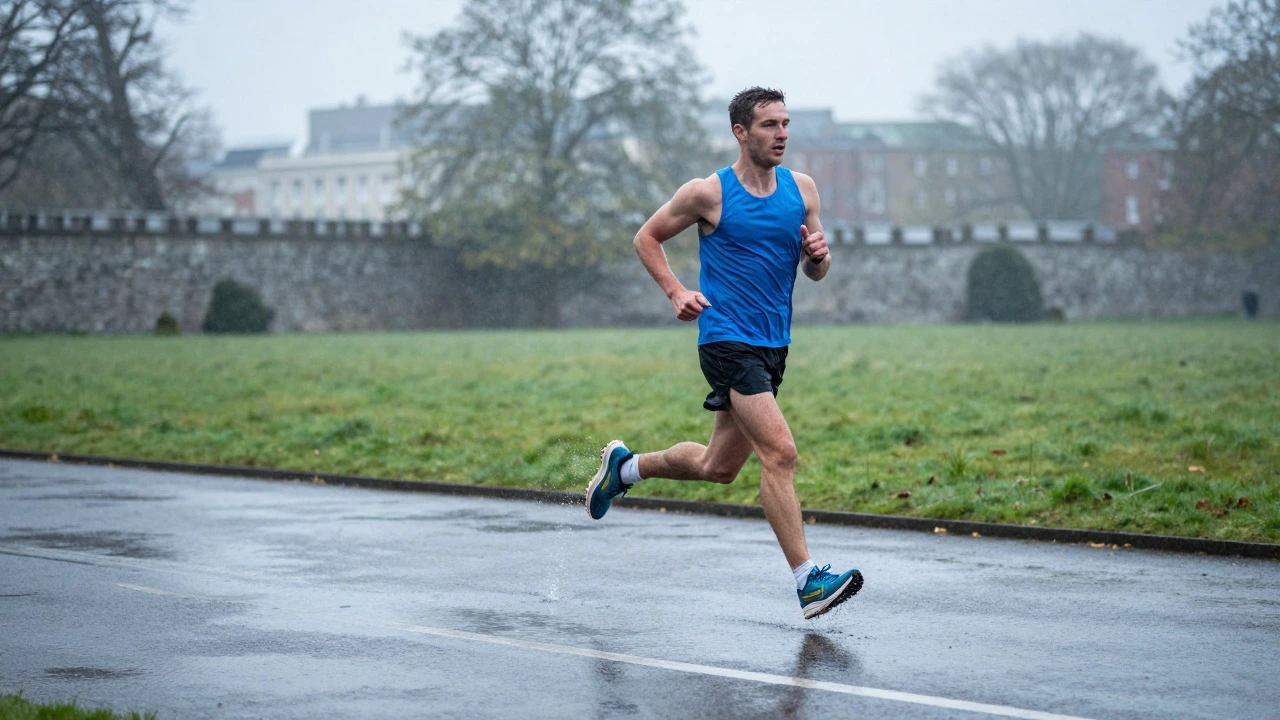
If you’re part of the growing community of joggers hitting the Phoenix Park track at dawn or sprinting along the Cliffs of Moher path, running trainers are your primary tool. These shoes are engineered specifically for forward motion. The design focuses on cushioning to absorb impact from hard surfaces like tarmac and concrete, which dominate our urban centers like Galway City and Cork.
Running Trainers are athletic shoes designed specifically for forward-motion activities like jogging and marathon training. They typically feature high-cushion midsoles made from EVA foam or newer nitrogen-infused compounds to reduce joint stress.In Ireland, where pavement can be slick with algae or moss after heavy rains, traction is key. Look for outsoles with deep lugs or multi-directional patterns. Brands like Asics and Brooks are staples here because they offer reliable stability. If you run on trails, such as the Slieve Felim mountains, you’ll want trail-specific running trainers with aggressive rubber grips to prevent slipping on wet rock.
- Cushioning: High priority for long distances on hard roads.
- Weight: Lightweight to encourage speed.
- Best For: Road running, track events, and aerobic fitness.
- Irish Context: Essential for navigating slippery city sidewalks safely.
2. Walking and Hiking Trainers: Conquering the Wild Atlantic Way
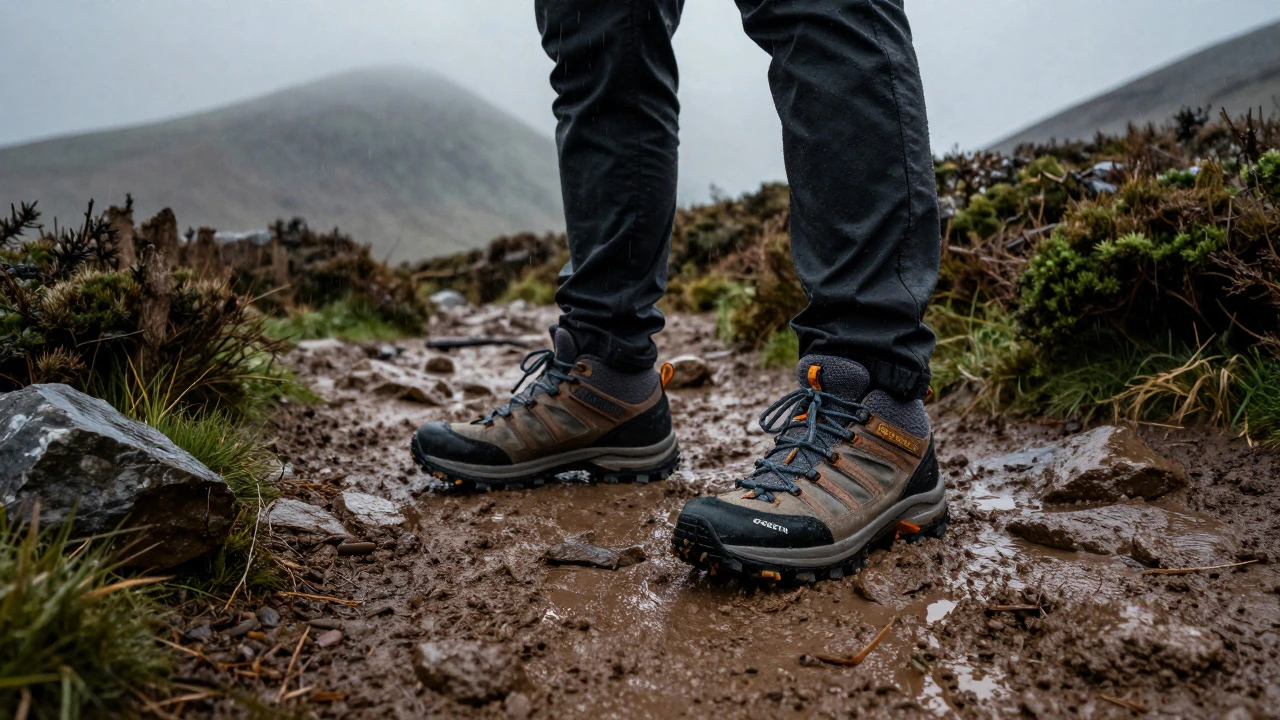
Walking trainers sit between casual sneakers and heavy-duty boots. They are perfect for the Irish outdoorsman who wants agility without sacrificing support. Think about exploring the Ring of Kerry or taking a weekend hike in Killarney National Park. Heavy leather boots can be cumbersome and slow down your pace, while standard canvas shoes will soak up water instantly. Walking trainers bridge this gap.
These shoes prioritize stability and ankle support over pure cushioning. They often feature a stiffer sole to protect your feet from uneven terrain, roots, and rocks. Many modern walking trainers include Gore-Tex membranes, which are practically mandatory in Ireland. This technology keeps your feet dry during sudden downpours while allowing sweat to escape, preventing that dreaded cold, clammy feeling.
| Feature | Standard Sneaker | Walking/Hiking Trainer |
|---|---|---|
| Sole Rigidity | Flexible | Stiff for stability |
| Water Resistance | Low (unless treated) | High (Gore-Tex common) |
| Ankle Support | Minimal | Moderate to High |
| Terrain Suitability | Pavement only | Mud, gravel, wet grass |
When shopping in stores like Sports Direct in Dundrum Town Centre or specialized outdoor shops in Dingle, look for brands like Merrell or Salomon. Their designs account for the soft, boggy ground found in many parts of rural Ireland, offering better grip than smooth-soled fashion sneakers.
3. Gym and Cross-Training Trainers: Stability for Strength
Not all exercise happens outside. For those hitting the weights at PureGym in Temple Bar or doing HIIT classes in Limerick, gym trainers are essential. Unlike running shoes, which compress underfoot to help you bounce forward, gym trainers are flat and stable. This stability prevents your ankle from rolling when you’re lifting heavy boxes or moving laterally during boxing drills.
Cross-Training Trainers are versatile athletic shoes designed for multi-directional movements including weightlifting, agility drills, and court sports. They feature a wide base and firm heel counter to maintain balance during intense workouts.Using running shoes for weightlifting can actually be dangerous. The soft foam acts like a wobble board, reducing power transfer and increasing injury risk. Cross-trainers provide a solid platform. If you play indoor sports like basketball or badminton at local community centers, these shoes also offer the necessary lateral support to stop and start quickly without slipping on polished wooden floors.
- Outsole: Flat and grippy for indoor surfaces.
- Upper: Reinforced sides for lateral movement.
- Heel Counter: Rigid structure to lock the foot in place.
- Best For: Weightlifting, circuit training, and indoor sports.
4. Lifestyle and Street Trainers: Style Meets Comfort
Finally, there are lifestyle trainers. These are the shoes you wear to meet friends for coffee in Temple Bar, commute on the Luas, or attend a casual office day. They blend aesthetics with comfort. In recent years, the line between sportswear and streetwear has blurred significantly in Ireland. It’s common to see high-end designer trainers paired with jeans or even smart trousers.
While they may look like running shoes, lifestyle trainers often lack the technical performance features. They might have less advanced cushioning or poorer arch support. However, they excel in versatility. Brands like Nike, Adidas, and New Balance dominate this space, offering models that transition seamlessly from a day at work to an evening out. For the Irish climate, choosing leather or suede materials can offer some natural water resistance compared to mesh fabrics, though they still require care during heavy storms.
Remember, wearing lifestyle trainers for serious exercise is a recipe for discomfort. They aren’t built to handle the repetitive stress of running or the dynamic shifts of cross-training. Save them for the streets of Dublin or the pubs of Kilkenny.
Choosing the Right Pair for Your Irish Life
Selecting the right trainer depends entirely on your primary activity. Most people in Ireland benefit from having at least two pairs: one for performance (running or gym) and one for daily wear (lifestyle). Trying to do everything with one pair usually leads to premature wear and tear.
Consider the seasons. In summer, breathable mesh is great for hot days in County Wexford. In winter, water-resistant materials become non-negotiable. Check local sales at retailers like JD Sports or Decathlon, especially around seasonal changes, to find good deals on high-quality gear. Don’t forget to break in new shoes gradually, especially if you plan to use them for hiking or long runs, to avoid blisters on your first outing.
Are running trainers good for walking in Ireland?
Running trainers can be used for casual walking, but they may not offer enough stability for rough terrain or wet conditions. For extensive walking, especially in hilly areas like Wicklow, dedicated walking trainers with better grip and water resistance are recommended.
What is the best type of trainer for rainy weather?
For rainy weather, look for trainers with Gore-Tex or similar waterproof membranes. Walking and hiking trainers often feature these technologies. Ensure the outsole has deep lugs for traction on wet surfaces.
Can I use gym trainers for running?
It’s not ideal. Gym trainers are designed for stability and lateral movement, lacking the cushioning needed for the repetitive impact of running. Using them for long runs can lead to joint pain and injuries.
Where can I buy quality trainers in Ireland?
Major retailers include Sports Direct, JD Sports, Decathlon, and specialized outdoor stores like Cotswold Outdoor. Online options from ASOS or brand websites also offer wide selections with delivery across Ireland.
How often should I replace my trainers?
Generally, every 500-800 kilometers for running shoes, or when the cushioning feels compressed. For lifestyle trainers, replace them when the sole wears thin or the upper material deteriorates, typically every 1-2 years depending on usage.