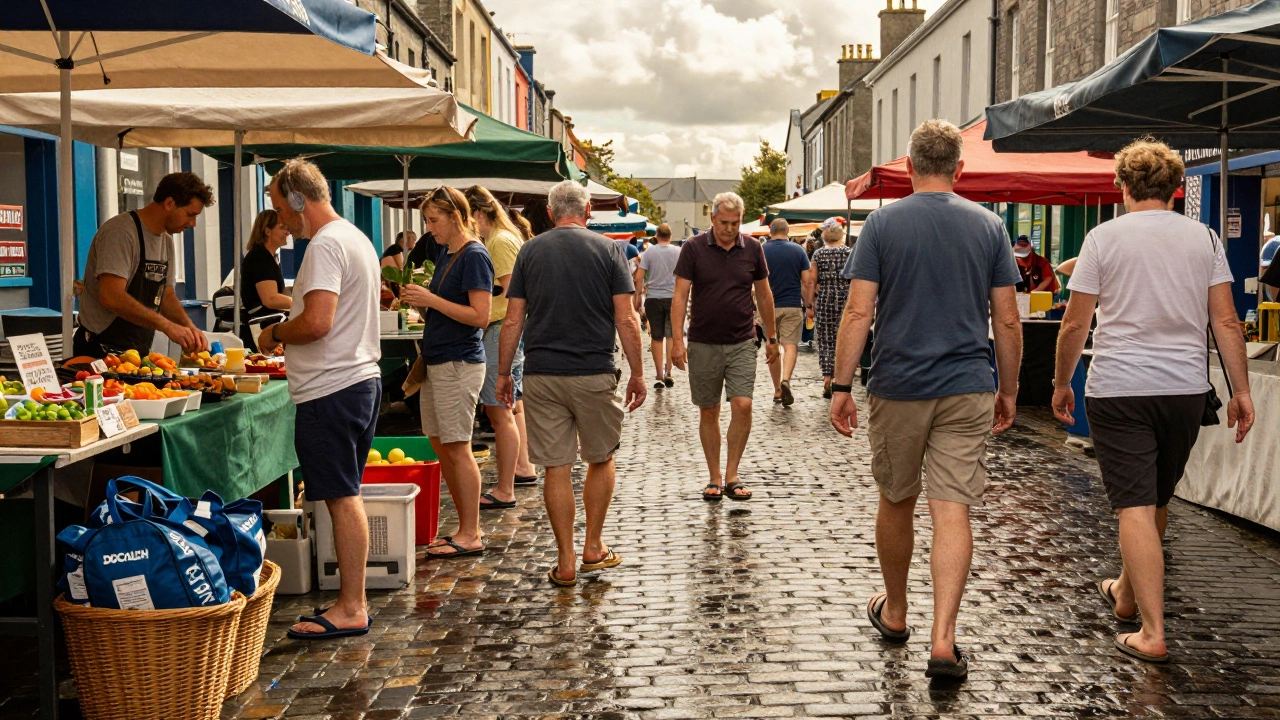
Sandals in Ireland: What Works for Wet Weather and Everyday Wear
When you think of sandals in Ireland, open-toed footwear designed for warm days and casual wear. Also known as summer shoes, they're often dismissed here as impractical—but that’s a myth. In reality, Irish people wear sandals when the weather allows, and they’ve learned to pick ones that handle rain, puddles, and damp grass without falling apart. It’s not about beach vibes. It’s about comfort after weeks of boots, and finding something light that still protects your feet from wet sidewalks and muddy trails.
Many of the sandals that work here aren’t the flimsy flip-flops you’d see on a Mediterranean coast. They’re built with waterproof materials, rubber soles, sealed seams, and quick-dry uppers—the same tech you’d find in hiking boots, just lighter. Brands like Crocs, Birkenstock, and even local Irish labels have made versions with drainage holes, grippy treads, and arch support. These aren’t fashion afterthoughts. They’re tools for walking the dog, running errands, or stepping out for coffee on a rare sunny afternoon.
And it’s not just summer. In late spring and early autumn, when the rain slows but the ground stays damp, sandals become a go-to for people who hate sweaty feet. Nurses, teachers, and older adults in Ireland swap their heavy boots for sandals on mild days—not because they’re trendy, but because their feet thank them. One woman in Galway told me she wears her waterproof sandals for her morning walk every day in May and September. "It’s like breathing after being wrapped in plastic," she said.
What you won’t find in Ireland are sandals with thin straps or no heel support. Those fail fast on cobblestones and wet grass. Instead, look for closed-back designs, strap systems that lock your foot in, and soles that don’t slide like ice on pavement. The best ones even have antimicrobial liners—because damp feet in a cold climate aren’t just uncomfortable, they’re a health risk.
There’s also a quiet shift happening. More Irish shoppers are choosing sandals made locally or from ethical brands that avoid plastic and use recycled rubber. Sustainability isn’t a buzzword here—it’s a necessity. If your sandals fall apart after one season, you’re not just wasting money. You’re adding to landfill waste in a country that already struggles with waste management.
So if you’ve been told sandals don’t belong in Ireland, you’ve been given bad advice. They’re not for every day. But on the days the sun breaks through, when the air smells like wet earth and the rain has stopped for a few hours, sandals are the smartest thing you can put on your feet. They’re not a luxury. They’re a relief.
Below, you’ll find real stories from Irish people who wear sandals in rain, wind, and everything in between. You’ll learn which styles actually last, where to buy them locally, and why some so-called "summer shoes" are better than your winter boots for certain days. No fluff. Just what works.