Footwear Term Quiz
How much do you know about Irish footwear terminology?
Test your knowledge of what different English-speaking countries call flip-flops. The quiz focuses on the cultural differences discussed in the article.
In Ireland, you won’t hear anyone call them thongs-not at the Galway market, not on the Dingle Peninsula, not even in the queue for a pint in Temple Bar. If you walk into a local shop asking for thongs, you’ll likely get a confused look, maybe a chuckle, and then a polite offer of something more suitable for the weather. What Americans and Australians call thongs, the Irish call flip-flops. And that’s not just a preference-it’s a cultural marker.
Why ‘Thong’ Doesn’t Fly in Ireland
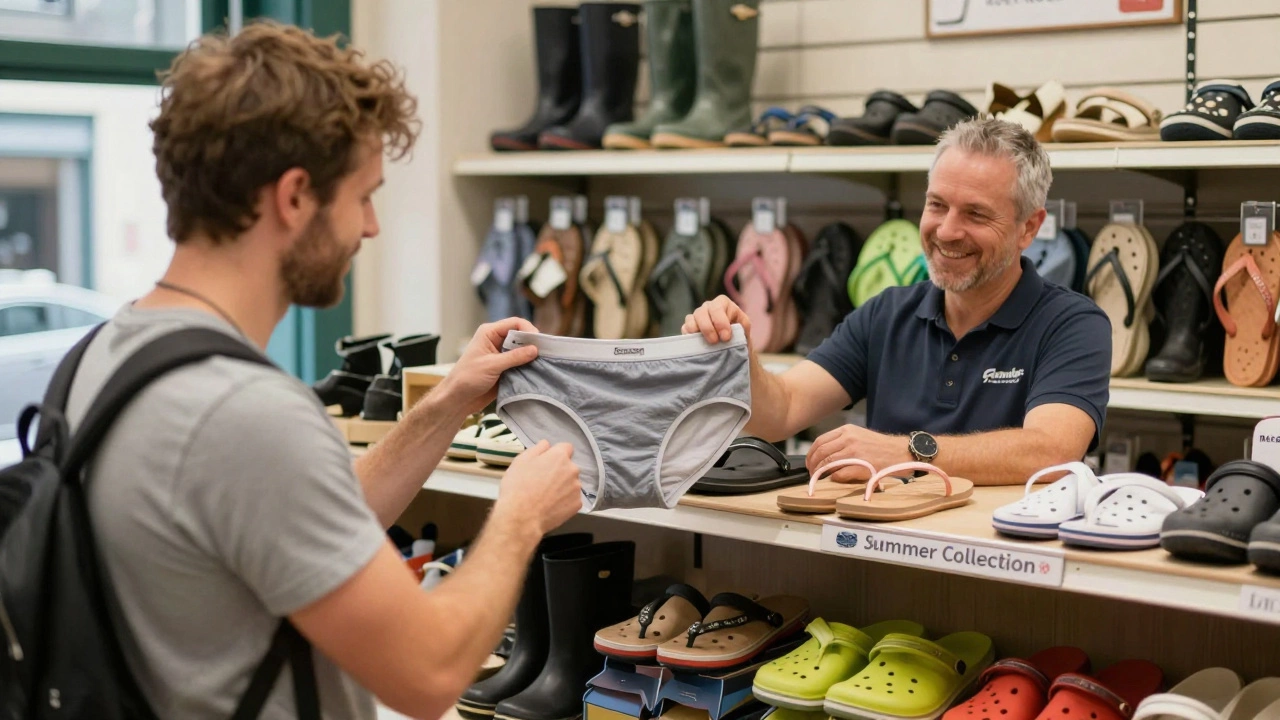
The word ‘thong’ in British and Irish English has long been associated with a type of underwear, not footwear. That’s not a recent shift-it’s been this way since at least the 1980s, when the term became widely used in UK tabloids for the minimalistic undergarment. By the time flip-flops started showing up on Irish beaches in the late 1990s, the word ‘thong’ was already too loaded to be repurposed. So instead, the term that stuck was the straightforward, descriptive one: flip-flops.It’s not just semantics. Ask anyone who’s lived in Dublin for more than a decade: if you walk into Dunnes Stores or Penneys (Primark) looking for ‘thongs’, you’ll be handed a pair of underwear without a second thought. But if you ask for ‘flip-flops’, you’ll be directed straight to the summer footwear aisle, next to the Crocs and the waterproof sandals.
What Irish People Actually Wear on Their Feet in Summer
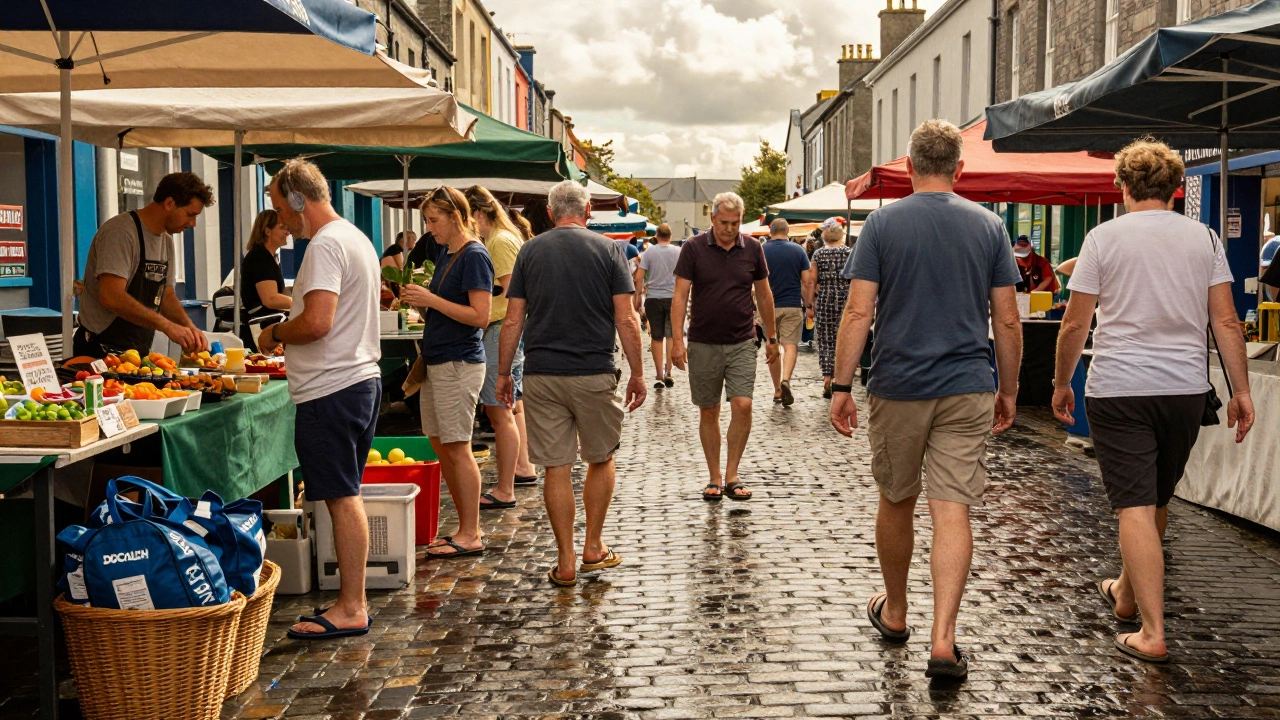
Ireland’s summers don’t come with the kind of heat you’d find in Spain or Greece. But when they do show up-usually between late June and mid-August-people take advantage. You’ll see flip-flops everywhere: outside the Cliffs of Moher, along the Wild Atlantic Way, at the Dublin Docklands Farmers’ Market, and even on the steps of Trinity College when the sun breaks through the clouds.But they’re not the flimsy plastic kind you’d buy at a petrol station in Florida. Irish flip-flops tend to be sturdier. Brands like Clarks, Birkenstock, and Decathlon dominate the market. You’ll often spot people wearing models with cushioned soles and rubber straps-designed not just for the beach, but for walking on wet cobblestones in Galway or muddy paths in Wicklow after a sudden downpour.
Even in cities, flip-flops are common. In Cork, you’ll see students from UCC wearing them to class in May. In Belfast, locals pair them with linen trousers for weekend brunch at The Merchant Hotel. The Irish don’t wait for perfect weather to wear them-they wear them when the sun dares to show up.
How Irish Flip-Flops Differ from Other Countries
Compared to Australia, where thongs are a national staple, or the U.S., where they’re tied to poolside lounging, Irish flip-flops have a different purpose. They’re not fashion statements-they’re practical gear. The Irish don’t buy flip-flops to look cool. They buy them to avoid soggy socks.Here’s what you’ll find in most Irish households during summer:
- One pair for the garden-usually black or navy, from Dunnes Stores
- One pair for the beach-waterproof, with grip soles, often bought at Decathlon or SuperValu
- One pair for walking the dog-sturdy, with ankle straps, because the Irish countryside is full of brambles and cow patties
You won’t find many people wearing bright neon flip-flops in Ireland. The color palette leans toward earth tones: charcoal, olive, brown. Even the ones sold at the tourist shops in Killarney are muted. It’s not about standing out-it’s about blending in and staying dry.

What Happens When Tourists Say ‘Thongs’
Every summer, a few tourists-usually from Australia or the U.S.-walk into a shop in Kilkenny and ask for thongs. The staff, used to the confusion, usually respond with a smile and a gentle correction: “Ah, you mean flip-flops?” Then they hand over the right pair.Some tourists don’t realize they’ve made a mistake until they get home and find a package of underwear labeled ‘Irish thongs’ in their luggage. Others laugh it off and buy a pair anyway-just for the novelty. One Dublin-based Airbnb host told me she keeps a pair of flip-flops by the door labeled ‘for guests who say thongs’-a running joke among locals.
It’s not meant to embarrass. It’s just how language evolves in a place where weather dictates behavior, and culture shapes vocabulary.
Where to Buy Flip-Flops in Ireland
If you’re in Ireland and need a good pair of flip-flops, here are the top places locals trust:- Dunnes Stores - Affordable, reliable, and available in every town. Their ‘Summer Collection’ hits shelves in May.
- Penneys (Primark) - Budget-friendly, but surprisingly durable. Their rubber-soled flip-flops last through two summers if you’re careful.
- Decathlon - For serious walkers. Their ‘Tribord’ line has non-slip soles and quick-dry straps-perfect for the Aran Islands or the Burren.
- Clarks - If you want something with arch support. Popular with older generations and anyone who’s walked the Wicklow Way.
- Local Craft Markets - In Galway, Doolin, and Cobh, you’ll find handmade leather flip-flops from Irish artisans. They’re pricier, but they last years.
Pro tip: Don’t buy flip-flops in January. They’re either buried under winter boots or sold at half-price with a ‘summer clearance’ sign. Wait until late April or early May-the real buying season.
Flip-Flops and Irish Weather: A Real-World Guide
Ireland’s weather doesn’t follow calendars. One day it’s 22°C and sunny in Wexford; the next, it’s pouring in Sligo. That’s why flip-flops here aren’t just for the beach. People wear them to:- Walk the dog after a rainstorm (because wet socks are worse than wet feet)
- Run to the corner shop for milk (the ‘quick errand’ uniform)
- Stand in line at the GAA match in Croke Park during a heatwave
- Visit the hot springs in Kildare (yes, they have them)
And here’s something you won’t find in travel guides: many Irish families keep a pair of flip-flops by the back door. Not for the garden-for the shower. It’s common to slip them on after a bath or shower to avoid wetting the floor. You’ll see them lined up outside the bathroom in homes from Limerick to Letterkenny.
Final Thought: Language, Weather, and Culture
The reason the Irish don’t call flip-flops thongs isn’t about being overly proper. It’s about clarity. In a country where rain is a daily variable and footwear needs to adapt fast, language has to be practical. You don’t want to confuse your footwear with your underwear-especially when you’re standing in a queue at the supermarket in Drogheda with a basket full of potatoes and a damp towel.So if you’re visiting Ireland this summer, remember: ask for flip-flops. Wear them with pride. Walk on wet stones, through puddles, and along coastal paths. And if someone smiles when you say ‘thong’-don’t take it personally. They’re just used to it.
Do the Irish call flip-flops thongs?
No, the Irish do not call flip-flops thongs. In Ireland, the word ‘thong’ refers to underwear. The correct term for the open-toed, strap footwear is ‘flip-flops’. Using ‘thong’ in this context will likely cause confusion or amusement.
Where can I buy flip-flops in Ireland?
You can buy flip-flops at Dunnes Stores, Penneys (Primark), Decathlon, and Clarks. For higher-quality or handmade options, check local craft markets in Galway, Doolin, or Cobh. Decathlon’s Tribord range is popular for its grip and durability on wet surfaces.
Are flip-flops common in Ireland?
Yes, flip-flops are common in Ireland during summer months, especially when the weather improves. You’ll see them at beaches, markets, parks, and even in cities. They’re worn for practicality, not fashion-often paired with jeans or shorts for quick errands or walks.
Why do Irish people prefer sturdy flip-flops?
Ireland’s terrain is often wet, uneven, or muddy. Flip-flops with good grip and cushioning are needed for walking on cobblestones, coastal paths, and grassy fields. Many Irish people also use them indoors after showers to keep floors dry, so durability matters.
Is it rude to say ‘thongs’ in Ireland?
It’s not rude, but it’s confusing. Locals will understand what you mean, but they’ll likely correct you gently. It’s a cultural quirk, not a taboo. Most people will laugh and offer you a pair of flip-flops instead.