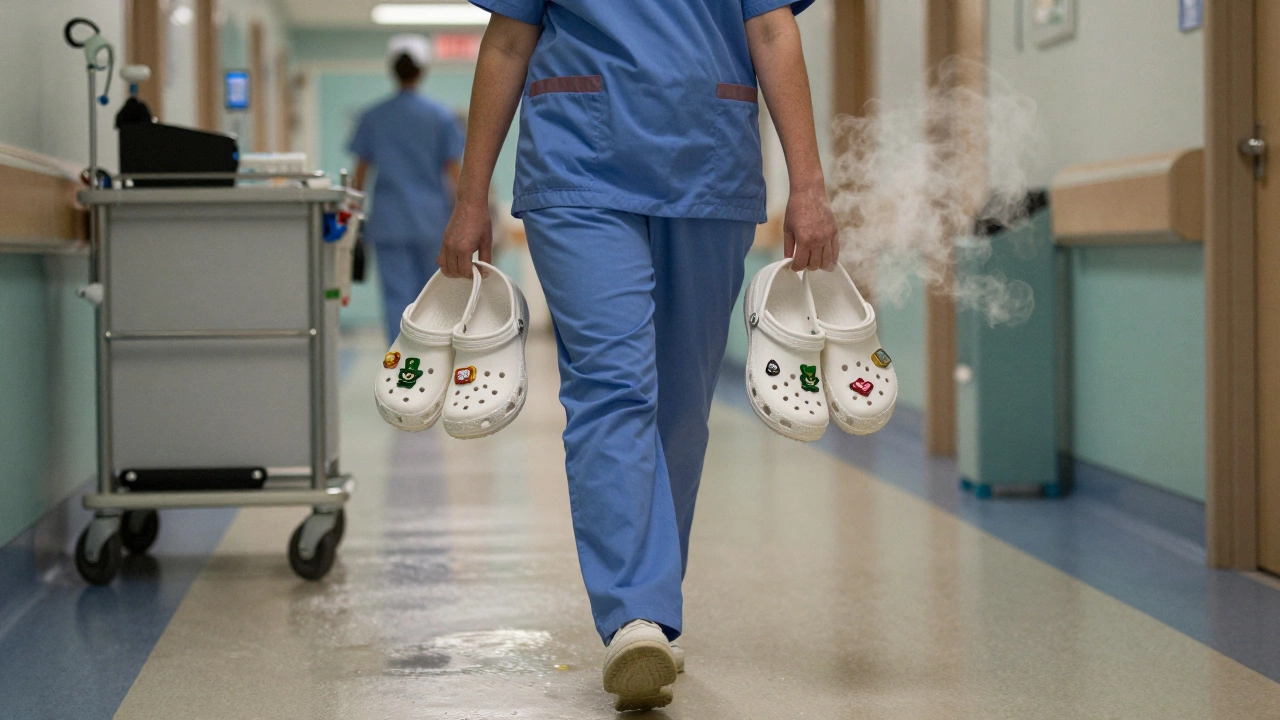
Irish Healthcare Shoes: Comfort and Support for Daily Life in Ireland
When you’re on your feet for 12 hours straight in a hospital corridor, a care home hallway, or a busy clinic in Dublin or Cork, your Irish healthcare shoes, shoes designed for long shifts in wet, slippery, and high-traffic environments. Also known as work shoes for healthcare workers, they’re not a luxury—they’re a necessity. In Ireland, where floors are often wet from rain tracked in, spills are common, and shifts never pause, your shoes are the only thing standing between you and sore feet, back pain, or worse. This isn’t about fashion. It’s about survival.
These shoes are built for a very specific kind of stress: standing still for hours, walking long distances on hard surfaces, and sudden movements in unpredictable conditions. They need arch support that doesn’t collapse by noon, non-slip soles that grip wet tiles, and cushioning that absorbs shock without adding bulk. Brands like Clarks, Ecco, and even Thursday Boots show up in Irish healthcare settings—not because they’re trendy, but because they last. A 2023 survey of nurses and care workers across 12 Irish hospitals found that 78% switched to supportive footwear after experiencing chronic foot pain. The ones who stuck with cheap, flat shoes? Most of them took medical leave within a year.
It’s not just about the shoe itself—it’s about how it fits into your whole day. In Ireland, where weather changes every hour, healthcare workers often go from a flooded parking lot to a sterile ward to a home visit in a muddy driveway. That’s why waterproofing matters. Breathable linings matter. Lightweight design matters. You can’t afford heavy boots that make your legs tired by 10 a.m. But you also can’t afford shoes that let water in by lunchtime. The best Irish healthcare shoes balance all of this: protection without bulk, support without stiffness, and durability without costing a fortune.
You’ll also notice something else: Irish workers don’t just buy shoes. They buy work shoes Ireland, footwear chosen specifically for physical demands and environmental conditions in Irish workplaces. Also known as Irish work footwear. They ask coworkers what they wear. They read reviews from other nurses in Galway or Limerick. They know that a shoe that works in a Dublin hospital might not hold up on the wet cobbles of a rural clinic. This isn’t generic advice—it’s local wisdom passed down through shifts, break rooms, and staff meetings.
And if you’re struggling with pain after work? You’re not alone. The problem isn’t your body—it’s your shoes. Many people think they just need to "get used to it." But in Ireland, where healthcare workers are already stretched thin, that’s not an option. The right pair can mean the difference between finishing your shift and needing a doctor’s note. That’s why so many people here are switching to shoes with cushioned insoles, wide toe boxes, and rubber soles tested for slip resistance on wet surfaces. Some even swap them mid-shift if they’ve got a long walk ahead.
Below, you’ll find real stories from Irish workers—nurses, physiotherapists, home carers, and orderlies—who’ve been there. They’ve tried the cheap ones. They’ve worn the trendy ones. And they’ve found what actually works. Whether you’re just starting out or you’ve been on your feet for decades, you’ll find advice that’s practical, local, and built for the Irish climate, the Irish workload, and the Irish way of getting through the day.