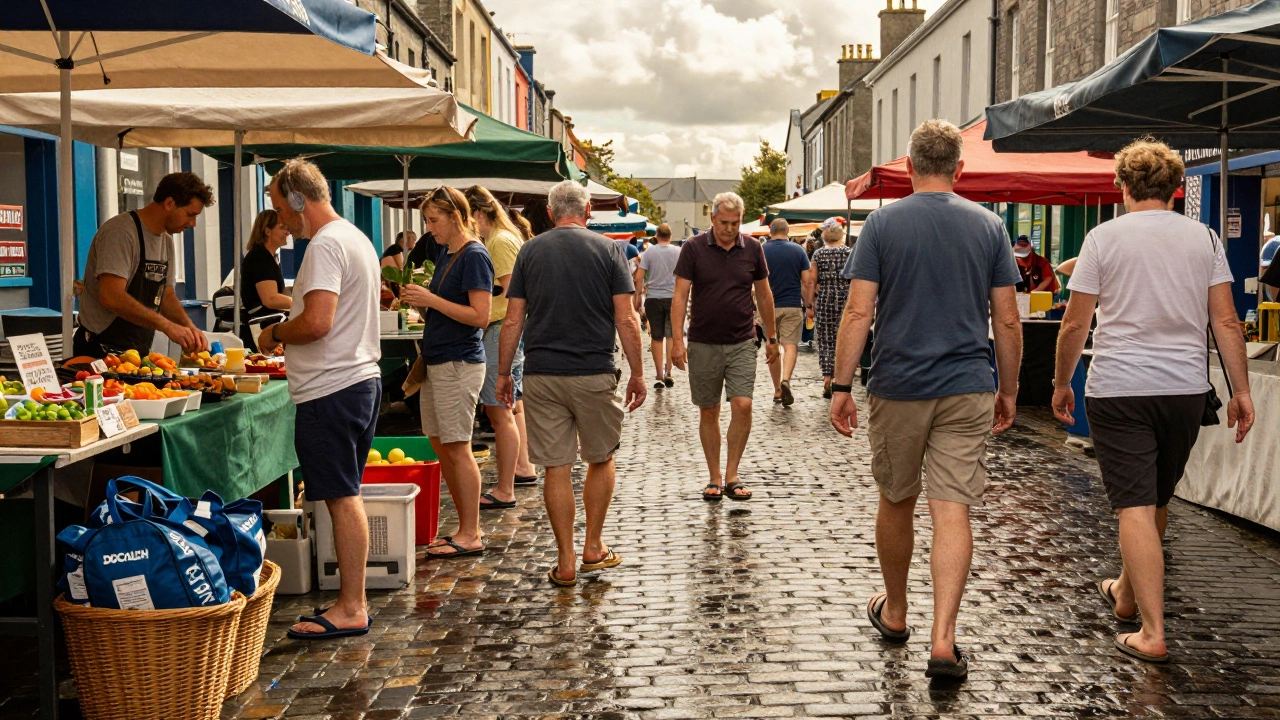
Irish Flip-Flops: What Works in Ireland’s Wet Weather
When you think of Irish flip-flops, casual sandals worn in Ireland’s brief summer windows, often made for light use but challenged by rain and uneven ground. Also known as summer sandals, they’re not just a trend—they’re a test of practicality in a climate that rarely stays dry long enough to enjoy them. Most people assume flip-flops belong on Mediterranean beaches, but in Ireland, they show up on sunny afternoons in Dublin parks, at coastal walks in Wexford, or after a quick swim in Donegal. The problem? Ireland doesn’t do long, dry summers. One minute it’s warm enough for bare feet, the next it’s drizzling, muddy, and chilly. That’s why most Irish flip-flops either get left at home—or they’re the kind built to handle it.
What makes a flip-flop work here isn’t the color or the brand—it’s the sole. A thin, flimsy rubber strap might feel cool, but on wet cobblestones or slick grass, it’s a slip hazard. The best ones have textured soles, a slight heel for stability, and straps that don’t dig into your toes after an hour of walking. Brands like Crocs, Teva, and even local Irish labels like Irish-made sandals, durable, weather-resistant footwear designed for Ireland’s damp conditions, often using recycled or quick-dry materials have started making versions that actually survive a day out. These aren’t fancy—they’re functional. They dry fast, don’t hold water, and won’t fall apart when you step in a puddle. And yes, people wear them to the pub after a walk, even if it’s still damp outside.
Flip-flops in Ireland aren’t about fashion—they’re about timing. You wear them when the sun breaks through, and you stash them the second the clouds roll back in. That’s why most Irish households have a pair tucked by the back door, near the boots. They’re not for hiking, not for work, not for long walks on wet trails. But for a quick trip to the shop, a garden barbecue, or a beach day in August, they’re the only thing that feels right. And if you’ve ever tried walking on wet grass in a cheap pair, you know why this matters. The right pair keeps you from slipping, keeps your feet dry longer, and doesn’t turn your toes into a sore mess by lunchtime.
What you’ll find in this collection aren’t just reviews of flip-flops. You’ll see real stories from people who’ve tried the trendy ones, the cheap ones, the ones sold in Irish supermarkets—and which ones actually lasted. There’s advice on what to look for when the weather’s unpredictable, how to pick a pair that won’t fall apart after one rainstorm, and why some Irish families swear by their old Crocs over designer sandals. You’ll also learn how flip-flops fit into bigger conversations about footwear in Ireland: why runners are the real national shoe, why Crocs became a staple for nurses, and how even the simplest sandals have to be built for a country where the forecast changes every hour.