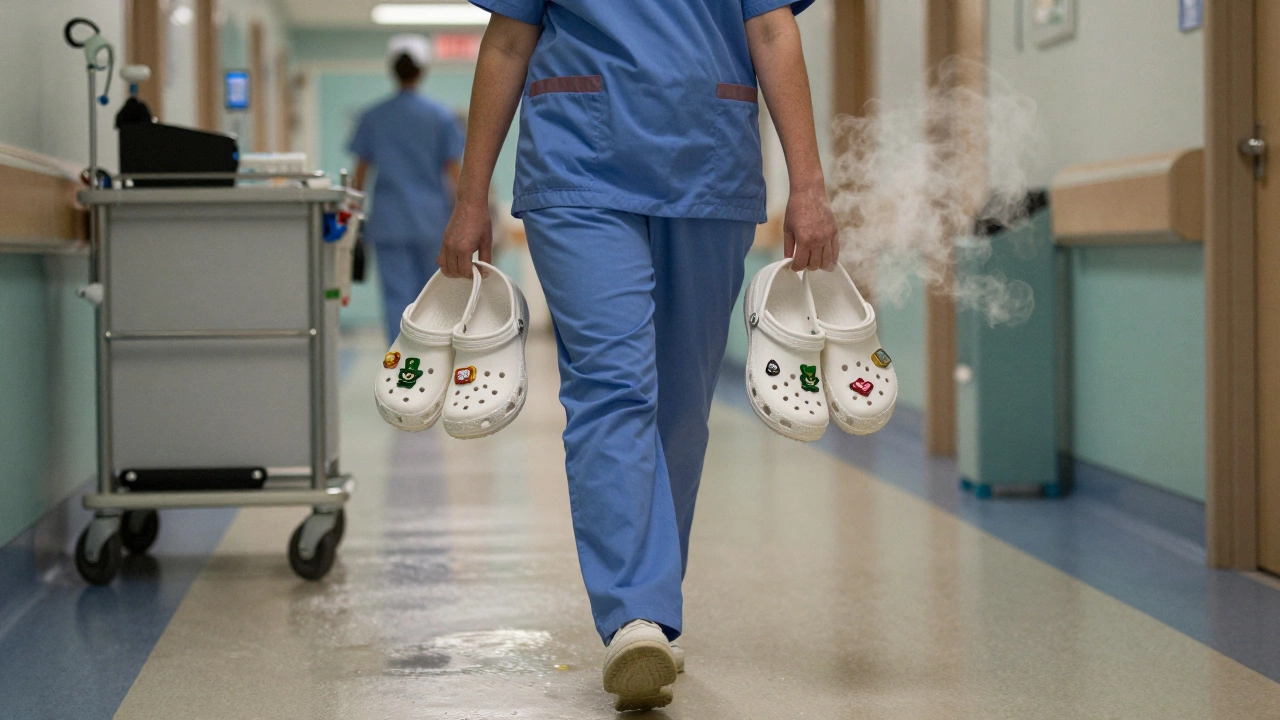
Best Work Shoes for Nurses in Ireland
When you’re on your feet for 12 hours straight in a hospital hallway, your work shoes, shoes built for long shifts, slip resistance, and foot support. Also known as nursing shoes, they’re not just footwear—they’re your first line of defense against pain, fatigue, and injury. In Ireland, where hospital floors are often wet, corridors are tiled and uneven, and shifts stretch into the night, regular sneakers or stylish flats won’t cut it. You need something that holds up through rain, spills, and endless walking—without turning your feet into numb bricks by shift’s end.
The standing all day pain, the ache in heels, arches, and knees after long hours on hard surfaces isn’t just something nurses accept—it’s something you can fix. Many Irish nurses swear by shoes with cushioned midsoles, arch support that doesn’t flatten after a week, and non-slip soles that grip wet linoleum like a boot on a muddy trail. Brands like Clarks, Ecco, and even local Irish suppliers have started designing footwear specifically for healthcare workers here—not just imported US models that don’t handle our damp, chilly conditions. You don’t need to spend €200 on a pair, but you do need to avoid the cheap ones that collapse after two weeks. Look for shoes that let your feet breathe, support your arches, and don’t slide when you turn fast in an emergency.
And it’s not just about comfort—it’s about safety. A slip on a wet floor isn’t just embarrassing; it can end a career. That’s why many Irish hospitals now have approved shoe lists, and why nurses in Dublin, Cork, and Galway are swapping out their trendy runners for shoes with real traction. The same principles that make a good hiking boot work here: grip, support, durability. You’re not hiking mountains, but you are walking miles on concrete, bending, lifting, and rushing. Your feet deserve gear that matches that demand.
What you’ll find below are real Irish experiences—nurses who’ve tried everything, from memory foam inserts to orthopedic sandals, and settled on what actually works. You’ll see which shoes handle Irish hospital floors, which ones stay dry in rainy commutes, and which ones don’t make your toes scream by 3 PM. No fluff. No trends. Just what keeps you moving, standing, and surviving your shift—without ending up on the physio’s table.