Boot Fit Checker & Guide
Check Your Fit
Follow these steps to measure your current boot fit:
Fit Analysis
Enter your details and click "Analyze My Fit" to see results.
Ideal Boot Size Estimator
If your current boots don't fit perfectly, use this tool to estimate your ideal size based on the "Thumb Test" rule (1.25cm gap).
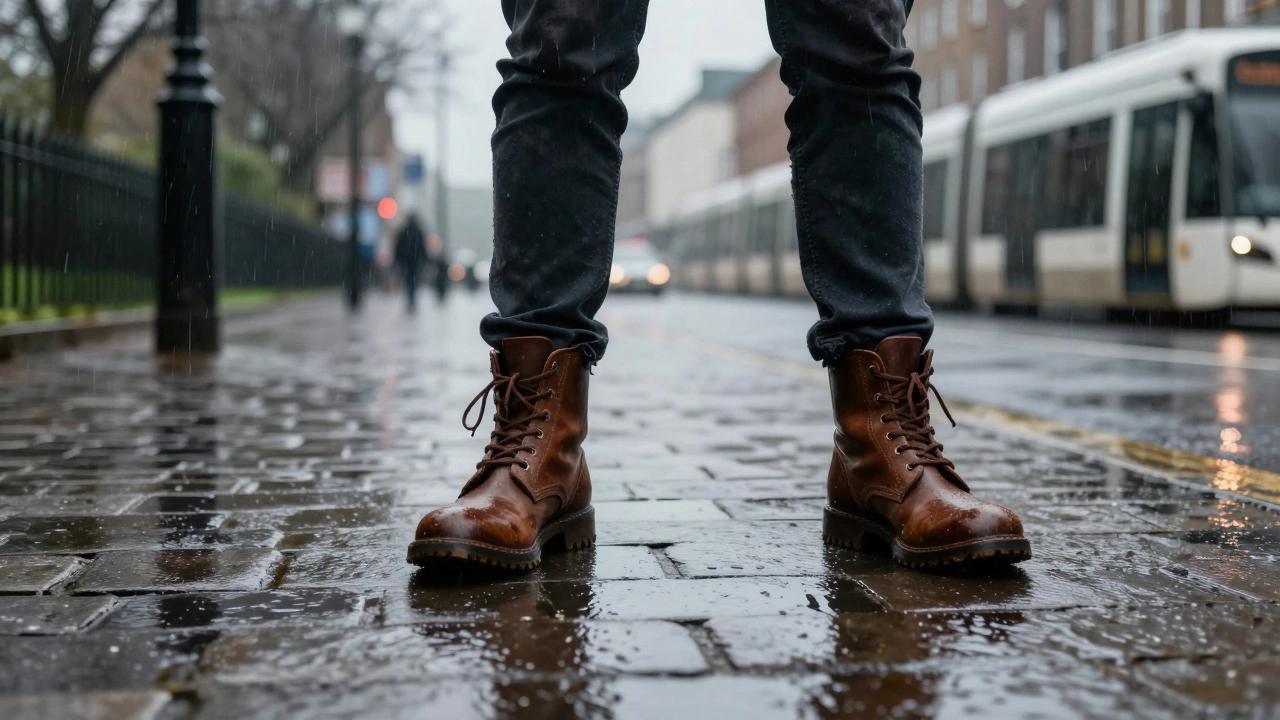
Picture this: it’s a Tuesday morning in Dublin. The rain is coming down sideways off the Liffey, and you’re rushing to catch the Luas on the Green Line. You step out of your house, and immediately, that familiar, nagging pressure starts building at the front of your feet. By the time you reach St. Stephen’s Green, your toes are screaming. Sound familiar? If you’ve ever wondered should your toes touch the end of your boots, you are definitely not alone. In Ireland, where our weather can shift from biting wind to drizzle in minutes, getting your footwear right isn’t just about looking good-it’s about survival.
The short answer? No. Your toes should never touch the end of your boots. Not even a little bit. But why does this matter so much, especially when you’re navigating cobblestones in Galway or hiking the Cliffs of Moher? Let’s break down exactly how boots should fit, why Irish terrain demands extra space, and how to avoid the blisters that ruin weekends in the countryside.
Why Toe Room Matters More Than You Think
When you walk, your foot doesn’t just slide forward; it swells. It expands with every step, pumping blood through your arches and toes. If your toes are jammed against the leather or synthetic end of your boot, you cut off circulation and create friction. Friction leads to blisters. Blisters lead to pain. And pain means you stop enjoying your day.
In Ireland, we do a lot of walking. Whether you’re strolling through the Guinness Storehouse, exploring the rugged trails of the Wicklow Mountains, or just commuting across the city, your feet work hard. When you climb uphill, gravity pulls your foot forward into the toe box. If there’s no space, your toenails take the hit. This is often called "hiker’s toe" or subungual hematoma-a fancy term for a blackened, painful toenail caused by repetitive impact. Nobody wants that after a lovely weekend away in Killarney.
Furthermore, cold weather plays a huge role here. Irish winters are damp and chilly. Cold causes your blood vessels to constrict, which can make your feet feel tighter inside their shoes. But paradoxically, you need *more* space in winter boots to accommodate thicker socks. If your toes are touching the end in summer, they will be frozen and cramped in January.
The Golden Rule: The Thumb Test
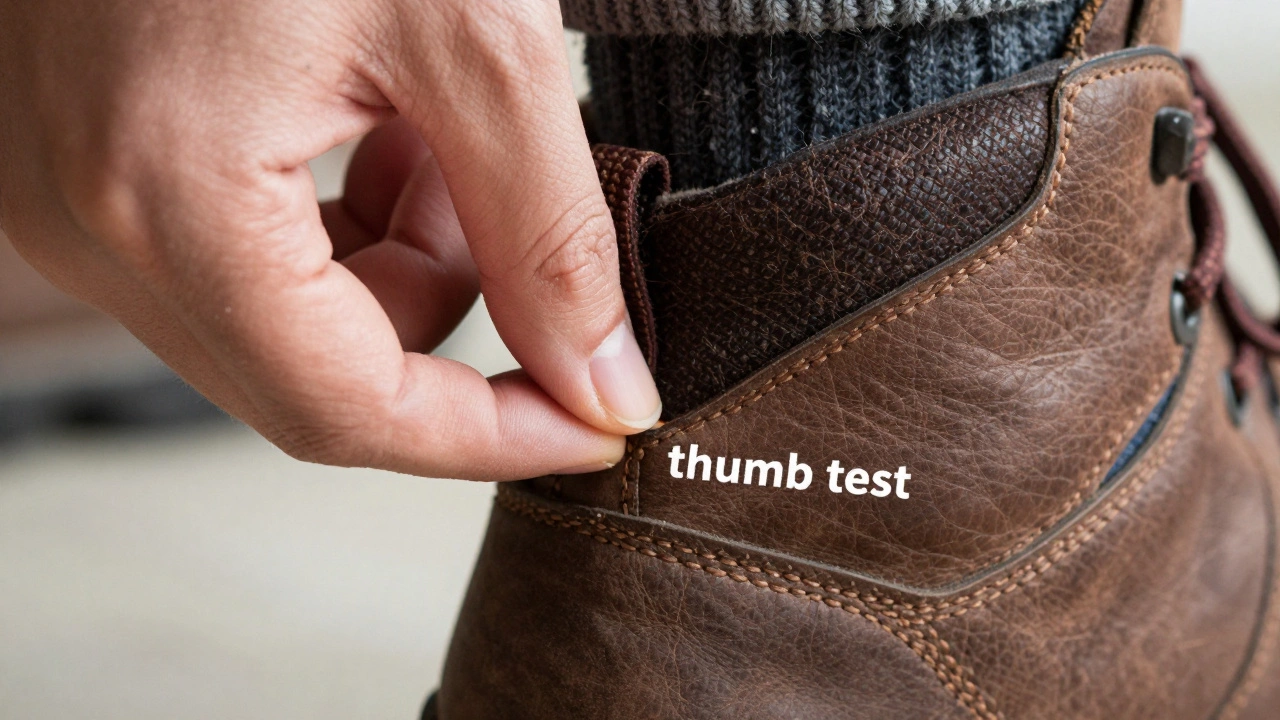
So, how do you know if you have enough room? There’s a simple trick used by podiatrists and outdoor experts alike: the thumb test. Here’s how to do it:
- Stand up straight with your weight evenly distributed on both feet.
- Pull the tongue of the boot back so it’s snug against your ankle.
- Check the space between your longest toe (usually the big toe, but sometimes the second one) and the end of the boot.
- You should be able to fit your thumbnail-or about half an inch (1.25 cm)-of space between your toe and the boot wall.
If your toe touches the end, the boot is too small. If you have two inches of space, it’s too big, and your heel will slip, causing blisters on your Achilles tendon. That half-inch sweet spot allows for natural movement, swelling during long walks, and insulation layers without crushing your digits.
Ireland’s Terrain Demands Specific Footwear
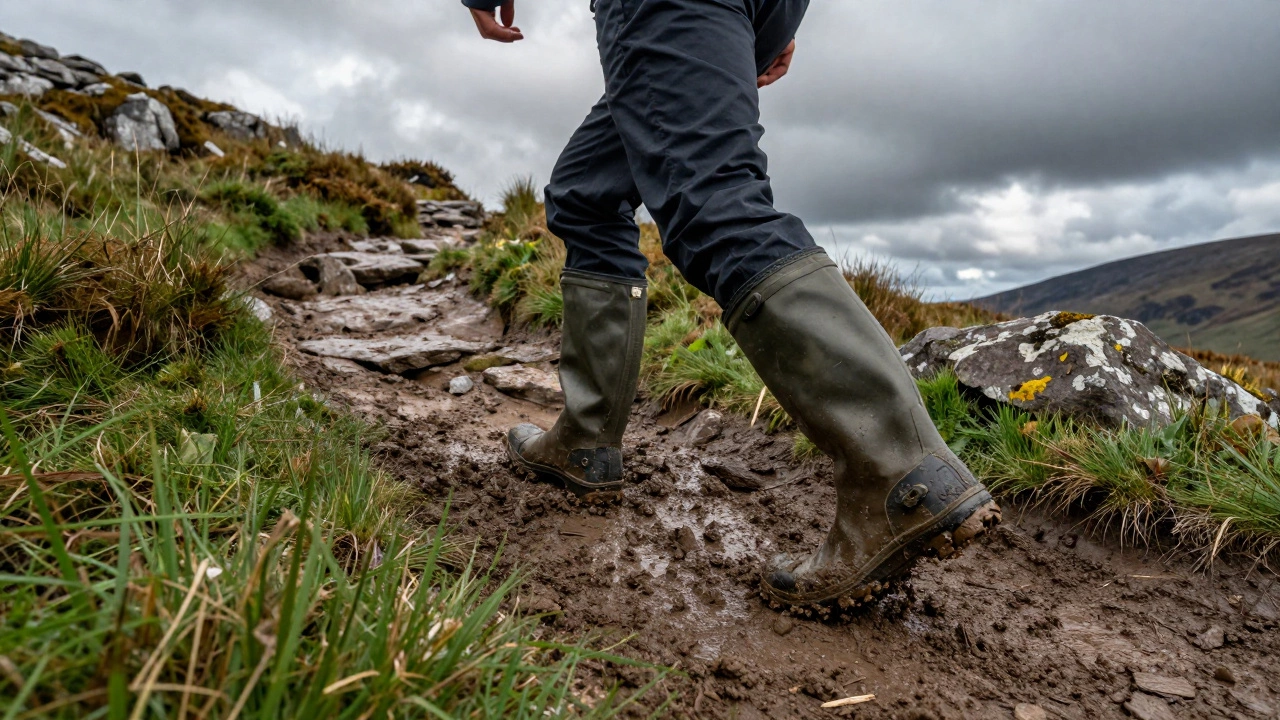
Let’s talk about where we live. Ireland is not flat. Even in urban areas like Cork or Limerick, the streets can be uneven, hilly, or paved with old, irregular stones. In rural areas, the ground is soft, muddy, and slippery. This environment requires boots that offer stability and grip, but also flexibility.
When you walk on uneven ground, your foot rolls slightly inward or outward to maintain balance. A boot that is too tight restricts this natural motion, leading to strain in your ankles and knees. Conversely, a boot that is too loose fails to support your foot, increasing the risk of twisting an ankle on a rocky path in Connemara.
Consider the classic Irish pub crawl. You might start in a cozy spot in Temple Bar, then move to a session in Merrion Square, ending up dancing in a village hall in Mayo. You’ll be on your feet for hours. Tight boots turn a fun night out into a medical emergency. Loose boots mean you’re tripping over your own laces. Proper fit means you forget you’re wearing them.
| Feature | What to Look For | Why It Matters in Ireland | |
|---|---|---|---|
| Toe Box | Half-inch gap, wide enough for toes to wiggle | Prevents blisters on long hikes and allows for thick wool socks in winter | |
| Heel Counter | Firm, snug around the heel | Stops slipping on wet cobblestones and muddy trails | |
| Arch Support | Matches your foot’s curve | Reduces fatigue during city walks or standing at festivals | |
| Waterproofing | Gore-Tex or treated leather | Essential for keeping feet dry during sudden downpours | |
| Sole Grip | Deep lugs, rubber compound | Traction on wet grass, mud, and slick stone steps |
Women’s Boots: Style Meets Function
For women, the challenge is often balancing aesthetics with comfort. We love a good pair of Chelsea boots for autumn brunches in Dundrum Town Centre, or knee-high riding boots for a smart-casual dinner in Kilkenny. But style shouldn’t compromise fit.
Many women buy boots based on the size of their sneakers. This is a mistake. Different brands use different lasts (the mold around which the shoe is built). A size 7 in Dr. Martens fits differently than a size 7 in Clarks or a local brand like Dune. Always try boots on in the afternoon or evening. Your feet swell throughout the day due to gravity and activity. Trying them on in the morning might lead you to buy a pair that feels fine then but becomes unbearable by 6 PM.
Pay attention to the width as well. Some brands run narrow, which can squeeze the ball of your foot. If your toes are touching the end, check if the width is also tight. Sometimes, going up half a size solves both problems. Other times, you need a wide-fit version. Don’t be afraid to ask shop assistants for alternatives. Stores like Brown Thomas, Penneys, or independent cobbler shops in towns like Ennis or Tralee often carry multiple widths.
Breaking Them In: The Irish Way
New boots need breaking in. Leather stretches, memory foam molds to your shape, and stiff soles soften. But don’t wear brand-new boots on a long hike right away. Start small. Wear them around your house for an hour. Then take them for a short walk around the block. Gradually increase the distance.
If you’re buying waterproof hiking boots for a trip to the Ring of Kerry, break them in on local paths first. The Howth Cliff Walk or the Glendalough Valley are perfect testing grounds. They offer varied terrain-rocky, muddy, and steep-without being dangerously remote. If your toes start hurting there, return the boots. Most retailers in Ireland, including online giants like Amazon.ie and local chains like Sports Direct, have generous return policies. Use them.
Use quality insoles if needed. Many boots come with generic foam inserts that compress quickly. Replacing them with orthotic-friendly insoles can improve fit and support. Brands like Superfeet or custom options from a local podiatrist can make a world of difference, especially if you have high arches or flat feet.
Common Mistakes to Avoid
Here are some pitfalls I see all the time:
- Buying for the bigger foot. Everyone has one foot slightly larger than the other. Fit the boot to the larger foot. Use a thicker sock on the smaller side if needed.
- Ignoring sock thickness. Always try boots on with the socks you plan to wear. If you’re hiking in the Wild Atlantic Way, you’ll likely wear merino wool hiking socks. These are thicker than everyday cotton socks. Trying boots on with thin socks will result in a poor fit.
- Lacing too tightly. Over-tightening laces cuts off circulation and forces your foot forward. Lace loosely over the top of the foot, snugly around the ankle.
- Assuming stretch equals fit. Leather stretches, but only about half a size. It won’t magically grow to accommodate toes that are currently hitting the wall.
Final Thoughts on Comfort
Your feet are the foundation of your mobility. In a country as beautiful and rugged as Ireland, they carry you everywhere. From the bustling streets of Belfast to the quiet beaches of Donegal, comfortable boots open up possibilities. Painful boots limit them.
Next time you’re shopping, whether in Grafton Street or browsing online, remember the thumb test. Give your toes room to breathe. Your future self, standing comfortably at a ceilidh or hiking a mountain trail, will thank you.
How much space should be between my toe and the end of my boot?
You should have about half an inch (1.25 cm) of space, roughly the width of your thumbnail. This allows for foot swelling during activity and prevents your toes from hitting the front of the boot when walking downhill.
Do boots stretch enough to fix a tight toe box?
Leather boots can stretch slightly, usually about half a size. However, they will not stretch significantly in length. If your toes are touching the end now, they will continue to hurt. Sizing up is the better solution.
What is the best time of day to try on boots?
Try on boots in the late afternoon or evening. Your feet naturally swell throughout the day due to gravity and movement. Fitting them when your feet are at their largest ensures they won’t be too tight later.
Should I wear thick socks when trying on hiking boots?
Yes. Always wear the type of socks you intend to use with the boots. Hiking socks are thicker than regular socks, and failing to account for this can lead to a cramped fit and blisters on the trail.
Why do my toes hurt when I walk downhill?
When walking downhill, gravity pulls your foot forward inside the boot. If there is insufficient space in the toe box, your toes repeatedly impact the front wall, causing bruising, pain, and potentially blackened toenails.
Can I wear boots that are too big?
Boots that are too big cause your heel to slip, leading to blisters on your heel and Achilles tendon. They also reduce stability, increasing the risk of ankle sprains, especially on uneven Irish terrain. It is better to size down or use insoles than to buy too large.