
Workplace Footwear Compliance Checker
Does your environment contain these hazards?
Ready to Check
Select your industry and check the relevant hazards below to see if being barefoot is a violation.
Imagine walking into your kitchen in Dublin after a long shift, kicking off your heavy boots, and feeling the cool linoleum under your feet. It feels freeing, right? But now, imagine doing that while you are on the clock, handling food, or operating machinery. Is it just a personal choice, or is it a serious legal breach? If you have ever wondered is it a health code violation to be barefoot, especially within the strict regulatory environment of Ireland, you are not alone. The short answer is: it depends entirely on where you work and what you do.
In Ireland, the concept of "health codes" often gets mixed up with general workplace safety laws. While there isn't a single document called "The Health Code" that explicitly bans bare feet in every scenario, the Safety, Health and Welfare at Work Act 2005 and specific food hygiene regulations create a landscape where going barefoot is rarely a safe or legal option for most employees.
The Legal Framework: HSE and Food Hygiene Regulations
To understand why being barefoot might get you in trouble, we need to look at who makes the rules. In Ireland, the Health and Safety Authority (HSA) is the primary body overseeing workplace safety. They don’t just guess; they enforce strict guidelines based on risk assessment. For most jobs, particularly those involving physical labor, kitchens, or healthcare, the employer is legally required to provide Personal Protective Equipment (PPE). This includes safety footwear.
If you work in a restaurant, café, or hotel kitchen-think of the bustling pubs in Temple Bar or the busy hotels in Galway City-the rules tighten significantly. The European Union Food Hygiene Regulations, which are fully adopted in Irish law, require food handlers to wear clean protective clothing. While the text doesn't scream "NO BARE FEET," the interpretation by local Environmental Health Officers (EHOs) from the Local Authorities is clear: bare feet pose a contamination risk. If you step in something unsanitary and then walk through your prep area, you are violating hygiene standards. An EHO visiting a business in Cork or Limerick will likely cite this as a failure to maintain proper hygiene controls, which can lead to fines or closure.
Does the HSA specifically ban bare feet?
The HSA does not have a blanket ban on bare feet for all jobs, but they mandate that employers conduct risk assessments. If a risk exists (like falling objects or slips), PPE including shoes must be worn. In food service, local EHOs enforce hygiene standards that effectively prohibit bare feet due to contamination risks.
Industry-Specific Rules: Where You Can and Cannot Go Barefoot
Not all workplaces are created equal. Your ability to go barefoot depends heavily on your industry sector. Let’s break down how this applies across different common job types in Ireland.
Food Service and Hospitality: This is the biggest no-go zone. Whether you are chopping vegetables in a Michelin-starred kitchen in Dublin 4 or serving pints in a traditional pub in Kilkenny, closed-toe, non-slip shoes are mandatory. Why? Two reasons. First, hygiene. Second, safety. Kitchen floors are slippery, hot grease spills happen, and sharp knives fall. A bare foot offers zero protection against a dropped cleaver or a splash of boiling water. Most employers in this sector will write "no bare feet" directly into your employment contract.
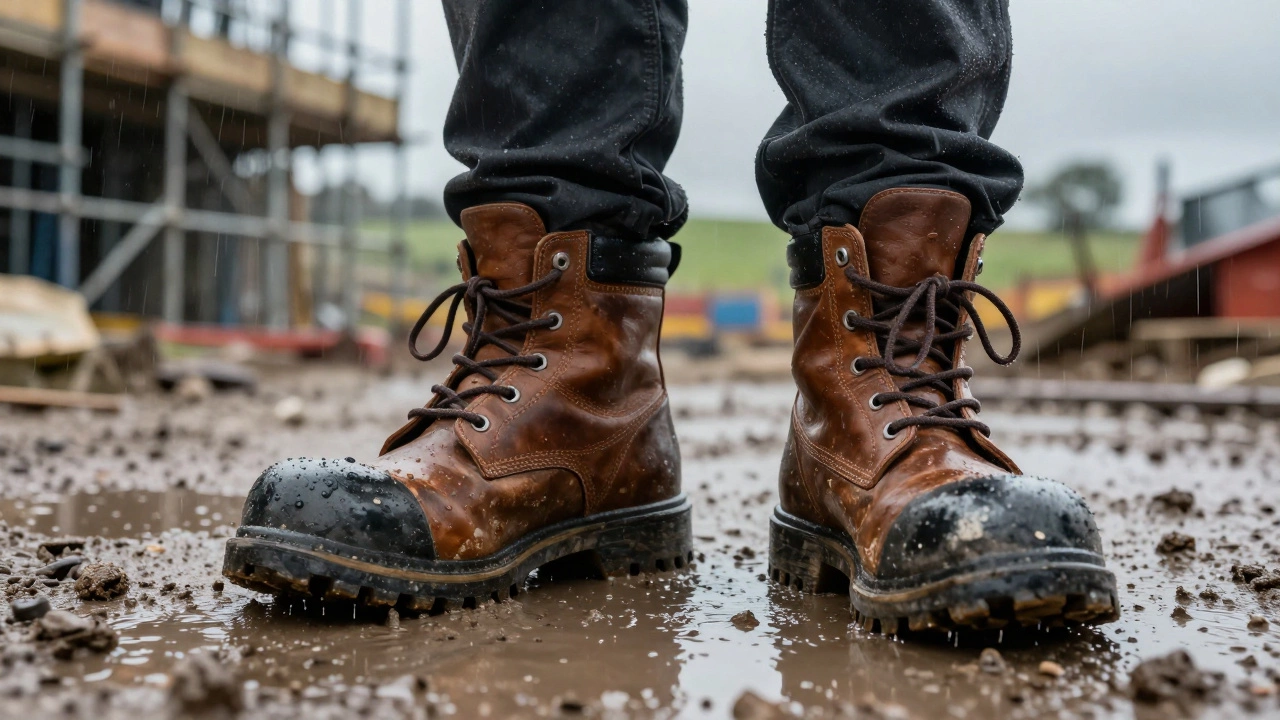
Construction and Manufacturing: If you are working on a site in the Dún Laoghaire area or in a factory in Dundalk, being barefoot is not just a violation; it’s dangerous. The Use of Personal Protective Equipment at Work Regulations 2007 requires employers to provide safety boots if there is a risk of injury to the feet. This includes heavy objects falling, puncture hazards from nails, or exposure to chemicals. Going barefoot here would be a direct violation of statutory safety requirements.
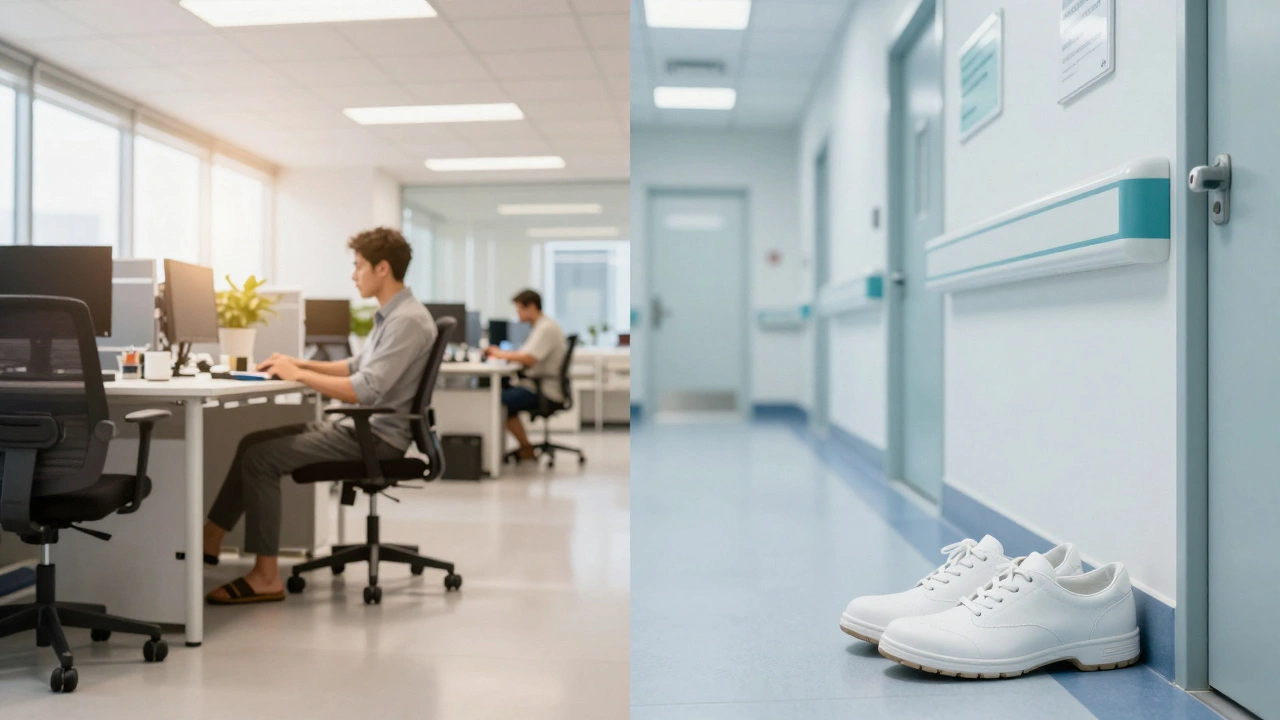
Office and Creative Roles: Here, the rules relax considerably. If you work in a tech startup in the Docklands or an advertising agency in Merrion Square, the risk assessment likely concludes that there is minimal danger to your feet. Unless your company has a specific dress code policy stating otherwise, wearing sandals or even going barefoot (if you have slippers) is generally acceptable. However, professionalism still plays a role. While it might not be a "health code violation," it could be a breach of company culture or client-facing expectations.
Healthcare: Hospitals like St. James’s in Dublin or University Hospital Galway have strict infection control policies. Healthcare workers must wear appropriate footwear that can be cleaned and disinfected. Bare feet are prohibited because they cannot be sanitized and pose a risk of transmitting pathogens between patients.
Risk Assessment: The Key Determinant
The golden rule in Irish workplace safety is the Risk Assessment. Under Section 20 of the Safety, Health and Welfare at Work Act 2005, every employer must carry out a suitable and sufficient assessment of the risks to the safety, health, and welfare of their employees. This document is crucial. It determines whether PPE is necessary.
If the risk assessment identifies hazards such as:
- Falling or rolling objects
- Objects that could pierce the sole of the foot
- Electric shock hazards
- Extreme temperatures (hot or cold)
- Slippery surfaces
- Biohazards or chemical spills
Then, appropriate footwear becomes a legal requirement. If you refuse to wear the provided PPE, you are not only putting yourself at risk but also potentially breaching your contractual obligations and safety regulations. Employers can discipline employees who fail to comply with reasonable safety instructions.
Hygiene vs. Safety: Understanding the Distinction
It is important to distinguish between safety violations and hygiene violations, although they often overlap. In a construction site, the issue is primarily safety-protecting your toes from a hammer. In a kitchen, the issue is primarily hygiene-preventing bacteria from your skin or the floor from contaminating food.
Local Environmental Health Offices (EHOs) operate under the Public Health Acts. They inspect businesses to ensure compliance with food safety standards. During an inspection, an officer will look for evidence of good hygiene practices. Seeing staff members barefoot in a food preparation area is a red flag. It suggests a lack of attention to detail regarding contamination control. Even if no actual contamination occurs, the *potential* for it is enough to trigger a warning or improvement notice.
| Industry Sector | Primary Regulation Body | Barefoot Allowed? | Key Reason |
|---|---|---|---|
| Food Service / Hospitality | Local EHO / HSA | No | Hygiene & Slip Hazards |
| Construction / Manufacturing | HSA | No | Impact & Puncture Protection |
| Healthcare | HSE / Hospital Policy | No | Infection Control |
| Office / Retail (Non-Food) | Company Policy | Usually Yes | Low Physical Risk |
Employer Responsibilities and Employee Rights
In Ireland, the relationship between employer and employee regarding safety is mutual. The employer must provide the necessary PPE free of charge. You should not have to buy your own safety boots if they are mandated for the role. The employer must also provide training on how to use and care for the equipment.
As an employee, you have a duty to take reasonable care of your own health and safety and that of others. This means wearing the PPE provided. If you believe the footwear provided is inadequate-for example, if the soles are worn out and slippery-you have the right to raise this concern with your Safety Officer or management. Under the Act, you are protected from victimization if you raise genuine safety concerns.
However, you cannot simply decide that shoes are uncomfortable and opt out. Comfort is important, but it does not override safety. Many modern safety shoes offer excellent comfort features, such as memory foam insoles and breathable materials, making them easier to wear for long shifts.
Practical Tips for Choosing the Right Footwear in Ireland
If you are subject to strict footwear policies, choosing the right pair can make a huge difference to your day. Ireland’s weather and terrain mean that practicality is key. Here are some tips:
- Look for Anti-Slip Ratings: Especially for hospitality workers, look for shoes with high anti-slip ratings (like SRC rating). Wet floors in Irish pubs and kitchens are a major hazard.
- Consider Waterproofing: If you work outdoors or in areas with frequent cleaning, waterproof membranes like Gore-Tex can keep your feet dry and comfortable.
- Break Them In: Never wear brand-new safety boots for a full 12-hour shift on your first day. Break them in gradually to avoid blisters and foot pain.
- Check for CE Marking: Ensure any safety footwear you buy meets European safety standards. Look for the CE mark and relevant pictograms indicating protection level.
- Use Quality Socks: Invest in good quality, moisture-wicking socks. Cotton socks can hold moisture and lead to fungal infections, especially in humid environments.
What Happens If You Are Caught Barefoot?
If you are found barefoot in a regulated environment, the consequences can vary. In a mild case, your manager might give you a verbal warning and ask you to put on shoes immediately. In more serious cases, particularly in food service or construction, it could lead to:
- Written warnings and disciplinary action
- Termination of employment for gross misconduct
- Fines issued to your employer by the HSA or Local Authority
- Closure of the business until compliance is achieved
For self-employed individuals, the risks are even higher. If you injure yourself while working barefoot in violation of safety norms, you may find it difficult to claim compensation or insurance coverage.
Conclusion: When in Doubt, Cover Up
So, is it a health code violation to be barefoot in Ireland? While there is no single universal law banning bare feet everywhere, the combination of safety regulations, hygiene standards, and employer policies makes it a violation in the vast majority of professional settings. In food service, healthcare, construction, and manufacturing, being barefoot is not just frowned upon-it is illegal and unsafe. In office environments, it is largely a matter of personal preference and company culture.
Ultimately, your feet are vital tools for your work and your life. Protecting them with appropriate footwear is not just about following rules; it is about ensuring you can continue to work safely and comfortably for years to come. If you are unsure about your workplace requirements, check your employee handbook or speak to your safety representative. Better safe than sorry!
Can I wear open-toed sandals in an Irish office?
In most Irish offices, yes, unless there is a specific dress code prohibiting it. Office environments typically have low physical risks, so formal safety footwear is not required. However, always check your company's internal policies as some firms prefer closed-toe shoes for professionalism.
Who pays for safety shoes in Ireland?
Under Irish law, if safety footwear is classified as Personal Protective Equipment (PPE) and is required for the job, the employer must provide it free of charge. You should not have to pay for mandatory safety gear.
What happens if I slip and fall while barefoot at work?
If you are injured while barefoot in a situation where footwear was required, you may still be able to make a personal injury claim. However, your compensation could be reduced due to "contributory negligence" if you failed to follow safety protocols. Always report accidents immediately to your employer.
Are there exceptions for medical conditions?
Yes. If you have a medical condition that prevents you from wearing standard safety shoes, your employer must engage in a consultation process to find reasonable accommodations. This might include specialized footwear or modified duties, but it does not automatically exempt you from all safety requirements.
How often should I replace my safety shoes?
Safety shoes should be replaced when they show signs of wear that compromise their protective function. This includes worn-out soles, damaged toe caps, or broken straps. Generally, with daily use, safety boots last between 6 to 12 months. Regularly inspect your footwear for damage.