Ireland Workplace Footwear Compliance Checker
Result Title
- Primary Risks go here
💰 Who Pays?
Payment info goes here.
Regulatory Basis: ...
Walking into a Dublin office or a Cork factory barefoot might feel like the ultimate act of freedom, especially after a long day. But before you ditch your shoes, there is a hard legal reality to consider. In Ireland, being barefoot at work is not just a matter of personal comfort; it is a significant health and safety issue that can lead to serious violations. While there isn't a single line in an ancient statute that explicitly says "thou shalt not be barefoot," the broader framework of Irish employment law makes it virtually impossible to justify going shoeless in most professional environments.
If you are wondering whether your employer can force you to wear shoes, the short answer is yes. And if you are an employer wondering if you need to provide them, the answer is also usually yes. Let’s break down how the Health and Safety Authority (HSA) views this, what the law actually says, and where the gray areas lie for different industries across Ireland.
The Legal Framework: Why Feet Need Protection
To understand why bare feet are generally banned in Irish workplaces, we have to look at the Health and Safety at Work Act 2005. This is the cornerstone of workplace safety in Ireland. The Act places a duty on employers to ensure, so far as is reasonably practicable, the safety, health, and welfare of their employees.
This means an employer must assess risks. If a risk exists-like dropping a heavy box, spilling hot coffee, or slipping on a wet floor-the employer must mitigate it. Footwear is one of the primary ways to mitigate injury to the lower limbs. Under the Personal Protective Equipment (General Use) Regulations 2007, employers must provide suitable PPE free of charge if the risk cannot be controlled by other means.
Think about it logically. If you work in a warehouse in Dundalk handling pallets, a falling object could crush your toes. If you work in a kitchen in Galway, boiling water or sharp knives pose immediate threats. In these scenarios, allowing bare feet would be a direct breach of the employer's duty of care. The Health and Safety Authority (HSA) inspectors take this seriously. They don't just check for fire extinguishers; they look at practical daily risks.
Industry Breakdown: Where Bare Feet Are Strictly Prohibited
Not all jobs carry the same risks. However, in several key sectors in Ireland, being barefoot is effectively illegal because it violates specific safety standards.
| Industry / Sector | Primary Risks | Required Footwear Type | Regulatory Body / Standard |
|---|---|---|---|
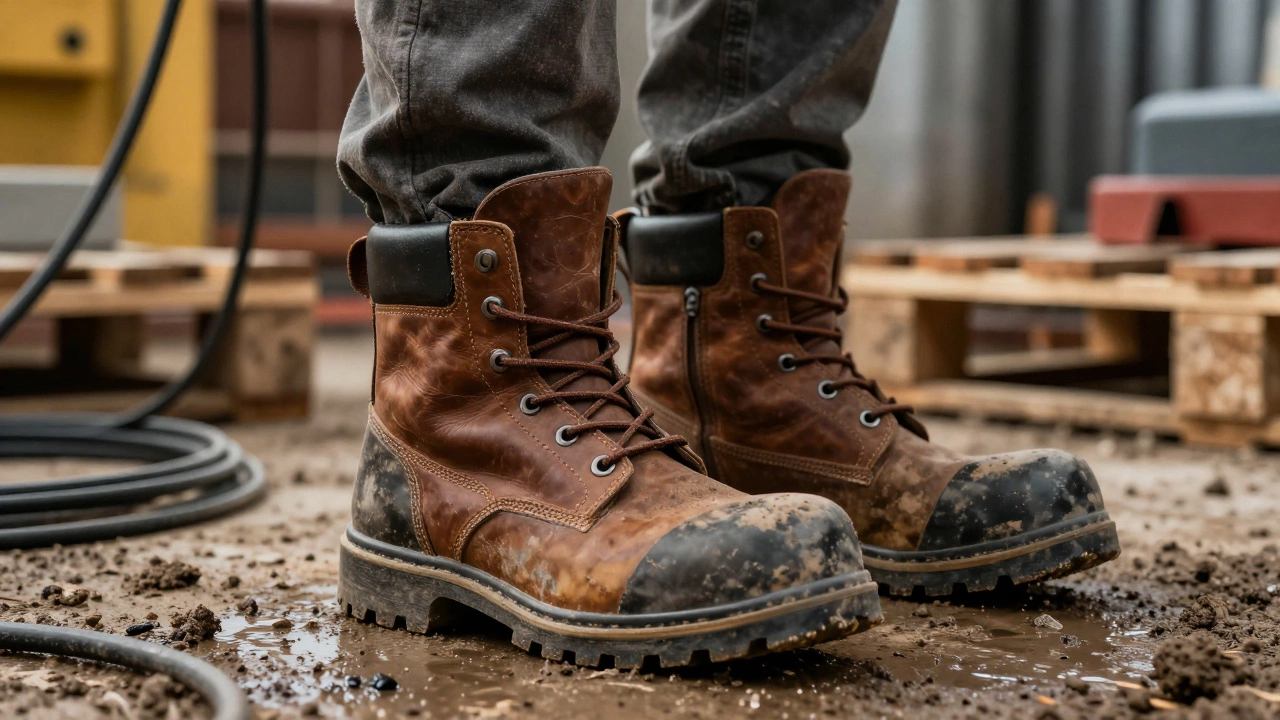
| Construction & Manufacturing | Falling objects, punctures, electrical hazards | Steel-toed boots, S3 rated safety shoes | HSA, EN ISO 20345 |
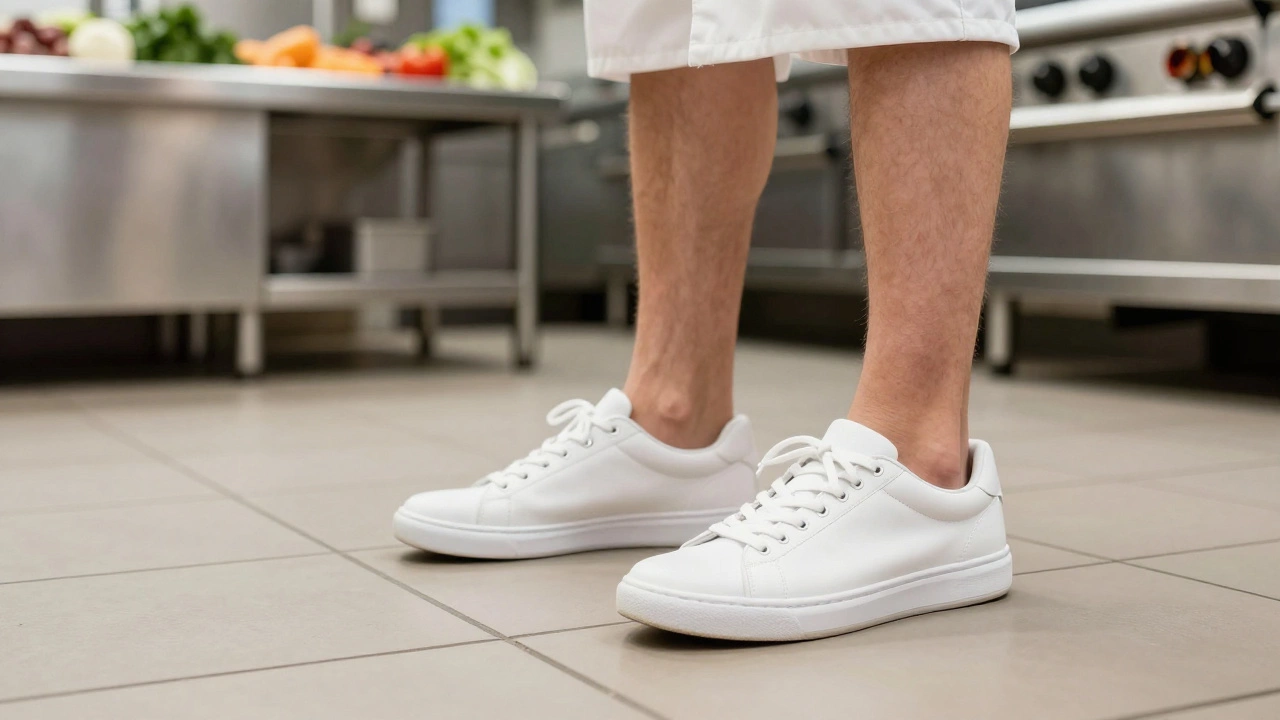
| Food & Beverage (Kitchens) | Slips, burns, hygiene contamination | Non-slip, closed-toe, washable shoes | HACCP Guidelines, HSA |
| Healthcare (HSE Hospitals) | Biohazards, needle sticks, slips | Closed-toe, fluid-resistant shoes | HSE Infection Control |
| Retail & Hospitality (Front of House) | Spills, minor impacts, customer perception | Smart casual or uniform-compliant shoes | Employer Policy / Contract |
| Office / Creative Agencies | Minimal physical risk | Varies by company culture | Internal HR Policy |
In construction sites around the Greater Dublin Area, wearing anything less than safety boots is often grounds for immediate removal from the site. The European Norm EN ISO 20345 sets the standard for safety footwear. These shoes protect against compression, impact, and penetration. Without them, an employer is liable for negligence if an accident occurs.
In the food industry, the stakes are slightly different but equally high. Hygiene is paramount. Under HACCP (Hazard Analysis Critical Control Point) principles, which are mandatory for food businesses in Ireland, bare feet can introduce contaminants. Hair, skin cells, or dirt from bare feet can fall into food preparation areas. Most reputable restaurants in cities like Limerick or Kilkenny enforce strict closed-toe shoe policies not just for safety, but for hygiene compliance during health inspections.
The Gray Area: Offices and Creative Spaces
So, what about the tech startup in Sandyford or the design studio in Temple Bar? Here, the law gets fuzzier. There is no specific regulation stating you must wear shoes in an office environment. The risk of a falling steel beam is non-existent. The risk of cutting yourself with a knife is low.
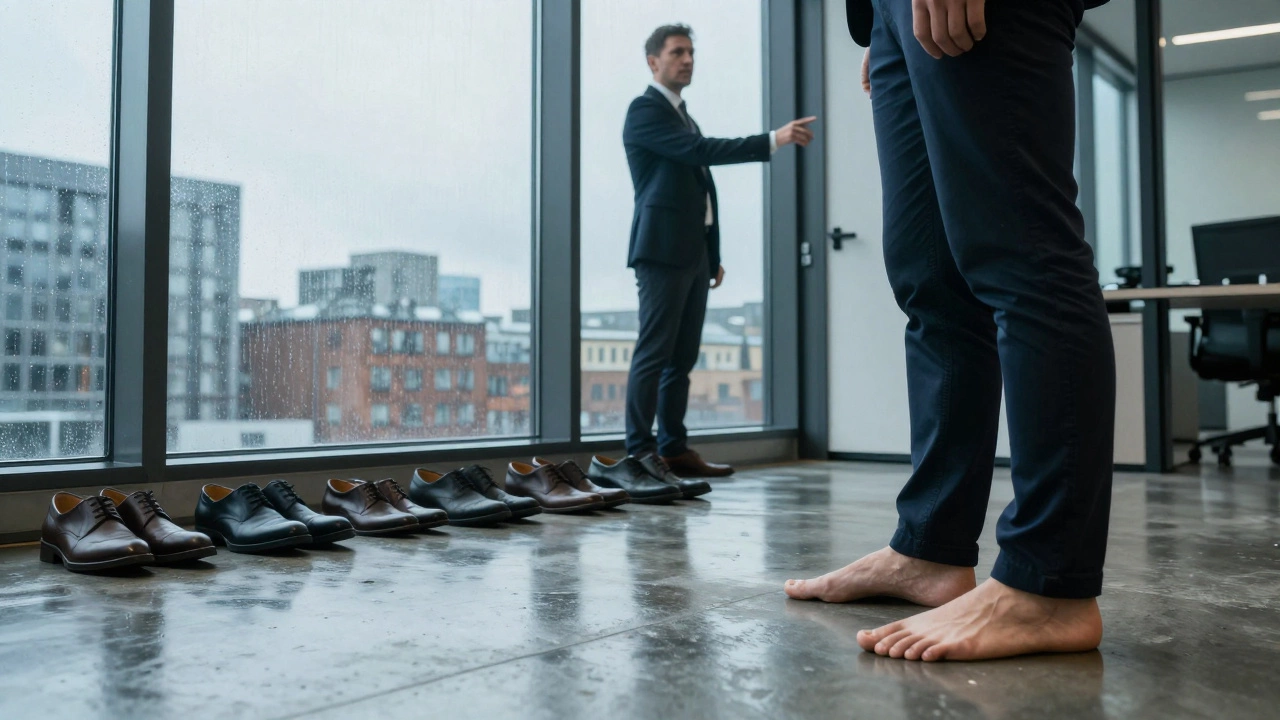
However, "no specific rule" doesn't mean "anything goes." Employers still have a duty to maintain a safe working environment. Wet floors in Irish winters are a common hazard. If an employee slips on a polished concrete floor while barefoot and injures themselves, the employer could still face scrutiny under the General Application Regulations 2007, which require employers to manage slip and trip hazards.
Most modern Irish companies address this through internal dress codes rather than statutory law. Your employment contract likely includes a clause regarding "professional attire" or "reasonable workplace conduct." If your manager asks you to put on shoes, refusing could be considered insubordination. It’s not a criminal offense, but it could lead to disciplinary action or even dismissal if it breaches company policy.
Who Pays for the Shoes?
A common question among workers in Ireland is: "If I have to wear special shoes, do I buy them myself?" The answer depends entirely on the type of footwear required.
- Safety Footwear: If the job requires specific protective equipment (like steel-toed boots for construction or anti-static shoes for electronics manufacturing), the employer must provide them free of charge. This is a legal requirement under the PPE Regulations. You cannot be asked to pay for your own safety gear.
- Standard Professional Footwear: If the requirement is simply for "smart shoes" in an office or retail setting, the cost usually falls on the employee. This is considered part of your general wardrobe, similar to buying a suit or a uniform shirt.
- Hygiene-Specific Footwear: In some healthcare or lab settings, if specific disposable or specialized shoes are required for infection control, the employer typically provides them.
If your employer in Ireland asks you to buy expensive safety boots out of your own pocket, that is a violation of your rights. You can report this to the Workplace Relations Commission (WRC) or contact the HSA directly.
Practical Advice for Employees and Employers
For employees: Don’t assume silence means permission. If you want to go barefoot in an office, ask first. Check your employee handbook. If you work in a high-risk environment, never compromise on safety. Your feet are vital, and a moment of comfort isn't worth a crushed toe or a slipped disc.
For employers: Be clear. Ambiguity leads to accidents. Write a clear dress code policy that specifies footwear requirements for different roles. If you require safety shoes, budget for them. Providing high-quality, comfortable safety footwear can actually reduce absenteeism and improve morale. Brands like Safety Jogger or Keen Utility are popular in Ireland for offering both protection and comfort.
Remember, Irish weather is unpredictable. Even if you work indoors, coming in from the rain with wet, bare feet can create slippery surfaces for others. It’s a collective responsibility.
What Happens if You Get Inspected?
If an HSA inspector visits your workplace and sees staff working barefoot in a hazardous area, they will issue an improvement notice. This is a formal document requiring you to fix the issue within a set time. Ignoring it can lead to prosecution. Fines for health and safety breaches in Ireland can be substantial, reaching up to €3 million for corporate offenses in severe cases involving endangerment.
Even in low-risk offices, an inspector might note bare feet as a "minor observation" if the flooring is prone to slipping. It shows a lack of risk assessment rigor. It’s better to have a simple policy: "Closed-toe shoes required at all times." It removes the guesswork.
Can my boss force me to wear shoes at work in Ireland?
Yes. If the footwear is required for safety reasons (PPE), it is a legal obligation under the Health and Safety at Work Act. If it is for general professional appearance, your employer can enforce it through your employment contract and company dress code policy. Refusing may lead to disciplinary action.
Do I have to pay for my own work shoes?
It depends on the type of shoe. If you need specific safety footwear (like steel-toed boots) due to workplace hazards, your employer must provide them for free. For standard office or retail shoes, you are generally expected to provide your own as part of your professional attire.
Is it illegal to be barefoot in a restaurant kitchen in Ireland?
While not explicitly "illegal" in a criminal sense, it violates health and safety best practices and HACCP hygiene guidelines. Food safety inspectors can cite your business for poor hygiene controls, and your employer can dismiss you for violating safety protocols regarding slips, trips, and contamination.
What should I do if my employer won't provide safety boots?
You should first raise the issue with your line manager or HR department, citing the Personal Protective Equipment (General Use) Regulations 2007. If they refuse, you can contact the Health and Safety Authority (HSA) for advice or report the issue to the Workplace Relations Commission (WRC).
Can I wear sandals in an office in Ireland?
This depends on your company's dress code. Many modern Irish offices allow smart sandals or flats, especially in summer. However, open-toed shoes may be prohibited if there is any perceived risk of foot injury or if the company maintains a strict formal dress code. Always check your employee handbook.
Are there any jobs where being barefoot is allowed?
Very few. Some yoga studios, dance schools, or specific creative workshops may allow bare feet if the environment is strictly controlled and clean. However, even then, liability waivers and hygiene policies usually apply. In almost all industrial, commercial, and public-facing roles, footwear is required.