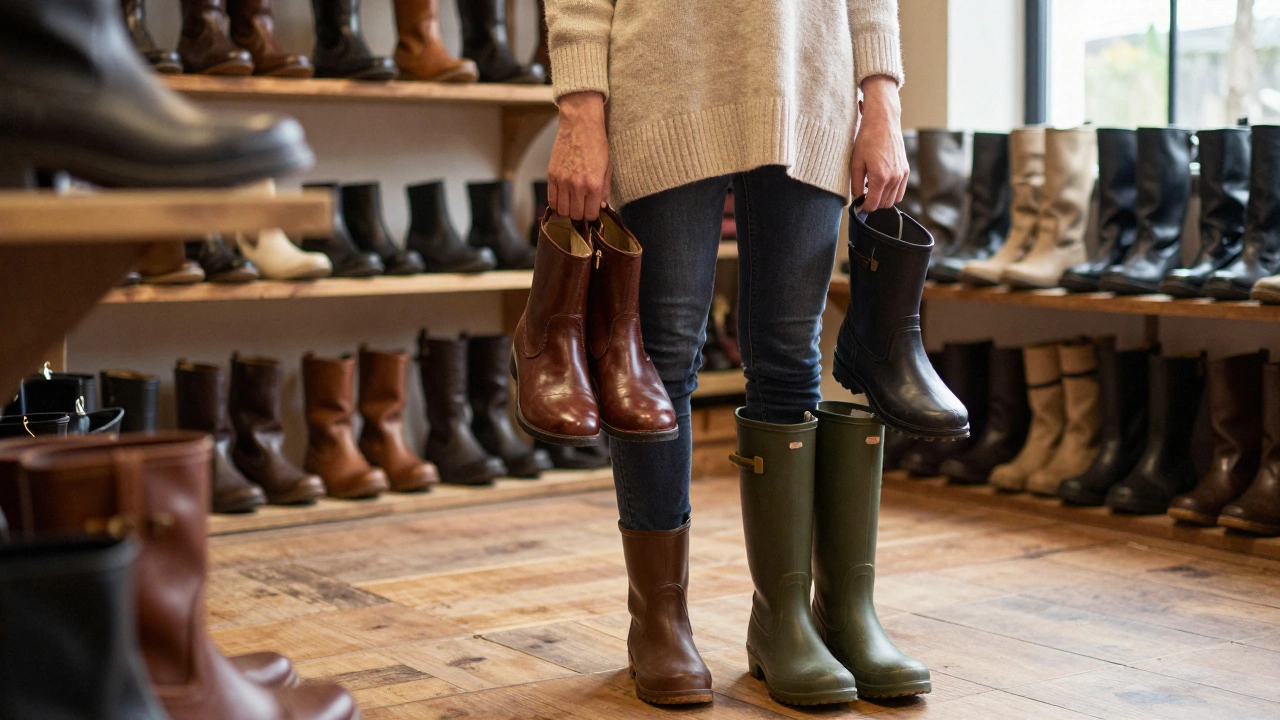
Women's Boot Sizing Advisor
Enter Your Details
Recommended Size
You should wear a UK
-Fill in the form to see how you should size up or down for different boot styles.
Walking through the cobbled streets of Dublin’s Temple Bar or navigating the muddy trails of the Wicklow Mountains, you know one thing for sure: your boots need to fit. But here is the question that stops most of us in our tracks at the fitting room mirror: do people size up in boots? The short answer is yes, but not always by a full size, and certainly not for every style. In Ireland, where the weather can shift from bright sunshine to driving rain in minutes, getting this right isn't just about comfort-it's about staying dry and safe.
The Myth of 'One Size Fits All' Boot Sizing
We often treat shoe sizing like a universal language. You are a UK 6, so you buy a UK 6. It works for trainers, maybe for flats, but boots are different beasts. They have more structure, thicker materials, and often higher shafts. If you squeeze into a pair of leather ankle boots that feel tight at first, hoping they will stretch, you are likely setting yourself up for blisters on your way to work in Cork or Galway.
Boots generally require a bit more room than sneakers. Why? Because your foot swells during the day. By the time you’ve walked around Grafton Street or stood in line at a pub in Kilkenny, your feet expand. If your boots are snug in the morning, they will be painful by evening. Most experts recommend leaving about a thumb’s width of space between your longest toe and the end of the boot. This allows for natural movement and prevents your toes from jamming against the front when you walk downhill-a common scenario if you’re hiking the Cliffs of Moher.
Material Matters: Leather vs. Synthetic
The material of the boot changes how it fits over time. In Ireland, we love sturdy leather boots because they handle our damp climate well. However, genuine leather stretches. A brand-new pair of leather Chelsea boots from a local Dublin shop might feel firm across the instep (the top of your foot). After a few wears, that leather will mold to your foot shape. If they are too tight initially, they won’t become comfortable; they’ll just remain painfully tight.
Synthetic materials, on the other hand, don’t stretch much. If you are buying waterproof synthetic rain boots-essential for those unpredictable Atlantic showers-they should fit comfortably from day one. Don’t plan on breaking them in. If there is any pinching, size up immediately. Brands like Hunter, which are iconic in the UK and Ireland, tend to run true to size, but their rubber construction means there is no give. If you are between sizes, going up half a size gives you room for thick socks, which you will definitely need in an Irish winter.
Ankle Boots vs. Knee-High: Different Rules Apply
Not all boots are created equal. Ankle boots, particularly those with a pointed toe, often run small. Many fashion-forward brands found in shopping centers like Dundrum Town Centre or Luas stops across the city design these styles to be sleek. To maintain that slim profile, they cut the last (the mold used to make the shoe) narrower and shorter. For pointed-toe ankle boots, sizing up half a size is almost standard practice.
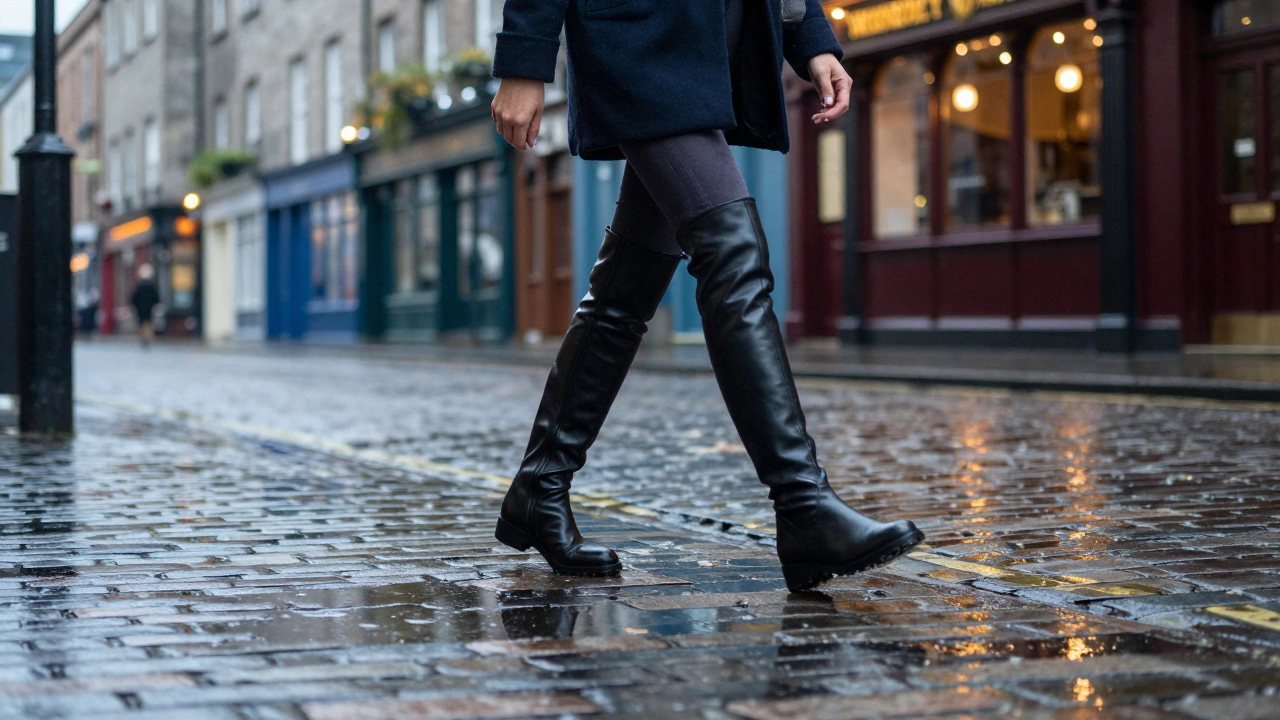
Knee-high or riding boots tell a different story. These boots cover more surface area, so friction points change. If the shaft is too tight, it leaves marks on your calves and restricts circulation. If it’s too loose, it slips down every time you take a step. Here, sizing up might help the calf fit, but it could make the heel slip. The solution often isn’t changing the size, but looking for boots with adjustable side zippers or elastic panels. If you do size up in knee-highs, ensure the heel counter (the back part holding your heel) still grips your foot securely. A slipping heel is a recipe for blisters, especially if you’re walking on uneven cobblestones in Derry or Limerick.
The Width Factor: Narrow Feet in Wide Countries?
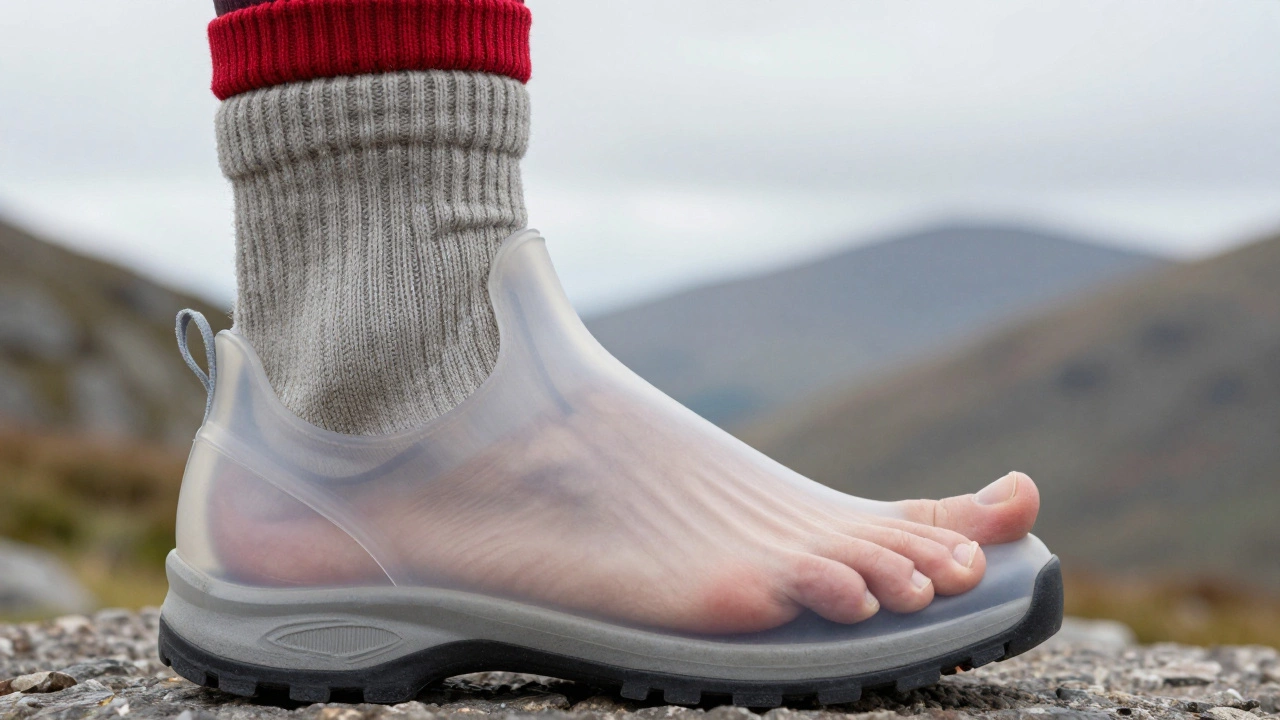
Here is a tricky reality for many women in Ireland: European and American brands often design shoes for wider feet. If you have naturally narrow feet, a 'true to size' boot might feel like it’s falling off. Conversely, some British and Irish heritage brands cater to slightly narrower profiles. If you find that your heels slip out even when the length feels right, don’t automatically size down. Sizing down crushes your toes. Instead, look for brands that offer 'Narrow' (N) or 'Wide' (W) widths.
If width options aren’t available, use insoles. A simple gel insert or a thicker sock can fill the extra volume without altering the length. This is crucial for maintaining balance, particularly if you’re wearing boots with a block heel or a platform sole, which are popular for adding height and keeping feet off wet pavement.
| Boot Style | Typical Fit | Recommendation |
|---|---|---|
| Ankle Boots (Pointed Toe) | Runs Small/Narrow | Size up 0.5 - 1 size |
| Chelsea Boots (Leather) | True to Size (Stretches) | Stay True to Size, allow break-in |
| Rain Boots (Rubber/Synthetic) | No Stretch | Size up 0.5 if between sizes |
| Hiking Boots | Needs Room for Socks | Size up 0.5 - 1 size |
| Knee-High Boots | Varies by Shaft | Focus on calf circumference, not just length |
Trying On Boots: The Irish Weather Test
When you go shopping, whether it’s online from ASOS or in-store at Brown Thomas, remember the context. Are these boots for a night out in Dublin, or for walking the dog in County Mayo? Always try boots on in the afternoon or evening. Your feet are naturally larger then due to daily activity. Wearing the same type of socks you intend to wear with the boots is non-negotiable. Thick wool socks for winter boots change the fit dramatically compared to thin cotton socks.
Walk around. Not just stand. Lean forward to simulate walking. Check for pressure points on the ball of your foot and rubbing at the heel. If you’re buying online, check the return policy. Many Irish retailers offer free returns, which takes the risk out of guessing your size. If you’re unsure, order two sizes and keep the one that feels right after a week of indoor wear.
Brand Specifics: What We Wear Here
Some brands are staples in Irish wardrobes. Dr. Martens, for instance, are famous for running large. Most people in Ireland size down half a size for their classic 1460 boots. They come with stiff leather that needs breaking in, so if you size up, you’ll have a lot of blistering to deal with. On the other hand, brands like Clarks often run true to size or slightly small, depending on the model. Always check specific reviews for the exact style, as lasts change over time.
Local Irish brands like O’Neills or smaller artisan makers in cities like Waterford may follow traditional sizing charts, but handmade elements can introduce variations. When supporting local, ask the maker about their specific fit. They often know exactly how their leather behaves in our humid climate.
Common Mistakes to Avoid
- Ignoring Arch Support: If your boots lack good arch support, your foot will flatten and spread inside the boot, making it feel tighter. Consider adding orthotic inserts if you have high arches or plantar fasciitis.
- Buying for the Worst Day: Don’t buy boots based on how your feet feel when they are swollen from standing all day at work. Buy for your average day, then add a half-size for wiggle room.
- Forgetting the Heel Slip: A little heel slip is normal in new boots. Too much means the size is wrong. If the heel lifts more than half an inch when you walk, the boot is too big.
In summary, do people size up in boots? Often, yes. But it depends on the material, the style, and your own foot shape. In Ireland, where practicality meets style, finding the right fit ensures you stay comfortable whether you’re commuting on the Luas or exploring the Ring of Kerry. Listen to your feet, test the walk, and don’t be afraid to go up half a size for that extra breath of air.
Should I size up in leather boots?
Generally, no. Leather stretches and molds to your foot over time. If they are too tight initially, they will likely remain uncomfortable. Stick to your true size unless the brand specifically notes they run small, in which case a half-size up is sufficient.
Do Dr. Martens run big or small?
Dr. Martens typically run large. Most wearers in Ireland and the UK size down half a size for the best fit. The stiff leather requires a break-in period, so ensuring a snug fit initially prevents excessive slipping and blisters later.
How much room should I have in my boots?
You should have about a thumb’s width (roughly half an inch) of space between your longest toe and the end of the boot. This allows for foot swelling during the day and prevents toe jamming when walking downhill.
What if my boots are too wide?
If the length is correct but the boot is too wide, avoid sizing down. Instead, use insoles, heel grips, or thicker socks to fill the extra volume. This maintains proper toe room while securing the foot.
Are UK boot sizes different from US sizes?
Yes. UK sizes are typically one number lower than US women’s sizes (e.g., UK 6 is US 8). Always check the brand’s specific conversion chart, as discrepancies can occur between manufacturers, especially when buying international brands online.