Women's Boot Width Finder
Your Recommended Width:
Trying on a pair of stylish women's boots in Dublin or Cork often leads to the same frustrating moment: the length is perfect, but your toes are screaming. You pinch, you wiggle, and you wonder if you just have "big feet." But here’s the truth-having a wide foot isn’t about size; it’s about shape. In Ireland, where we spend half our year navigating wet cobblestones and damp grass, getting this wrong doesn’t just mean sore arches; it means cold, blistered feet during your weekend walk along the Cliffs of Moher.
So, what actually counts as a wide foot? It’s not about how many pairs of shoes you own. It’s about specific measurements that differ from the standard industry mold. If you’ve ever felt like your feet are being squeezed into a vice after an hour at work, this guide will help you understand exactly why that happens and how to fix it without sacrificing style or comfort.
The Real Definition of a Wide Foot
Most people think shoe width is determined by shoe size. A size 8 woman must have wider feet than a size 5 woman, right? Not necessarily. Shoe width is measured across the ball of the foot-the widest part of your foot, just below your toes. This measurement is independent of length.
In the UK and Ireland, which share the same sizing standards, the standard width for women is marked as "B". If your feet measure significantly wider than the B-width last (the mold used to make the shoe), you likely need a "D" width, which is considered wide, or even "EE" for extra-wide. For context, a difference of just 1/4 inch (about 6mm) across the ball of the foot can change your entire experience in a boot. That tiny gap is the difference between a day of walking through Grafton Street feeling like a breeze and ending up with bruised metatarsals.
How to Measure Your Feet Correctly
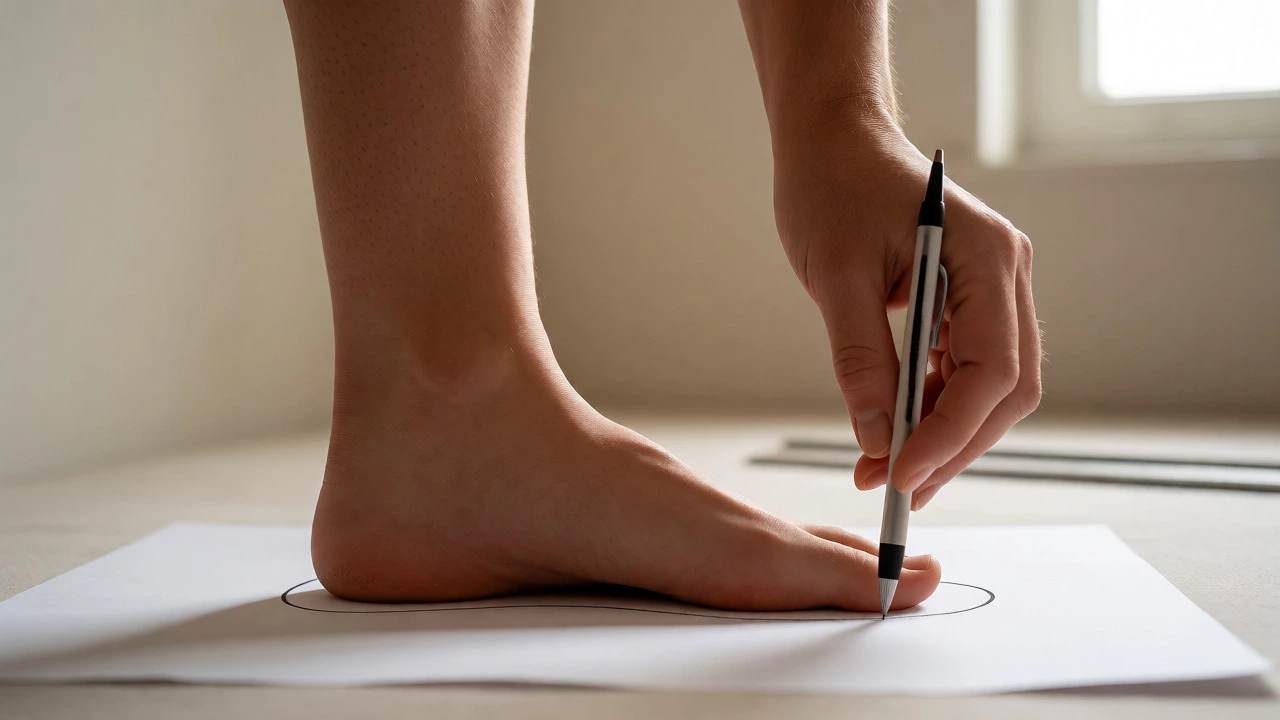
You don’t need a fancy podiatrist appointment to figure this out. You can do it at home in five minutes. Grab a piece of paper, a pen, and a ruler. Do this in the afternoon or evening, because feet swell throughout the day-a crucial factor if you’re planning to wear these boots for long days out.
- Stand up: Place the paper against a wall. Stand on it with your heel touching the wall. Weight-bearing is key; sitting won’t give you an accurate reading.
- Trace the outline: Keep the pen perpendicular to the paper. Trace around your foot. Don’t worry about being artistic; just get the shape.
- Measure the length: Measure from the wall to the longest toe (which might be your big toe or your second toe).
- Measure the width: Find the widest part of the trace (usually the ball of the foot). Measure straight across.
Once you have your width measurement in centimeters, compare it to a standard chart. For example, if you wear a UK size 6, a width of roughly 9.2 cm is standard (B). If you measure 9.7 cm or more, you are likely a D (Wide). If you hit 10.2 cm, you might need EE (Extra Wide). These numbers vary slightly by brand, so always check the specific retailer’s size guide.
Why Standard Boots Fail Irish Women
Here’s a cultural reality: many major high-street brands in Ireland, from Penneys to H&M, prioritize aesthetics over ergonomic diversity. They use a single "last" (the wooden form the shoe is built on) for all sizes. This means a size 6 and a size 9 have the same proportional width relative to their length. If you have a naturally broad forefoot, you end up buying a larger size to accommodate the width, resulting in a heel that slips out every time you take a step.
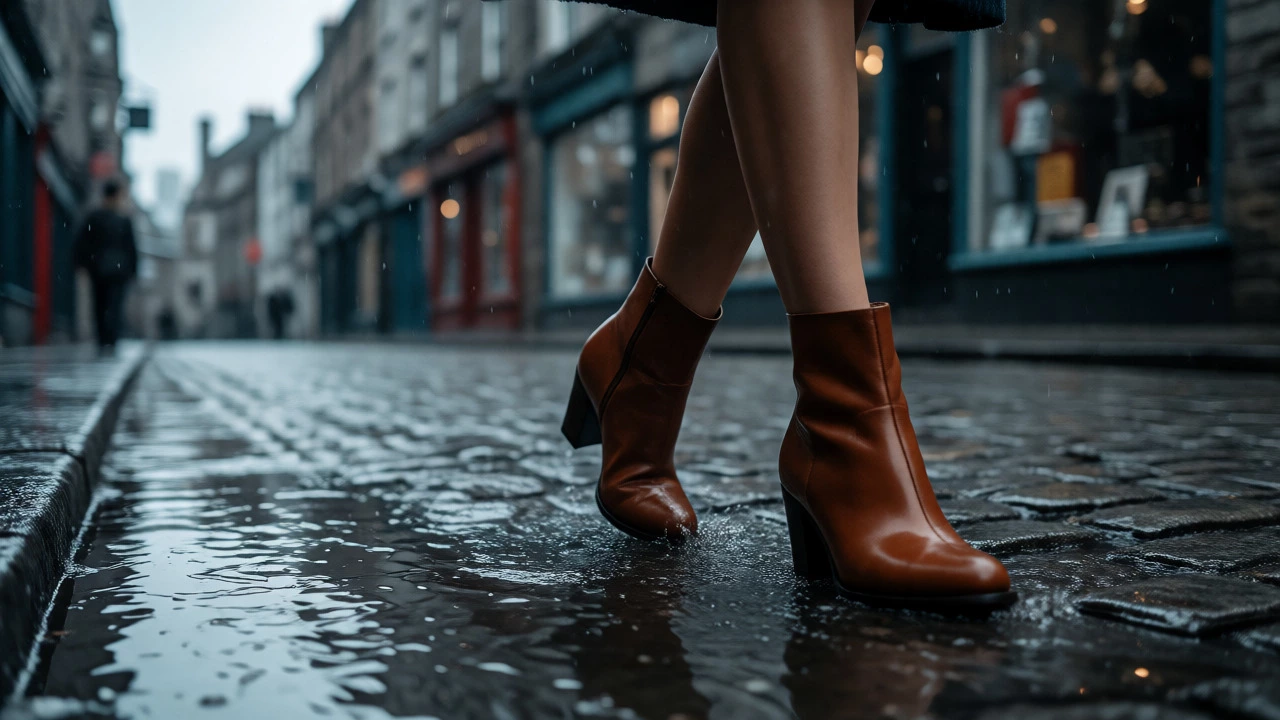
This issue is compounded by the types of boots popular in Ireland. Chelsea boots, for instance, rely on elastic panels for fit. If your foot is wide, those panels stretch too much, causing friction blisters on the sides of your ankles. Conversely, lace-up hiking boots might feel tight across the top of your foot (the instep), cutting off circulation during a hike in Wicklow Mountains National Park.
Signs You Need Wide-Fit Boots
If you’re unsure whether you’re truly wide-footed, look for these physical signs. They are more reliable than guessing based on how old your shoes are.
- Bulging sides: Look at your current favorite boots. Does the material bulge out at the ball of your foot? That’s a clear sign the shoe is too narrow.
- Numbness or tingling: If your toes fall asleep after two hours, you’re compressing nerves. This is common in narrow-toe-box designs.
- Corn formation: Corns between the fourth and fifth toes are classic indicators of crowding. If you’re getting corns despite keeping your feet clean and dry, it’s likely a fit issue, not hygiene.
- Difficulty lacing: If you can barely pull your boots closed, or if the tongue gaps open excessively when you try to tighten them, your foot volume exceeds the shoe’s capacity.
Where to Shop for Wide Fits in Ireland
Shopping for wide-fit footwear used to mean visiting orthopedic specialists in sterile clinics. Today, the landscape has changed. You can find stylish, weather-appropriate options right here on the island.
Specialist Retailers: Stores like Shoe Zone and Russell & Bromley often carry select styles in wide fits, though stock varies by location. However, for guaranteed variety, look at dedicated wide-fit shops such as Wide Fit Shoes (with online delivery across Ireland) or Clarks, which offers a "Comfort" range specifically engineered for wider feet. Clarks’ Unstructured collection, for example, uses softer leathers that adapt to foot shape better than rigid synthetics.
Online Options: Brands like Ecco and Gabor are increasingly available through Irish online retailers. Ecco, a Danish brand widely sold in Ireland, uses anatomical lasts that naturally accommodate wider feet without looking bulky. Their leather stretches slightly over time, molding to your foot while maintaining support.
Local Craftsmanship: Don’t overlook local artisans. In Galway and Dublin, there are bespoke shoemakers who can craft boots to your exact measurements. While pricier, investing in a pair of custom-made boots made from Irish leather can save you years of discomfort. Ask local cobblers if they offer "lasting" services-where they stretch existing boots to add width. This is a cost-effective way to rescue a pair of boots you already love.
Material Matters: Leather vs. Synthetic
For wide feet, the material of your boot is just as important as the width label. Natural materials breathe and stretch; synthetic ones don’t.
| Material | Stretch Potential | Best For |
|---|---|---|
| Full-Grain Leather | High | Daily wear; molds to foot shape over time |
| Suede/Nubuck | Medium-High | Fashion boots; softer but less water-resistant |
| Synthetic/Vegan Leather | Low | Budget options; retains original shape strictly |
| Rubber (Wellies) | None | Rain protection; requires precise width match |
In Ireland’s damp climate, waterproofing is non-negotiable. However, avoid thick rubber wellies if you have wide feet unless they are explicitly labeled "wide calf" and "wide foot." Standard Hunter boots, for example, are notorious for being narrow. Many Irish women switch to brands like Aigle or Lemaitre, which offer wider toe boxes and more forgiving ankle cuts.
Tips for Breaking In Wide-Fit Boots
Even if you buy the correct width, new boots need breaking in. Here’s how to do it without pain:
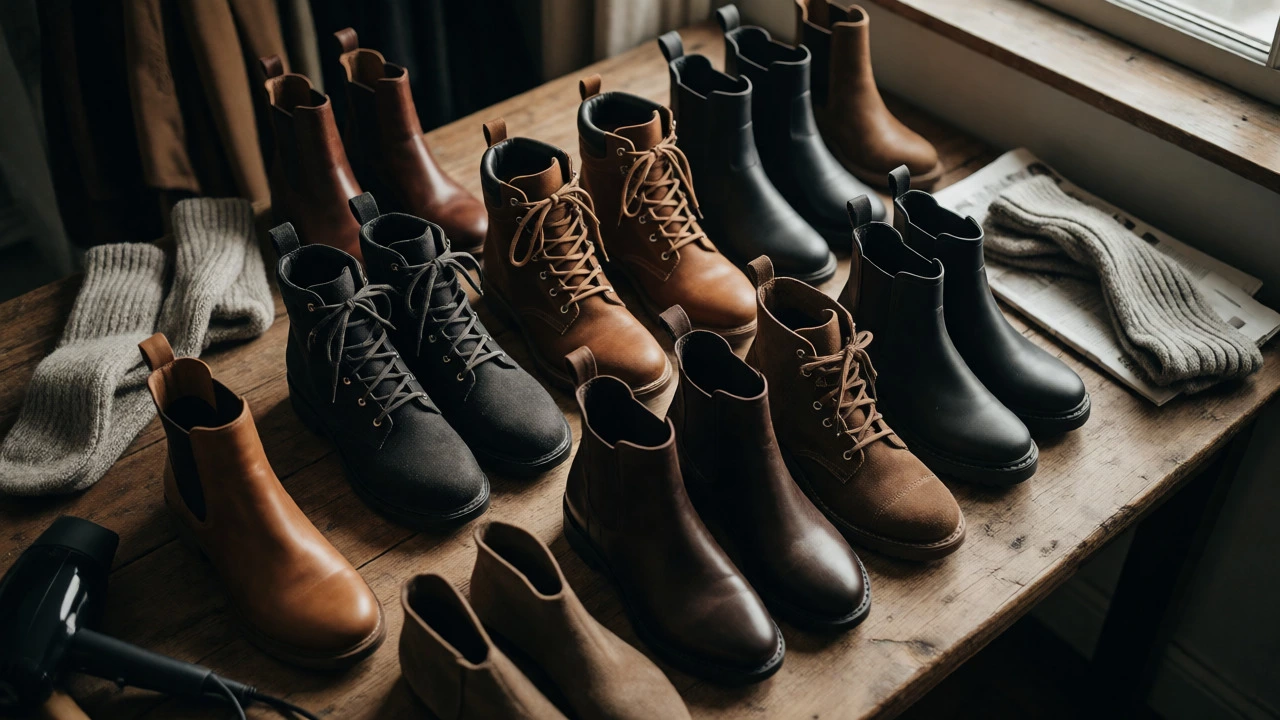
- The Thick Sock Method: Wear your thickest wool socks (perfect for Irish winters) and put on the boots. Use a hairdryer on medium heat to warm the tight areas (like the toe box) for 20 seconds. Walk around your house until they cool down. The leather expands and holds the new shape.
- Newspaper Stuffing: Crumple newspaper tightly and stuff it into the toe area overnight. This gently stretches the front of the boot where your toes need room.
- Gradual Wear: Don’t wear new boots for a full day at work immediately. Start with one hour, then two. Listen to your body. If you feel pressure points, stop before they become blisters.
Common Myths About Wide Feet
Myth 1: Wide feet look clumsy. False. Modern design has moved away from pointy, restrictive toes. Round-toe and square-toe boots are currently trending in Dublin fashion circles and are inherently better for wide feet. They provide natural space without looking "medical."
Myth 2: You can just wear a bigger size. No. Going up a size adds length, not just width. Your heel will slip, causing blisters on the back of your foot. Always solve width issues with width-specific shoes, not length.
Myth 3: Orthopedic shoes are ugly. Gone are the days of beige, clunky orthopedics. Brands now integrate supportive tech into sleek designs. You can get wide-fit ankle boots that look identical to high-fashion counterparts but feature cushioned insoles and broader lasts.
Final Thoughts on Comfort in Ireland
Living in Ireland means walking. Whether you’re commuting in Belfast, strolling through Phoenix Park in Dublin, or exploring the trails in Kerry, your feet bear the brunt of the terrain. Prioritizing a proper fit isn’t vanity-it’s health. Chronic foot compression can lead to bunions, hammertoes, and plantar fasciitis, conditions that are harder to treat later in life.
Take the time to measure your feet. Visit a specialist shop if possible. Try on boots in the afternoon. And remember, a wide foot is a strong foot. With the right gear, you’ll navigate every puddle and hillside with ease.
How do I know if my feet are wide?
You can determine this by measuring the width of your foot at the ball (widest part) and comparing it to a standard size chart. Generally, if your width is 1/4 inch or more above the standard measurement for your shoe size, you have wide feet. Physical signs include bulging shoe sides, numbness, or frequent corns between toes.
What does 'D' width mean for women's shoes?
In US and UK sizing systems, 'B' is the standard width for women. 'D' indicates a wide width, providing approximately 3-6mm more room across the forefoot and instep compared to standard shoes. 'EE' or 'W' denotes extra-wide.
Can I stretch narrow boots to fit wide feet?
Yes, leather boots can be stretched by a professional cobbler or using DIY methods like the hairdryer technique. However, synthetic materials and suede have limited stretch potential. Stretching usually adds only half a size in width, so if the boot is extremely tight, it may not be salvageable.
Are there specific brands in Ireland that sell wide-fit boots?
Yes. Brands like Clarks, Ecco, Gabor, and Josef Seibel are widely available in Ireland and frequently offer wide-fit options. Specialist online retailers also cater specifically to wide feet, delivering across the country.
Do wide feet cause health problems if ignored?
Chronic wearing of narrow shoes can lead to bunions, neuromas (nerve damage), hammertoes, and ingrown toenails. It can also alter your gait, leading to knee, hip, or lower back pain over time.