T-Shirt History & Trivia Quiz
How well do you know the story behind the world's most worn garment? Take this quick quiz to find out!
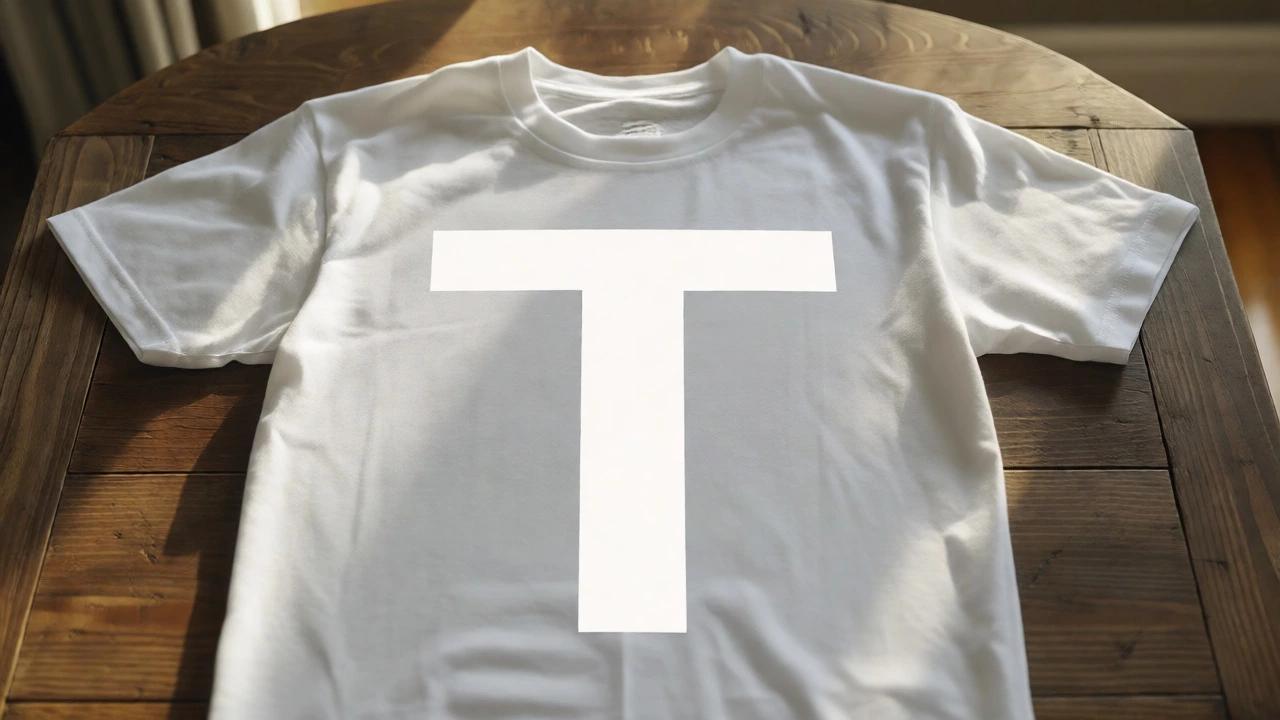
The name comes from the shape when laid flat.
Why is it called a "T-shirt"?
You’re standing in a fitting room on Grafton Street, holding up a plain white cotton tee. It’s comfortable, it’s versatile, and you probably own ten of them. But have you ever stopped to ask why is it called a T-shirt? It’s not because it was invented by someone named Tom, nor does it stand for "Training Shirt" in any official dictionary sense. The answer lies in geometry, military logistics, and a bit of Hollywood flair that changed how we dress across Ireland and the world.
Quick Summary: Why is it called a T-shirt?
• The name comes from the garment's shape when laid flat, which resembles the letter "T". • Originally issued as underwear for US Navy sailors in 1913, it became outerwear after WWII. • In Ireland, the term stuck globally due to American cultural influence via cinema and music. • Before being called a T-shirt, it was known as an undershirt or union suit component. • The transition from underwear to casual wear happened in the 1950s thanks to actors like Marlon Brando.
The Geometry of the Name
Let’s cut straight to the chase. The name "T-shirt" is purely descriptive. If you take a standard short-sleeved shirt with no collar and lay it flat on your bed in your apartment in Dublin, look at the outline. The vertical body of the shirt forms the stem of the letter "T," while the sleeves extend horizontally to form the crossbar. That’s it. There is no hidden acronym, no secret brand code. It is literally a shirt shaped like a T.
This might seem obvious now, but context matters. Before this naming convention took hold, men wore complex layers of wool and linen. A "shirt" implied something with a collar, buttons, and cuffs-something formal enough to be seen. The garment we call a T-shirt today lacked all these features. It was a simple tube of fabric with two holes for arms. Because it didn't fit the traditional definition of a shirt, people needed a new way to describe it. Calling it a "T-shirt" distinguished it immediately from the button-down shirts hanging in your wardrobe next to your Harris Tweed jackets.
From Underwear to Outerwear: A Military Origin Story
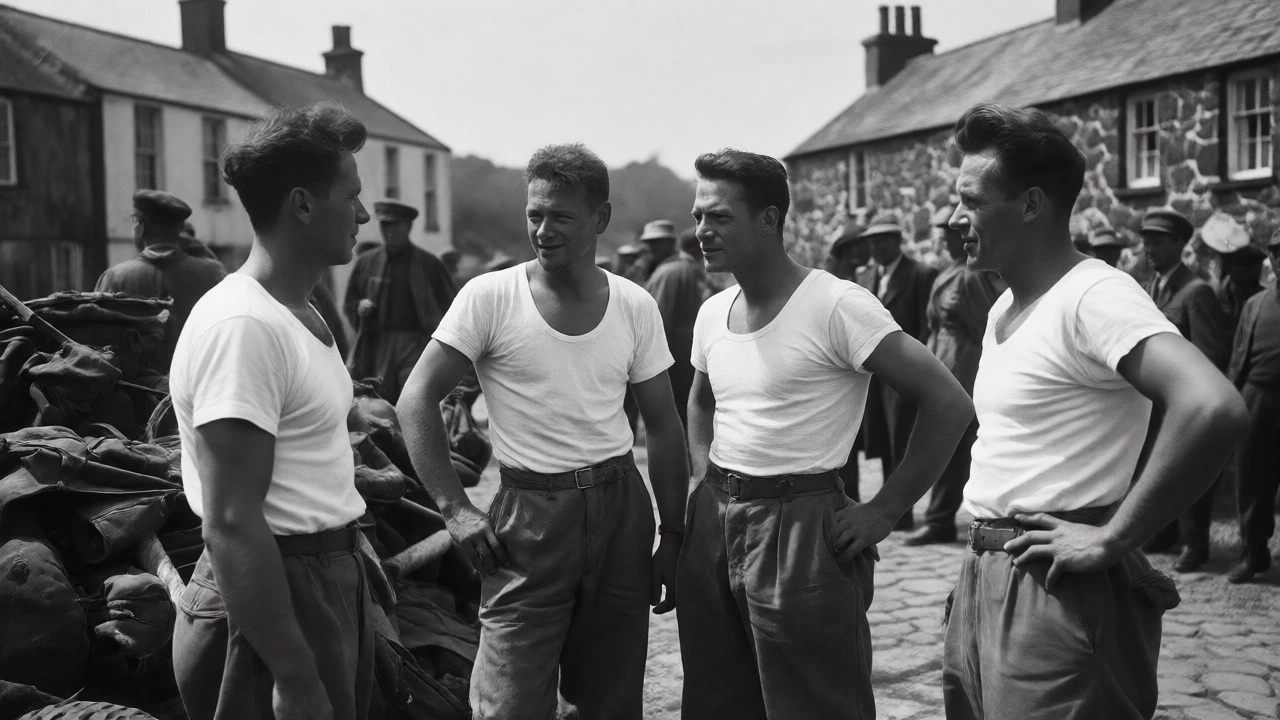
To understand why this specific piece of clothing exists, you have to look back to the early 20th century. Specifically, 1913. The United States Navy decided that sailors working in hot tropical climates needed something lighter than their heavy wool uniforms. They introduced a lightweight, short-sleeved cotton jersey garment as standard issue underwear. At this stage, nobody in Cork or Galway would have dreamed of wearing it out to a pub. It was strictly undergarment territory, worn beneath the uniform.
World War II changed everything. American soldiers stationed overseas, including those who passed through ports near Ireland during the Atlantic campaigns, found themselves needing to shed their heavy gear. They wore these light cotton tees as standalone tops. Locals in Europe saw American GIs running around in these simple garments. The practicality was undeniable. It was cheap, durable, and easy to wash. By the time the war ended, the T-shirt had crossed the ocean not just as a product, but as a symbol of American casualness.
Hollywood and the 1950s Shift
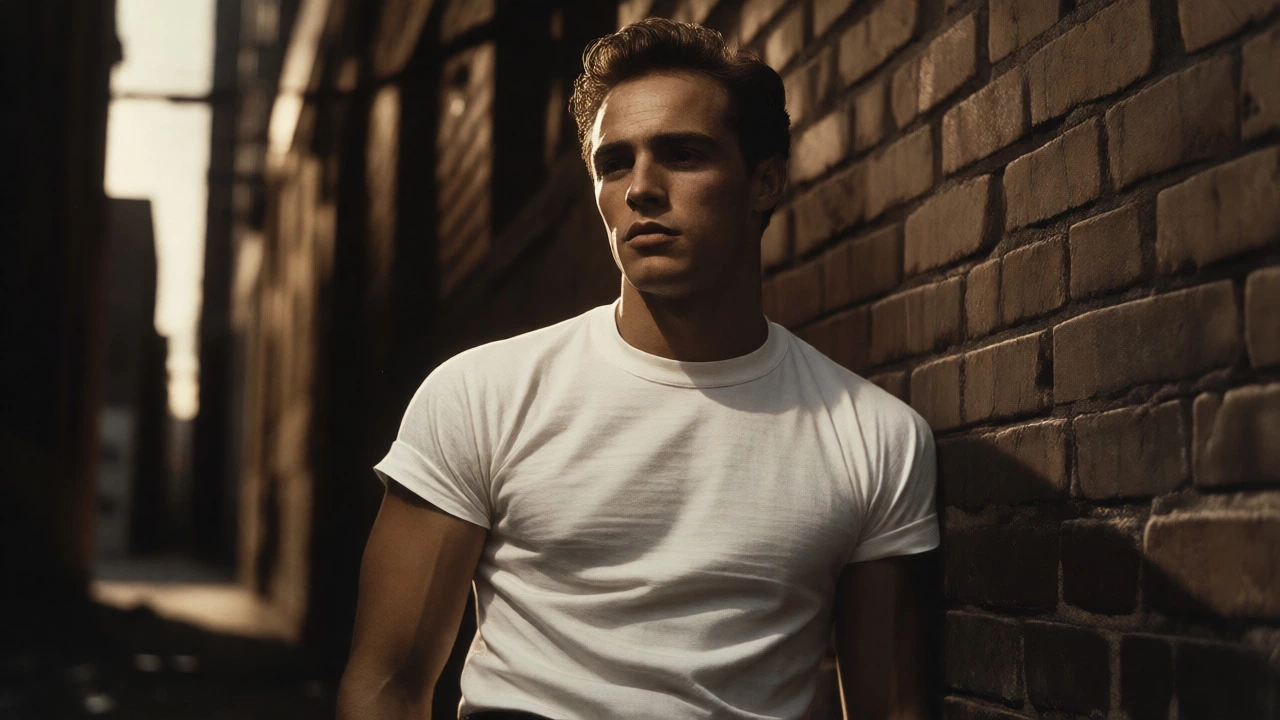
If the military made the T-shirt common, Hollywood made it cool. This is where the cultural shift really hits home for many Irish readers who grew up watching American films. In 1951, Marlon Brando appeared in "A Streetcar Named Desire" wearing a tight white T-shirt. He looked rugged, rebellious, and incredibly attractive. Suddenly, the idea that a T-shirt was just underwear vanished. It became a statement of masculinity and non-conformity.
A few years later, James Dean did the same in "Rebel Without a Cause." These images traveled fast. In Ireland, where traditional fashion norms were still quite conservative in the mid-20th century, seeing American icons wear collars-less shirts signaled a break from the past. You didn’t need to be a sailor or a soldier to wear one; you could just be a teenager wanting to look like the movies. This era cemented the T-shirt as a staple of youth culture, bridging the gap between utility and style.
The Evolution of Fabric and Fit
Not all T-shirts are created equal, and understanding the materials helps explain why the term stuck. The original naval shirts were made of heavy-duty cotton jersey. Today, the market in Ireland offers everything from thin polyester blends for gym sessions in the Aviva Stadium to thick, heavyweight cotton for everyday wear in rainy weather.
When you shop in Dublin city centre, you’ll notice distinct categories:
- Classic Cotton Jersey: The standard breathable fabric used since the 1913 naval issue. Ideal for mild Irish summers.
- Heavyweight Cotton: Thicker fabric (often 180-240 GSM) that holds its shape better. Popular among brands focusing on durability rather than fast fashion.
- Performance Blends: Synthetic mixes designed for moisture-wicking. Essential for hikers tackling the Wicklow Way or runners along the Grand Canal.
The fit has also evolved. Early models were boxy and loose, designed to fit over other clothes. Modern cuts are slimmer, often tailored to show off physique. Yet, despite these changes in material and cut, the fundamental "T" shape remains. This consistency is why the name has survived over a century of fashion trends.
Global Spread and Local Adoption in Ireland
Ireland adopted the T-shirt with enthusiasm once global supply chains stabilized. In the 1960s and 70s, as tourism boomed, souvenir shops began printing logos on blank tees. Suddenly, the T-shirt wasn’t just a garment; it was a billboard. Walking down O’Connell Street, you’d see visitors wearing shirts with shamrocks, Guinness logos, or band names. This turned the T-shirt into a tool for identity expression.
Today, local Irish designers use the canvas of the T-shirt to promote everything from traditional Gaelic sports to modern street art. The garment’s neutrality makes it perfect for customization. Unlike a jacket or jeans, which have structural constraints, a T-shirt is a blank slate. This versatility explains its dominance in the Irish retail sector. Whether you’re buying a premium organic cotton tee from a boutique in Temple Bar or a bulk pack from a supermarket, the underlying reason for the name remains tied to its simple, unmistakable silhouette.
Common Misconceptions About the Name
Despite the clear geometric explanation, myths persist. Some people believe "T" stands for "Training," linking it solely to sportswear. While true that athletes wear them, the name predates their widespread use in gyms. Others think it refers to the "T" neckline, but crew necks are just one variation; V-necks and scoop necks are also called T-shirts if they lack collars and buttons. The defining feature isn't the neck hole-it's the lack of front closure and the overall shape.
Another myth is that it was invented in France. While French sailors wore similar knit shirts, the specific term "T-shirt" and the mass production model originated in the US. However, fashion is global. Today, manufacturing happens worldwide, including in countries with strong textile histories. The label "Made in..." might say Bangladesh or Vietnam, but the design DNA is rooted in that 1913 naval innovation.
Why the Term Stuck When Others Faded
Fashion terms come and go. Remember "jersey" or "undershirt"? Those terms faded because they described function or material, not form. "T-shirt" describes form. And form is permanent. As long as humans have shoulders and torsos, the T-shape will exist. This linguistic efficiency is why the term survived the transition from underwear to outerwear, from military issue to high fashion.
In Ireland, where language and storytelling are deeply valued, having a straightforward name for such a ubiquitous item is satisfying. It doesn’t require a glossary to understand. You see it, you know what it is. This clarity helped the T-shirt become the most worn garment on the planet. From the boardwalks of New York to the beaches of Donegal, everyone knows what a T-shirt is because the name tells you exactly what you’re getting.
Caring for Your Tees in the Irish Climate
Living in Ireland means dealing with damp air and unpredictable rain. Your T-shirts take a beating. To keep them looking fresh and maintaining their "T" shape, follow these tips:
- Wash Cold: Hot water shrinks cotton. Stick to 30°C cycles to preserve the size.
- Avoid Direct Sun Drying: While tempting on a sunny day in July, UV rays fade prints quickly. Air dry indoors or in shade.
- Turn Inside Out: This protects graphics and reduces friction on the outer fabric.
- Store Folded: Hangers stretch the necklines over time, ruining the clean line of the "T" top bar. Folding preserves the structure.
Taking care of your basics ensures they last longer. Given the cost of living pressures in Ireland recently, making clothes last is more important than ever. A well-maintained T-shirt can serve you for years, whether you’re using it for lounging at home or layering under a blazer for work.
Was the T-shirt originally considered underwear?
Yes, absolutely. When first introduced by the US Navy in 1913, it was strictly classified as underwear. Wearing it alone in public was considered improper until the mid-20th century.
Does the "T" stand for Training?
No. While commonly associated with training and sports, the "T" refers to the visual shape of the garment when laid flat, resembling the capital letter T.
Can I wear a T-shirt to a formal event in Ireland?
Generally, no. Traditional Irish formal wear still requires collared shirts. However, in creative industries or casual workplaces, a high-quality, solid-colored T-shirt under a blazer is becoming more acceptable.
Why do some T-shirts shrink so much?
Most classic T-shirts are made of cotton, a natural fiber that contracts when exposed to heat and agitation. Pre-shrunk options exist, but proper washing techniques significantly reduce shrinkage.
Are there different types of T-shirts besides the basic cut?
Yes, variations include V-necks, tank tops, raglan sleeves, and henleys. However, only those without collars or front buttons typically retain the strict "T-shirt" designation in technical apparel contexts.