
Hoodie Terminology Timeline
Select a time period to see how the term for this garment evolved and what it meant culturally.
Click on a time period above to begin.
Walk through any university campus in Dublin or catch a bus in Cork on a rainy Tuesday, and you’ll see it: the hoodie is a pullover garment with a hood attached to the neckline, typically made of cotton fleece. It’s the default uniform for students, commuters, and anyone trying to survive the damp Irish wind. But have you ever stopped to ask why we call it that? It seems obvious now, but the term didn’t always exist. In fact, for decades, this garment was known by a much clunkier name.
In Ireland, where weather can change from bright sunshine to sideways rain in five minutes, the hoodie isn’t just fashion; it’s survival gear. Yet the word itself has a specific lineage that connects American industrial needs to global street culture. Understanding where "hoodie" comes from helps explain why it became so dominant in our closets. It’s not just about warmth; it’s about identity, comfort, and a bit of linguistic evolution that happened faster than most people realize.
The Original Name: Hooded Sweatshirt
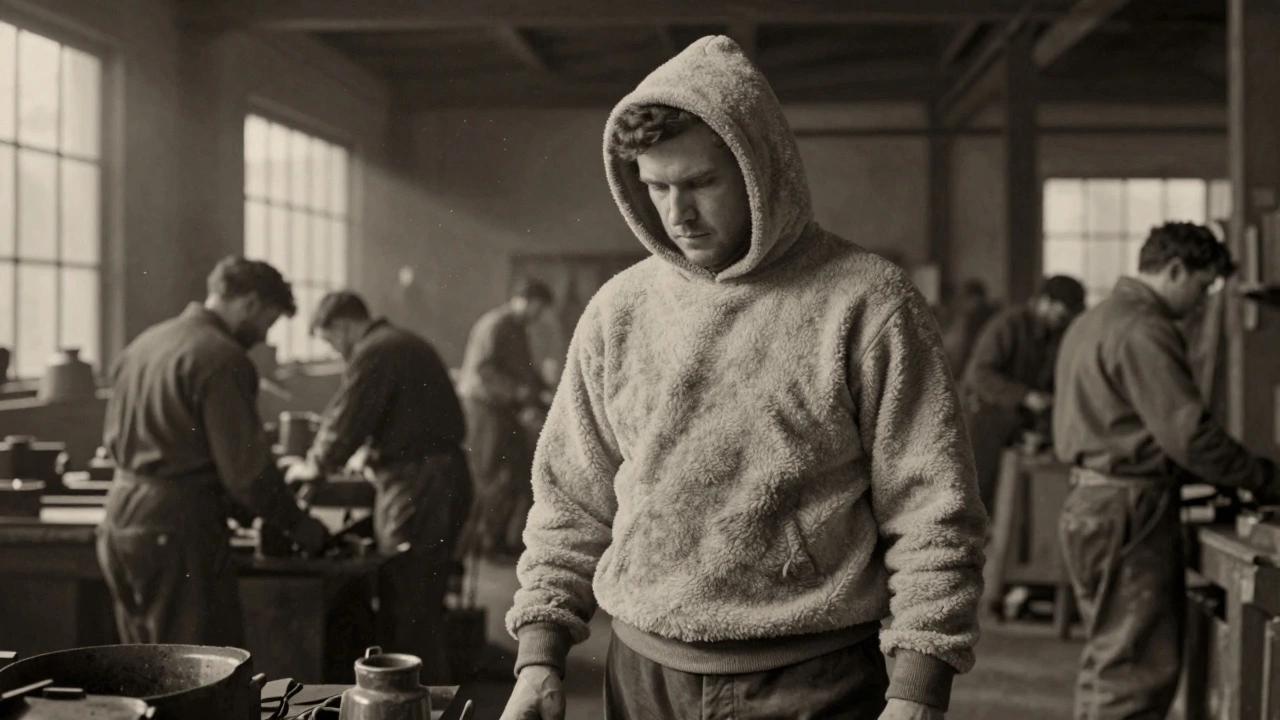
Before it was a hoodie, it was simply a hooded sweatshirt is a long-sleeved shirt with a hood designed to protect the head from cold or rain. This distinction matters because the early versions weren't really "sweatshirts" in the athletic sense. They were work clothes. In the early 20th century, workers in the United States needed protection from the elements while doing outdoor labor. The hood was a practical addition to keep heads dry and warm.
For most of the 1900s, if you bought one, you asked for a "hooded sweatshirt." The abbreviation "hoodie" didn’t enter common vocabulary until later. Think of it like how we say "mobile phone" versus "cell phone," or "biscuit" versus "cookie." The full term described the function; the shortened term captured the vibe. In Ireland, we’ve adopted the shorter form almost exclusively. You rarely hear someone asking for a "hooded sweatshirt" at a shop in Grafton Street. We just want the hoodie.
When Did the Shortened Term Stick?
The shift from "hooded sweatshirt" to "hoodie" happened gradually during the mid-20th century. By the 1960s and 70s, the garment had moved from factory floors to campuses and skate parks. As it became a staple of youth culture, people naturally started clipping words. English is great at this. We don’t say "automobile," we say "car." We don’t say "refrigerator," we say "fridge." So, dropping "ed sweatshirt" from "hooded sweatshirt" felt natural.
There isn’t one single moment where a dictionary declared, "Today, we call it a hoodie." Instead, it was organic usage. If you look at vintage ads from the late 60s, you’ll still see "hooded sweatshirt." But by the 80s, as hip-hop and skateboarding exploded in popularity, "hoodie" was the word on everyone’s lips. In Ireland, this cultural wave hit hard in the 90s. Brands like Champion and Nike became household names, and with them, the term "hoodie" solidified its place in our daily language.
Ireland’s Relationship with the Hoodie
Let’s be honest: the hoodie is practically part of the Irish national dress alongside the green jersey. Why? Because of the weather. Living in Dublin, you know that a jacket without a hood is often insufficient. A light drizzle can soak through a standard denim jacket, but a hood offers immediate shelter. For students in Galway or Limerick, the hoodie is essential for walking across campus between lectures when the wind picks up off the Atlantic.
Culturally, the hoodie also represents a certain kind of relaxed confidence. It’s not formal, but it’s not sloppy either. It fits the Irish ethos of being comfortable and unpretentious. Whether you’re heading to a pub in Temple Bar or sitting in a lecture hall at Trinity College, a hoodie signals that you’re there to be present, not to show off. It’s versatile enough to pair with jeans for a night out or joggers for a lazy Sunday morning.
Common Misconceptions About the Name
You might think the word "hoodie" came from the "hood" part of the garment alone. While that’s true, some people assume it was named after a specific person or brand. That’s not the case. There was no "Mr. Hoodie" who invented it. It’s purely a descriptive abbreviation. Another misconception is that it’s an Americanism that was forced upon us. Sure, it originated in the US, but languages evolve locally. We adopted it because it fit our speech patterns. It’s short, punchy, and easy to say.
Some older generations in Ireland might still use the term "sweatshirt" generically, even if the item has a hood. This is a common slip of the tongue. If you ask your grandmother for a "sweatshirt," she might hand you a plain crewneck, even if you wanted a hooded version. Context usually saves the day, but it highlights how the terminology is still settling into everyday usage for some people.
How the Term Has Evolved in Fashion
Today, "hoodie" covers a wide range of styles. It’s no longer just a basic cotton pullover. We have zip-up hoodies, oversized hoodies, cropped hoodies, and even luxury hoodies from high-end designers. The term has become an umbrella for any garment with a hood attached to a sweatshirt-style body. This flexibility is why the word stuck. If it had been called something more specific, like "fleece hood top," it might not have adapted as well to new trends.
In the Irish market, you’ll find everything from €30 basics at Primark to €150+ designer pieces at stores like Free People or local boutiques in Dublin. The price tag doesn’t change the name. It’s still a hoodie. This consistency in naming makes shopping easier. You know exactly what you’re looking for, regardless of the brand or price point.
| Time Period | Common Term | Context/Usage |
|---|---|---|
| Early 1900s - 1950s | Hooded Sweatshirt | Workwear, industrial settings, literal description |
| 1960s - 1970s | Hooded Sweatshirt / Hoodie (emerging) | Sports, casual wear, beginning of abbreviation |
| 1980s - 1990s | Hoodie | Streetwear, hip-hop, skate culture, mainstream adoption |
| 2000s - Present | Hoodie | Universal fashion term, includes luxury and fast fashion variants |

Why the Short Word Won Out
Linguistically, shorter words are easier to process. When you’re rushing out the door in the morning, grabbing your "hoodie" takes less mental effort than saying "hooded sweatshirt." This efficiency is key. In a busy city like Dublin, where time is precious, we favor brevity. The same applies to other clothing items. We say "tee" instead of "T-shirt" (though T-shirt is still very common), and "jeans" instead of "denim trousers." The pattern is clear: we prefer the snappier option.
Additionally, the sound of "hoodie" is pleasing. It ends with a soft 'ee' sound, which feels friendly and approachable. Compare that to "sweatshirt," which ends with a harder 't' sound. Subtle phonetic differences can influence how popular a word becomes. In Ireland, where conversation is central to social life, words that flow easily tend to stick around.
Practical Tips for Irish Wearers
Since the hoodie is such a staple here, here are a few tips to make the most of it in the Irish climate:
- Layering is key: In winter, wear a thermal base layer under your hoodie. This traps heat and keeps you warm without needing a bulky coat all the time.
- Check the material: For heavy rain, look for water-resistant fabrics. Not all hoodies repel water, so check the label if you plan to walk in the wet.
- Size up for layering: If you plan to wear a hoodie over a sweater, go one size up. Irish winters can be chilly, and you need room for extra layers.
- Invest in quality zippers: Zip-up hoodies are great for regulating temperature. Make sure the zipper is sturdy, as they get used a lot in variable weather.
Whether you’re buying a new hoodie online or picking one up in a store in Belfast or Cork, remember that the name is just the start. The real value is in how it serves you through the seasons. It’s a simple garment with a complex history, and now you know exactly why we call it what we do.
Is "hoodie" an official dictionary word?
Yes, "hoodie" is recognized in major dictionaries, including Oxford and Merriam-Webster. It is defined as a pullover garment with a hood. The entry usually notes that it is derived from "hooded sweatshirt."
Did the term originate in Ireland?
No, the term originated in the United States. However, like many English-speaking countries, Ireland adopted the shortened form quickly due to its practicality and ease of use in everyday conversation.
What is the difference between a hoodie and a sweatshirt?
A sweatshirt is a general term for a thick, loose-fitting pullover shirt. A hoodie is a specific type of sweatshirt that includes a hood. All hoodies are sweatshirts, but not all sweatshirts are hoodies.
Why do people still say "hooded sweatshirt"?
Some people, particularly older generations, may use the full term out of habit or precision. It is also common in formal contexts or product descriptions where clarity is prioritized over brevity.
Is the hoodie popular in other countries too?
Yes, the hoodie is globally popular. It is worn in Europe, Asia, and the Americas. The term "hoodie" is widely understood in English-speaking countries and is increasingly used in non-English contexts as well.