
Crocs Suitability Checker
Answer these questions to see if Crocs fit your job requirements.
Select your details and click "Check Suitability" to see our recommendation.
You’ve probably noticed it whether you’re grabbing a coffee in Temple Bar or dining at a high-end bistro in Dún Laoghaire. The staff behind the counter, the chefs in the kitchen, and the runners darting between tables are almost universally wearing Crocs. It looks odd at first glance-like someone forgot to change out of their slippers before starting a shift. But if you spend five minutes talking to anyone working in Ireland’s hospitality sector, from the bustling pubs of Galway to the fast-paced kitchens in Dublin city centre, you’ll quickly realize this isn’t about fashion. It’s about survival.
So, why do restaurant workers wear Crocs? The answer lies in a perfect storm of practicality, safety regulations, and the unique demands of standing on hard floors for twelve-hour shifts in wet, slippery environments. For the average worker in Ireland, where rain is a constant companion and health and safety standards are strictly enforced, these foam clogs have become the unofficial uniform of the trade.
The Reality of Standing All Day in Irish Kitchens
Let’s talk about the physical toll of working in a restaurant. If you’re a line cook or a server in places like The Market Hall in Dublin or a busy gastro-pub in Cork City, you aren’t just walking; you’re standing still while chopping vegetables, leaning over grills, or waiting for orders. The average hospitality worker in Ireland spends between eight and ten hours on their feet daily, often seven days a week during peak seasons.
Traditional leather shoes or even standard trainers offer little support for this kind of static load. Your arches collapse, your lower back starts to ache by hour three, and by hour six, every step feels like walking on nails. This is where the design of Crocs comes into play. They feature a proprietary resin material called Croslite™, which is lightweight and provides cushioning that absorbs impact. Unlike rigid soles that bounce energy back up your legs, Croslite compresses slightly, reducing fatigue. For a waiter navigating the cobblestones outside a pub in Kilkenny and then transitioning to polished concrete inside, that shock absorption is priceless.
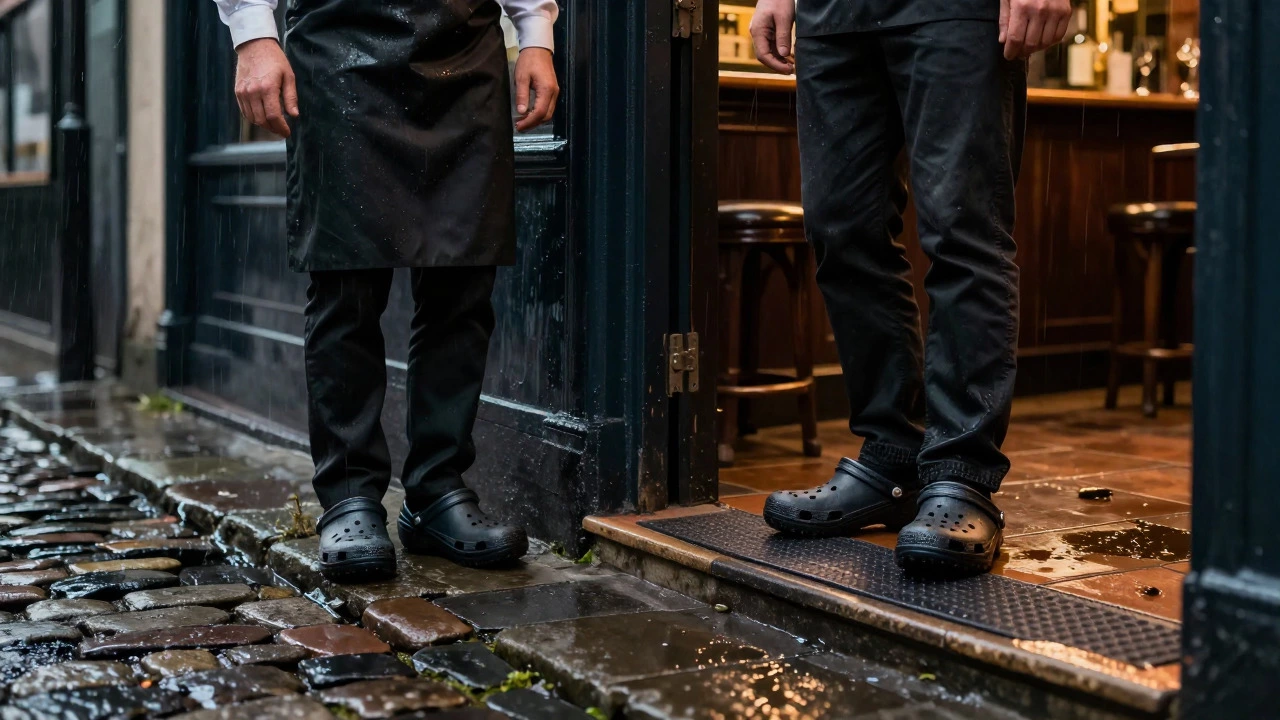
But comfort is only half the equation. In Ireland, where HSE (Health and Safety Authority) guidelines are taken seriously, footwear must also meet specific safety criteria. Many workers opt for the Crocs Work Collection, specifically models like the Bistro or On-The-Clock. These aren’t your garden-variety beach sandals. They are designed with slip-resistant treads that grip wet tiles-a critical feature given how often Irish kitchens see spills of oil, water, and sauce. A slip-and-fall accident can end a career before it starts, and the traction provided by these specialized soles significantly reduces that risk.
Hygiene and Speed: Why Foam Beats Leather
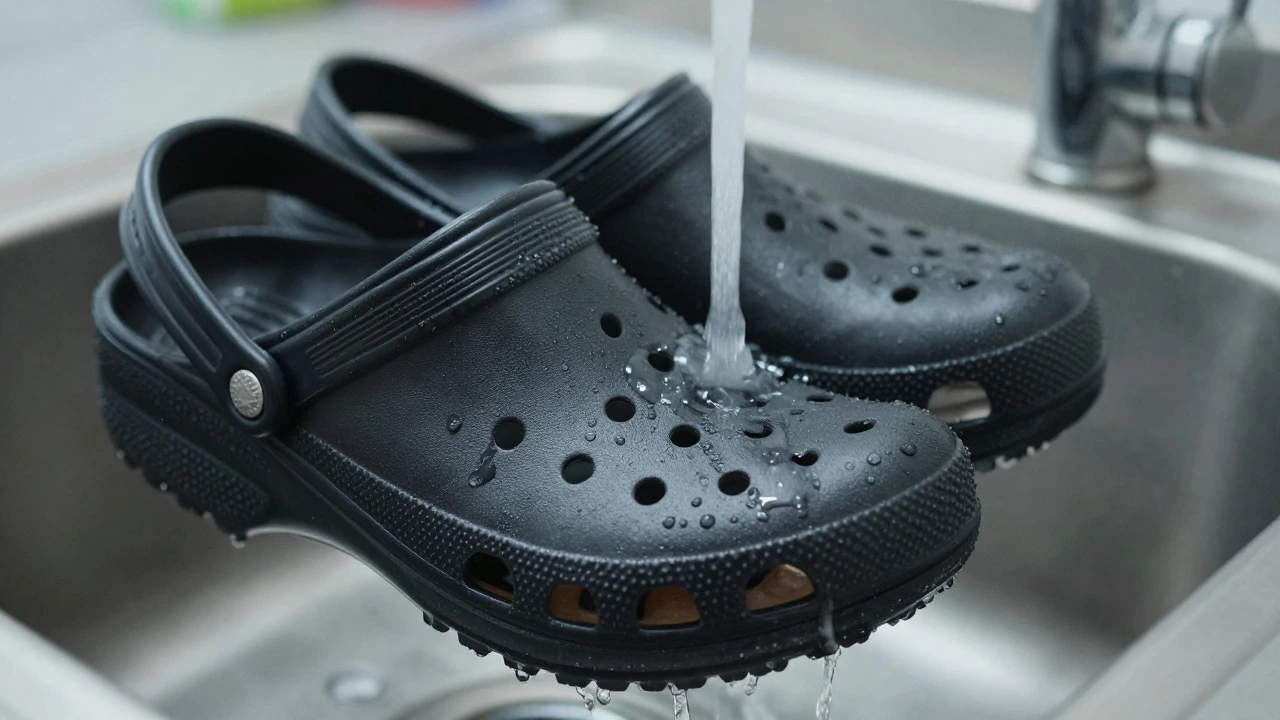
In a professional kitchen, cleanliness is non-negotiable. Spills happen constantly. A splash of boiling stock, a drop of raw chicken juice, or a puddle of cleaning solution can ruin traditional footwear within minutes. Leather requires conditioning, drying, and careful maintenance. Canvas absorbs liquids and harbors bacteria. Crocs, however, are made from a closed-cell resin that is naturally resistant to stains and odors.
Imagine finishing a double shift at a popular spot like Chapter One in Dublin. Your feet are sweaty, your shoes are soaked, and you need to get home. With leather boots, you’re looking at a long drying process, potential mold growth, and an unpleasant smell lingering for days. With Crocs, you rinse them under a tap, wipe them down, and they’re ready for tomorrow. This ease of cleaning is a massive factor for workers who may not have access to lockers or dry storage areas at work.
Furthermore, the quick-drying nature of the material is essential in Ireland’s climate. Coming in from the rain, stepping onto wet mats, and moving through steam-filled kitchens means your footwear is constantly exposed to moisture. Traditional shoes stay damp, leading to blisters and fungal infections. The ventilation holes in classic Crocs allow air to circulate, keeping feet cooler and drier than enclosed sneakers, although many workers plug these holes with metal inserts for added protection against falling objects.
Safety Features You Might Not Notice
While they look casual, the work-specific versions of Crocs are engineered to meet rigorous safety standards. In Ireland, employers often require footwear that complies with EN ISO 20345 standards for protective footwear. The Crocs Bistro model, for instance, features a toe cap that protects against crushing injuries from dropped pans or heavy pots. It also has a midfoot strap that keeps the shoe securely on your foot when running across slippery surfaces.
Consider the environment of a busy brewery tour in Guinness Storehouse or a distillery in Midleton. Floors are often slick with condensation or spilled beverages. The tread pattern on work Crocs is designed to channel liquid away from the sole, maintaining grip. This is far superior to smooth-soled dress shoes or worn-out trainers. Additionally, the materials used are often anti-static and fuel-resistant, which might seem irrelevant for a café but is crucial in industrial kitchen settings where gas lines and electrical equipment are present.
Another hidden benefit is the ease of removal. In case of an emergency, such as a chemical spill or a fire, being able to kick off your shoes instantly can be life-saving. While rare, these scenarios are part of risk assessments in large hospitality venues. The slip-on design allows for rapid evacuation without fumbling with laces or buckles.
The Cultural Shift: From Stigma to Standard
A decade ago, wearing Crocs to work was frowned upon. They were seen as lazy, unprofessional, and distinctly “un-Irish” in a culture that values smart attire. However, the pandemic accelerated a shift in workplace norms. As hygiene became paramount, the disposable, easy-to-clean nature of Crocs gained acceptance. Today, it’s common to see entire teams in Limerick or Waterford wearing coordinated colors of work Crocs, turning a functional choice into a team identity.
This cultural acceptance has been bolstered by endorsements from celebrity chefs and industry leaders. When respected figures in the culinary world adopt a product, it removes the stigma. Now, walking into a trendy brunch spot in Smithfield, you won’t bat an eye at the staff’s footwear. Instead, you recognize it as a sign of a pragmatic, safety-conscious employer who prioritizes employee well-being over outdated dress codes.
Moreover, the affordability of Crocs plays a role. High-quality safety boots can cost upwards of €150-€200. For entry-level workers earning minimum wage, this is a significant investment. Crocs, while not cheap, offer a durable alternative that lasts longer than budget trainers and costs less than premium safety footwear. This economic factor makes them accessible to a broader range of employees across Ireland’s diverse hospitality landscape.
Choosing the Right Pair for Your Role
Not all Crocs are created equal for work. If you’re considering making the switch, it’s important to choose the right model based on your specific role. Here’s a breakdown of what to look for:
- For Chefs and Kitchen Staff: Opt for the Crocs Bistro or On-The-Clock. These models have closed toes, slip-resistant soles, and often include a heel strap for security. Look for ones with a reinforced toe cap if you work with heavy equipment.
- For Servers and Bartenders: The classic Classic Clog with the pivot turn strap works well. Ensure the tread is intact and consider adding custom insoles for extra arch support if you stand for long periods.
- For Outdoor Roles: If you’re managing deliveries or working at outdoor events in Bord Gáis Energy Theatre, look for waterproof variants with deeper treads to handle mud and gravel.
Remember to check your employer’s policy. Some high-end establishments may still require black leather shoes, but many modern restaurants in Ireland have relaxed these rules in favor of practicality. Always prioritize safety certifications over style.
Maintenance Tips for Longevity
To keep your work Crocs in top condition, follow these simple steps:
- Daily Rinse: After each shift, rinse off any food particles or grease with warm water and mild soap.
- Deep Clean Weekly: Use a soft brush to scrub the treads and remove embedded dirt. Avoid harsh chemicals that can degrade the Croslite material.
- Dry Properly: Let them air dry away from direct heat sources like radiators, which can warp the shape.
- Replace Insoles: Over time, the footbeds will compress. Replace them with supportive orthotic insoles to maintain comfort and prevent foot pain.
- Inspect Treads: Check for wear and tear regularly. Once the slip-resistant pattern is smoothed out, it’s time for a new pair.
Are Crocs allowed in all restaurants in Ireland?
Not necessarily. While many modern and casual eateries accept work-specific Crocs, some high-end fine dining establishments may still enforce a strict dress code requiring leather shoes. Always check with your manager or HR department before purchasing.
Do Crocs provide enough protection for kitchen work?
Yes, if you choose the correct model. The Crocs Bistro and On-The-Clock lines are designed to meet safety standards, offering slip resistance, toe protection, and durability suitable for commercial kitchens. Avoid classic open-toe styles for hot environments.
How much do work Crocs cost in Ireland?
Prices vary depending on the retailer and model, but generally range from €40 to €70. They are often available at major sports retailers, online stores, and specialty shoe shops across Dublin, Cork, and other cities.
Can I wear regular Crocs to work?
It depends on your job. For low-risk roles like front-of-house in a quiet café, classic Crocs might suffice. However, for kitchen work or busy bars, it’s highly recommended to invest in the work-specific collection for better grip, support, and safety features.
Are there alternatives to Crocs for hospitality workers?
Yes, brands like Skechers Work, Dansko, and Birkenstock Professional offer similar benefits with different designs. Skechers provides memory foam comfort, Dansko offers sturdy clogs, and Birkenstock focuses on ergonomic support. Each has its own advantages depending on personal preference and specific job requirements.