Irish Shoe Safety Validator
Check Your Shoes for Ireland
Select the features your shoes have to determine if they're safe for Irish weather and terrain.
In Ireland, the wrong pair of shoes can turn a simple commute into a soggy, slippery nightmare. With rain falling an average of 220 days a year and cobblestone streets still common in Galway, Cork, and Derry, your footwear isn’t just about style-it’s about survival. Whether you’re walking to a Dublin office, navigating the wet grass at a local market, or stepping off a bus in Sligo after a long shift, choosing the right shoes matters. And just as important: knowing what to avoid can save you from aching feet, ruined socks, and even a trip to the hospital.
Don’t Wear Flat Leather Shoes
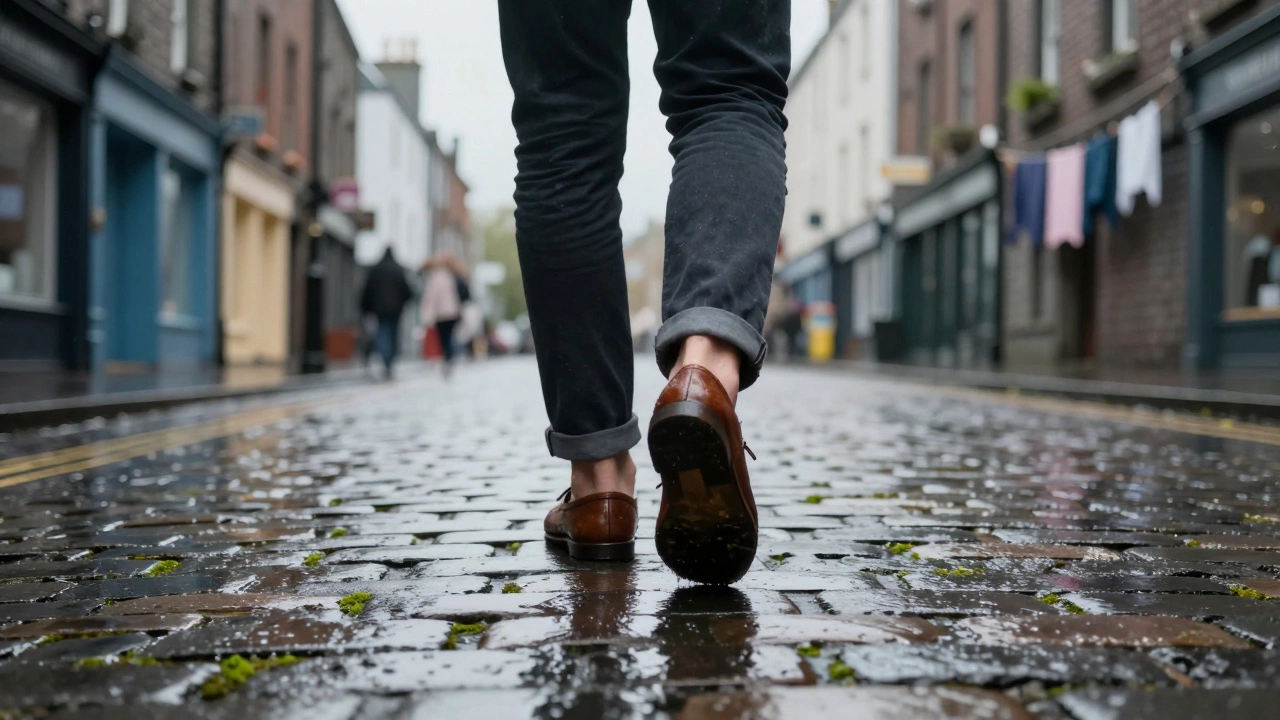
Flat leather shoes-those sleek, minimalist oxfords or loafers you might see in city ads-are a trap in Ireland. They look sharp in a photo, but leather soaks up moisture like a sponge. By mid-morning on a rainy Tuesday in Limerick, your feet are damp, cold, and starting to feel numb. Worse, the soles offer almost no grip on wet pavement, stone, or moss-covered steps. I’ve seen accountants from KPMG’s Dublin office limp into the office after slipping on a puddle near St. Stephen’s Green, their expensive shoes ruined and their ankles bruised. Leather doesn’t dry quickly here. It stays wet, smells, and eventually cracks. If you need something professional, go for waterproof leather with a rubber sole-not plain, untreated leather.Avoid High Heels on Uneven Surfaces
High heels are fine for a night out in Temple Bar, but not for walking to work in Belfast, or even a quick trip to the pharmacy in Waterford. Ireland’s sidewalks aren’t built for stilettos. Many are cracked, uneven, or covered in moss from constant damp. Even cobblestones in historic towns like Kilkenny or Wexford were laid centuries ago and haven’t been smoothed for modern heels. A 3-inch heel can catch on a gap, twist your ankle, or snap outright. One nurse I spoke to in Cork told me she broke her ankle stepping off a curb in a pair of designer heels during a winter shift. She now keeps a pair of flat, supportive boots in her car. If you must wear heels, stick to low, wide ones with rubber soles-and only for short distances.Skip Thin-Sole Sneakers
Those lightweight, fashion-forward sneakers you bought on a trip to London? They’re not built for Ireland. Thin soles don’t insulate against cold ground, and they don’t absorb shock on wet pavement. Walk ten minutes in a pair of Nike Air Max or Adidas Stan Smiths during a drizzle in Galway, and your feet will feel like ice blocks. Plus, the upper fabric often isn’t waterproof. You’ll get soaked from the top down, not just the bottom. Brands like Clarks and Ecco make decent options, but even those need a waterproof coating. Look for sneakers with a Gore-Tex lining or a rubber outsole designed for wet conditions. If it doesn’t say “water-resistant” on the box, assume it’s useless here.Never Wear Flip-Flops or Sandals for Work
Flip-flops are for beaches in Doolin or summer days in Howth-not for offices, warehouses, or delivery routes. Ireland’s weather doesn’t give you a dry season. Even in July, a sudden downpour can turn a parking lot into a swamp. Flip-flops offer zero support, zero grip, and zero protection. Workers in logistics, healthcare, or retail who’ve tried wearing sandals to save time have ended up with blisters, sprains, or cuts from sharp debris on wet ground. In Belfast, a warehouse supervisor banned sandals after three employees slipped and injured themselves on oil-slicked floors. If your job requires standing or walking, your feet need full coverage. Period.
Avoid Shoes Without Non-Slip Soles
This is the biggest mistake people make. You don’t need expensive gear-you need grip. Rubber soles with deep treads are non-negotiable. Look for patterns that look like tire treads or hexagons-these channel water away and grip stone, tile, and metal. Brands like Aigle, Blundstone, and Clarks have models designed for European wet climates. Even Irish-made brands like Irish Footwear Co. a Dublin-based brand producing waterproof, non-slip work boots since 2018, used by nurses, teachers, and construction workers across the country make affordable, durable options. Avoid flat, smooth soles-common in cheap imported shoes sold in Dunnes Stores or Primark. They’re fine on dry floors, but in Ireland? They’re a hazard.Stay Away from Fabric Boots Without Waterproofing
Canvas boots, like those from Converse or Vans, look casual and cool. But canvas absorbs water like a sponge. In a typical Irish winter, your feet will be wet for days. Even if the boots dry out, the lining stays damp, leading to fungal infections like athlete’s foot-common in damp, poorly ventilated workplaces. A 2023 survey by the Irish Health and Safety Authority found that 17% of reported foot injuries in public sector jobs were linked to non-waterproof footwear. If you love the look of canvas, go for a waterproof version with a rubber sole. Otherwise, save them for dry days and keep a pair of proper boots at your desk.Don’t Rely on Old or Worn-Out Shoes
Shoes that looked great last year? They’re likely dangerous now. Tread wears down fast in Ireland’s wet conditions. A shoe with less than 2mm of tread depth is essentially bald. I’ve seen delivery drivers on e-bikes in Louth lose control on slick roads because their soles were smooth. Replace work shoes every 6-8 months if you’re on your feet daily. Check the sole: if you can’t feel the grooves when you run your finger over them, it’s time. Don’t wait for a slip to remind you. Many workplaces in Ireland now require foot inspections before shifts-especially in hospitals, schools, and care homes. Your employer might not say it, but they’re expecting you to show up with safe gear.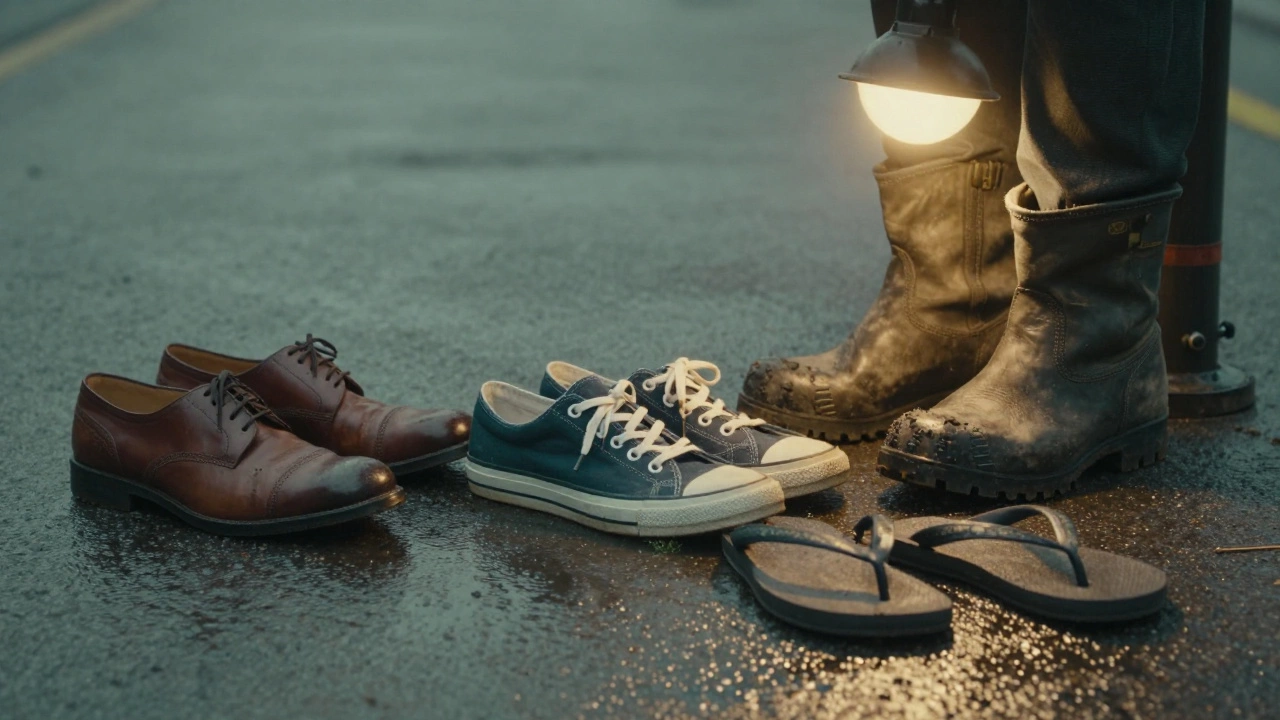
What to Wear Instead
The right shoes for Ireland are simple: waterproof, non-slip, supportive, and durable. Brands like Blundstone (popular with farmers and nurses), Aigle (used in Dublin’s hospitals), and Irish Footwear Co. offer boots and shoes that handle rain, mud, and cold. Look for:- Waterproof membranes (Gore-Tex or similar)
- Deep, rubber treads
- Steel or composite toe caps if you’re in construction or warehousing
- Thermal lining for winter months
- Easy slip-on or lace-up designs for quick changes
Final Tip: Test Before You Commit
Before you buy, walk on a wet tile or pavement. Tilt your foot sideways. If the shoe slides, walk away. If it grips like a tire on rain-slicked road, you’ve got a winner. Most Irish shoe stores-like Clarks in Dundrum Town Centre or Foot Locker in Limerick-let you test shoes on damp surfaces. Use that. Your feet will thank you come March.Can I wear trainers to work in Ireland?
Yes-but only if they’re waterproof, have a non-slip sole, and provide ankle support. Regular fashion trainers like Adidas Superstars or Nike Jordans aren’t suitable for long shifts or wet conditions. Look for models labeled as ‘water-resistant’ or ‘all-weather.’ Many Irish offices now accept smart, clean trainers as long as they’re safe and professional-looking.
Are Irish work boots expensive?
Not necessarily. A decent pair of waterproof work boots from Irish Footwear Co. or Dunnes Stores’ own brand costs between €60-€90. Compare that to buying two or three cheap pairs that wear out in three months. Good boots last two years or more, so they’re cheaper in the long run. Many employers in healthcare and public services even offer subsidies or reimbursements for safety footwear.
What if I work in an office with carpeted floors?
Even if your office has carpet, you still walk outside. Rain tracked in from your shoes can make floors slippery. Plus, you’ll need to walk to the bus stop, parking lot, or café during lunch. A waterproof, non-slip sole helps you stay safe everywhere-not just inside. Opt for shoes with a dual-purpose sole: grippy on wet pavement but quiet on carpet.
Should I buy shoes online or in-store in Ireland?
Buy in-store if you can. Irish weather changes fast, and you need to test grip and comfort. Stores like Clarks, Foot Locker, and independent retailers in Cork and Galway let you walk on damp surfaces. If you must buy online, choose retailers with free returns. Brands like Blundstone and Aigle have good return policies in Ireland. Never assume your size is the same across brands-Irish feet vary, and sizing isn’t consistent.
Is it worth getting custom insoles?
If you’re on your feet more than four hours a day, yes. Many Irish physiotherapists recommend custom insoles for people with flat feet or back pain caused by standing on hard surfaces. Hospitals like St. James’s in Dublin offer foot assessments through occupational health. Even a €30 pair of memory foam insoles from a pharmacy can reduce fatigue and prevent long-term injury.