Irish Work Shoe Selector
Find Your Perfect Work Shoes
Select your work environment to get personalized shoe recommendations for Irish weather and conditions
Recommended Shoes
Top Recommendation
Priority
Why it works:
Additional Options
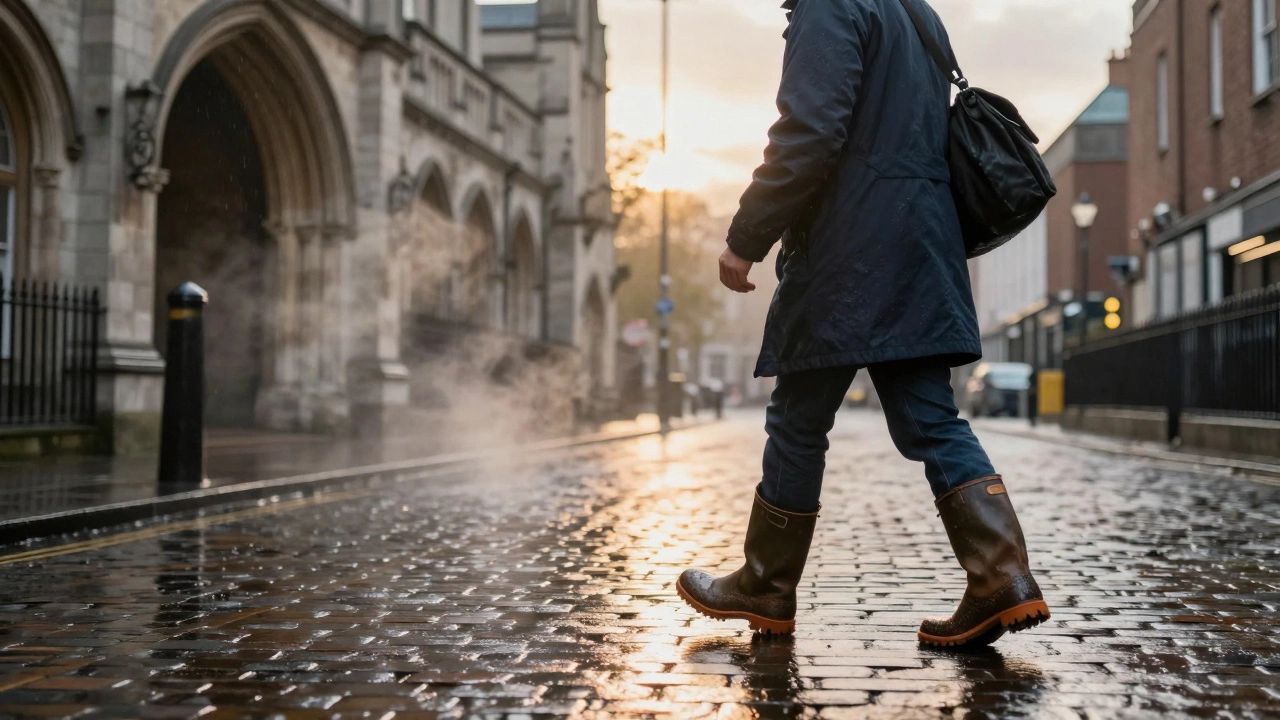
RecommendedIn Ireland, the right pair of work shoes isn’t just about looking professional-it’s about surviving the weather, the pavement, and the commute. Whether you’re walking from Pearse Station to a Dublin office, cycling through Galway’s rain-slicked streets, or trudging up a hill in Cork after a morning downpour, your footwear has to handle more than just client meetings. The Irish work environment doesn’t have a strict dress code like some countries, but it does have unspoken rules shaped by rain, mud, and practicality.
Why Irish Work Shoes Are Different
Forget the shiny patent leather loafers you see in American office dramas. In Ireland, even in finance or law firms in Dublin’s Docklands, you’ll spot colleagues wearing waterproof brogues or sturdy leather ankle boots. Why? Because the average Irish city gets over 150 rainy days a year. Dublin’s rainfall alone averages 800mm annually-more than Paris or Berlin. Your shoes don’t just need to look good; they need to keep your socks dry.
There’s also the matter of walking. Most Irish professionals don’t drive to work. A 2023 survey by the Central Statistics Office found that nearly 40% of urban workers in Ireland walk or cycle to their job. That means your shoes are getting soaked in the morning, dried out by lunch, and soaked again by 5 p.m. You need something that breathes, supports, and won’t crack after six months of Irish winters.
Top 5 Work Shoes for Irish Professionals
- Waterproof Brogues - These are the unofficial national standard. Brands like Clarks and Allen Edmonds have Irish-friendly versions with Goodyear welts and Dainite rubber soles. Look for full-grain leather that’s been treated with wax or silicone. They’re formal enough for boardrooms but tough enough for puddles outside Trinity College.
- Leather Ankle Boots - Ideal for women and men who need more ankle support. Blacks, a staple in Irish footwear shops since 1902, makes a sleek, lace-up ankle boot with a cushioned insole and waterproof membrane. It’s the go-to for nurses in Limerick, teachers in Waterford, and accountants in Sligo.
- Comfort-Oriented Loafers - For creative industries in Cork, Galway, or Limerick, slip-ons are common. But skip the thin soles. Opt for models like Geox or ECCO with breathable membranes and shock-absorbing midsoles. You’ll thank yourself after a 10-hour day on concrete floors at a tech hub like Project A or the Digital Hub.
- Steel-Toe Safety Shoes (for non-office roles) - If you’re in construction, logistics, or healthcare in Ireland, you need certified footwear. Reebok Work and Dr. Martens Work are widely worn in Dublin’s industrial parks and HSE facilities. They meet Irish and EU safety standards (EN ISO 20345) and are often provided by employers under health and safety regulations.
- Waterproof Sneakers - Increasingly common in startups and remote-first companies. Brands like Allbirds and Birkenstock have gained traction among Irish remote workers. Look for models with water-repellent finishes and recycled materials-popular in eco-conscious workplaces like B Corp-certified firms in Dublin 1.

What to Avoid
Some things just don’t work here. Thin-soled dress shoes? They’ll leak after one wet Tuesday. Slip-on canvas sneakers? They’ll smell like a wet dog by Friday. High heels? Sure, they’re worn-but rarely beyond the entrance of a hotel bar in Ballsbridge. In Ireland, practicality trumps fashion. A colleague in Galway once told me she switched from stilettos to Clarks Unstructured after slipping on wet cobbles outside the Town Hall. She hasn’t looked back.
Also avoid shoes with no grip. Irish pavements aren’t just wet-they’re uneven. Cobblestone lanes in Kilkenny, mossy paths in Glendalough, and frost-covered sidewalks in Belfast (yes, many Irish workers commute across the border) demand traction. Look for soles with deep lugs or rubber nubs. Brands like Rockport and Clarks label these as “all-weather” or “slip-resistant.”
Where to Buy in Ireland
You don’t need to order online. Ireland has a strong network of local shoe shops with expertise in weather-appropriate footwear. In Dublin, try Shoe Warehouse on Grafton Street-they have a whole section for “Irish Weather Ready” shoes. In Cork, Boots & Co. on Patrick Street lets you try shoes on while standing on a wet tile to test grip. Galway’s Footprints offers free waterproofing treatments with any purchase over €80.
Chain stores like Clarks, ECCO, and Boots (the pharmacy chain) also carry work-appropriate lines. Don’t overlook second-hand options: Dublin’s Goodwill and St. Vincent de Paul shops often have gently used professional footwear-especially after the January sales.

Seasonal Shifts Matter
Irish workers don’t just own one pair. Most rotate. In winter (October-March), waterproof boots dominate. Come spring, people switch to breathable brogues or loafers with moisture-wicking socks. Summer? Lighter materials, but still waterproof. Ireland’s summers are rarely dry for long. Even in July, a sudden downpour in County Wicklow can soak you in under a minute.
Some companies even have seasonal shoe allowances. A few tech firms in Dublin, like Intercom and HubSpot, offer €100 annual footwear stipends. It’s not just a perk-it’s a recognition that your feet are your first point of contact with the working world here.
Final Tip: Test Before You Buy
Before you hand over your money, walk around the store. Stand on a damp surface. Walk up and down a slight incline. Ask if the shop offers a 30-day comfort guarantee. Most reputable Irish retailers do. And if they don’t? Walk out. Your feet will thank you when you’re on the 6:30 a.m. bus to Limerick, your toes still dry, your steps still steady, and your professionalism intact-even if the sky’s falling.