Irish Summer Fabric Advisor
Select your typical summer scenario to find the most suitable material for Ireland's unpredictable climate.
Standing on Grafton Street when the rare Dublin sun hits the pavement, you know immediately that your outfit choice was a gamble. Did you pick something that traps heat like a greenhouse, or did you choose a fabric that lets your skin breathe? For anyone navigating Ireland’s unpredictable summer weather-where a bright morning can turn into a humid drizzle by lunchtime-knowing what to wear is less about fashion trends and more about survival. The question isn't just "what looks good," but "what won't make me miserable?" If you are looking for the coolest material to wear in summer, the answer depends heavily on whether you need airflow, moisture management, or quick-drying capabilities.
The Breathability Battle: Linen vs. Cotton
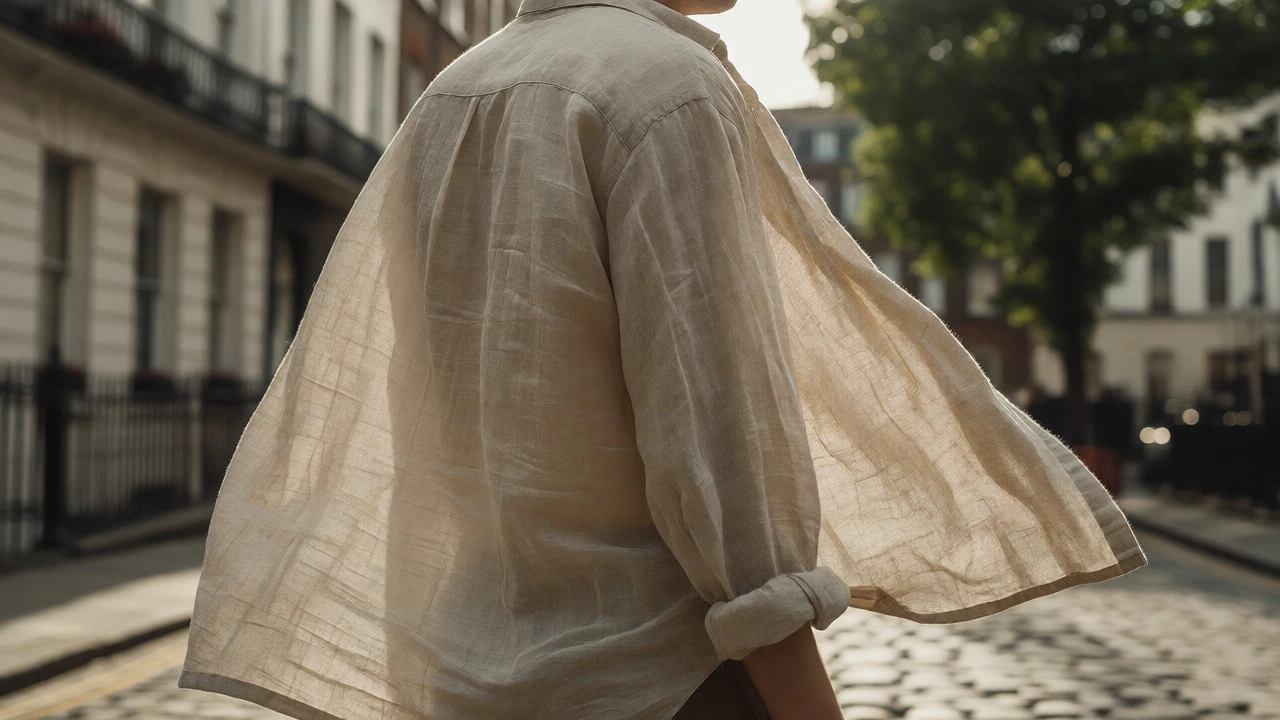
When we talk about staying cool, two names dominate the conversation: linen and cotton. Both are natural fibers, but they behave very differently against your skin. Linen is made from the flax plant and has been used for thousands of years precisely because it keeps people cool. Its fibers are hollow, which allows air to flow through the fabric rather than getting trapped against your body. This makes it the undisputed king of breathability. However, linen has a reputation for wrinkling easily, which might not suit everyone’s aesthetic if you’re heading to a formal event in Ballsbridge.
Cotton, specifically high-quality long-staple varieties like Egyptian or Pima cotton, is the other heavy hitter. Unlike linen, cotton absorbs moisture (sweat) into the fiber itself. This feels great initially because it pulls sweat away from your skin. But here is the catch: once cotton gets wet, it stays wet. In Ireland’s damp summer climate, if you get caught in a sudden shower near Phoenix Park, a heavy cotton t-shirt can become cold and clingy within minutes. It takes forever to dry, which is why many locals prefer lighter weaves like poplin or seersucker over thick jersey cotton.
| Fabric Type | Breathability | Moisture Management | Drying Speed | Best Use Case |
|---|---|---|---|---|
| Linen | Excellent | Low Absorption (Wicks) | Fast | Hot, dry days; casual office wear |
| Cotton | Good | High Absorption | Slow | Mild temperatures; low humidity |
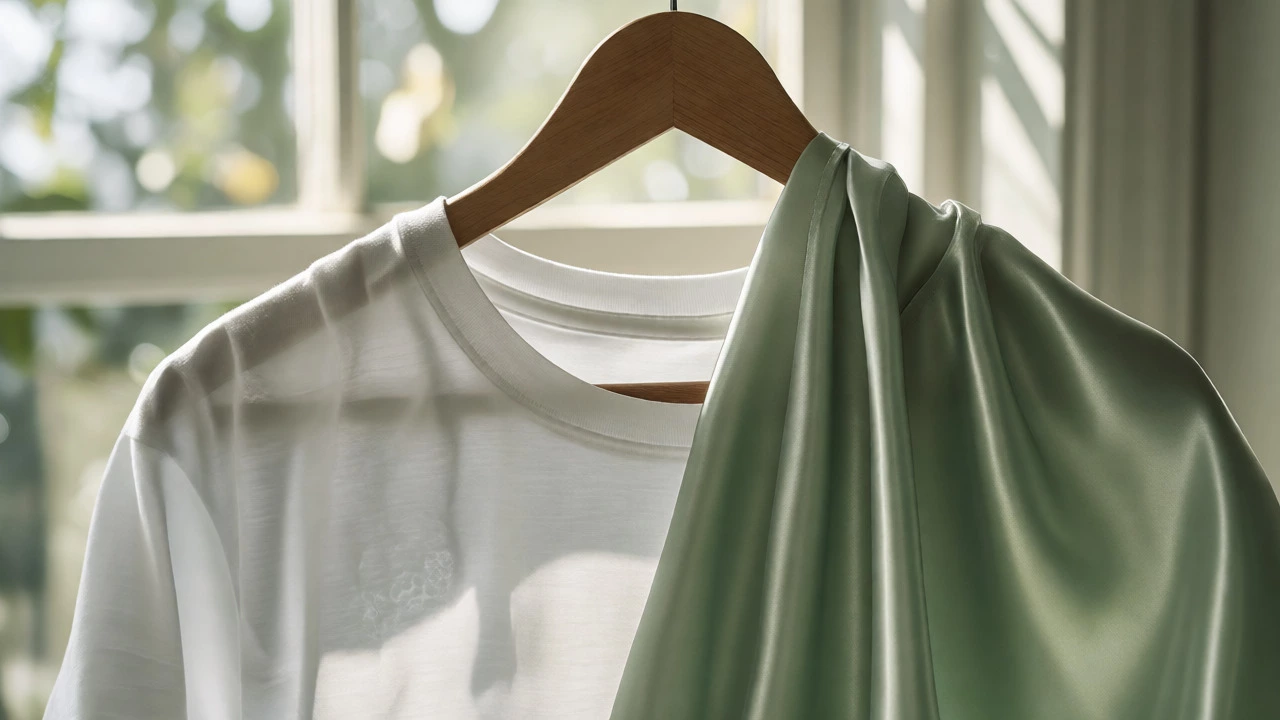
| Silk | Moderate | Low Absorption | Medium | Evenings; formal events |
| Rayon/Viscose | High | High Absorption | Medium | Draped dresses; indoor AC |
| Tencel/Lyocell | Very High | High Wicking | Fast | All-day comfort; sensitive skin |
The Modern Contender: Tencel and Lyocell
If linen wrinkles too much for you and cotton holds water too long, meet the modern hero of sustainable fashion: Tencel (or Lyocell). Made from wood pulp (usually eucalyptus), this fabric is engineered at a molecular level to manage moisture better than almost any natural fiber. It doesn’t just absorb sweat; it wicks it away from the skin and releases it into the air rapidly. This means you stay dry even if you’ve been walking up Howth Head.
Tencel also has a smooth surface that reduces friction against the skin, making it ideal for those with sensitive skin who find wool or rough synthetics irritating. While it costs more than basic cotton, brands available in Dublin’s city center often highlight its durability and softness. It resists bacterial growth, so it doesn’t smell as quickly after a day out, a huge plus for commuters using public transport where ventilation isn’t always guaranteed.
Synthetics: When Technology Beats Nature
We often demonize synthetic fabrics, assuming they are all plastic bags wrapped around our bodies. That’s outdated thinking. Modern technical synthetics, particularly those designed for activewear, are incredibly effective at cooling. Materials like Polyester blends with moisture-wicking technology don’t absorb water at all. Instead, they push sweat to the surface where it evaporates instantly.
This is crucial for high-intensity activities. If you’re cycling along the Grand Canal or running in St. Stephen’s Green, a pure cotton shirt will leave you soaked and chilled once you stop moving. A high-performance polyester blend will keep you dry. However, cheap synthetics can trap odors and feel clammy if they lack proper mesh structures. Look for terms like "mesh panels," "ventilation zones," or "micro-porous" on labels. Avoid generic "polyester" unless it’s part of a known performance brand line.

The Irish Climate Factor: Humidity and Layering
Here is the specific challenge for us in Ireland: humidity. Our summers aren’t typically scorching like Spain’s, but they are damp. This changes the calculus for fabric selection. In dry heat, evaporation is fast, so any breathable fabric works. In humid heat, evaporation slows down, meaning sweat sits on your skin longer.
This is where loose-fitting linen shines. Because it doesn’t absorb moisture, it allows air circulation to do the work of cooling you down, even if the air is moist. Tight-fitting cotton, conversely, becomes a second skin of dampness. Therefore, the cut of the garment matters as much as the material. An oversized linen shirt allows for an air gap between the fabric and your body, creating a micro-climate that stays cooler than the ambient temperature.
Also, consider the transition from day to night. Irish evenings drop in temperature quickly. A lightweight merino wool tee might sound counterintuitive for summer, but Merino Wool is naturally temperature-regulating. It keeps you warm when it’s cool and cool when it’s warm. It’s also odor-resistant, making it perfect for multi-day trips around the Wild Atlantic Way where laundry facilities might be scarce.
Practical Tips for Shopping in Ireland
When you’re browsing racks in Henry Street or online stores shipping to Cork, check the care label first. Don’t just look for "100% Cotton." Look for the weight. Heavy denim or thick canvas jackets are terrible for July. You want lightweight weaves.
- Check the weave: Open-weave fabrics allow light and air to pass through. Hold the fabric up to a light source. If you can see the bulb clearly, it’s breathable.
- Avoid dark colors: While black looks chic, it absorbs heat. Lighter colors reflect sunlight, keeping the fabric-and you-cooler.
- Consider blends: A linen-cotton blend offers the structure of cotton with the breathability of linen. It wrinkles less than pure linen but dries faster than pure cotton.
- Test for transparency: Thin summer fabrics can be sheer. Ensure there is enough opacity or plan for appropriate undergarments.
Remember that "cool" is subjective. For some, it’s about physical temperature regulation. For others, it’s about feeling fresh and not smelling like a gym bag after three hours in an office without air conditioning. Prioritize fabrics that handle moisture well, because in Ireland, you’re likely to encounter rain or humidity sooner than you think.
Is linen really cooler than cotton?
Yes, generally speaking. Linen fibers are hollow, allowing for superior airflow and quicker drying times compared to cotton. Cotton absorbs moisture and holds it, which can feel cold and clammy once you stop sweating or if the weather turns damp.
Can I wear synthetic fabrics in summer?
You can, but choose wisely. Technical synthetics designed for sports are excellent at wicking sweat and drying fast. However, cheap, non-breathable polyesters can trap heat and odor. Always look for mesh panels or moisture-wicking claims on the label.
What is the best fabric for Irish rainy summers?
Linen and Tencel are top choices because they dry quickly. Merino wool is also surprisingly effective due to its temperature regulation and odor resistance, though it should be a lightweight gauge. Avoid heavy cottons that take hours to dry.
Does color affect how hot I feel?
Yes. Dark colors absorb solar radiation, heating the fabric and your body. Light colors reflect sunlight. In sunny spells common in June and July, wearing white, beige, or pastels can significantly reduce perceived heat.
Is silk suitable for summer?
Silk is a natural protein fiber that is breathable and hypoallergenic. It feels cool to the touch and is excellent for evening wear. However, it stains easily with sweat and requires careful washing, making it less practical for active daytime use.