Tactical Jacket Matchmaker
Answer these questions to determine which type of tactical jacket suits your lifestyle and environment in Ireland.
Match Score: 0%
Key Features to Look For:
You’ve likely seen them in movies or spotted them on the news: bulky, multi-pocketed jackets worn by officers during high-stakes operations. But what is a SWAT jacket? In short, it’s a piece of heavy-duty tactical outerwear designed for law enforcement and military personnel, prioritizing durability, storage capacity, and protection over fashion. While the term "SWAT" (Special Weapons And Tactics) originates from US policing, the style has crossed the Atlantic, finding a niche among security professionals, outdoor enthusiasts, and even urban commuters here in Ireland who need gear that can handle our unpredictable weather.
If you’re walking through Dublin’s city centre or hiking in Wicklow, you might wonder if this American-style kit makes sense for us. Spoiler alert: it does, but with caveats. This guide breaks down exactly what defines a tactical jacket, why it’s built the way it is, and how to choose one that survives an Irish winter without making you look like you’re about to breach a door at Grafton Street.
The Anatomy of a Tactical Jacket
A standard raincoat protects you from water. A tactical jacket protects you from water, wind, abrasion, and the sheer chaos of a long shift. These garments are engineered around three core principles: modularity, durability, and utility. Unlike your average Barbour waxed cotton, which ages beautifully but offers limited functionality, a tactical jacket is a tool first and a garment second.
Most modern versions utilize Cordura nylon, a fabric known for its extreme resistance to tearing and scuffing. You’ll also find ripstop weaves that prevent small tears from spreading-a crucial feature if you’re brushing against rough stone walls in Galway or thorny brambles in Connemara. The construction usually involves double or triple stitching at stress points, ensuring the seams don’t blow out when you’re reaching for equipment or climbing into a vehicle.
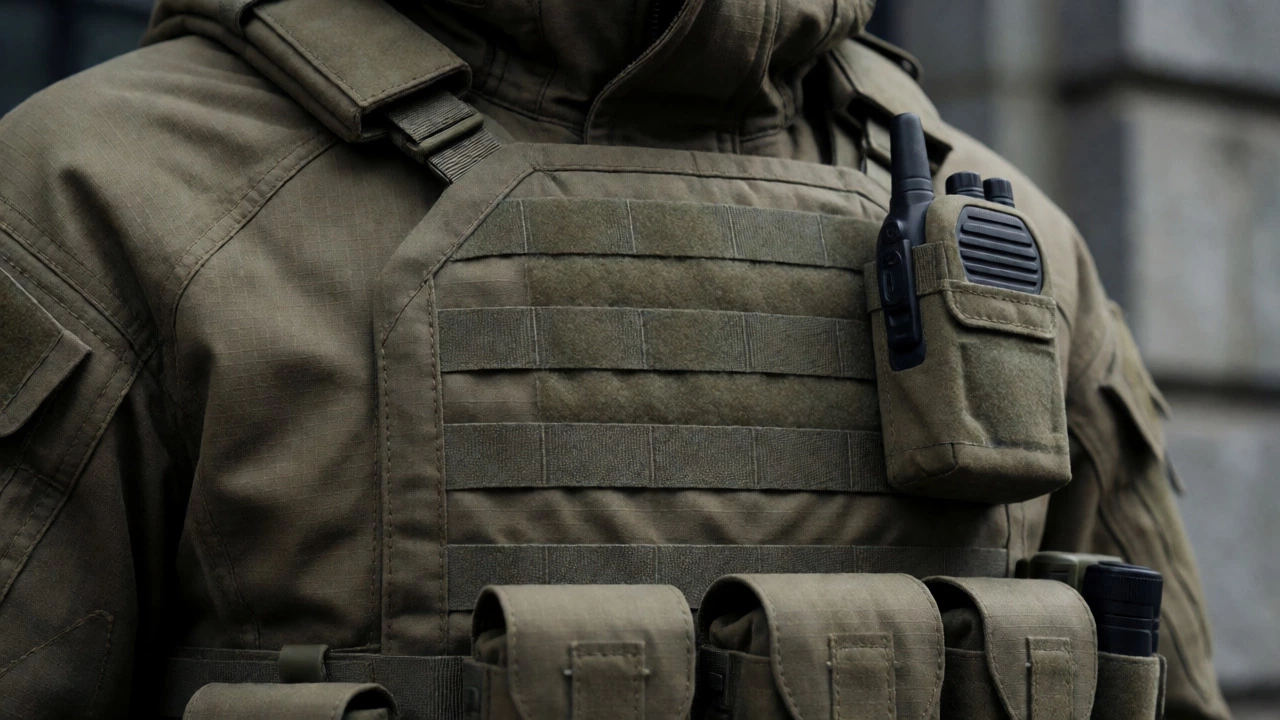
But the real giveaway is the pockets. We’re not talking about two shallow side slots. A proper tactical jacket features MOLLE webbing (Modular Lightweight Load-carrying Equipment) on the chest and sleeves. This grid-like system allows users to attach pouches, radios, or medical kits externally. It turns the jacket into a wearable command center. For anyone working in security at Croke Park during a match, having your radio and flashlight within arm’s reach, rather than buried in a bag, is a game-changer.
Why Do Police Wear Them?
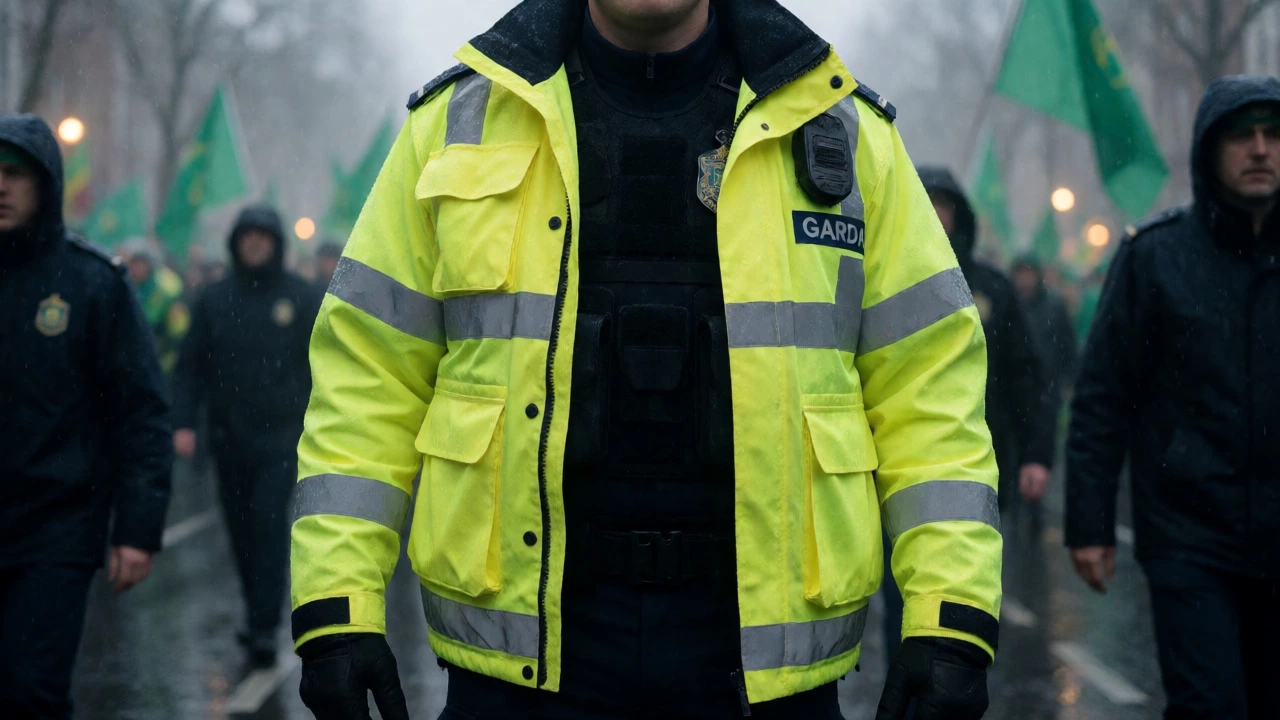
You might ask, "Why do Gardaí wear these if they aren't all SWAT?" The answer lies in the evolution of public order policing. While the Garda Síochána doesn't use the specific "SWAT" branding as commonly as US agencies, their Public Order Units utilize similar protective outerwear. During events like the St. Patrick’s Day parade in Dublin or major hurling finals, officers face crowds, potential projectiles, and long hours standing in cold, wet conditions.
These jackets serve several practical functions for law enforcement:
- Visibility: Many come in high-visibility yellow or reflective strips, essential for night shifts on busy roads like the M50.
- Layering: They are cut generously to fit over body armor and thermal layers. In an Irish winter, where temperatures hover around 4°C but feel colder due to wind chill, this layering capability is non-negotiable.
- Authority: The structured silhouette projects professionalism and readiness, helping de-escalate tense situations before physical contact occurs.
It’s worth noting that while US SWAT teams might prioritize ballistic protection integrated directly into the jacket, Irish tactical gear often separates the vest from the shell. This modular approach allows for easier cleaning and swapping of components, a practical consideration given how muddy things can get in rural areas during floods.
Civilian Use: Is It Overkill for Daily Life?
So, should you buy one for your commute? If you live in a damp apartment in Cork or work outdoors in Donegal, a tactical jacket might actually be smarter than a traditional wool coat. Here’s why civilians in Ireland are increasingly adopting this style:
| Feature | Tactical Jacket | Traditional Raincoat |
|---|---|---|
| Storage | High (MOLLE, zippered cargo) | Low (2-3 open pockets) |
| Durability | Very High (Ripstop/Cordura) | Moderate (Nylon/Polyester) |
| Weather Protection | Wind/Water Resistant (often unlined) | Fully Waterproof/Lined |
| Aesthetics | Utilitarian/Bulky | Sleek/Fashion-forward |
| Best For | Work, Hiking, Security | Commuting, Casual Wear |
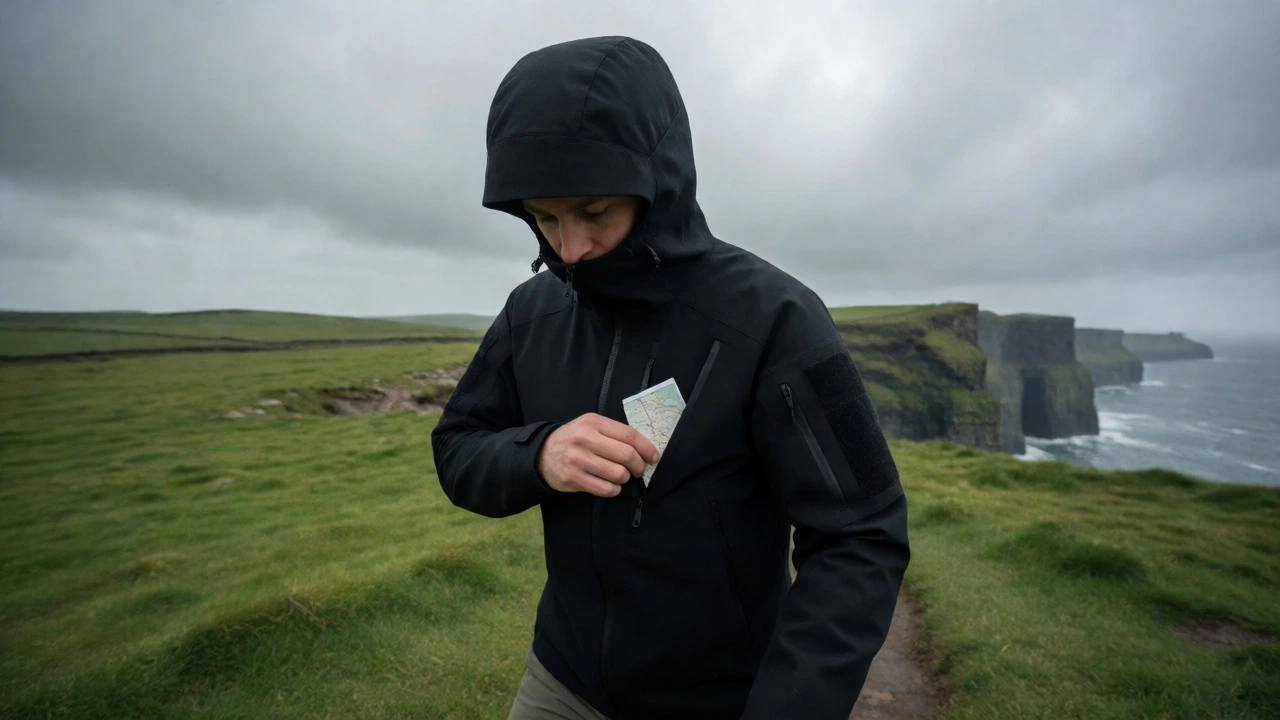
The trade-off is weight and bulk. A tactical jacket isn’t something you throw on for a quick pint at the pub unless you’re going for a rugged look. However, for hikers tackling the Cliffs of Moher, the multiple pockets mean you can keep your phone, map, and snacks secure without digging through a backpack every ten minutes. Plus, the hood designs are often adjustable and stiffened to stay up in strong coastal winds, unlike the floppy hoods on cheap fashion coats.
Choosing the Right Fit for the Irish Climate
Not all tactical jackets are created equal. When shopping in the Irish market, you need to distinguish between "soft shell" and "hard shell" variants. Hard shells are fully waterproof membranes, great for rainy days in Kerry. Soft shells offer better breathability and stretch, ideal for active movement in milder weather.
Here are three specific recommendations based on local needs:
- The All-Rounder: Look for a 3-in-1 system. These jackets have a detachable inner fleece liner. You wear the shell alone in summer, the fleece in spring, and both together during the deep freeze of January. Brands like Helikon-Tex or Propper offer models widely available through UK-based retailers that ship quickly to Ireland.
- The Urban Commuter: Opt for a low-profile tactical jacket in black or navy. Avoid excessive MOLLE webbing if you want to blend in at an office in Dublin 2. Features like hidden earphone ports and internal tablet pockets add value without shouting "military surplus."
- The Field Worker: If you work in agriculture or construction, prioritize hi-vis options with reinforced elbows. The mud in Irish fields is abrasive; ensure the fabric is treated with a DWR (Durable Water Repellent) coating so water beads off rather than soaking in.
One pitfall to avoid: buying purely for aesthetics. Some "fashion tactical" jackets sold online lack the genuine ripstop construction. Check the zippers-YKK is the gold standard. If the zipper snags easily, it will fail when you’re wearing gloves in freezing rain.
Maintenance and Longevity
Investing €80-€150 in a quality tactical jacket means you expect it to last years. To make that happen, you must maintain it correctly. Unlike wool, which needs dry cleaning, tactical nylon can usually be machine washed on a gentle cycle. However, heat is the enemy. Never tumble dry these jackets on high heat, as it can melt the waterproof membrane or shrink the synthetic fibers.
Instead, hang them to dry in a well-ventilated area. Every few months, reapply a spray-on DWR treatment. This restores the water-beading effect, ensuring rain rolls off instead of saturating the outer layer. Given how much time many of us spend waiting for buses in the drizzle, this maintenance step pays dividends in comfort.
Also, check the velcro closures regularly. Pet hair and lint love to stick to velcro, reducing its effectiveness. Use a stiff brush or a piece of tape to clean the hooks periodically. It’s a small detail, but it keeps the jacket functioning as intended.
Beyond the Uniform: Cultural Context
In Ireland, there’s a subtle cultural shift happening regarding tactical gear. Historically, wearing anything resembling paramilitary attire could carry negative connotations, particularly in border regions. Today, however, the association is shifting toward reliability and preparedness. With increased interest in prepping and outdoor living post-pandemic, more people see tactical jackets as sensible investments rather than aggressive statements.
Furthermore, the rise of private security firms and event management companies across cities like Limerick and Belfast has normalized the look. Seeing someone in a well-fitted tactical jacket no longer implies trouble; it often implies competence. Whether you’re a garda, a site manager, or just someone who hates carrying a handbag, understanding the utility of this garment helps you make an informed choice.
Ultimately, a SWAT-style jacket is about having the right tool for the job. It bridges the gap between civilian comfort and professional resilience. If you’re tired of your coat failing you during the first storm of October, it might be time to upgrade your arsenal.
Is a SWAT jacket waterproof?
Not necessarily. Most tactical jackets are water-resistant or windproof, but not fully waterproof unless specified as a hard shell with taped seams. Many rely on a durable water repellent (DWR) coating, which sheds light rain but may soak through in heavy downpours common in Ireland. Always check the product specifications for hydrostatic head ratings if full waterproofing is required.
Can I wear a tactical jacket casually?
Yes, especially if you choose a low-profile design in neutral colors like black, grey, or olive green. Modern streetwear often incorporates tactical elements. Just ensure the fit is tailored enough to avoid looking like you're wearing oversized uniform surplus. Pairing it with jeans and boots works well for an everyday urban look.
What is MOLLE webbing?
MOLLE stands for Modular Lightweight Load-carrying Equipment. It refers to the grid of stitched straps found on the exterior of tactical vests and jackets. Users can attach compatible pouches, holsters, or accessories to this grid using a specific weaving technique called PALS (Pouch Attachment Ladder System). It allows for customizable storage solutions.
Are tactical jackets warm enough for Irish winters?
A standalone soft-shell tactical jacket may not be sufficient for freezing temperatures. However, most are designed for layering. Wearing a thermal base layer and a fleece mid-layer underneath provides excellent warmth. 3-in-1 models with removable liners are the best option for staying warm during Irish winters without overheating indoors.
Where can I buy tactical jackets in Ireland?
While specialized military stores exist, many online retailers shipping to Ireland stock brands like Helikon-Tex, Condor, and Mil-Tec. Local outdoor shops in Dublin, Cork, and Galway often carry general-purpose tactical styles. Checking eBay or Amazon UK with filters for delivery to Ireland is also a common method for finding specific models.