T-Shirt History & Trivia Quiz
Think you know what the 'T' stands for? Or how Hollywood changed Irish wardrobes? Take this quick quiz to test your knowledge.
1. What does the "T" in T-shirt actually stand for?
2. Which group originally popularized the lightweight cotton undershirt that became the modern T-shirt?
3. Why is cotton often recommended over synthetics for T-shirts in Ireland?
4. How should you store a T-shirt to maintain its shape?
5. When did the term "T-shirt" first appear in print?
You’ve worn them through rain-soaked Grafton Street walks, St. Patrick’s Day parades, and lazy Sunday mornings with a cup of tea. But have you ever stopped to wonder what does the T stand for in T-shirt? It’s one of those questions that pops up when you’re staring at your wardrobe, trying to figure out if it’s just a shape thing or some hidden acronym from the military. The answer is surprisingly simple, but the story behind it is tangled up in global naval history, American pop culture, and yes, even our own Irish textile traditions.
If you are in Ireland, you know that weather dictates fashion more than any trend report. We need layers. We need basics. And nothing fits that bill quite like the humble tee. But understanding where this garment came from changes how you wear it. It’s not just a piece of cloth; it’s a relic of practicality that conquered the world. Let’s break down exactly what the "T" means, why it matters, and how it fits into the modern Irish lifestyle.
The Shape Tells All: Why It Is Called a T-Shirt
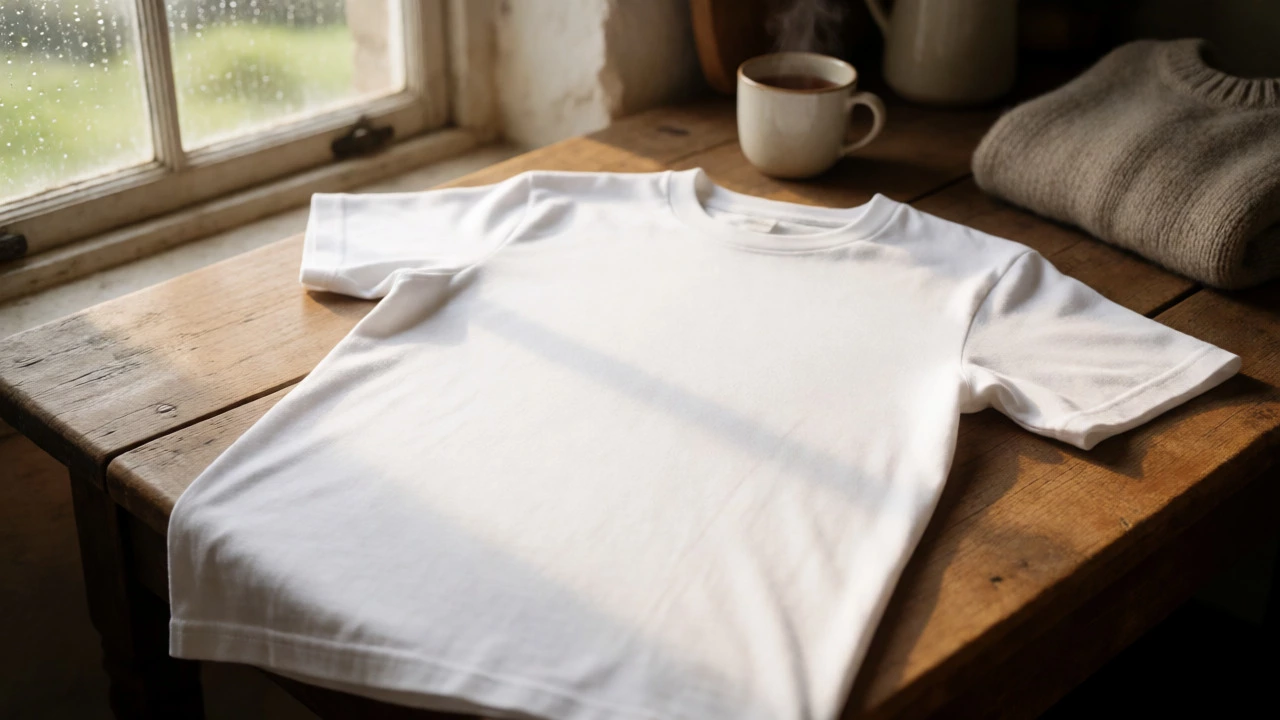
Here is the straight talk: The "T" in T-shirt stands for the T-shape of the garment itself. When you lay a classic short-sleeved shirt flat on a table, the body forms the vertical line of the letter T, and the sleeves form the horizontal crossbar. That’s it. No secret code, no military rank abbreviation, no brand name origin. It is purely descriptive geometry.
This naming convention emerged in the early 20th century as these undershirts moved from being strictly undergarments to standalone outerwear. Before they were called T-shirts, they were known as "undershirts," "jerseys," or simply "shorts." The term "T-shirt" first appeared in print around 1932, reportedly in F. Scott Fitzgerald’s novel This Side of Paradise, though it didn’t catch on globally until later. By the time it reached the shores of Ireland, the name had already stuck because it was so visually obvious. If you hold up a plain white tee against a wall in your kitchen in Cork or Galway, you can see the T immediately. It’s a label born from utility, not marketing genius.
| Time Period | Common Name | Primary Use | Context |
|---|---|---|---|
| Late 1800s | Undershirt / Jersey | Underwear | Worn by sailors and laborers |
| Early 1900s | Short Sleeve Shirt | Underwear/Sportswear | Athletic teams began wearing them |
| 1930s-1940s | T-Shirt | Casual Outerwear | Term coined due to T-shape visibility |
| 1950s-Present | T-Shirt | Fashion Statement | Global cultural icon |
From Naval Uniforms to Dublin Streets
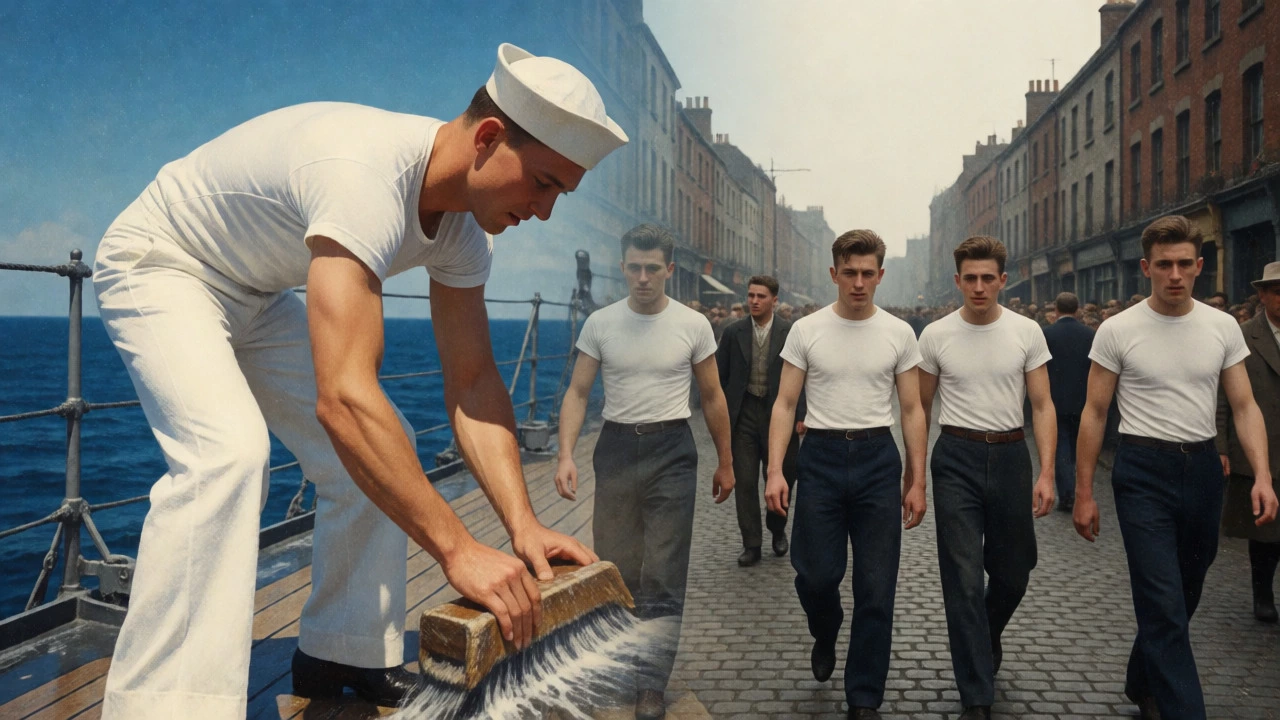
To really get the context, we have to look at who started wearing these things. In the late 19th century, the United States Navy issued lightweight cotton undershirts to sailors. Why? Because wool uniforms were miserable in hot climates. These undershirts were cut from a single piece of fabric, which reduced chafing-a big deal if you’re scrubbing decks off the coast of Spain or training in the Caribbean. This design efficiency is why the T-shirt remains comfortable today.
How did this naval staple end up in your drawer in Dublin? Hollywood played a massive role. Think about Marlon Brando in A Streetcar Named Desire (1951) or James Dean in Rebel Without a Cause. They wore white T-shirts as outerwear, signaling rebellion and coolness. Suddenly, the T-shirt wasn’t underwear; it was attitude. In Ireland, this shift mirrored our own cultural changes. As traditional rural life gave way to urbanization in the mid-20th century, young people in cities like Belfast and Dublin adopted these American symbols of youth culture. Wearing a T-shirt became a way to signal that you weren’t your father’s generation.
Hanes and Russell Athletic were among the first companies to mass-produce these garments in the US. Their durability made them popular worldwide, including here. Today, while you might buy your tees from Penneys or Brown Thomas, the DNA of the garment remains rooted in that utilitarian naval past.
The Material Matters: Cotton and the Irish Climate
You might ask, "Does the material change the meaning?" Not the name, but definitely the experience. Most authentic T-shirts are made from cotton. Why? Breathability. Ireland’s climate is temperate maritime-mild winters, cool summers, and rain that never seems to quit. Synthetic fabrics can feel clammy here. Cotton absorbs moisture and breathes, making it ideal for our unpredictable weather.
In Ireland, we have a deep connection to textiles. From the Aran Islands’ heavy knitwear to the fine linens of Ulster, fabric quality matters. When you shop for a T-shirt in Ireland, look for high-quality cotton. Brands like Next Level Apparel or local suppliers using organic cotton are gaining traction. You want something that won’t shrink after one wash in your machine. Cheap polyester blends might save a few euro now, but they pill quickly and don’t handle the damp air well. A good cotton tee lasts years, becoming softer with age, much like a favorite pair of jeans.
Consider the weight of the fabric too. In summer festivals like Electric Picnic in Laois, you want lightweight cotton. For layering under a hoodie in autumn, a heavier GSM (grams per square meter) tee holds its shape better. Understanding these attributes helps you choose the right "T" for your needs, ensuring comfort whether you’re commuting on the Luas or hiking in Wicklow Mountains National Park.
Cultural Impact: More Than Just Fabric
The T-shirt has become a canvas for identity. In Ireland, it’s common to see tees featuring everything from Gaelic football team logos to political slogans. During election campaigns, candidates distribute branded T-shirts to voters. It’s a low-cost, high-visibility tool. But beyond politics, the T-shirt allows for personal expression without saying a word.
Think about the rise of sustainable fashion in Ireland. Consumers are increasingly asking where their clothes come from. Is the cotton ethically sourced? Was the printing process eco-friendly? Companies like Patagonia and local Irish brands are responding to this demand. Buying a T-shirt is no longer just about the shape; it’s about values. When you wear a tee from a company that supports fair trade, you’re making a statement about global citizenship, relevant to our small but interconnected island nation.
There’s also the humor aspect. Irish wit often finds its way onto T-shirts. Puns, references to local landmarks, or self-deprecating jokes about the weather are staples. A tee saying "It’s probably raining in Galway" is instantly relatable. This localization makes the generic T-shirt feel personal. It transforms a mass-produced item into a conversation starter at a pub in Temple Bar.
How to Care for Your Tees in an Irish Home
So, you know what the T stands for. Now, how do you keep it looking fresh? Irish water hardness varies by region, which can affect laundry. Hard water can leave residues on dark-colored tees, making them look gray over time. Here are some practical tips:
- Wash Cold: Hot water shrinks cotton. Stick to cold cycles to preserve size and color.
- Turn Inside Out: This protects prints from fading. If you have a graphic tee from a concert at the RDS, this is crucial.
- Air Dry When Possible: Tumble dryers can warp necklines. Hanging tees on a rack indoors or outside (if the sun is out!) extends their life. In winter, use a drying rack near a radiator, but not touching it.
- Store Properly: Fold rather than hang. Hangers stretch out the shoulders over time, ruining the perfect T-shape.
Following these steps ensures your investment lasts. A well-cared-for T-shirt can be part of your wardrobe for five years or more. In a country where value for money is highly prized, this longevity is key.
Buying Guide: Where to Find Quality Tees in Ireland
Where should you go to find the best T-shirts in Ireland? It depends on your budget and style preferences.
- Budget-Friendly: Penneys offers solid basics at competitive prices. Good for everyday wear and bulk buying.
- Mid-Range: Zara and H&M provide trendy cuts and designs. Check reviews for sizing, as European fits differ from US standards.
- Premium/Local: Look for Irish designers or sustainable brands like Orla Kiely collaborations or independent makers on Etsy shipping to Ireland. You support local economy and get unique pieces.
- Sports Gear: For GAA or soccer fans, official club stores offer high-performance blends that wick sweat, essential for active days.
Always check the tag for fiber content. Aim for 100% cotton or a high-percentage blend with elastane for stretch if you prefer a fitted look. Avoid anything labeled "polyester-heavy" unless you need quick-dry properties for sports.
Frequently Asked Questions
Does the T in T-shirt stand for Team?
No, it does not stand for Team. While T-shirts are popular in team sports, the name comes from the visual T-shape of the garment when laid flat. The term was adopted because the silhouette resembled the letter T.
Why are T-shirts associated with the US Navy?
The US Navy issued lightweight cotton undershirts to sailors in the late 19th century to replace uncomfortable wool uniforms in warm climates. This practical adoption helped standardize the design and spread its popularity globally.
Are there different types of T-shirts besides the classic T-shape?
Yes, while the classic crew neck maintains the T-shape, variations include V-necks, henleys, and raglan sleeves. However, the term "T-shirt" generally refers to the basic short-sleeved, round-necked style that defines the category.
Is cotton still the best fabric for T-shirts in Ireland?
For most people, yes. Cotton is breathable and comfortable in Ireland's temperate climate. However, performance blends with synthetic fibers are useful for athletic activities where moisture-wicking is necessary.
When did the term T-shirt become common in Ireland?
The term gained widespread usage in Ireland during the 1950s and 60s, influenced by American cinema and music. As youth culture expanded, the T-shirt transitioned from underwear to casual outerwear across the country.