Lifetime Shoe Cost Calculator
Calculate Your Shoe Value
Based on the article's insight that Irish luxury shoes often last 15-20 years versus 3 years for typical imported designer shoes.
Cost Comparison Over 20 Years
💰 Initial cost: €
🔧 Maintenance cost: €
📅 Expected lifetime: years
💰 Initial cost: €
🔧 Maintenance cost: €
📅 Expected lifetime: years
Key Insight: The Irish luxury shoe costs per year, while the imported shoe costs per year.
When you walk through the cobbled lanes of Galway or the upscale boutiques of Ballsbridge, you might notice something surprising: Ireland’s love for fine footwear isn’t just about practicality-it’s about heritage, status, and quiet pride. While global headlines scream about $2 million diamond-encrusted sneakers, the most expensive shoes in Ireland aren’t always the flashiest. They’re the ones stitched by hand in Cork, lined with Irish lambswool, and worn by people who’ve spent decades building a reputation-not a brand. In Ireland, the most expensive shoes aren’t bought for Instagram. They’re bought to last a lifetime.
The Price of Craft: Handmade Irish Boots
At the top of the Irish luxury footwear ladder sits John Lobb, the British house with a workshop in Dublin that’s been handcrafting bespoke leather shoes since 1998. These aren’t mass-produced. Each pair starts with a cast of your foot, takes 180 hours to make, and costs between €4,500 and €8,000. Clients include judges from the Four Courts, retired rugby captains from Leinster, and even a few members of the Irish aristocracy who still wear them to Ascot.
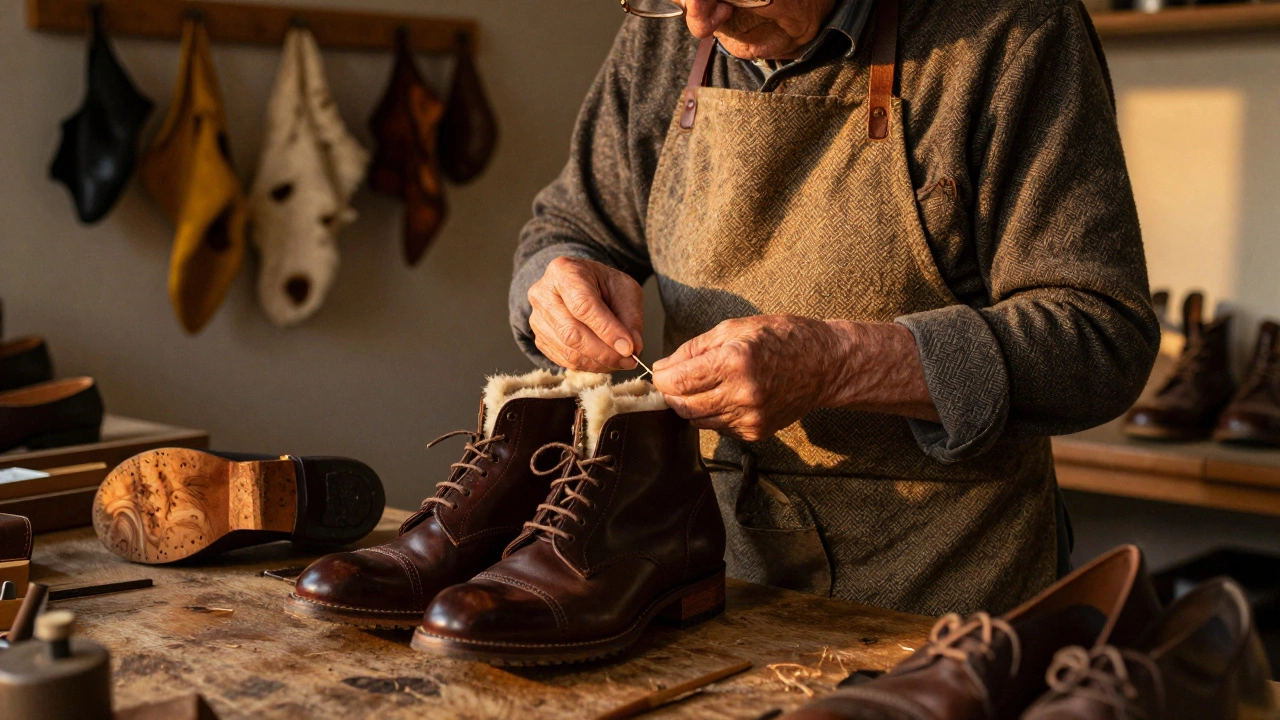
But John Lobb isn’t the only name that commands respect. Clarks once had a factory in Clonmel, and though it closed in 2002, its legacy lives on in the few surviving artisans who now work from small studios in Waterford and Kilkenny. One such maker, Patrick O’Connor of Ó Conchubhair Footwear, uses leather tanned in the same tannery that supplied the Irish Army during the 1950s. His most expensive model, the Clonmel Heritage Boot, uses calf leather from County Tipperary, hand-stitched with linen thread, and soles carved from Irish bog oak. Price? €5,200. And yes, he has a waiting list of 18 months.
When Luxury Meets Tradition: The Irish Wedge
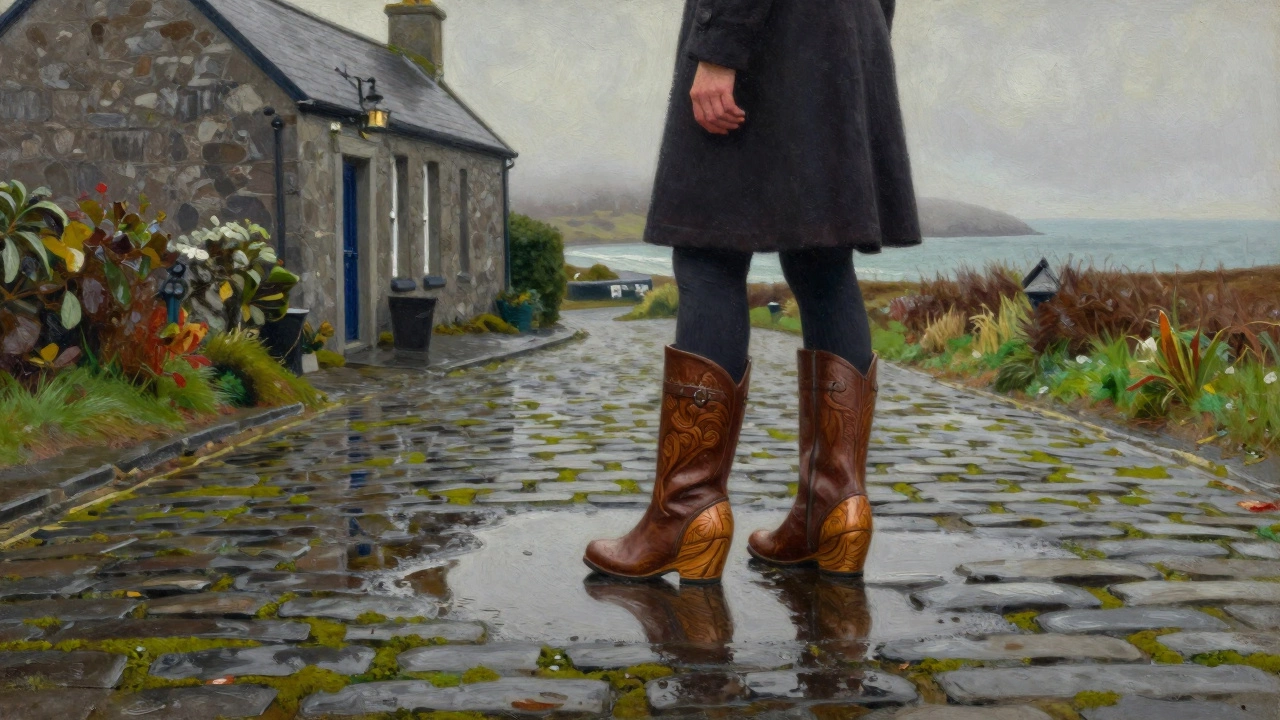
What makes a shoe truly expensive in Ireland isn’t just the materials-it’s the story. Take the Irish Wedge Heel, a design that emerged in the 1970s as a fusion of rural practicality and urban elegance. Women in rural counties like Donegal and Mayo wore thick, wooden-heeled boots to walk through peat bogs and muddy lanes. Today, designers like Clodagh O’Doherty from Galway have reimagined this as a luxury piece. Her Bogwood Wedge uses reclaimed bog oak from County Kerry, hand-carved and sealed with beeswax from Ballycotton. The heel is shaped to match the natural curve of a woman’s arch after decades of walking on uneven stone. Each pair is numbered and comes with a certificate of origin from the Kerry Peat Board. They sell for €3,800. You won’t find them on Zalando. You find them in a single drawer in a linen closet in Kenmare.
Global Icons, Local Taste
Of course, global luxury brands still have a presence. Jimmy Choo and Christian Louboutin are stocked in Brown Thomas and Bewley’s on Grafton Street. But here’s the twist: Irish buyers rarely choose the most expensive models from these brands. A pair of Louboutins might cost €1,200, but in Ireland, the most expensive shoes you’ll see worn regularly are the ones that cost less-but are made locally.
Why? Because Irish consumers value authenticity over logos. A survey by the Irish Fashion Council in 2024 found that 68% of high-income buyers in Dublin, Cork, and Galway prefer handmade Irish footwear over imported luxury, even when the price difference is 300%. They’re not just buying shoes. They’re buying a connection-to the land, to the maker, to the quiet dignity of craftsmanship.
The Hidden Cost: Why Irish Shoes Last
Here’s the thing about expensive shoes in Ireland: they don’t just cost more upfront-they save you money over time. A pair of handmade Irish boots, properly cared for, lasts 15 to 20 years. That’s three times longer than a typical designer sneaker. Repair services are still common here. In Limerick, Shoe Doctor John on O’Connell Street still does resoling for €85. In Belfast, McKenna’s Last Sole offers heel replacement with hand-carved Irish oak. These aren’t repairs-they’re rituals.
Compare that to a €1,500 pair of Italian loafers that need a full rebuild after three years. In Ireland, people don’t throw shoes away. They mend them. They pass them down. A pair of Ó Conchubhair boots might be worn by a father, then his daughter, then his granddaughter. That’s not luxury. That’s legacy.
Where to Find Them-and How to Get Them
If you’re in Ireland and want to own one of these pieces, don’t go to a mall. Head to the workshops. In Cork, visit McCarthy & Sons on Oliver Plunkett Street-they take appointments for bespoke lasts. In Galway, Clodagh O’Doherty opens her studio to visitors on the first Saturday of each month. In Donegal, Sheep’s Wool & Sole in Glenties lets you pick your leather from a rack of hides dyed with natural pigments from the Atlantic coast.
And if you’re not in Ireland? Many of these makers ship internationally. But be warned: shipping a pair of handmade boots from County Clare to New York costs €180. And the customs form? You’ll need to declare it as “handcrafted heritage footwear” or risk being taxed as luxury goods. Locals know the trick: ask the maker to include a handwritten note about the materials and origin. It’s not just paperwork-it’s proof of authenticity.
What Makes a Shoe Worth €5,000 in Ireland?
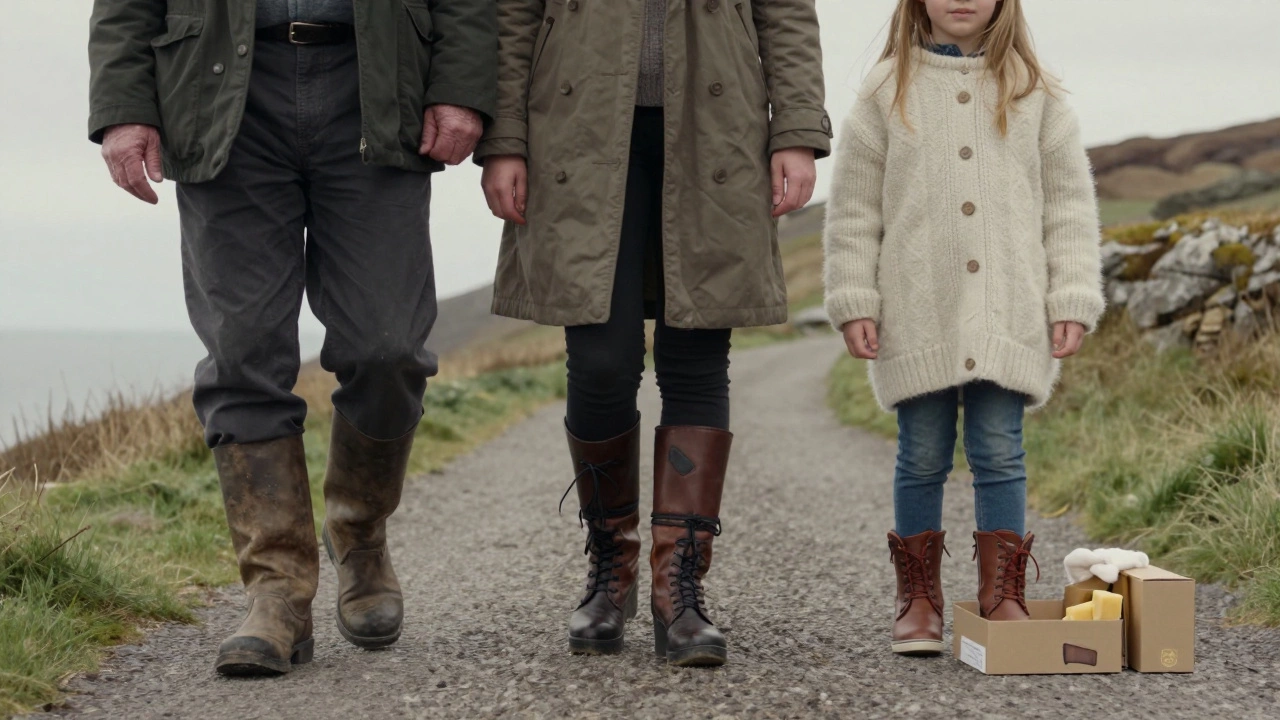
It’s not the gold stitching. It’s not the logo. It’s the fact that the person who made it knows your name. It’s the leather that came from a farm your grandfather knew. It’s the fact that when you walk into a pub in Doolin, someone might say, “Ah, those are the ones from O’Connor, aren’t they?” And you nod-not because you’re showing off, but because you’re honoring something older than fashion.
In Ireland, the most expensive shoes aren’t the ones with the highest price tag. They’re the ones that carry the weight of place, of patience, of people who still believe that something made well is worth holding onto.
What’s the most expensive pair of shoes ever sold in Ireland?
The most expensive pair sold in Ireland was a custom pair of John Lobb brogues made for a retired Irish Taoiseach in 2022. They featured hand-tooled leather from a single hide of a Hereford bull raised on the family’s land in County Wexford, with soles carved from 100-year-old oak from the Ballycroy Forest. The final price was €8,500, including a lifetime repair guarantee. It’s still worn only on state occasions.
Are there any Irish-made luxury shoes under €2,000?
Yes. Several artisans offer entry-level bespoke shoes for under €2,000. Éire Footwear in Sligo makes a Classic Oxfords model using Irish calf leather and hand-stitched soles for €1,750. They’re not fully bespoke, but they’re made to your size, with your choice of last. Many Irish professionals wear these as their everyday dress shoes.
Can I get my expensive Irish shoes repaired outside Ireland?
Technically yes-but it’s not recommended. The leather, stitching, and soles used in Irish-made shoes are often unique to local suppliers. Most international cobblers don’t have access to bog oak, Irish lambswool linings, or the specific tanning methods used here. Sending them abroad risks losing their character. Stick with Irish repair specialists like Shoe Doctor John in Limerick or McKenna’s Last Sole in Belfast.
Why don’t Irish designers compete with Italian or French luxury brands?
They don’t need to. Irish footwear thrives on intimacy, not scale. While Italian brands produce thousands of pairs a year, Irish makers produce fewer than 200. That’s not a weakness-it’s their strength. Customers don’t want mass-produced elegance. They want something that feels like it was made just for them, by someone who knows their town, their walk, and their history.
Is it worth investing in expensive Irish shoes if I live in a city like Dublin?
Absolutely. Dublin’s weather is wet, its streets are uneven, and winters are long. A good pair of Irish boots will outlast five pairs of imported designer shoes. Plus, in a city where everyone wears black, having footwear with subtle, handcrafted details-like a single stitch in green thread or a toe cap carved with a Celtic knot-becomes a quiet statement of identity. People notice. And in Dublin, that matters.
Final Thought: The Real Value of Luxury
When you walk into a shop in Ireland and see a pair of shoes priced at €5,000, you might think it’s madness. But look closer. That price isn’t just for leather and labor. It’s for the farmer who raised the sheep. The tanner who used rainwater to clean the hides. The old man who carved the last from a tree that stood in his grandfather’s field. It’s for the silence in a workshop in Ennis on a Sunday morning, when the only sound is the needle pulling thread through leather.
In Ireland, the most expensive shoes aren’t bought to impress. They’re bought to belong.