Leather Shoes Suitability Calculator
Determine if leather shoes are suitable for your Irish location, season, and activity based on Ireland's unique climate challenges.
Recommendation
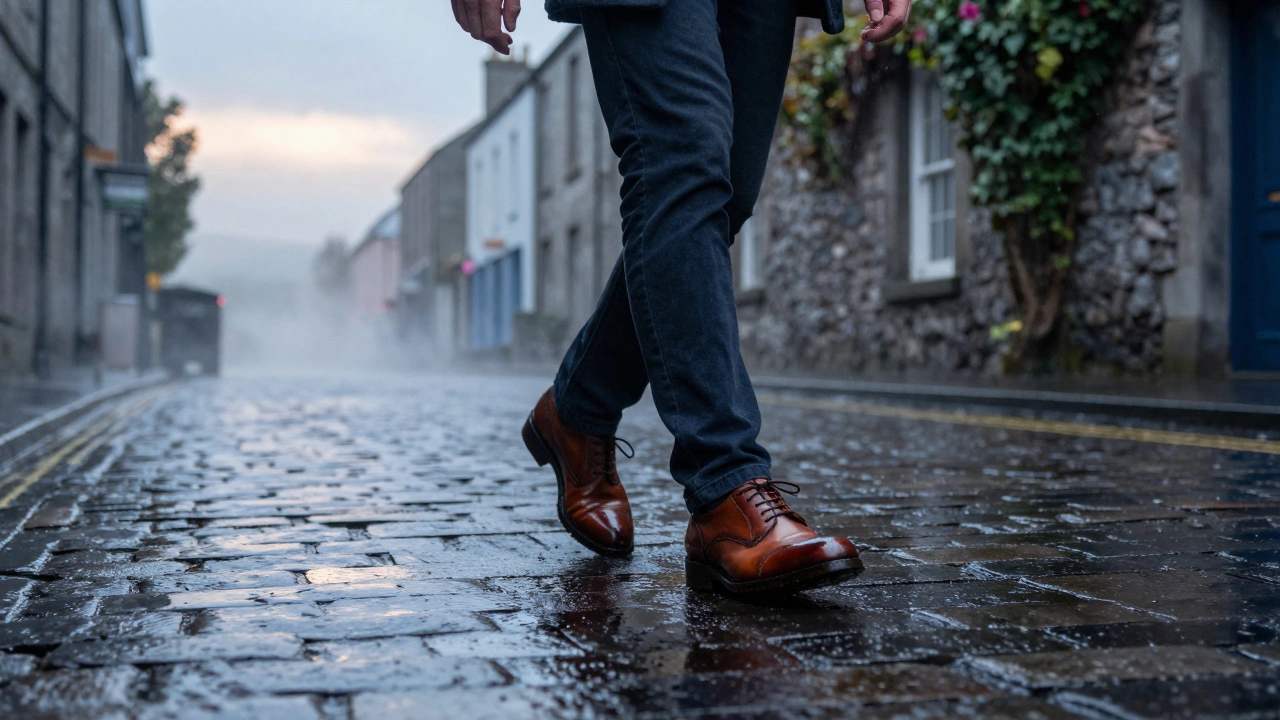
When you walk the cobbled streets of Galway, commute through Dublin’s bus lanes, or hike the Wicklow Mountains, your footwear does more than just cover your feet-it battles the elements. In Ireland, where rain falls an average of 225 days a year and dampness clings to the air like a second skin, leather shoes might look sharp, but they come with serious downsides. Many people in Ireland choose leather for its classic look-think of the polished oxfords worn to a funeral in Cork or the brogues paired with a tweed jacket in Kilkenny-but beneath the style lies a practical problem: leather simply isn’t built for this climate.
Leather Soaks Up Moisture Like a Sponge
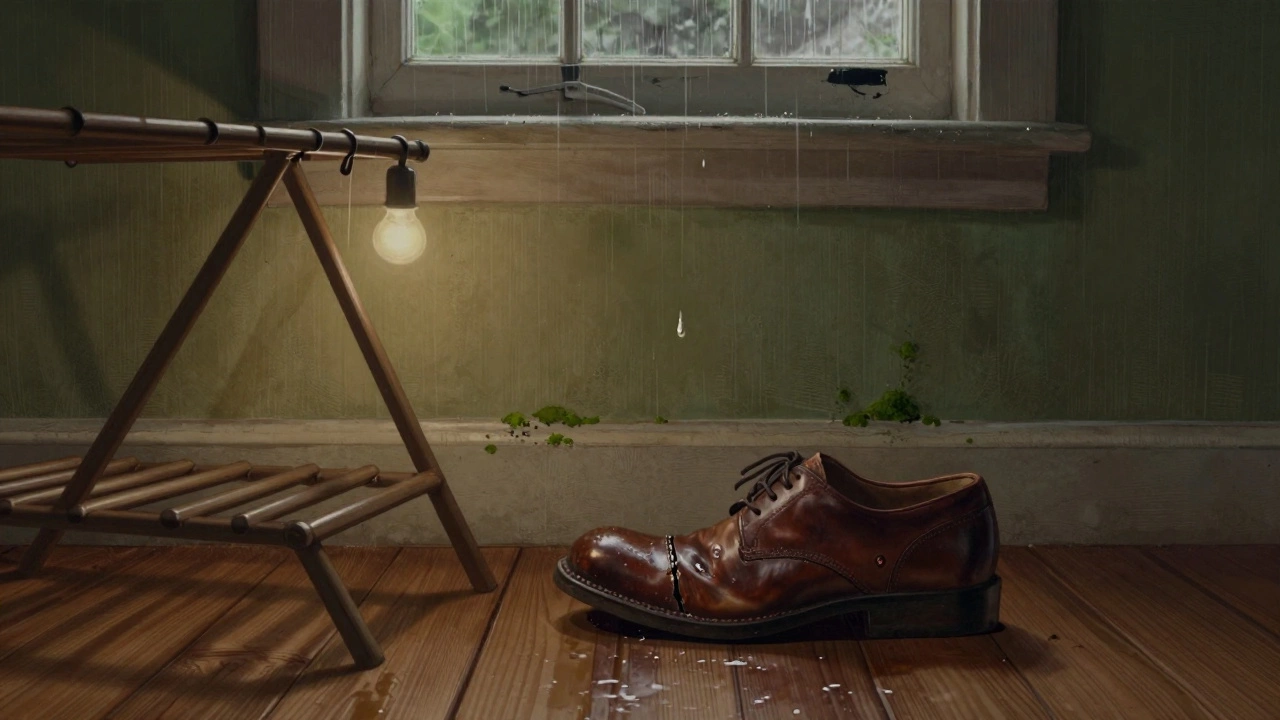
Irish weather doesn’t ask for permission. One minute it’s a misty morning in Sligo, the next you’re wading through puddles that stretch from the bus stop to the door of your local Tesco. Leather absorbs water. Not just a little-it soaks it in, slowly, relentlessly. Once wet, it takes days to dry naturally, and in a country where drying rooms are rare and central heating isn’t always reliable, that means your shoes stay damp. And damp leather doesn’t just smell bad-it starts to break down. The glue loosens, the stitching pulls, and the sole begins to separate. You’ll notice this most in places like Limerick or Ennis, where winter humidity lingers for weeks.
Many Irish shoppers don’t realize that not all leather is the same. Full-grain leather from a reputable brand like Clarks a British brand widely available in Ireland, known for its durable, water-resistant options holds up better than cheap, corrected-grain leather sold at discount stores like Primark. But even Clarks can’t fight the Irish rain without help. Without regular treatment, your leather shoes will start to stiffen, crack, and lose shape after just one season of daily wear.
Slippery When Wet-A Real Risk on Irish Pavements
Think about the sidewalks in Derry, the wet stones of Trinity College in Dublin, or the moss-covered paths of Glendalough. Leather soles, especially smooth ones, turn these places into skating rinks. A 2023 survey by the Irish Health and Safety Authority found that over 1,200 slip-related injuries in urban areas were linked to footwear with non-grippy soles during the winter months. Leather soles offer almost no traction on wet stone, moss, or polished wood. You don’t need to be an expert to know that slipping on a wet step in Galway isn’t just embarrassing-it can mean a trip to the hospital.
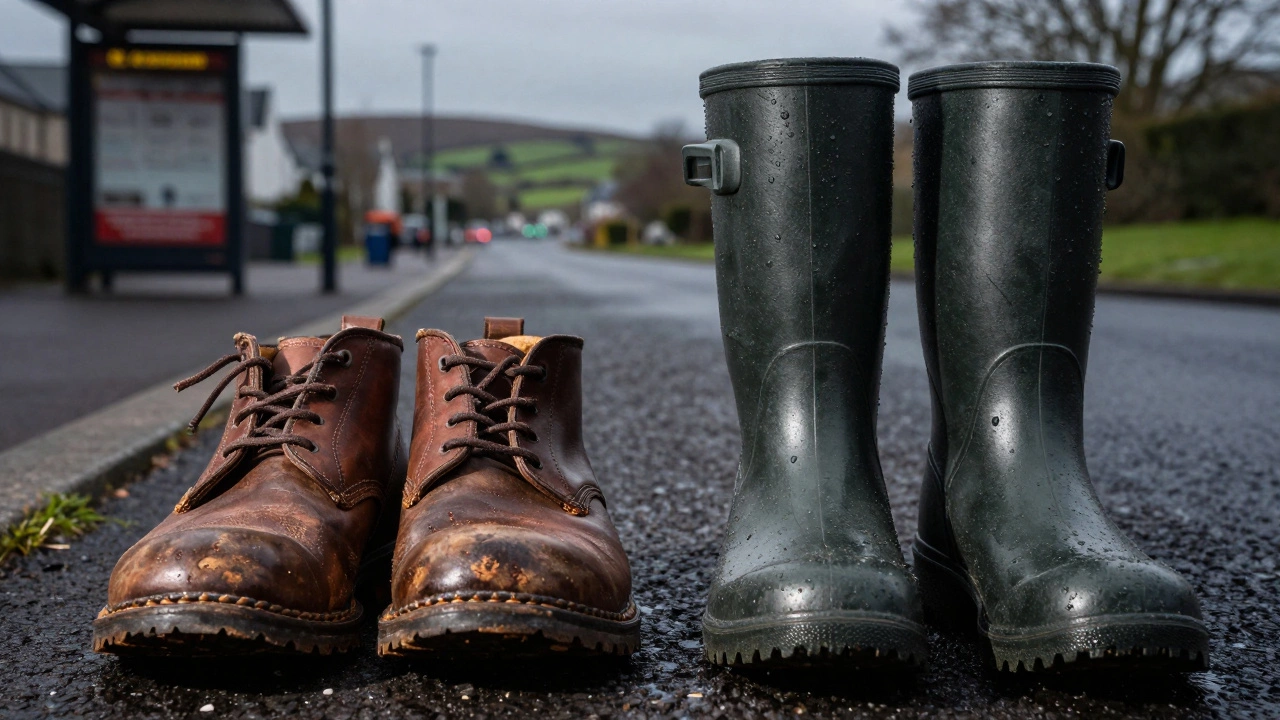
Many Irish walkers have switched to rubber-soled boots or shoes with deep treads, especially those who work outdoors or walk long distances. Brands like Aigle a French brand popular in Ireland for its waterproof rubber-soled boots and Bally an Irish footwear brand with a long history of making weather-resistant shoes have built reputations here not because they’re fancy, but because they’re safe. Leather shoes with thin, smooth soles? They’re a liability.
They’re Not Built for Irish Winter Temperatures
Temperatures in Ireland rarely drop below freezing, but the cold is constant. The damp chill seeps into your bones, and leather shoes offer almost no insulation. Unlike boots lined with fleece or wool, most leather shoes are thin and breathable by design-something that works great in a dry climate, but not here. In Belfast or Donegal, where winter winds howl off the Atlantic, your feet can go numb in under 20 minutes if you’re wearing unlined leather oxfords.
Even if you tuck your socks into thermal layers, leather doesn’t trap heat. It lets the cold in. Many Irish workers-teachers, nurses, delivery drivers-have switched to waterproof, insulated boots for winter. You’ll see them in every pub in Kildare, every hospital entrance in Louth, every school gate in Waterford. The trend isn’t just about comfort; it’s about health. Cold feet contribute to circulation issues and can make existing conditions worse. In a country with a strong public health system, people are starting to realize that footwear choices aren’t just personal-they’re medical.
High Maintenance in a Low-Maintenance Culture
Ireland isn’t a country that lives by strict routines. People don’t have time for weekly leather conditioning, polishing, and drying racks. Most households don’t even have a dedicated shoe closet. Shoes are tossed by the door, left in hallways, or shoved under the stairs. Leather shoes demand attention: regular cleaning, waterproofing sprays, cedar inserts to fight odor, and time to air out. In a country where 62% of households report having no indoor drying space (according to Sustainable Energy Ireland, 2024), this is a huge barrier.
Compare that to waterproof synthetic boots or rubber-soled loafers-things you can hose down after a muddy walk in the Burren or toss in a washing machine on a gentle cycle. You can buy a decent pair of Irish-made waterproof shoes from Grafton a Dublin-based brand known for weather-ready footwear for under €100. They’ll last longer, require less care, and keep your feet dry. Why spend €200 on a pair of leather shoes that need monthly treatment and still end up smelling like a wet dog?
The Cost of Replacing Them Too Soon
Let’s talk numbers. A good pair of leather shoes might cost €150-€300. In Ireland’s climate, they’ll start showing serious wear after 8-12 months of daily use. That’s not a long life. Replace them twice a year, and you’re spending €300-€600 annually. Compare that to a pair of high-quality waterproof boots from Aigle a French brand popular in Ireland for its waterproof rubber-soled boots or Grafton a Dublin-based brand known for weather-ready footwear, which cost €120-€180 and last 3-4 years with minimal care. The math doesn’t lie.
And it’s not just about money. It’s about waste. Ireland produces over 10,000 tonnes of footwear waste each year, according to the Environmental Protection Agency. Leather shoes that rot, crack, or fall apart after a year contribute to that pile. Choosing footwear that lasts longer isn’t just smart-it’s responsible.
What Should You Wear Instead?
If you love the look of leather but need to survive an Irish winter, there’s a middle ground. Look for leather shoes with:
- Waterproof membranes (like Gore-Tex or similar tech built into the lining)
- Rubber outsoles with deep treads
- Insulated or lined interiors (wool or synthetic fleece)
- Waterproofing treatment applied at the factory
Brands like Clarks a British brand widely available in Ireland, known for its durable, water-resistant options and Grafton a Dublin-based brand known for weather-ready footwear offer styles that look like traditional leather shoes but perform like boots. You can find them in Dublin’s Grafton Street, Cork’s Oliver Plunkett Street, or online through Irish retailers like IrishShoeShop.ie a local online retailer specializing in weather-appropriate footwear.
Or, go fully practical. Invest in a pair of sturdy, waterproof walking shoes. They’re not glamorous, but they’ll get you through the rain, the mud, the cold, and the long walks without a single blister or soaked sock.
Final Thought: Style Doesn’t Beat Survival
In Ireland, your shoes aren’t just fashion-they’re your first line of defense. Leather shoes might have history, tradition, and elegance, but they’re not suited to the reality of life here. The rain doesn’t care how much you paid for them. The wet stones don’t care if they’re from a famous brand. And your feet? They’ll tell you the truth before you even notice the cracks in the sole.
Choose footwear that keeps you dry, warm, and safe. The best-looking pair won’t save you if you slip on a Dublin curb or catch a chill walking to the shop in Galway. In Ireland, practicality isn’t a compromise-it’s the smartest style there is.
Are leather shoes completely unsuitable for Ireland?
Not completely, but they require serious upkeep and aren’t ideal for daily wear in wet conditions. Leather shoes with waterproof linings, rubber soles, and proper treatment can work in dry seasons or for occasional use. For everyday wear, especially in winter or during rain, waterproof boots or synthetic shoes are far more reliable.
Can I waterproof leather shoes myself in Ireland?
Yes, but it’s not foolproof. You can use sprays like Nikwax or Dubbin, available in hardware stores like B&Q or local Irish outdoor shops. Apply them every 4-6 weeks during rainy months. However, waterproofing doesn’t stop moisture from seeping in through seams or stitching over time. It’s a temporary fix, not a long-term solution.
What are the best Irish-made waterproof shoes?
Grafton, based in Dublin, makes some of the most popular waterproof shoes in Ireland. They’re designed for local conditions, use durable materials, and are sold in stores across the country. Bally, an Irish brand with roots in County Kilkenny, also offers weather-resistant styles that blend style and function. Both brands are widely available online and in regional outlets.
Why do Irish people still wear leather shoes if they’re so problematic?
Tradition and aesthetics. Leather shoes are still worn for formal events-funerals, weddings, business meetings-where appearance matters more than weather resistance. Many people own them for these occasions but switch to practical footwear for daily life. It’s not ignorance; it’s context. You wouldn’t wear hiking boots to a christening, but you wouldn’t wear oxfords to a bog walk either.
Do leather shoes last longer in drier parts of Ireland?
Slightly, but not enough to matter. Even in the southeast, where rainfall is lower, humidity remains high. The damp air still penetrates leather, and temperature swings between day and night cause materials to expand and contract. This weakens glue and stitching over time. So while leather shoes might last 18 months in Waterford instead of 12 in Galway, the difference isn’t significant enough to justify the risk.