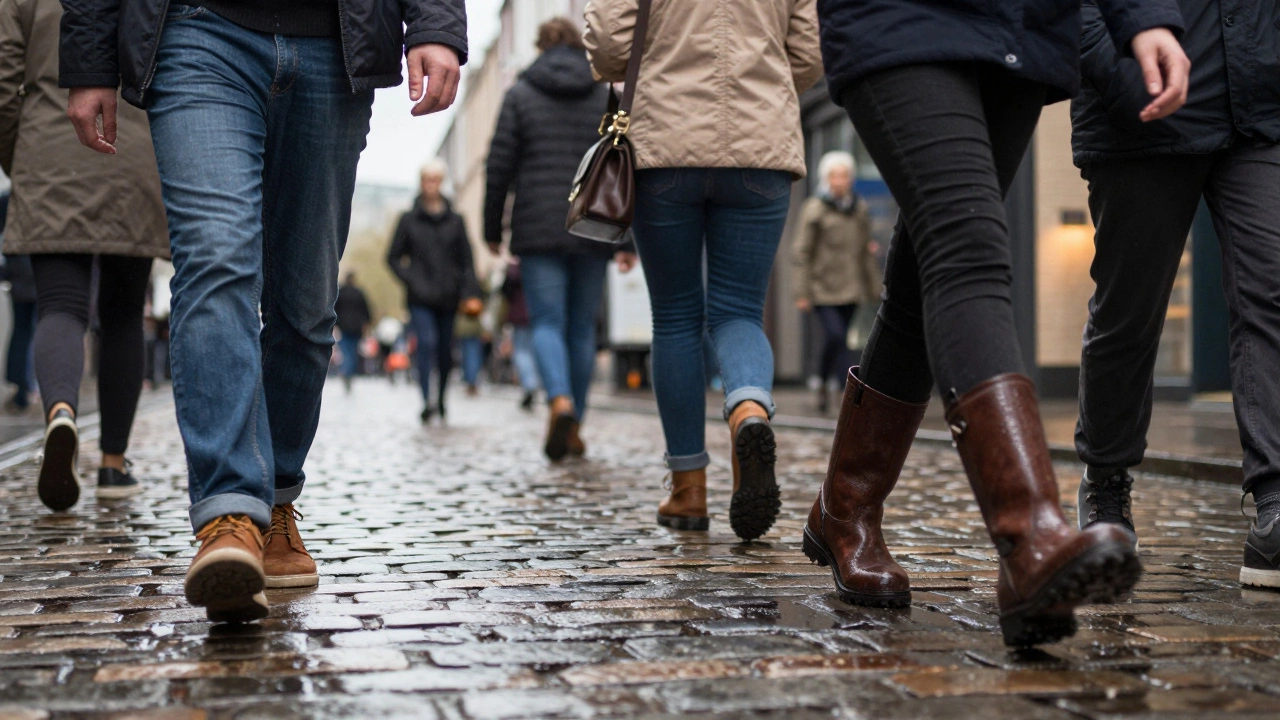
Walking Shoes for Irish Weather: What Works in Rain, Mud, and Cobblestones
When it comes to walking shoes for Irish weather, footwear designed to handle constant rain, muddy paths, and uneven stone streets. Also known as Irish walking shoes, these aren’t just sneakers you bought on sale—they’re your daily defense against the Atlantic climate. If your shoes get soaked after one walk to the shop, you’re not alone. Most people don’t realize that what works in dry climates fails here. Ireland doesn’t need fashion-forward shoes. It needs shoes that survive wet pavements, muddy trails, and 200 days of rain a year.
The real difference isn’t brand—it’s design. Waterproof footwear, shoes sealed against moisture with membranes like Gore-Tex or treated leather. Also known as waterproof footwear Ireland, this is what keeps feet dry from dawn till dusk. Brands like Clarks, Timberland, and Thursday Boots show up often in Irish homes because they don’t just look good—they hold up. Then there’s durable trainers, the local term for everyday walking shoes built for constant use in wet conditions. Also known as runners, these are the shoes Irish people actually wear to the grocery store, the bus stop, or a Sunday hike. They’re not meant for the gym. They’re meant for the street. And in Ireland, the street is always damp.
What makes a shoe right for here? It’s not the price tag. It’s the sole. A deep, grippy tread handles wet cobblestones in Galway and slick pavements in Dublin. A cushioned midsole reduces foot fatigue after standing all day—something nurses, teachers, and shop workers here know all too well. And the upper? It needs to breathe without letting water in. Leather works if it’s treated. Synthetic fabrics can too, if they’re sealed properly. No mesh. No thin linings. No flimsy soles that flatten after a month.
And here’s the thing most people miss: fit matters more than style. A snug but not tight fit keeps your foot stable on uneven ground. Too loose? You’ll twist an ankle. Too tight? Your toes will ache after three blocks. That’s why so many Irish shoppers check the width—especially women who need room for thick socks in winter. Thursday Boots, for example, are popular not just because they’re stylish, but because they offer a roomier toe box than most European brands.
You’ll see people wearing Crocs in hospitals, runners in schools, and heavy-duty boots on farms. But for everyday walking? It’s the simple, sturdy pair that lasts. The ones that don’t need breaking in because they were built to be worn from day one. The ones that cost a bit more upfront but save you from buying three pairs a year.
This collection doesn’t just talk about shoes. It shows you what Irish people actually wear, why they choose it, and how to spot the real deal from the hype. Whether you’re looking for something for work, walking the dog, or just surviving the commute, you’ll find the truth here—not marketing.