Hand‑Sewn vs Machine‑Sewn Suits: What Irish Shoppers Should Know
Explore the pros and cons of hand‑sewn vs machine‑sewn suits for Irish shoppers, covering fit, durability, cost, fabrics, and local tailoring options.
When we talk about suit quality, the durability, fit, and fabric that determine how well a suit performs in everyday Irish life. Also known as tailored outerwear, it’s not just about looking sharp—it’s about surviving the Atlantic weather, long commutes, and events that last from noon to midnight. In Ireland, a suit isn’t a weekend outfit. It’s a tool. A good one keeps you dry in Galway rain, stays crisp through a Dublin wedding, and doesn’t unravel after three winters in a damp closet.
High suit quality means more than expensive labels. It means wool blends that breathe but still repel moisture, linings that don’t cling to sweat, and construction that holds its shape after being packed in a backpack or hung in a damp hallway. Irish men don’t buy suits for photos—they buy them for Tuesdays. That’s why brands like Irish business attire, clothing designed for practicality over flash, with attention to weather resistance and comfort matter more than Milan runways. A suit that works in Ireland is built for movement: walking to the train, standing at a funeral, shaking hands in a pub. It needs to resist wind, handle sudden downpours, and still look presentable after being worn three days straight.
And then there’s the color. grey suit Ireland, the most common and practical choice for Irish men across work, weddings, and funerals. Also known as neutral formalwear, it doesn’t show water marks like black, doesn’t glare under cloudy skies like navy, and blends into every setting—from boardrooms in Cork to churchyards in Donegal. That’s why you see it everywhere. It’s not a trend. It’s survival.
Fit matters too. A suit that’s too tight pulls at the shoulders when you lift your arms. Too loose and it looks sloppy after a long day on your feet. Irish tailors don’t just take measurements—they ask if you walk to work, carry a bag, or sit on stone benches in the park. They know a suit that looks perfect in a mirror might fall apart on a wet bus ride.
You’ll find the best examples of men's suits Dublin, locally made or adapted suits that balance style with resilience against Ireland’s climate in small shops in Temple Bar or Dundrum—not chain stores. These aren’t just clothes. They’re investments. A well-made suit here lasts 10, 15 years. Not because it’s fancy, but because it was made to last.
And let’s not forget the details. Double-stitched seams. Real horn buttons. Hand-lapped lapels. These aren’t showy tricks—they’re what keep the suit from coming apart when you’re rushing through a storm or leaning over a garden gate at a cousin’s wedding. In Ireland, you don’t need a suit that looks like a movie star’s. You need one that doesn’t fall apart when you need it most.
What follows is a collection of real stories from Irish men and women who’ve lived with their suits—through rain, revisions, and years of use. You’ll find out why some suits are still worn after two decades, what brands locals swear by, how to spot a fake premium weave, and why a grey suit isn’t just a fashion choice—it’s a quiet act of resilience.
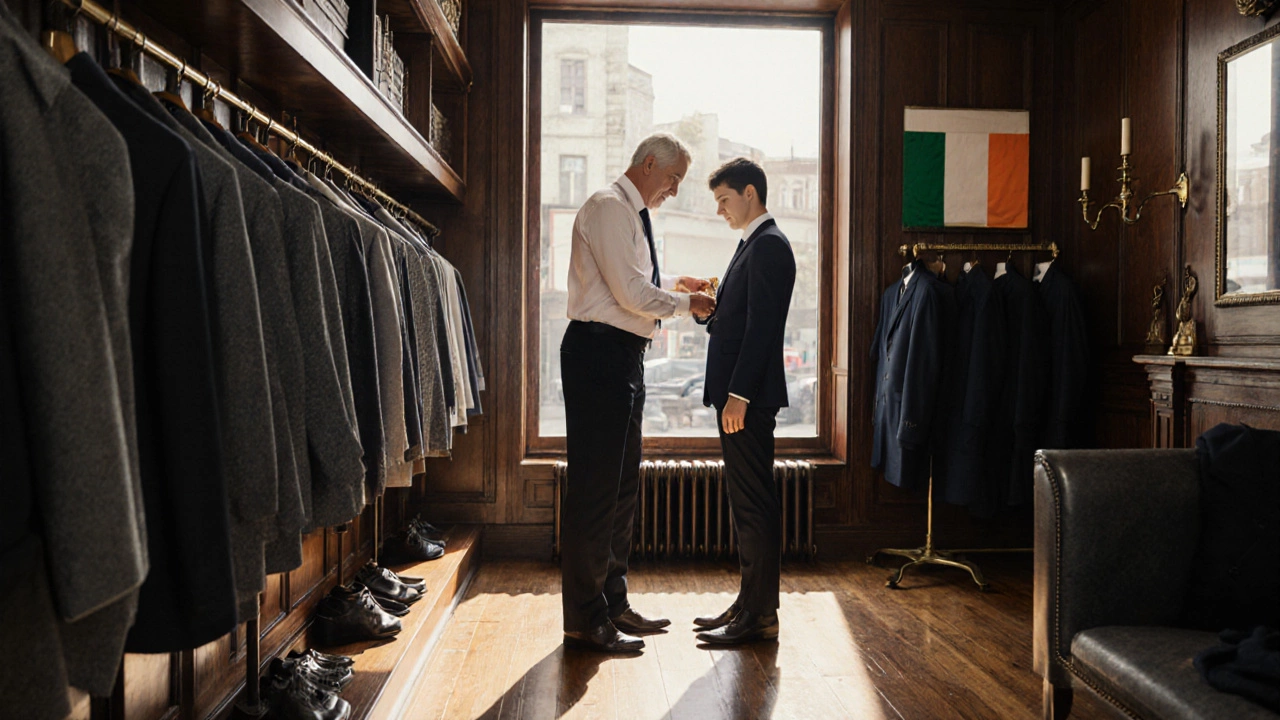
Explore the pros and cons of hand‑sewn vs machine‑sewn suits for Irish shoppers, covering fit, durability, cost, fabrics, and local tailoring options.