Do Expensive Suits Look Better? An Irish Perspective
Find out if pricey suits truly look better for Irish men. Explore fabric, fit, tailors in Dublin and compare cost versus lasting style.
When it comes to a suit, a tailored outer layer worn for work, formal events, or everyday professionalism in Ireland’s damp climate. Also known as business attire, it’s not about how much you spend—it’s about how well it holds up in a downpour, on cobblestones, and through five back-to-back meetings. You can buy a suit that costs €800 and still get soaked through by the time you reach the pub. Or you can find one for €300 that lasts three winters, stays dry, and doesn’t look out of place at a funeral, a job interview, or a wedding in Galway.
The real question isn’t whether a suit looks sharp—it’s whether it works. In Ireland, a grey suit, a neutral, versatile garment favored for its practicality and understated confidence in Irish professional and social settings isn’t a status symbol. It’s armor. It’s the thing you pull on when the sky opens up and you’ve got to walk from the bus stop to the bank without looking like you’ve been dragged through a hedge. Brands like Clarks and local tailors in Dublin and Cork don’t sell suits because they’re trendy—they sell them because they’re built for wet floors, wind-chilled offices, and the kind of weather that turns cheap polyester into a soggy mess by lunchtime.
Look? Sure, it matters. But not the way you think. A suit that costs twice as much might have a silk lining that wrinkles in five minutes of rain. A cheaper one might have a wool blend that breathes, resists stains, and dries faster. Irish men don’t care if your suit has a label from Milan—they care if you’re still dry at 6 p.m. And if you’re over 50, or on your feet all day, or just tired of spending money on things that fall apart? You learn fast. The Irish business attire, practical, weather-resistant clothing worn in professional settings across Ireland, prioritizing function over fashion isn’t about matching the latest London runway. It’s about matching the weather. It’s about choosing fabric that doesn’t cling when it’s damp, cut that doesn’t ride up when you’re climbing stairs in a pub, and fit that lets you move without looking like you’re in a costume.
What you’ll find in the posts below isn’t a list of the most expensive suits in Dublin. It’s a guide to what actually gets worn—by nurses, teachers, farmers, and grandfathers who still show up to church in a jacket that’s seen more storms than most people’s wardrobes. You’ll learn why a £200 suit can outlast a £600 one here, how color and cut affect how you look in soft, cloudy light, and why the best suit you’ll ever buy isn’t the one that looks the most expensive—it’s the one that lets you walk out the door without thinking about your clothes at all.
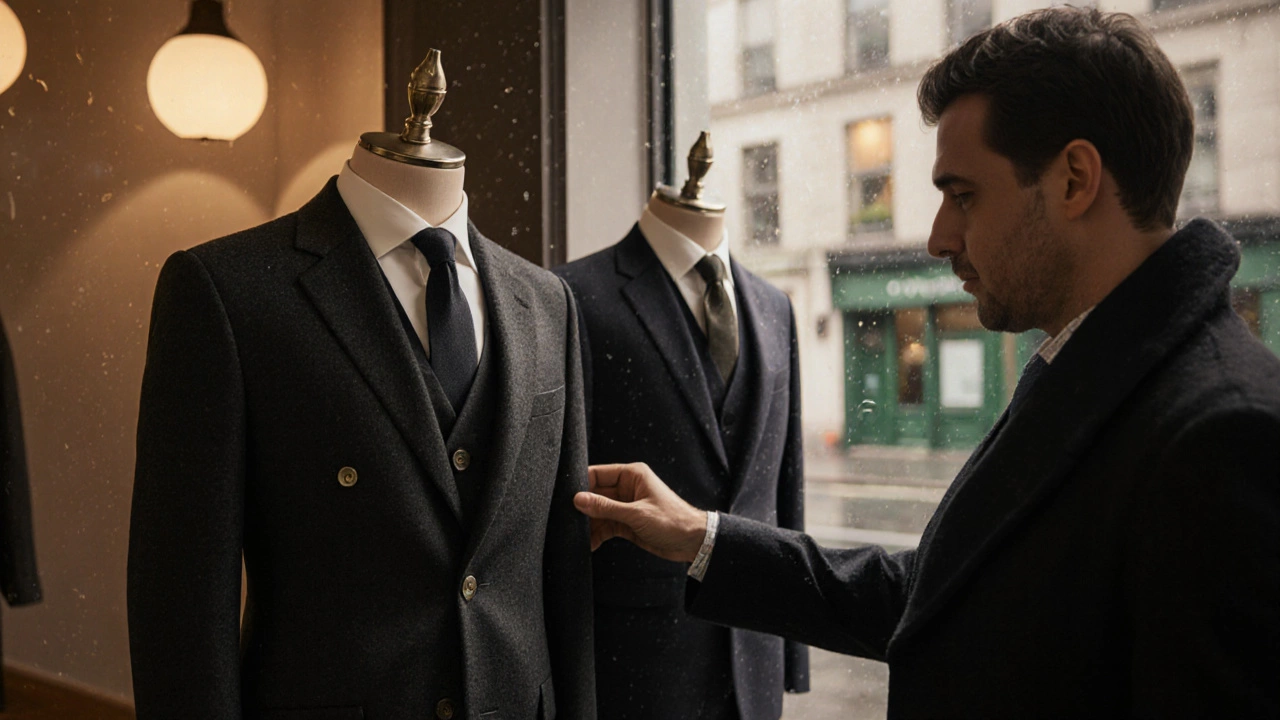
Find out if pricey suits truly look better for Irish men. Explore fabric, fit, tailors in Dublin and compare cost versus lasting style.