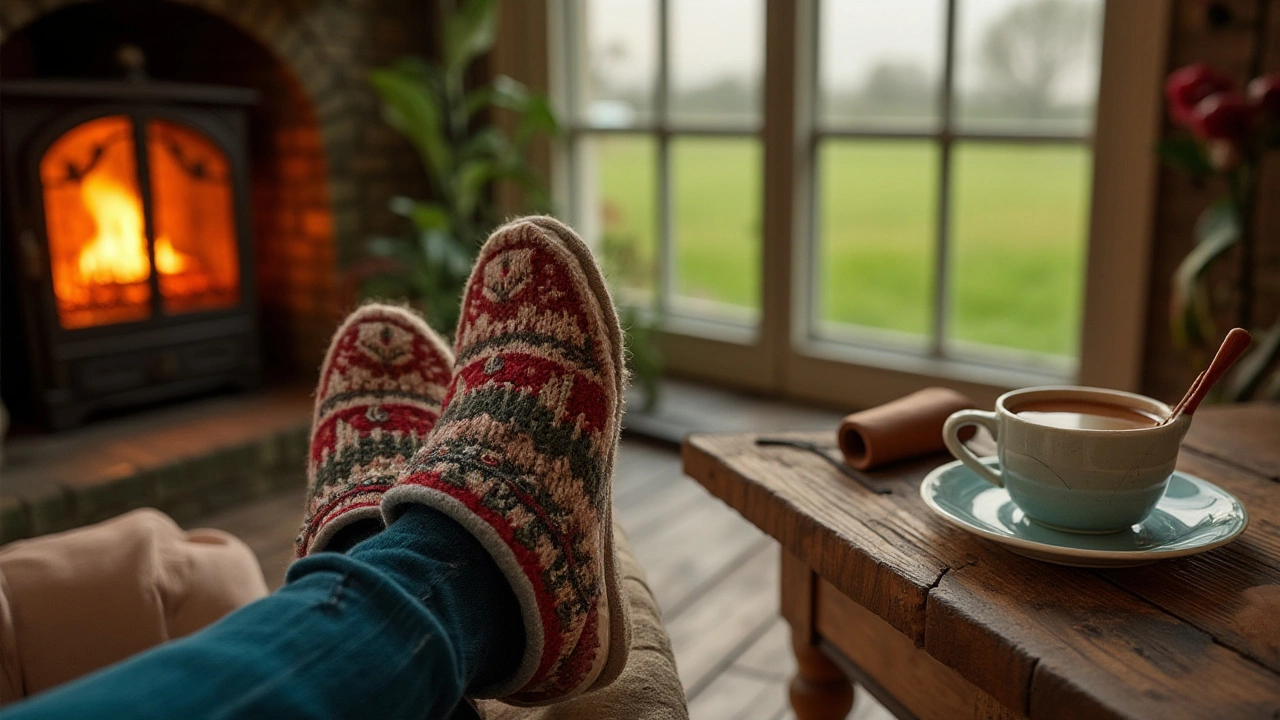
Slippers in Ireland
When you think of slippers in Ireland, soft, warm footwear worn indoors for comfort and warmth in damp, cold homes. Also known as indoor shoes Ireland, they’re not a luxury here—they’re a daily necessity. Unlike in warmer climates where slippers are optional, in Ireland they’re part of the rhythm of life. You put them on after stepping out of the shower, after walking the dog in the rain, after kicking off muddy boots at the door. The ground outside is wet most days. The floors inside? Often cold, sometimes damp. Slippers keep your feet dry, warm, and sane.
It’s not just about comfort. It’s about practicality. Irish homes aren’t always well insulated. Radiators run low. Old stone floors stay chilly even in spring. That’s why warm slippers, slippers with thick soles and insulated linings designed to retain heat in cold indoor environments are so common. You’ll see them in kitchens, living rooms, even hallways. Brands like Clarks, UGG, and local Irish makers dominate because they deliver grip, cushioning, and warmth without looking out of place. These aren’t fluffy house slippers from a catalog—they’re built for real life: wiping off mud, stepping on wet tiles, walking to the laundry room in the dark.
And it’s not just older people wearing them. Young professionals, students, parents with toddlers—all of them switch to slippers the moment they come inside. Why? Because Irish weather doesn’t stop at the door. Rain tracked in from boots, puddles from melting snow, damp socks from long commutes—slippers are the first line of defense. You don’t need to be barefoot to feel the chill. A good pair of practical slippers, slippers designed for durability, traction, and daily use in wet, cold Irish homes can mean the difference between a comfortable evening and aching feet.
What makes Irish slippers different? They’re not just soft. They’re sturdy. Rubber soles. Non-slip treads. Machine-washable materials. No delicate fabrics. No flimsy construction. You’ll find them in wool blends, fleece-lined synthetics, even waterproof canvas. You don’t buy them for style—you buy them because they survive the Irish winter indoors. And if you’ve ever stepped onto a cold kitchen floor barefoot in January, you know why this isn’t just about fashion.
The posts below dig into exactly that: what Irish people actually wear on their feet at home, why certain styles work better here than anywhere else, and how slippers fit into the bigger picture of clothing choices shaped by weather, tradition, and necessity. You’ll find real talk about what brands hold up, which materials last, and why some so-called "cozy" slippers fall apart after one rainy season. This isn’t about trends. It’s about surviving the damp.