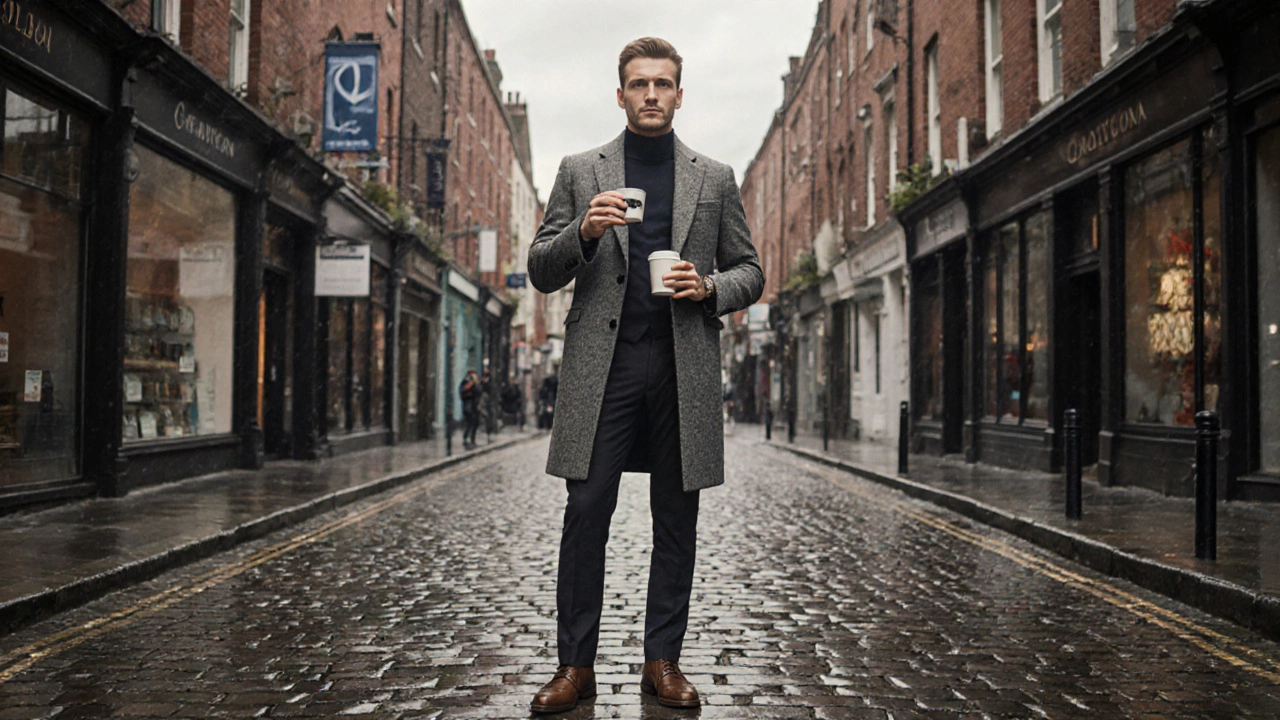
Men's Suits Dublin: What Works in Ireland's Weather and Style
When you think of a men's suit, a tailored outfit worn for formal or professional occasions, often made of wool or synthetic blends. Also known as business suit, it's not just about looking sharp—it’s about surviving Dublin’s rain, wind, and damp offices all day. In Ireland, a suit isn’t a one-season item. It’s something you wear through April showers, October gales, and the kind of indoor heating that turns your suit into a steam room. That’s why the suits that last here aren’t the ones you see in Milan or New York—they’re the ones built for wet pavement, damp stairwells, and the occasional pub lunch after a meeting.
The real question isn’t whether you need a suit—it’s what kind of suit survives here. Irish business attire, practical, weather-resistant formal wear adapted for Ireland’s climate and work culture leans toward wool blends with a bit of stretch, not pure worsted. Why? Pure wool soaks up moisture like a sponge and takes days to dry. A 15% polyester or elastane mix? It holds shape, resists wrinkles, and dries faster when you’re caught in a sudden downpour on the way to a client. And forget the thin lapels and tight cuts. In Dublin, you need room for a thermal undershirt, a light fleece, or even a waterproof layer underneath. A suit that fits snugly in London might feel like a straitjacket here.
Then there’s the fabric. Most suits sold in Dublin stores are imported from places with dry summers and mild winters. They look good on hangers. They fall apart after three rainy commutes. The suits that actually work here are made with a tighter weave, sometimes with a light DWR (durable water repellent) finish—something you won’t find on most off-the-rack labels. Brands like Clarks and John Smedley make wool blends that handle moisture better than most. Even better? Look for suits with hidden water-resistant linings or those designed for travel and commuting. You don’t need a trench coat over your suit—you need the suit itself to be the shield.
And fit? It’s not about being slim. It’s about being functional. A suit that’s too tight restricts movement on the DART or when you’re hauling a laptop bag. Too loose and you look sloppy in a boardroom. The sweet spot? A slightly fuller sleeve, a bit more room in the shoulders, and a jacket that ends just above the hip. That way, you can sit, stand, walk, and get on a bus without looking like you’re wearing a tent. Shoes matter too. A suit with suede loafers? Bad idea. A suit with waterproof, rubber-soled Oxfords? That’s Dublin logic.
What you’ll find in these posts isn’t fashion theory. It’s real talk from people who wear suits every day in Ireland—nurses switching to admin roles, teachers at parent-teacher meetings, sales reps on the road, and older men who still need to look sharp without freezing or soaking through. You’ll learn what fabrics hold up, where to get alterations done without breaking the bank, and why a suit that costs €200 in Dublin might outlast a €800 one from abroad. No trends. No runway fluff. Just what works when the rain comes sideways and your meeting starts in ten minutes.