Hand‑Sewn vs Machine‑Sewn Suits: What Irish Shoppers Should Know
Explore the pros and cons of hand‑sewn vs machine‑sewn suits for Irish shoppers, covering fit, durability, cost, fabrics, and local tailoring options.
When you hear machine sewn suit, a suit assembled using industrial sewing machines instead of hand-stitching. Also known as mass-produced suit, it’s the quiet workhorse of Irish wardrobes—built to survive wet commutes, office meetings, and Sunday dinners without falling apart. Unlike the delicate, high-end suits you see in magazines, this one doesn’t need a velvet hanger or a dry cleaner every other week. It’s stitched tight, reinforced at stress points, and made from fabrics that shrug off Irish rain.
In Ireland, where the weather doesn’t wait for you to get dressed, a machine sewn suit is often the only practical choice. You don’t need a bespoke tailor to get through a day in Dublin or Cork. What you need is something that holds up after being tossed in a bag, sat on in a train, and worn for 12 hours straight. That’s where the suit construction matters. Machine sewing means stronger seams, consistent stitching, and fewer weak spots. It’s not about luxury—it’s about reliability. Brands like Clarks, Dunnes Stores, and even local tailors who supply schools and hospitals rely on this method because it works. And if you’ve ever had a hand-sewn suit unravel after one rainy walk home, you know why.
It’s not just about the stitching. The Irish formal wear scene has shifted. No one expects a man in Galway to wear a hand-lapped lapel to the pub. But they do expect him to look neat, dry, and put together. That’s why the machine sewn suit dominates. It’s the go-to for funerals, job interviews, church, and even weddings when the weather’s iffy. Women wear them too—structured jackets with matching trousers or skirts, made from wool blends that breathe but don’t soak through. You won’t find these in fashion magazines, but you’ll see them everywhere else.
There’s a myth that machine-made means cheap. But in Ireland, it means smart. A suit that lasts five years in this climate is worth more than one that looks perfect for six months and then pills, stretches, or tears. You’ll find these suits in local shops, online retailers who ship to rural areas, and even second-hand stores where people pass them down like heirlooms—not because they’re fancy, but because they still work.
What you’ll find in the posts below are real stories from Irish people who wear these suits every day. From nurses who need something cleanable to older men who refuse to buy another suit that doesn’t fit right after a winter of rain. You’ll learn why some brands are trusted, what fabrics actually hold up, and how to spot a well-made machine sewn suit without paying designer prices. No fluff. No trends. Just what works when the wind’s howling and your shoes are soaked.
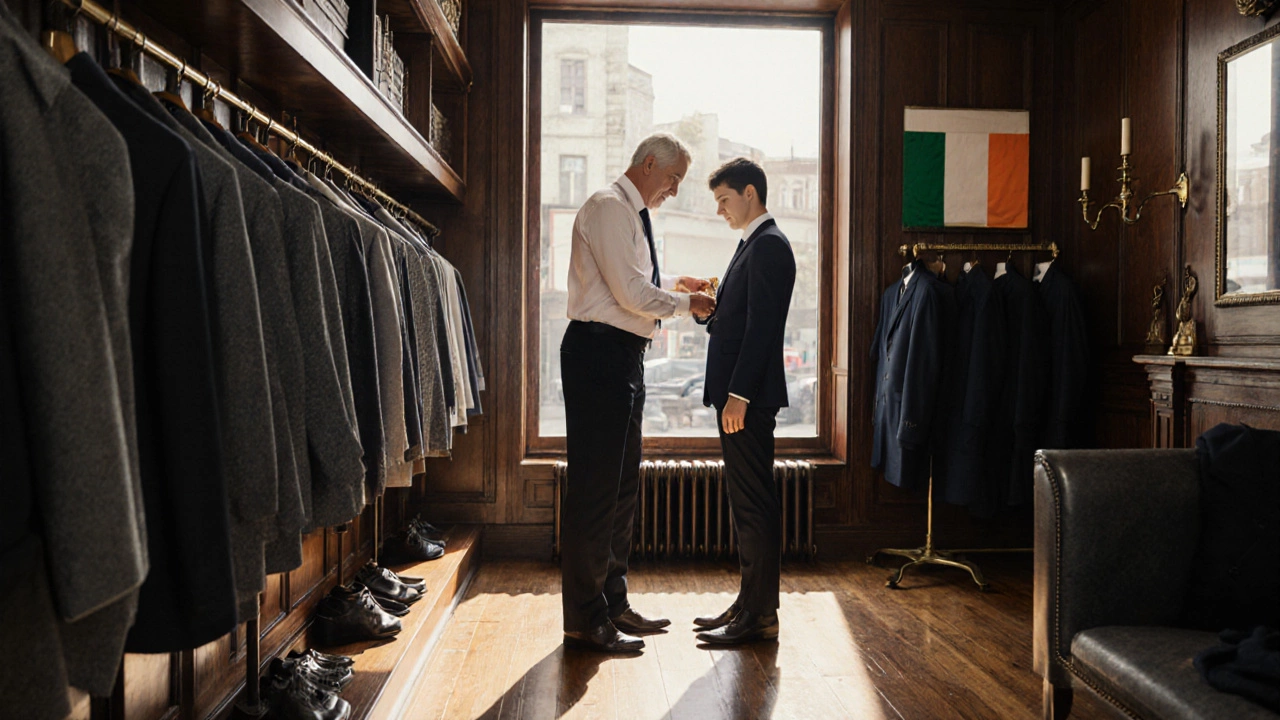
Explore the pros and cons of hand‑sewn vs machine‑sewn suits for Irish shoppers, covering fit, durability, cost, fabrics, and local tailoring options.