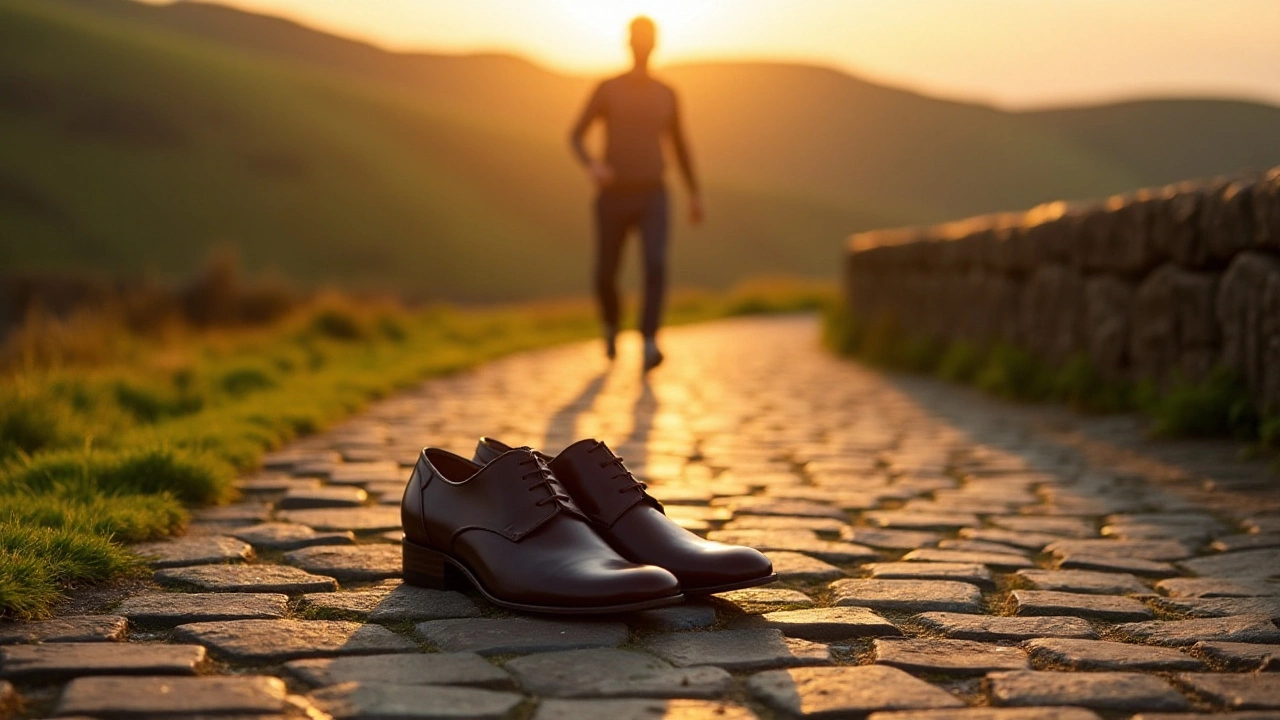
Leather Shoes Comfort: What Makes Them Work in Ireland's Weather
When it comes to leather shoes comfort, the ability of leather footwear to support your feet over long hours on wet, uneven ground without causing pain or blisters. Also known as durable leather footwear, it’s not just about softness—it’s about how well the shoe holds up to Ireland’s rain, mud, and cobblestones while still feeling like it was made for your feet. Too many people assume all leather shoes are comfortable. That’s not true here. In Ireland, comfort isn’t about cushioning alone—it’s about structure, breathability, and how the shoe reacts to dampness over weeks, not just days.
Real leather shoes comfort, the kind that lasts through long shifts, muddy walks, or daily commutes in Galway or Dublin. Also known as practical leather footwear, it needs to do three things: stay dry without trapping sweat, support the arch without digging in, and flex naturally when you walk on sloped sidewalks or wet stones. Brands like Clarks and Thursday Boots make the cut because they’re built for this. They don’t just use leather—they shape it around the way Irish people actually move. Compare that to cheap, stiff leather shoes bought online that harden when wet and pinch your toes after an hour. Those aren’t comfortable. They’re just leather with a price tag. Then there’s the work shoes, footwear designed for people who stand all day in hospitals, factories, or shops across Ireland. Also known as standing footwear, it’s where comfort becomes survival. Nurses, shop workers, and delivery drivers don’t wear leather shoes because they look nice—they wear them because they’re the only option that won’t leave them in pain by 4 p.m. And yes, some of those are made with leather. But only if they’ve got proper insoles, roomy toes, and soles that grip without being heavy.
What you won’t find in this collection are fluffy marketing claims or photos of leather shoes on sunlit beaches. You’ll find real talk about what works when the rain doesn’t stop, when your feet ache after a 12-hour shift, or when you’ve walked ten miles on wet cobbles and still need to get home. We’ve pulled together posts that show you exactly which leather shoes hold up, which ones don’t, and why some brands get it right while others fail in Irish conditions. Whether you’re looking for everyday wear, work gear, or something that won’t turn into a damp brick after a week of rain, you’ll find the truth here—no fluff, no hype, just what actually keeps your feet happy.