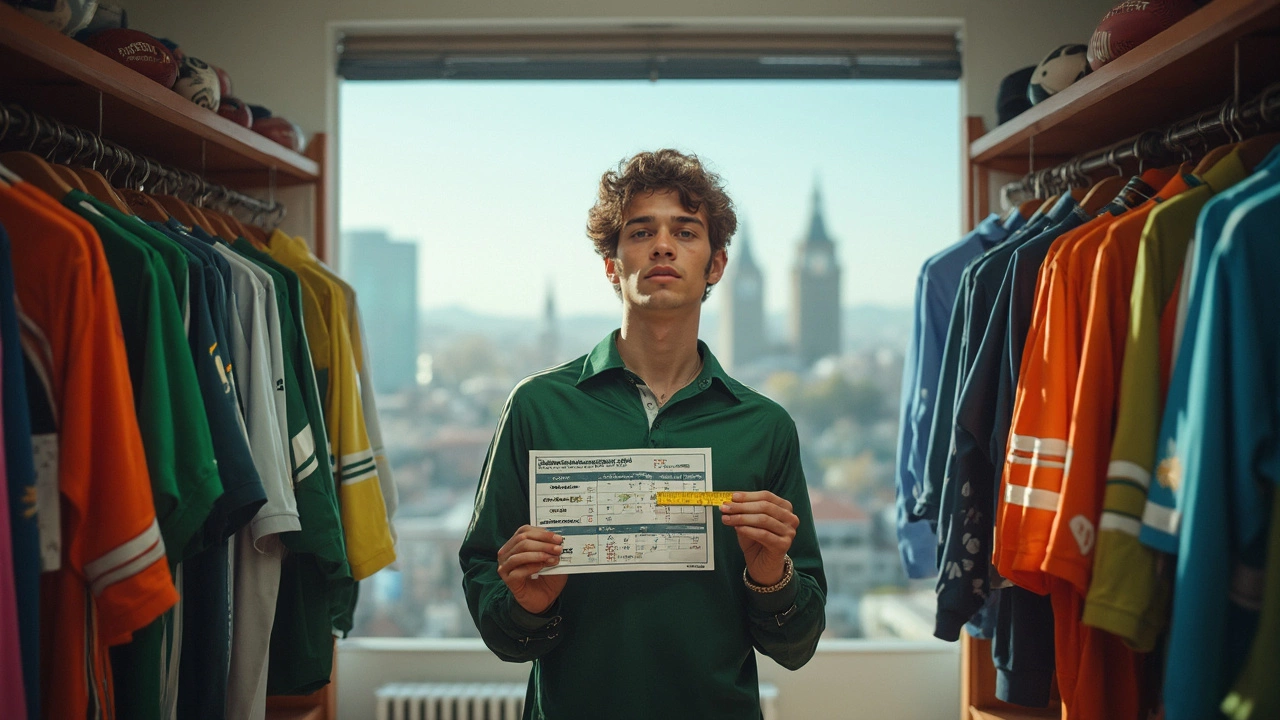
Irish T-Shirt Sizes: What Fits Best in Ireland’s Weather and Style
When it comes to T-shirt sizes, standard sizing in Ireland often differs from U.S. or European charts due to body type, climate needs, and local brand preferences. Also known as Irish clothing sizes, they’re not just about numbers—they’re about how the fabric moves with you on wet sidewalks, in drafty pubs, and under layer after layer of rain gear. Most Irish people aren’t tall or broad-shouldered like American models. The average Irish man wears a medium, and the average woman wears a small or medium. But here’s the catch: if you buy a medium based on a U.S. chart, it’ll likely be too long in the sleeves and too loose around the waist. Irish brands design for a leaner, more compact frame—think shorter torsos, narrower shoulders, and arms that don’t need extra room for lifting a pint or carrying groceries home in the rain.
Why does this matter? Because Irish weather, a mix of damp air, sudden downpours, and cool winds. Also known as Atlantic climate, it forces people to layer up. A T-shirt isn’t just a T-shirt here—it’s the base layer under a fleece, a waterproof shell, or a wool sweater. That means it needs to fit snug enough to stay in place, but not so tight it bunches or rides up. Brands like Clarks, a long-standing Irish and UK staple known for practical, well-fitting apparel. Also known as Irish workwear brands, and Aran sweaters, hand-knitted wool layers that dominate Irish wardrobes. Also known as traditional Irish knitwear, have shaped how people think about fit: close, durable, and built to last through years of wear. If your T-shirt can’t handle being tucked into jeans under a heavy coat, it’s not right for Ireland.
And then there’s the laundry factor. In Ireland, tumble dryers are a necessity, not a luxury. Jeans shrink, sweaters pill, and cotton T-shirts? They often lose half an inch in length after three washes. That’s why most Irish shoppers buy one size up from what they’d normally wear—unless the brand is known for pre-shrunk cotton, like Pimkie, a European brand popular in Irish towns for affordable, durable basics. Also known as Irish high-street fashion, or local labels like Ballymore, a small Irish brand focused on organic cotton and true-to-size cuts. Also known as Irish sustainable fashion. You’ll find these names popping up in posts about what people actually wear, not what’s trendy on Instagram.
There’s no single chart that works for everyone. A size 10 in a Dublin boutique might be a size 8 in a Cork online store. But the pattern is clear: Irish T-shirt sizes lean smaller, shorter, and tighter than you’d expect. And that’s not a flaw—it’s a feature. It’s designed for life in a country where you’re never just wearing a shirt. You’re wearing it under a jacket, over a thermal, through a downpour, and into a warm pub at 7 p.m. The right fit doesn’t just look good—it keeps you dry, comfortable, and moving without constant readjusting.
Below, you’ll find real stories from Irish shoppers about what actually works—what brands they swear by, what sizes they regret buying, and how they learned to read between the lines of sizing charts. No fluff. Just what fits, what doesn’t, and why it all matters in the real world of Irish weather and everyday life.