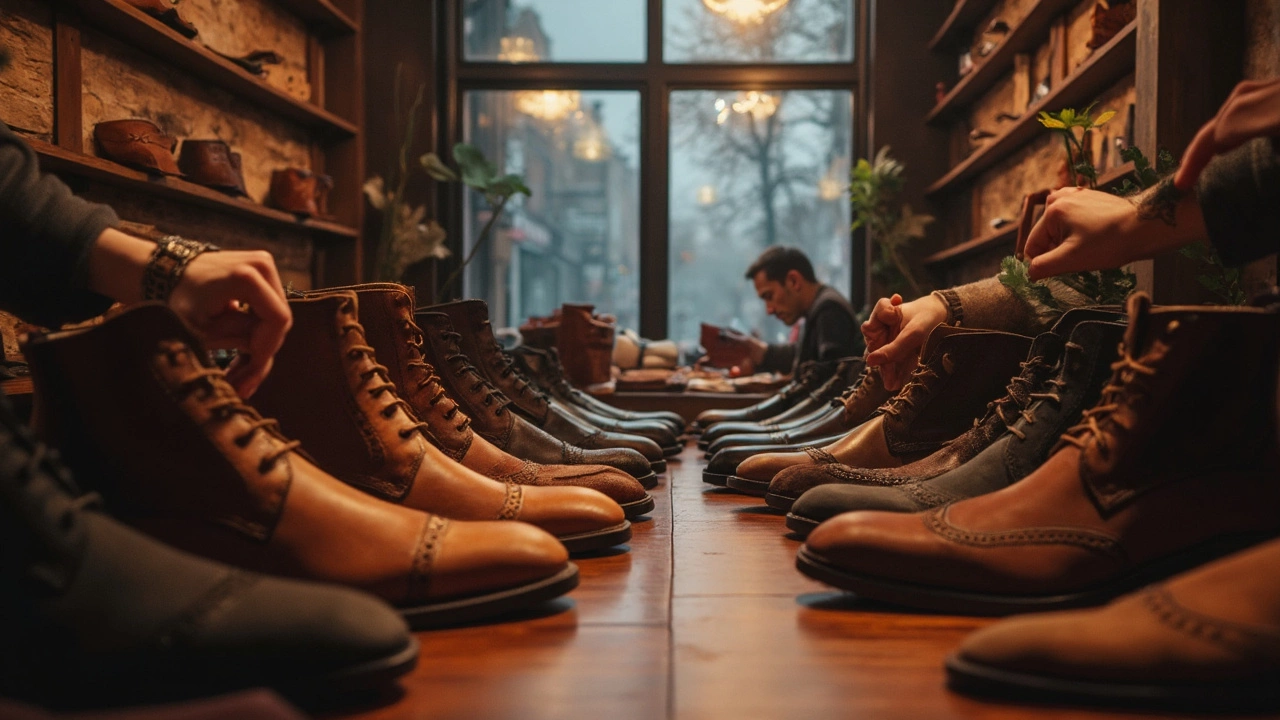
High Quality Leather: What Makes It Last in Ireland's Weather
When you hear high quality leather, a durable, naturally water-resistant material made from animal hides treated for strength and longevity. Also known as full-grain leather, it’s the kind that doesn’t crack after a few winters, doesn’t soak up rain like a sponge, and gets better with age. In Ireland, where the weather doesn’t care about trends, this isn’t luxury—it’s survival. You don’t buy it because it’s fancy. You buy it because your boots still hold up after a month of walking through puddles, mud, and icy sidewalks.
Not all leather is the same. Cheap leather peels, splits, or turns stiff when it gets wet. Real full-grain leather, the top layer of the hide, untouched by sanding or splitting keeps its fibers intact, letting it breathe while resisting moisture. That’s why Irish farmers, nurses, walkers, and commuters all end up with the same thing: boots or jackets made from this stuff. It’s not about branding. It’s about how it behaves when it’s pouring outside and your feet are cold. And then there’s leather care, the simple routine of cleaning, conditioning, and protecting leather to extend its life. Skip it, and even the best leather turns brittle. Do it right, and a pair of boots can last ten years—maybe longer.
What you’ll find in these posts isn’t a list of brands or price tags. It’s the real talk from people who live here. Why Thursday boots need to be snug. Why nurses choose Crocs over fancy leather shoes. Why Nike stopped using leather—and why some Irish makers still swear by it. You’ll read about what works in Galway rain, what falls apart in Dublin traffic, and what actually survives a winter in Cork. This isn’t about looking good. It’s about walking dry, staying warm, and not replacing your gear every season. If you’ve ever wondered why some leather lasts and some doesn’t—this is where you find out.