Hand‑Sewn vs Machine‑Sewn Suits: What Irish Shoppers Should Know
Explore the pros and cons of hand‑sewn vs machine‑sewn suits for Irish shoppers, covering fit, durability, cost, fabrics, and local tailoring options.
When you hear hand sewn suit, a garment constructed entirely by skilled artisans using needle and thread, not machines. Also known as bespoke clothing, it’s not about showing off—it’s about surviving Irish winters with something that fits your body, breathes with you, and lasts decades. In a country where rain doesn’t take holidays and wind doesn’t ask permission, a machine-stitched suit might hold up for a season. A hand sewn one? It holds up for your kids’ weddings.
That’s why Irish tailoring, the local craft of shaping suits to match individual posture, movement, and climate needs isn’t a relic—it’s a necessity. You don’t buy a suit in Ireland to look sharp at a meeting. You buy it to walk the dog in Galway drizzle, stand at a funeral in Cork, or sit through a long dinner in Dublin without feeling like you’re wrapped in plastic. The stitching? It’s not just decorative. Hand-sewn canvases allow the fabric to move with your shoulders. The lining? Often wool or cotton, not polyester, so it doesn’t trap sweat when you’re walking home from work in a downpour.
And it’s not just about the suit itself. The handmade suits, custom garments built from start to finish by one tailor, often with multiple fittings you see in Ireland come with stories. They’re passed down. They’re repaired. They’re altered when you gain a few pounds after Christmas dinner or lose them after a long hike. You won’t find this kind of care in fast fashion. You won’t find it in online orders that arrive in a plastic bag. This is the kind of clothing that outlives trends, and in Ireland, that’s not a luxury—it’s survival.
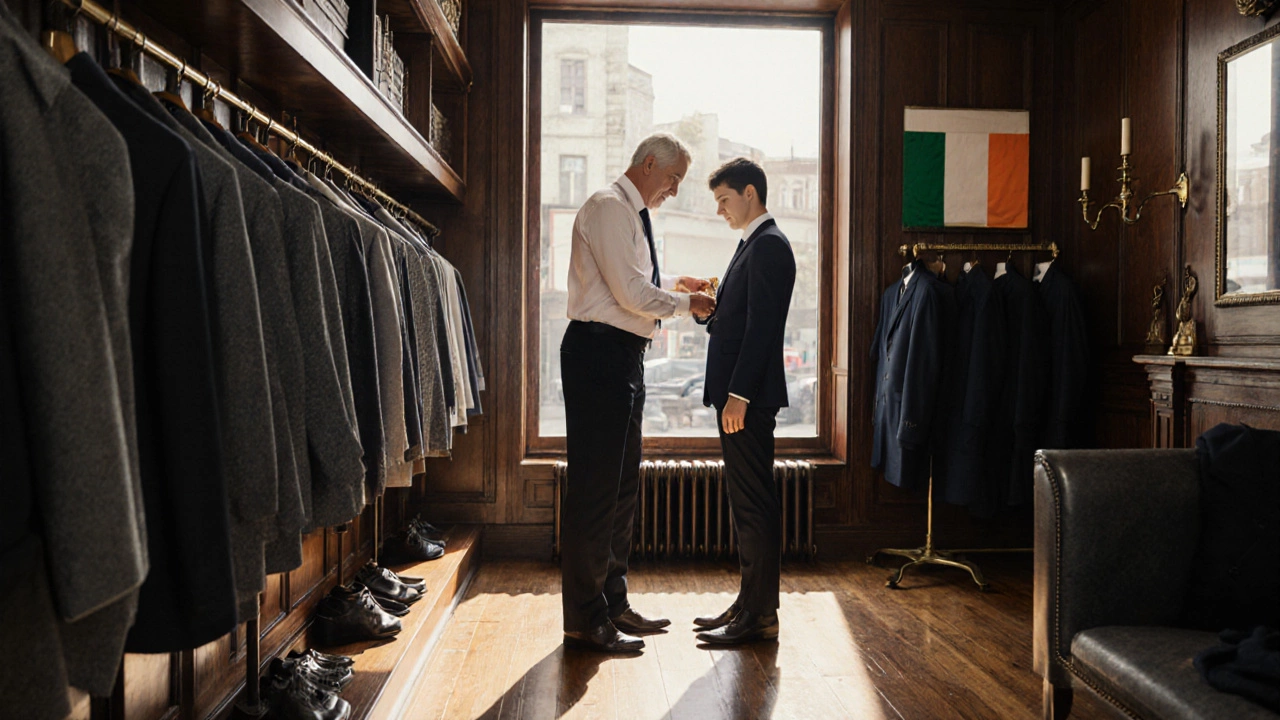
What you’ll find in these posts isn’t a list of fancy brands or celebrity tailors. It’s real talk from people who wear these suits every day. You’ll learn why some Irish men still get their suits made in Dublin instead of ordering from abroad. You’ll see how a hand sewn suit behaves differently on a wet cobblestone street versus a dry sidewalk. You’ll understand why a £1,200 suit that lasts 15 years is cheaper than three £400 ones that unravel after two winters. And you’ll find out where the quiet, unassuming tailors are—because they’re not advertising on Instagram. They’re in back rooms, measuring shoulders, and stitching by window light while the rain taps on the glass.
Explore the pros and cons of hand‑sewn vs machine‑sewn suits for Irish shoppers, covering fit, durability, cost, fabrics, and local tailoring options.