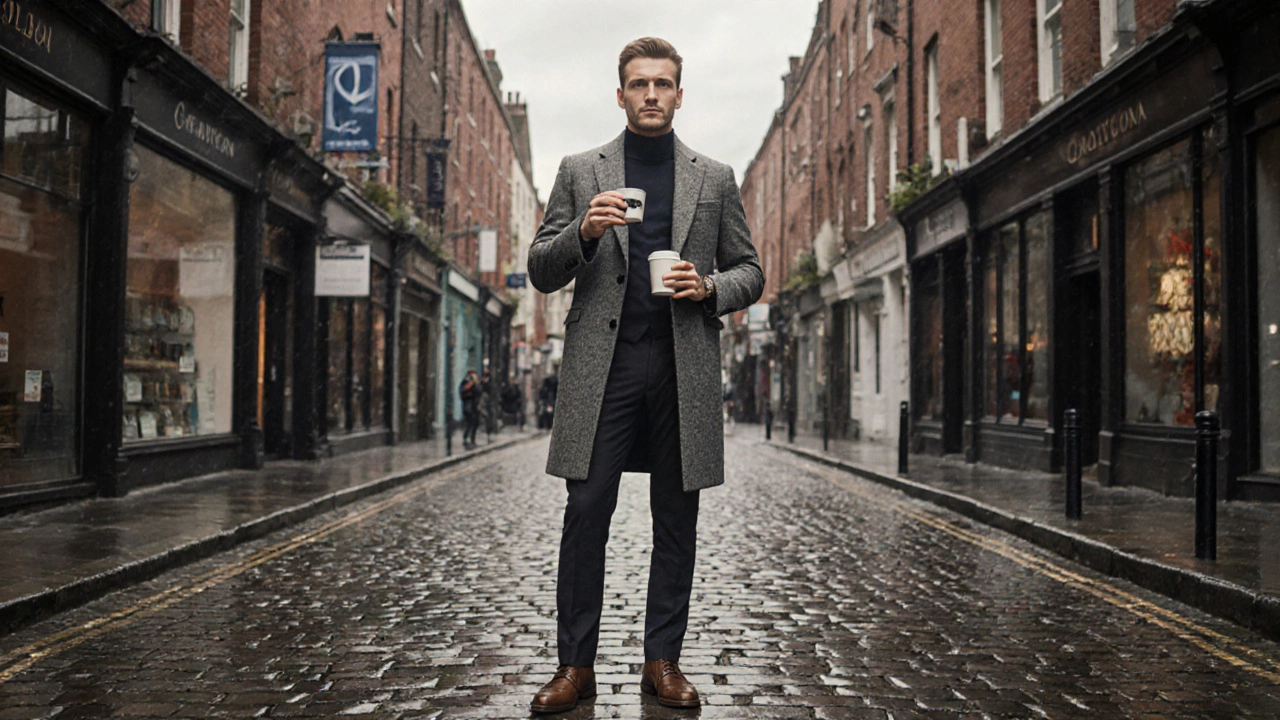
Grey Suit Meaning: What It Really Signals in Ireland’s Casual Culture
When someone wears a grey suit, a classic outer layer often associated with formal settings and professional identity. Also known as charcoal or slate suit, it’s a staple in traditional wardrobes—but in Ireland, it doesn’t carry the same weight as it does elsewhere. You won’t see it on Dublin’s streets every Monday morning like you would in London or New York. Here, the grey suit isn’t a symbol of authority—it’s just another layer, often worn over a wool jumper, with waterproof boots underneath, and a raincoat slung over the chair at the pub.
The Irish dress code, a blend of practicality, modesty, and weather-driven choices that prioritize function over form doesn’t demand suits. It demands dry feet. That’s why even in offices, you’ll find more runners than oxfords, more merino wool than silk ties. A formal wear Ireland, clothing worn for weddings, funerals, or job interviews where appearance matters, but comfort still comes first doesn’t mean stiff collars and polished leather. It means a well-fitted jacket that doesn’t soak through in a downpour, a pair of trousers that won’t cling after walking through a puddle, and shoes that can handle cobblestones without squeaking.
So what does a grey suit mean here? Sometimes, nothing at all. Other times, it’s a quiet signal: I’m going to something important, but I’m not trying to impress you. In Galway, a grey suit might be worn to a funeral, paired with a pair of well-worn boots. In Cork, it might be the only thing a man owns that doesn’t smell like damp wool after three days of rain. In Belfast, it’s often rented for a wedding and returned the next day. The business attire Ireland, the everyday clothing worn in professional environments that balances tradition with the realities of Irish weather has evolved—not because of trends, but because the climate won’t let you pretend.
People here don’t buy suits to look powerful. They buy them because they need something that won’t fall apart at a christening, or get ruined on the way to a meeting in the rain. That’s why local tailors in Limerick and Waterford now offer suits with hidden water-repellent treatments, stretch panels for walking long distances, and hidden pockets for umbrellas. A grey suit in Ireland isn’t about status. It’s about survival.
You won’t find many ads for grey suits in Irish magazines. But you’ll find them in the back of charity shops, in wardrobes of retired teachers, and in the closets of men who still wear them to church on Sundays—not because they have to, but because it’s the only thing they own that still fits right after 20 years of Irish winters. The meaning hasn’t changed. It’s just been rewritten by the weather.
Below, you’ll find real stories from Irish people who wear—or avoid—formal gear every day. From nurses who swap suits for Crocs to grandfathers who still wear their wedding suits to funerals, these aren’t fashion guides. They’re survival logs. And they tell you more about what a grey suit really means here than any dictionary ever could.