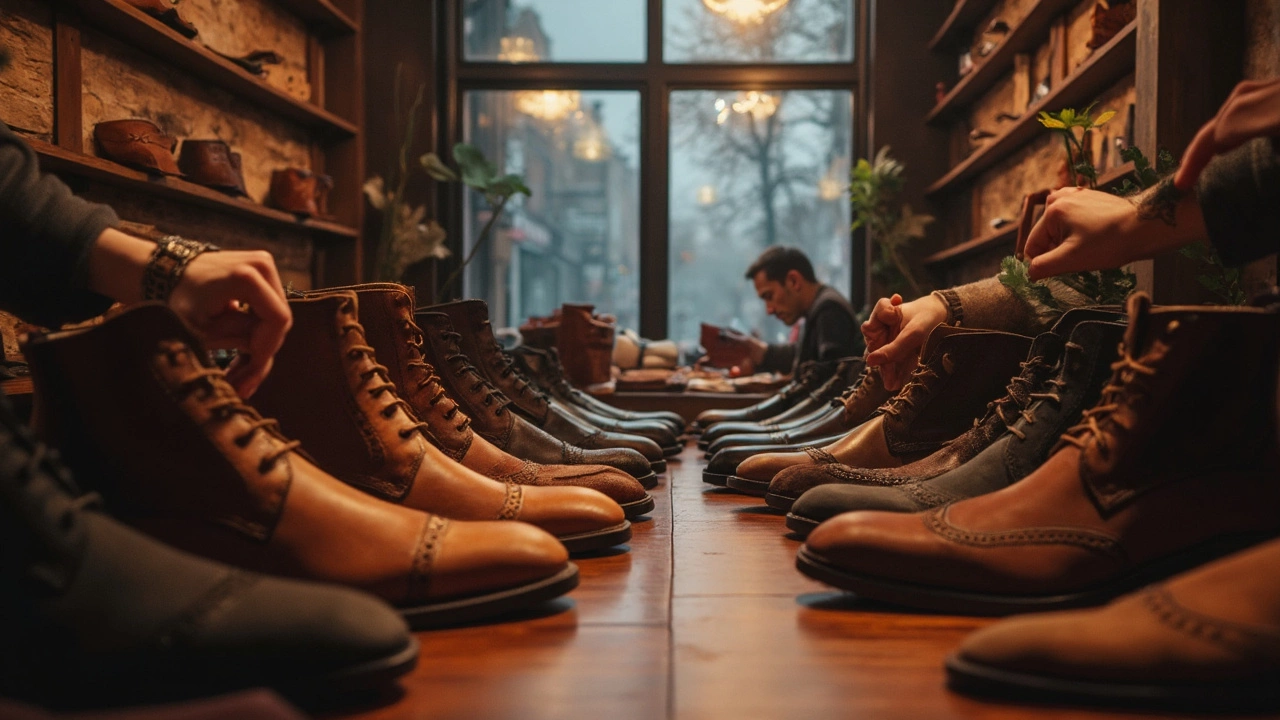
Full-Grain Leather: Why It Matters for Irish Boots and Outdoor Gear
When you’re walking through Irish rain, mud, and puddles every day, your boots need to be built for real life—not just looks. That’s where full-grain leather, the strongest, most natural form of leather made from the outermost layer of the hide, retaining all its original fibers and strength. Also known as top-grain leather, it’s the only kind that actually gets better with age, not worse. Unlike corrected or bonded leather, which gets sanded down and sprayed with plastic coatings, full-grain keeps every scar, wrinkle, and natural mark. That’s not a flaw—it’s proof it’s real. And in Ireland, where weather doesn’t care about trends, real matters.
Why does this matter for your boots? Because full-grain leather breathes, flexes, and seals itself against water naturally. It doesn’t crack when it freezes. It doesn’t peel when it’s wet for days. And when you oil it once a season, it becomes tougher than most synthetic materials. That’s why Irish farmers, nurses, hikers, and commuters all end up here—looking for boots made with this material. It’s not just about durability; it’s about reliability. You don’t want your boots failing when you’re stuck in a field, on a slippery sidewalk, or waiting for the bus in December. Full-grain leather doesn’t quit. It also pairs perfectly with other key features you’ll find in Irish gear: rubber soles that grip wet cobbles, insulated linings for cold mornings, and seam-sealed construction to keep water out. These aren’t random add-ons—they’re designed around one truth: Irish weather is relentless, and your gear needs to match it.
Look at the posts below. You’ll see people asking about Thursday boots, Crocs for nurses, and why trainers in Ireland need to handle mud. What they all have in common? The best ones use full-grain leather. It’s the silent hero behind every pair that lasts five years instead of one. You won’t find it in cheap imports or fast-fashion shoes. You’ll find it in the boots that get passed down, the ones people swear by, the ones that still look good even after they’ve seen three winters. This page isn’t about marketing buzzwords. It’s about what actually works when the rain won’t stop and your feet need to stay dry. Below, you’ll find real stories from Irish people who’ve tested these boots in the real world—on wet roads, in bogs, and through long shifts. No fluff. Just what matters.