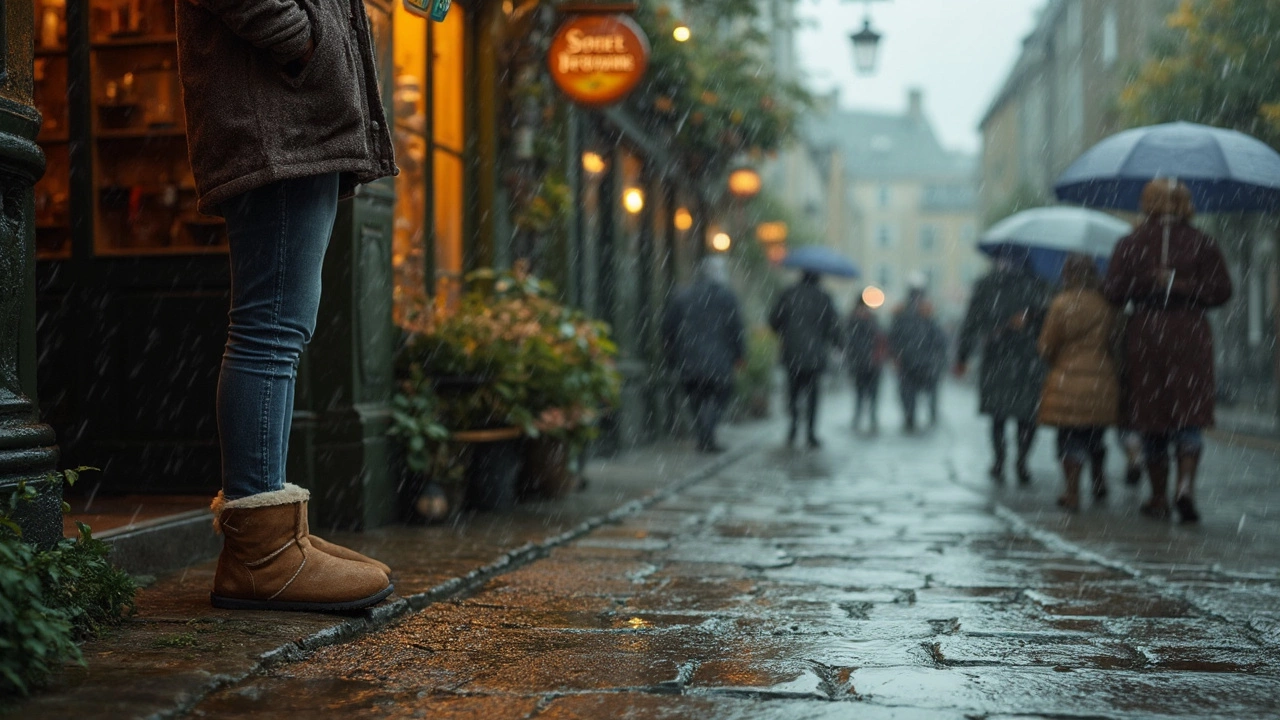
Footwear Drawbacks in Ireland: What Doesn't Work and Why
When it comes to footwear drawbacks, the hidden problems with shoes that seem fine on paper but fail in real Irish conditions. Also known as poor shoe performance, these issues aren’t just about comfort—they’re about safety, health, and daily survival in a country where rain is a daily forecast. You might think a trendy sneaker or a lightweight slip-on is enough for Dublin streets or Galway paths, but in Ireland, the wrong shoes can turn a simple walk into a painful ordeal.
One major footwear drawback, lack of grip on wet surfaces. Also known as slippery soles, this is why so many people here end up with bruised knees or strained ankles after slipping on wet cobblestones or muddy trails. Many casual shoes—like Hey Dudes or thin-soled trainers—have flat, smooth rubber that offers zero traction when the ground is soaked. Nurses, teachers, and delivery workers in Ireland know this firsthand. They don’t wear those shoes because they need to stand all day on wet hospital floors or slippery sidewalks. The same goes for flip-flops, which locals call by their proper name: flip-flops, not thongs. They’re fine for a beach day in August, but not for commuting in October.
Another big problem is lack of insulation and waterproofing, how shoes let in cold and moisture despite looking dry on the outside. Also known as damp feet syndrome, this affects anyone who wears cotton-lined shoes, leather boots without proper seals, or sneakers with no membrane. Ireland’s weather doesn’t care if your shoes look good. It rains for days, then the wind chills you to the bone. Shoes that don’t keep water out mean wet socks, cold toes, and eventually, blisters or fungal infections. Even high-end brands fail here if they’re not built for Atlantic storms.
Then there’s the fit issue. Too tight, and your feet swell after hours on your feet. Too loose, and your heels slap against the ground, causing heel pain or plantar fasciitis. Thursday Boots, for example, are popular because they’re snug but roomy enough for thick socks and swollen feet. Most people don’t realize that shoe size changes with the season in Ireland—feet expand in damp weather. Wearing the same pair year-round without checking fit is a common mistake. And don’t forget heel height. Trainers with no heel lift might look cool, but they offer zero support on uneven ground. In Ireland, a slight heel—around 1.25 inches—helps distribute weight better over wet, sloped sidewalks.
Even the most trusted brands aren’t immune. Nike stopped using leather in many models—not just for ethics, but because leather soaks up water and takes forever to dry. In Ireland, that’s a dealbreaker. Same with jeans: if you wear them, you know they shrink in the dryer. Shoes? They don’t shrink, but they break down faster in constant damp. The real winners here aren’t the flashy names. They’re the ones that last: Clarks, Crocs for nurses, waterproof hiking boots for weekend walkers, and sturdy runners with reinforced soles that locals just call ‘runners’.
What you wear on your feet isn’t fashion here. It’s a tool. And like any tool, if it doesn’t handle the job, it fails. The posts below dig into exactly which shoes fall short, why they fail in Irish conditions, and what you should swap them for. From school uniforms that cost too much to Crocs worn by nurses, from elevated sneakers that actually help to trainers that ruin your knees—you’ll find real stories from people who’ve learned the hard way. No fluff. Just what works, what doesn’t, and why.