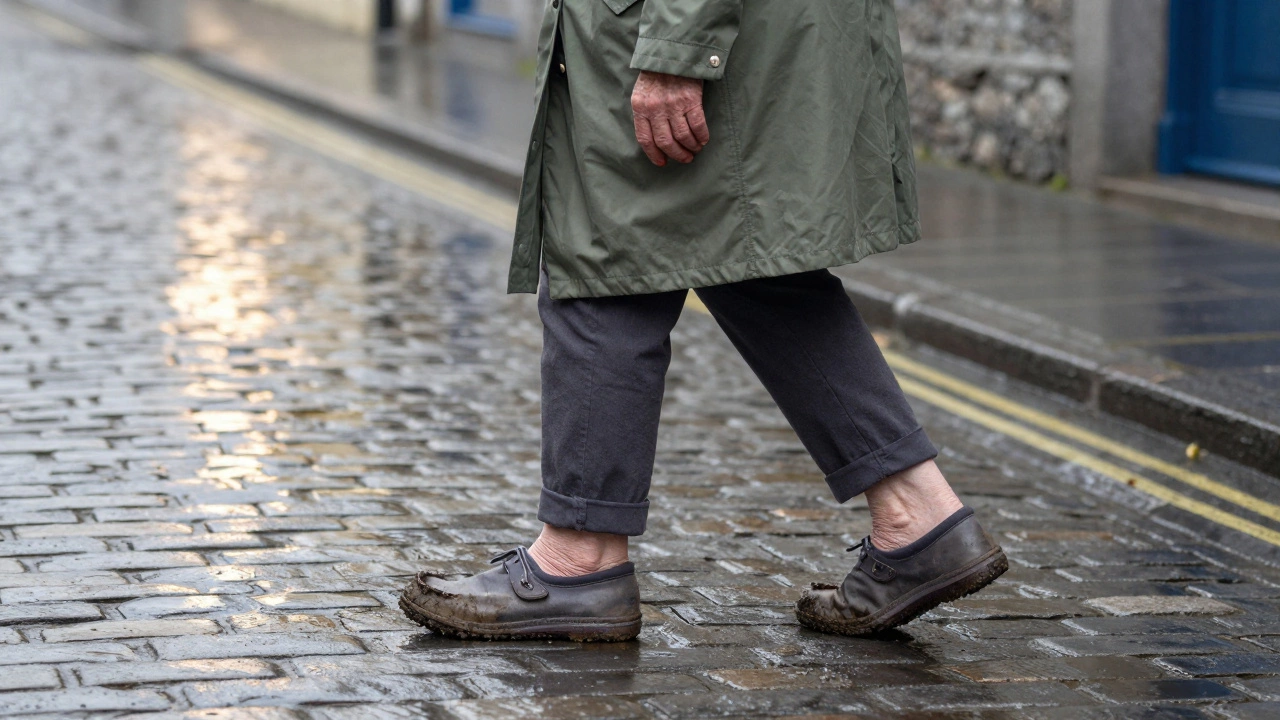
Dublin Trainers: What Makes Them Different for Irish Streets and Weather
When people talk about Dublin trainers, a type of everyday shoe designed for urban walking in wet, uneven conditions. Also known as Irish trainers, they're not the same as gym sneakers or fashion-focused styles you'd see in other cities. In Dublin, a trainer has to survive puddles, cobbled lanes, and sudden downpours—not just look good on a Instagram feed. People here don’t buy them for trends. They buy them because their feet are still working at 6 p.m. after a 10-hour shift, or because they’ve got kids to pick up from school in the rain, or because they walk to the pub and don’t want to slip on wet stone.
That’s why waterproof trainers, shoes with sealed seams and moisture-resistant uppers built for constant damp are the real standard here. You’ll see more Clarks, ECCO, and local brands like Muck Boots’ casual lines than you will flashy, thin-soled designs. These aren’t just shoes—they’re armor against Ireland’s weather. And walking shoes for Irish weather, footwear engineered for grip, support, and durability on uneven, slippery surfaces often look like trainers but perform like hiking boots. The sole isn’t just rubber—it’s carved to bite into wet pavement. The heel? Slightly raised, not for style, but to keep your foot clear of puddles and mud.
What makes a good pair in Dublin? It’s not brand name. It’s whether they dry out overnight. Whether your toes stay warm when you’re waiting for the bus at 7 a.m. in January. Whether they still hold up after six months of walking through slush and rain. People here know the difference between a shoe that looks like it belongs in the city and one that actually works in it. You’ll find trainers with cushioned insoles for standing all day, breathable uppers for summer heatwaves, and reinforced toes for kicking open heavy doors or navigating muddy paths after the rain.
This collection isn’t about hype. It’s about what real people in Dublin, Cork, Galway, and beyond actually wear—and why. You’ll read about trainers with heels that help with posture on uneven ground, why nurses swear by Crocs-style soles, and how some of the most popular shoes here aren’t even called trainers in other countries. There’s advice on fit, on washing them without ruining them, and on what to avoid if you want your feet to survive the Irish climate. No fluff. No trends. Just what works, day after day, in a place where the weather doesn’t wait for you to change your shoes.