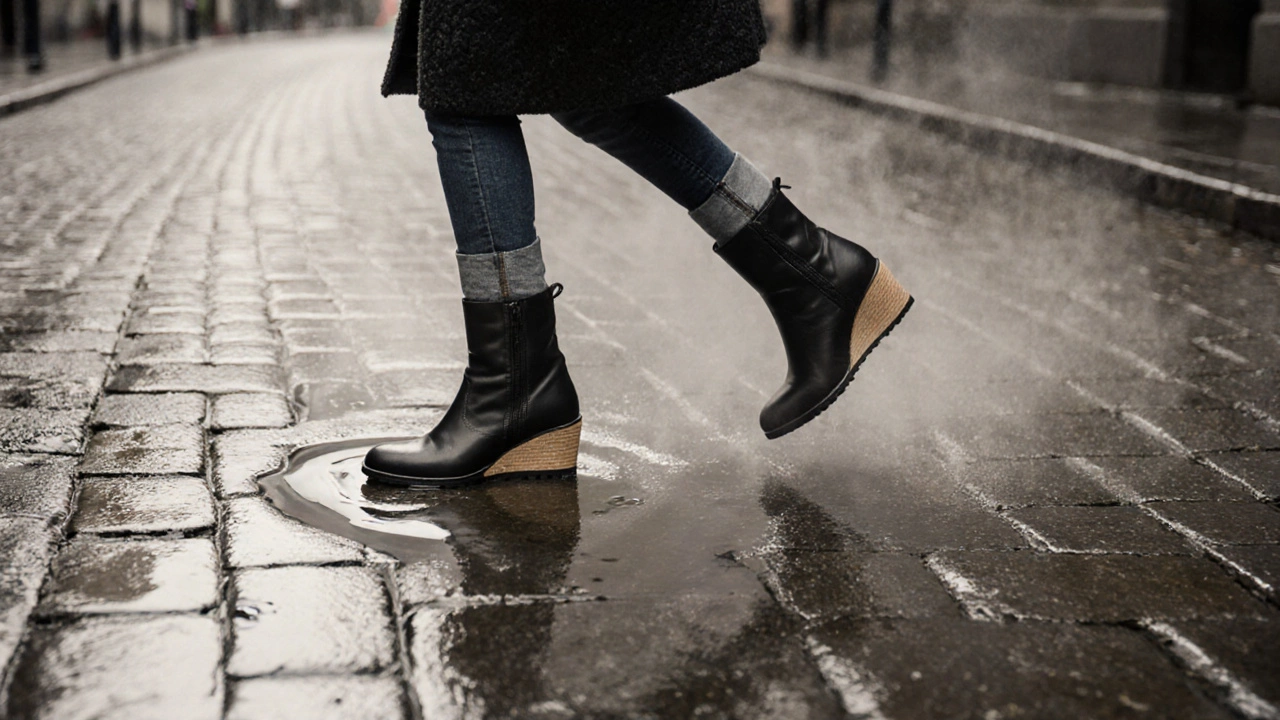
Boot Heel Height: What Really Matters for Irish Weather and Daily Life
When you think about boot heel height, the vertical distance from the sole to the heel of a boot, often measured in inches or millimeters. Also known as heel drop, it’s not just a design choice—it’s a practical factor that changes how your feet feel after hours on wet pavement, muddy trails, or uneven cobblestones. In Ireland, where rain is routine and ground is rarely flat, heel height isn’t about looking tall—it’s about staying steady.
Many Irish walkers, nurses, and farmers don’t choose boots because of fashion. They pick them because the elevated sneakers, shoes with slightly raised soles designed for comfort and traction on slippery surfaces help reduce strain on the knees and lower back. A heel that’s too low can make your foot roll inward on slick surfaces. A heel that’s too high makes you unstable on loose gravel or stair steps. Most people in Ireland who spend all day on their feet—whether it’s a nurse in a hospital, a teacher walking between classrooms, or a gardener in the backyard—stick to heels between 0.5 and 1.5 inches. That’s enough to lift the foot slightly off puddles and mud, without making you feel like you’re climbing a hill every time you take a step.
The work shoes Ireland, footwear designed for long hours of standing, walking, or moving in wet, unpredictable conditions you see in local shops aren’t just labeled as "comfortable." They’re built with specific heel heights to match real-life needs. Crocs, for example, have a heel around 1 inch—just enough to keep feet dry and reduce pressure on the Achilles tendon. Thursday boots, popular here for their fit and durability, often sit at 0.75 inches, giving support without tipping you forward. Even casual trainers sold in Dublin shops now come with subtle heel elevation because people here learned the hard way: flat soles on wet stone lead to sore feet and slipped ankles.
It’s not just about the heel. The sole shape, arch support, and rubber grip matter too. But if you get the heel height wrong, nothing else will fix it. You might think a taller heel looks more stylish, but in Ireland, style fades fast when your feet hurt by lunchtime. The best boots here aren’t the flashiest—they’re the ones that let you walk to the bus, carry groceries, and still stand in the kitchen without wincing.
What you’ll find below are real stories from Irish people who’ve tested boots in every kind of weather—from rainy Galway mornings to icy Dublin sidewalks. They’ll tell you what heel heights actually work, which brands deliver on comfort, and why some "fashion-forward" designs are just a waste of money here. No fluff. No trends. Just what keeps feet working in a country where the ground never stays dry for long.