Do Expensive Suits Look Better? An Irish Perspective
Find out if pricey suits truly look better for Irish men. Explore fabric, fit, tailors in Dublin and compare cost versus lasting style.
When you hear bespoke tailoring, custom-made clothing created from scratch for an individual’s exact measurements and style preferences. Also known as made-to-measure, it’s not just for formal events—it’s how many Irish people get clothes that actually work in their weather. In a country where rain is a daily forecast and wind can rip through a thin jacket, off-the-rack doesn’t cut it. You need fabric that breathes but doesn’t soak, seams that hold up after a hundred muddy walks, and a cut that lets you move without pulling at the shoulders.
That’s where Irish tailoring, the tradition of hand-cutting and stitching garments locally using time-honored techniques comes in. It’s not about flashy labels or celebrity endorsements. It’s about the tailor in Galway who knows how to adjust a coat’s length so it doesn’t drag in puddles, or the cutter in Cork who uses waxed cotton because it repels rain better than any synthetic blend. custom suits Ireland, suits designed and built specifically for Irish body types and climates aren’t just about looking sharp—they’re about staying dry, warm, and comfortable through long winters and unpredictable summers. These aren’t the same suits you’d find in London or New York. Irish bespoke tailoring builds for movement: wider armholes for lifting groceries, longer sleeves for layering, and reinforced hems that don’t fray after walking the same muddy path every day.
And it’s not just suits. handmade clothing, garments crafted individually by skilled artisans using traditional methods includes coats, trousers, even dresses—everything built to last through seasons, not just trends. You’ll find Irish women in Dublin wearing custom wool dresses that don’t cling when wet, or men in Limerick with trousers that fit just right over their hiking boots. It’s practical elegance. No one here is buying a £2,000 suit because it’s trendy. They’re buying it because it’s the only thing that won’t leak when they’re waiting for the bus in November.
What you’ll find in these posts isn’t a list of high-end boutiques or runway looks. It’s the real talk: how to spot a true tailor, what fabrics actually work in Irish weather, why a well-fitted jacket saves you money over five years, and why some people swear by hand-stitched buttonholes even when machine-made ones are cheaper. You’ll learn why a tailor in County Clare might use a different shoulder pad than one in Belfast, and how local climate shapes every seam. This isn’t about luxury—it’s about survival, dignity, and dressing for a life that doesn’t stop when it rains.
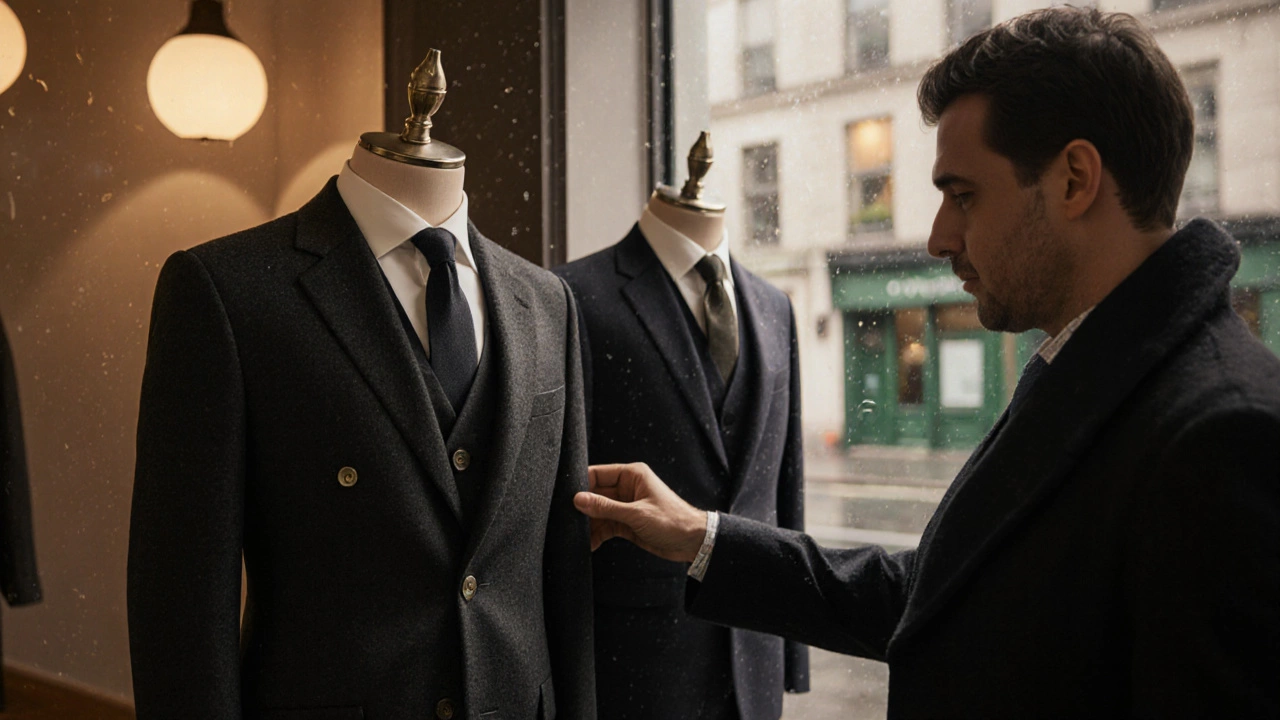
Find out if pricey suits truly look better for Irish men. Explore fabric, fit, tailors in Dublin and compare cost versus lasting style.