Hand‑Sewn vs Machine‑Sewn Suits: What Irish Shoppers Should Know
Explore the pros and cons of hand‑sewn vs machine‑sewn suits for Irish shoppers, covering fit, durability, cost, fabrics, and local tailoring options.
When you hear bespoke suit Ireland, a custom-tailored suit made to fit an individual’s body, posture, and lifestyle in Ireland. Also known as custom suit, it’s not just about looking sharp—it’s about staying dry, comfortable, and confident through Ireland’s unpredictable weather. Unlike off-the-rack suits that fall apart after a few rainy commutes, a true bespoke suit in Ireland is built for life here: thick wool blends, reinforced seams, and subtle waterproofing that doesn’t scream "I’m dressed up." It’s the difference between a suit that looks good in photos and one that lasts through weddings, funerals, job interviews, and pub meetings in Galway or Cork.
What makes a bespoke suit Irish isn’t just the tailor—it’s the context. Irish formal wear, clothing designed for practical elegance in a climate where rain is constant and formality is quiet doesn’t mean tuxedos and bow ties. It means a charcoal grey suit with a slightly longer jacket to cover the backside when sitting on wet benches, or a vest that doubles as insulation under a waxed cotton coat. Custom suits Dublin, handmade suits crafted by local tailors who understand Irish posture, movement, and weather are often made with a bit more room in the shoulders—because Irish men don’t just sit at desks; they carry groceries, walk dogs, and stand in line at the post office for an hour. Women, too, are turning to bespoke tailoring for structured blazers and wool dresses that don’t cling when wet.
And it’s not just about the fabric. men's suits Ireland, suits worn by Irish professionals, tradesmen, and retirees who need to look polished without sacrificing comfort often skip the stiff collar. Why? Because in a country where 70% of days are overcast, you don’t want to sweat through your shirt before noon. The best Irish bespoke tailors know this. They use breathable linings, avoid synthetic materials that trap moisture, and cut the sleeves so you can raise your arms without the jacket riding up. You’ll find these suits in places like Temple Bar, Limerick’s city center, or even small shops in County Clare—not in flashy malls, but in quiet corners where the tailor remembers your name and how much you walk each day.
If you’ve ever worn a suit that felt like a costume in Ireland, you know why bespoke matters. It’s not luxury—it’s survival. The suits that work here aren’t bought for Instagram. They’re bought because they don’t fall apart on the bus, because they dry fast after a downpour, because they still look neat after a long day on your feet. That’s the Irish way. And below, you’ll find real stories from people who’ve worn them—to weddings, to funerals, to job interviews in the rain—and learned what actually makes a suit last in this country.
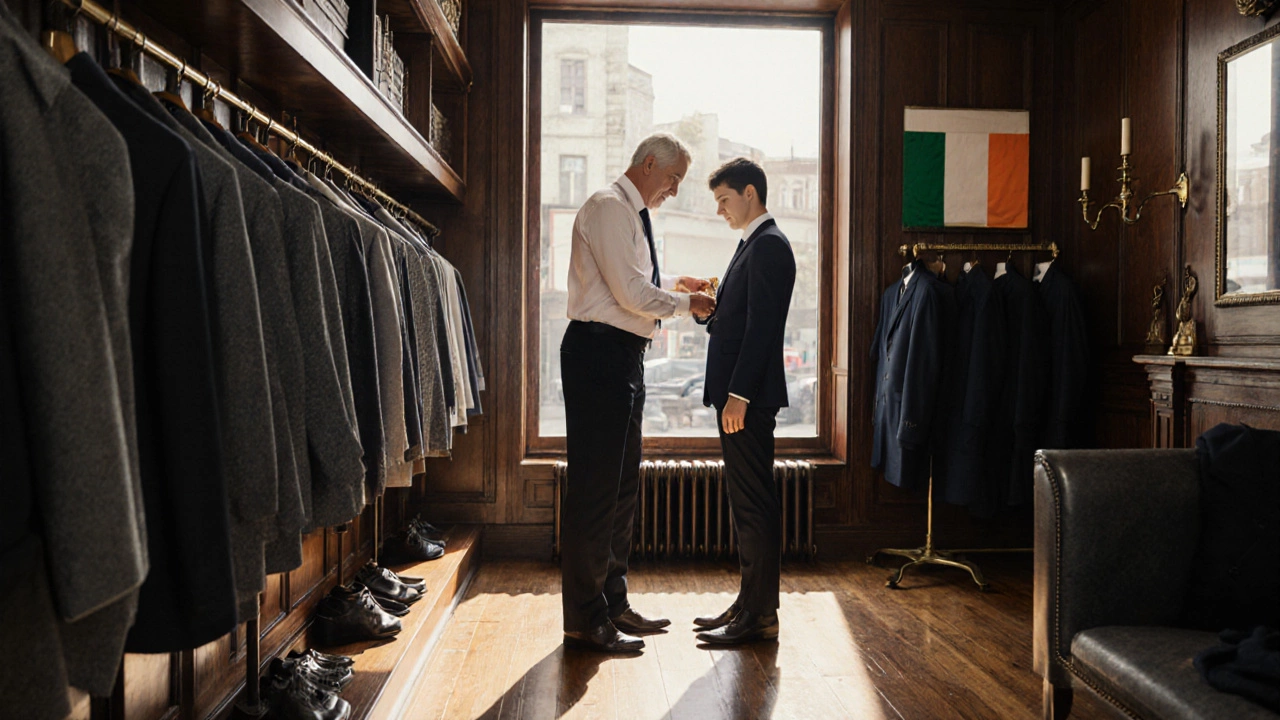
Explore the pros and cons of hand‑sewn vs machine‑sewn suits for Irish shoppers, covering fit, durability, cost, fabrics, and local tailoring options.