Suit Storage Risk Calculator
Ireland's high humidity makes proper storage critical. Find out if your current method is safe.
Risk Assessment
Select OptionsExpert Recommendation
You’ve just bought a sharp new suit from Brown Thomas or maybe a solid workhorse from Penneys. Now you’re staring at it, wondering where to put it when you aren’t wearing it. Should you keep a suit in a bag? It’s a question that pops up often among professionals in Dublin and beyond, especially as we head into the damp, unpredictable Irish autumn. The short answer is: it depends on the bag, the fabric, and how long you plan to leave it there. But the wrong choice can lead to creases that won’t iron out, mildew smells that linger for weeks, or worse-fabric degradation.
Living in Ireland means dealing with high humidity levels, particularly during our wet season from October through March. If you toss your wool blend into a plastic dry-cleaning bag and shove it under the bed, you might return to find your investment ruined by mould spores. This guide breaks down exactly when a bag is your best friend and when it’s your worst enemy, tailored specifically for the climate and lifestyle here in Ireland.
The Humidity Factor: Why Ireland Demands Careful Storage
Here’s the reality of storing clothes in this country: our air is moist. Average relative humidity in many parts of Ireland hovers between 70% and 90% during winter months. Wool, cotton, and silk are hygroscopic, meaning they absorb moisture from the air. When trapped in an enclosed space without airflow, that moisture has nowhere to go. It settles into the fibres, creating a breeding ground for bacteria and mould.
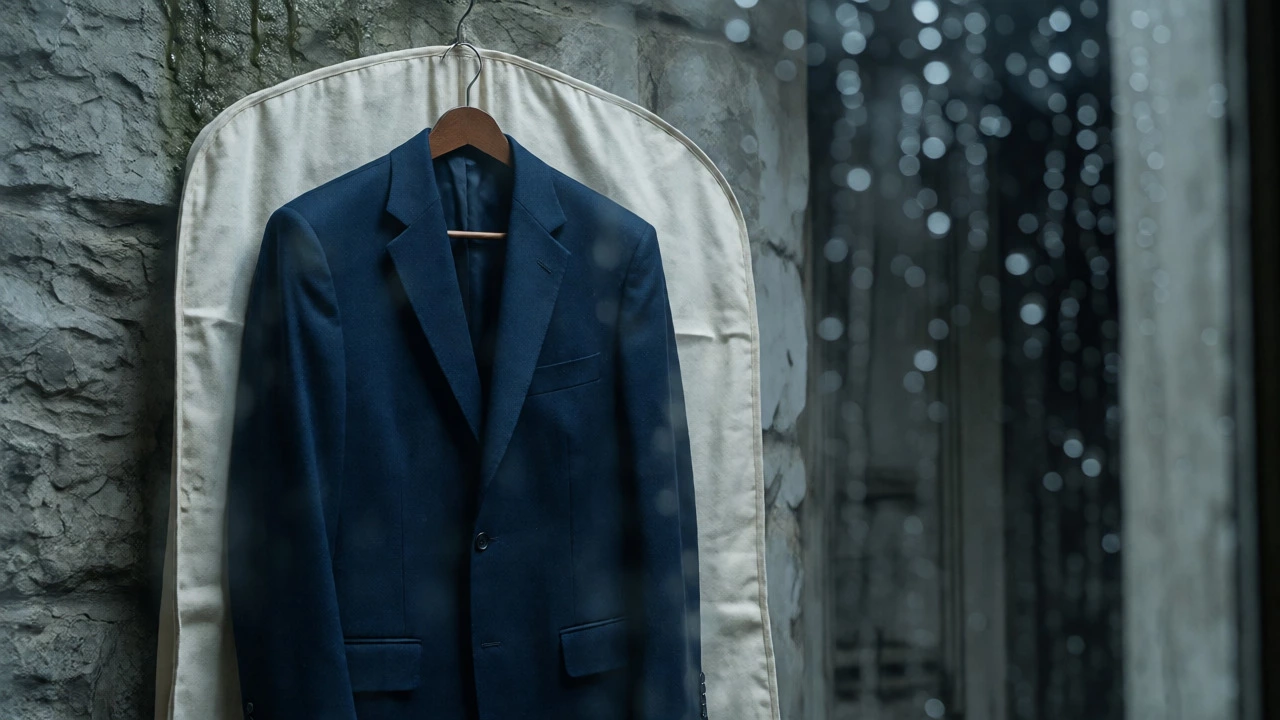
If you live in a period property in Cork or Galway with older stone walls, condensation can be a real issue. Keeping a suit in a sealed plastic bag in such an environment is a recipe for disaster. You need breathability. This doesn’t mean you should never use a bag; it means you must choose the right type. A breathable canvas or cotton garment bag allows air circulation while protecting against dust. A cheap plastic polyethylene bag acts like a greenhouse, trapping heat and dampness against the fabric.
| Storage Method | Breathability | Protection Level | Risk in Ireland | Best For |
|---|---|---|---|---|
| Plastic Dry-Cleaning Bag | Low | Dust only | High (Mould risk) | Short-term transport only |
| Cotton/Garment Bag | Medium-High | Dust & Light Moisture | Low | Long-term home storage |
| Travel Suit Case | Low-Medium | Crush Protection | Medium (if packed tight) | Air travel (Dublin to London/NY) |
| Open Wardrobe Rail | High | Minimal | Negligible | Frequently worn suits |
When a Garment Bag Is Essential
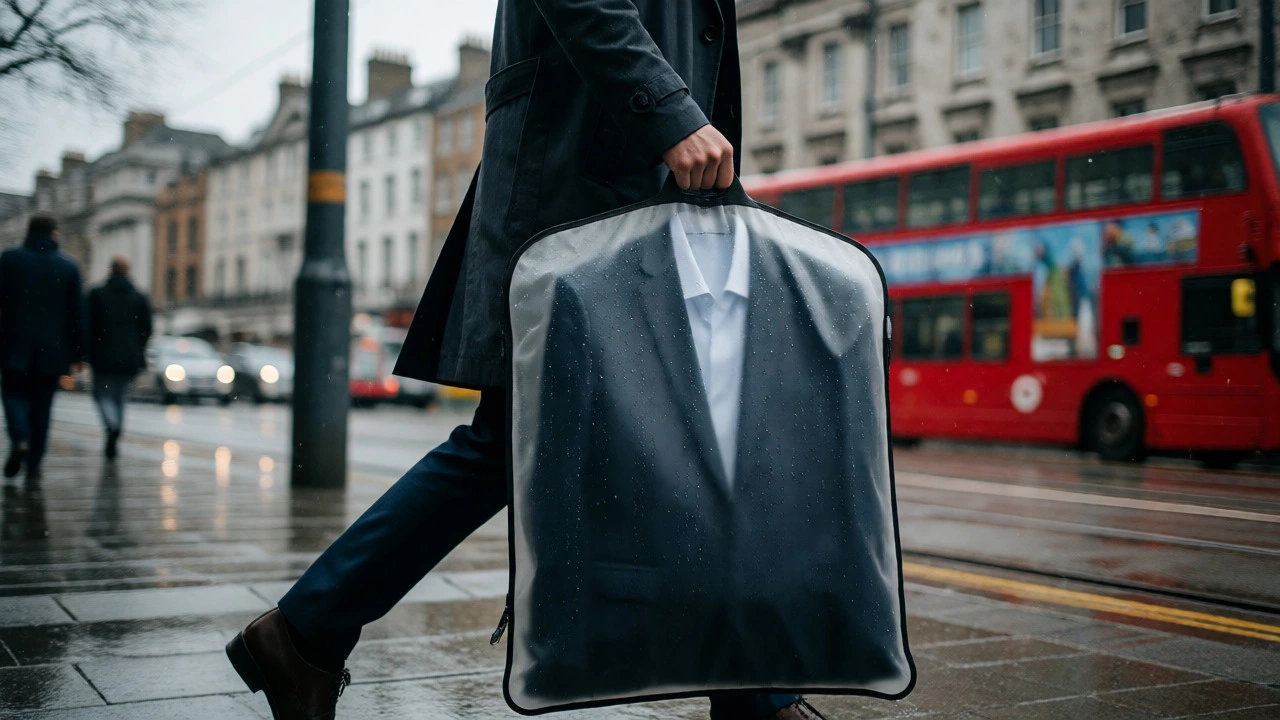
There are specific scenarios where keeping a suit in a bag isn’t just recommended-it’s mandatory. First, consider the commute. If you’re taking the Luas or DART in Dublin city centre, you are exposed to rain, wind, and the general grime of public transport. A water-resistant garment bag protects your jacket from getting splashed on the way to the office. Wet wool takes days to dry properly and can lose its shape if dried too quickly near a radiator.
Second, think about seasonal rotation. In Ireland, we don’t have extreme temperature swings like some other countries, but we do have distinct seasons. Your heavy tweed or flannel suits used for weddings in winter need to be stored differently than your lightweight linen or tropical wool suits used for summer garden parties in Kildare or Wicklow. During the off-season, placing these suits in a breathable cotton garment bag before putting them in the back of your wardrobe prevents dust accumulation and keeps moths at bay. Moths are a genuine nuisance in Irish homes, particularly in older buildings with wooden floors. They love undisturbed, dark spaces.
Third, business travel. Flying out of Dublin Airport to attend conferences in Berlin or New York requires protection. A dedicated suit carrier or a foldable travel bag designed for suiting prevents deep creases along the shoulders and lapels. However, even then, unpack immediately upon arrival. Don’t let your suit sit in a confined space for more than 24 hours if possible.
The Dangers of Improper Bagging
Let’s talk about what goes wrong. Many people make the mistake of leaving their suits in the thin plastic bags provided by dry cleaners. These bags are meant for transport, not storage. They restrict air flow completely. If you hang your suit in one of these in your bedroom closet, which likely lacks ventilation compared to a walk-in wardrobe, you risk yellowing of white shirts underneath and a stale odour developing on the jacket itself.
Another common error is overpacking. If you stuff multiple suits into a single large duffel bag or suitcase for a holiday abroad, they will crush each other. The shoulder pads deform, and the natural curve of the sleeve gets flattened. Once those structural elements are compromised, no amount of steaming will fully restore the original silhouette. It’s better to pack fewer items properly than to cram everything in and ruin the fit.
Also, beware of chemical off-gassing. Cheap synthetic garment bags made from low-quality polyester can emit volatile organic compounds (VOCs) over time. While rare, this can subtly affect the scent of expensive fabrics. Stick to natural materials like cotton, muslin, or high-quality non-woven polypropylene that is explicitly labelled as breathable.
Best Practices for Storing Suits in Ireland
If you decide to store your suit in a bag, follow these steps to ensure longevity:
- Brush it first: Before bagging, use a horsehair brush to remove surface dust and lint. This prevents particles from grinding into the fabric fibres while compressed.
- Empty the pockets: Remove wallets, keys, and tissues. Weight distorts the pocket lining and can cause visible bulges over time.
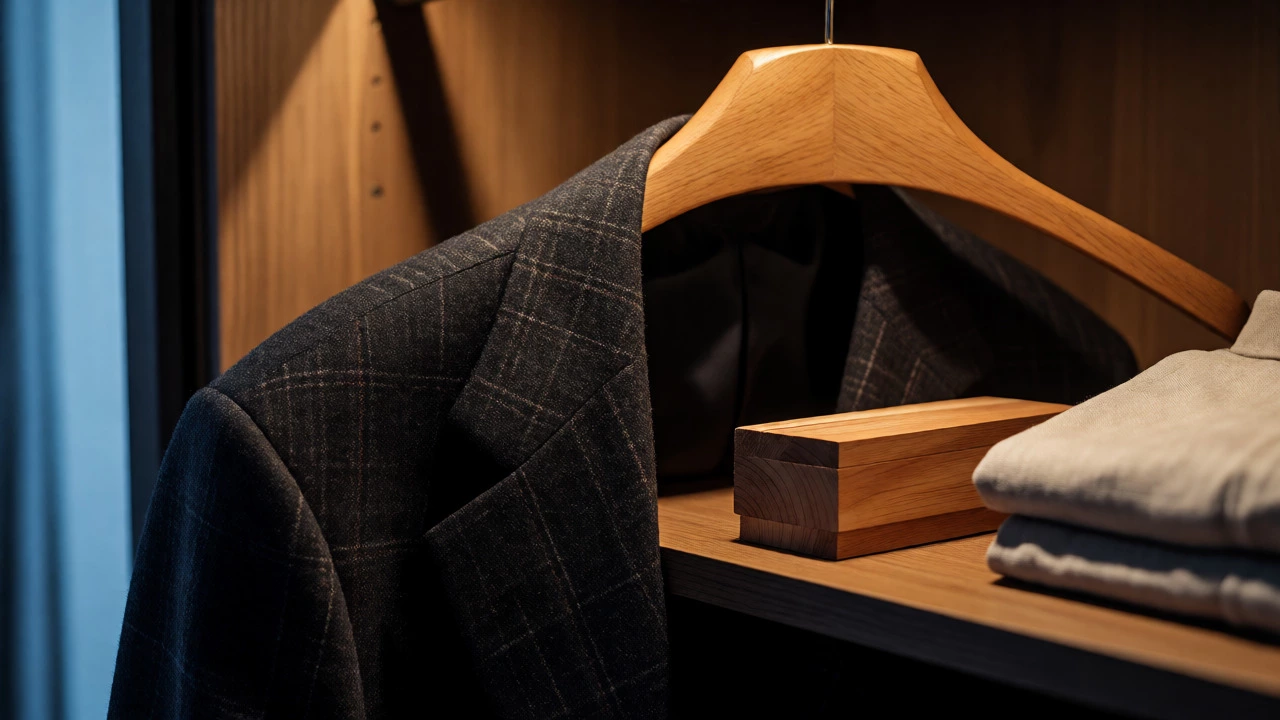
- Use cedar blocks: Place a small cedar sachet inside the garment bag. Cedar repels moths naturally and absorbs excess moisture, which is crucial in our humid climate.
- Leave room to breathe: Ensure the zipper isn’t fully closed if the bag is hanging in a well-ventilated area. Or, opt for a bag with mesh panels.
- Check periodically: Every few months, open the bag and inspect the fabric. Look for any signs of spotting or smell. Air it out for an hour if needed.
For those living in apartments in Dublin or Cork with limited closet space, consider using vacuum-sealed bags only for very short-term moves, never for long-term storage. The compression can damage the resilience of wool fibres, making them look flat and lifeless permanently.
Alternatives to Bags: What Works Better?
Is there a better option than a bag? Often, yes. A wide, wooden hanger is superior for daily wear. It supports the shoulder structure correctly. If you have the space, simply hanging the suit in your wardrobe is the healthiest option. Just ensure there’s at least a few inches of space between garments so air can circulate.
For seasonal storage, a ventilated wardrobe box is a great alternative. These are rigid boxes with ventilation holes, offering more protection than a soft bag while still allowing airflow. Brands available in Irish homeware stores often sell these specifically for clothing preservation.
If you are worried about light exposure fading your suit colours, a dark cotton garment bag is ideal. Sunlight damages dye bonds in fabrics over time. In south-facing rooms in houses across Leinster, direct sunlight can bleach navy blues and charcoals significantly within a year. A bag solves this easily.
Troubleshooting Common Issues
What if you already kept your suit in a plastic bag for six months? Don’t panic. Here’s how to recover:
- Air it out: Hang the suit outside in fresh air (not direct sun) for 24-48 hours. The breeze helps dissipate stagnant odours.
- Steam gently: Use a handheld steamer to relax minor wrinkles. Avoid touching the nozzle directly to the fabric to prevent water spots.
- Inspect for mould: Check underarms and collars closely. If you see tiny black or green spots, take it to a professional cleaner immediately. Do not try to scrub mould yourself, as it can spread.
- Press lightly: If creases remain, use a pressing cloth and a cool iron. Never iron directly on shiny areas like satin linings.
Remember, prevention is cheaper than restoration. A €50 garment bag is worth it if it saves a €300 suit from premature wear.
Can I store my suit in the plastic bag from the dry cleaner?
No, not for long-term storage. Plastic bags trap moisture and prevent the fabric from breathing, which can lead to yellowing and mould growth, especially in Ireland's humid climate. Remove the plastic bag as soon as you get home from the dry cleaner and replace it with a breathable cotton garment bag or hang it freely in your wardrobe.
Do I need a special bag for traveling with a suit?
Yes, a dedicated suit carrier or garment bag is highly recommended for travel. Regular suitcases crush the structured shoulders and lapels. A suit carrier allows the jacket to hang relatively straight, minimizing deep creases. If you must use a suitcase, fold the suit carefully using the 'bundle' method and place it on top of other items.
How does humidity in Ireland affect suit storage?
Ireland's high average humidity means that enclosed spaces can become damp quickly. Wool and other natural fibres absorb this moisture. Without proper ventilation, this leads to musty smells and potential mould. Always ensure your storage solution allows for air circulation, such as using canvas bags or leaving gaps between hangers in your wardrobe.
Are cedar blocks necessary for storing suits in bags?
While not strictly necessary, they are highly beneficial. Moths are a common problem in Irish homes, and cedar acts as a natural repellent. Additionally, cedar helps regulate moisture levels inside the bag, reducing the risk of damp-related issues. Refresh the scent every few months by lightly sanding the wood.
How long can a suit stay in a garment bag?
If the bag is breathable (cotton or canvas), a suit can stay in it indefinitely, provided you check it occasionally. If the bag is synthetic or semi-breathable, limit storage to a few months. Always remove the suit for airing out every few months to maintain fabric integrity and freshness.