Leather Shoe Storage Advisor
Key Takeaways for Irish Shoe Owners
- Avoid original cardboard boxes for long-term storage in damp Irish homes.
- Breathability is non-negotiable to prevent mold growth.
- Cedar shoe trees are the best defense against humidity and creases.
- Dust bags offer a better balance of protection and airflow than boxes.
- Climate control (or a good dehumidifier) is essential for leather longevity.
The Problem with Original Cardboard Boxes
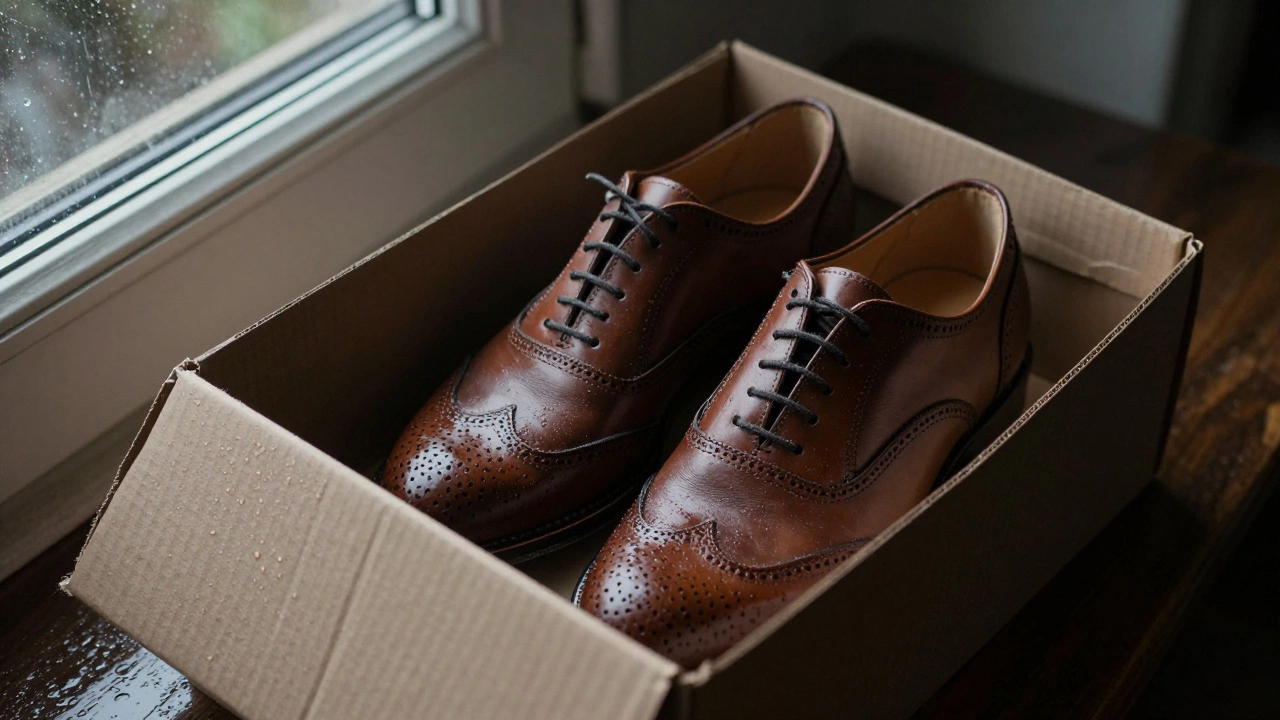
When you buy a new pair of shoes, the box they come in is designed for shipping and retail display, not for long-term preservation. Cardboard is a porous material made from wood pulp that absorbs moisture from the environment. In a Dublin terrace house or a cottage in Galway, where humidity often spikes, a cardboard box acts like a sponge. It sucks moisture from the air and holds it right against your leather.
If you leave your shoes in these boxes during a rainy October, you're essentially creating a tiny, damp sauna. Leather is a skin; it needs to breathe. When you seal it in a box, you block the airflow, which can lead to the growth of mildew. Have you ever opened a box after six months only to find a white, powdery film on the soles? That's the result of poor ventilation and trapped Irish humidity. While the box protects the shoes from dust, it fails the most important test: moisture management.
Breathability vs. Protection
You might wonder why people suggest boxes at all. The logic is simple: they keep dust off and prevent other shoes from scratching the leather. But in the Irish market, protection from the elements is more important than protection from a little bit of dust. The goal is to find a middle ground where the shoes are shielded but not suffocated.
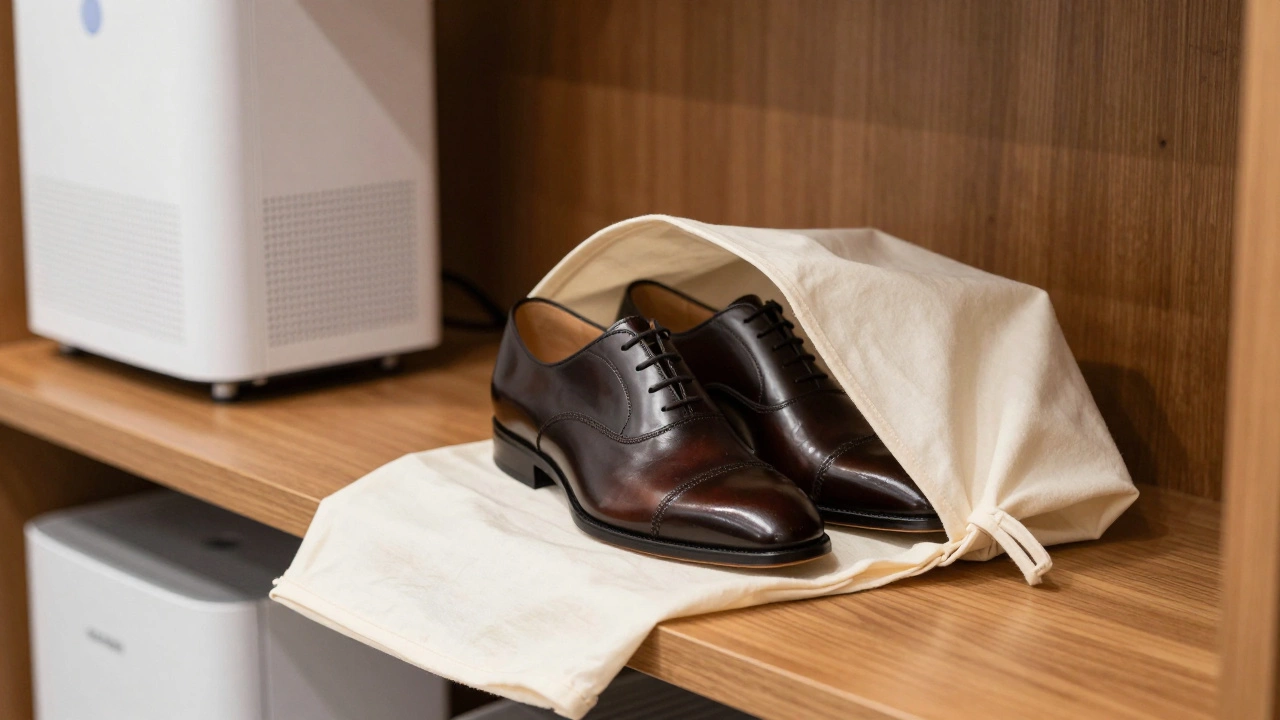
Instead of cardboard, look toward Cotton Dust Bags, which are breathable fabric pouches usually made from natural fibers that allow air circulation while blocking debris. Most high-end leather footwear comes with these. Using a fabric bag allows the leather to "off-gas" and prevents the stagnant air environment that causes smells and mold. If you're storing a pair of formal Oxfords for the off-season, a cotton bag in a well-ventilated wardrobe is a much safer bet than a sealed box.
| Method | Breathability | Dust Protection | Moisture Control | Verdict for Ireland |
|---|---|---|---|---|
| Original Cardboard Box | Low | High | Poor (Absorbs water) | Avoid Long-term |
| Plastic Bins | Zero | Very High | Dangerous (Traps sweat) | Never Use |
| Cotton Dust Bags | High | Medium | Good | Recommended |
| Open Shoe Racks | Maximum | Low | Excellent | Best for Daily Wear |
The Magic of Cedar Shoe Trees
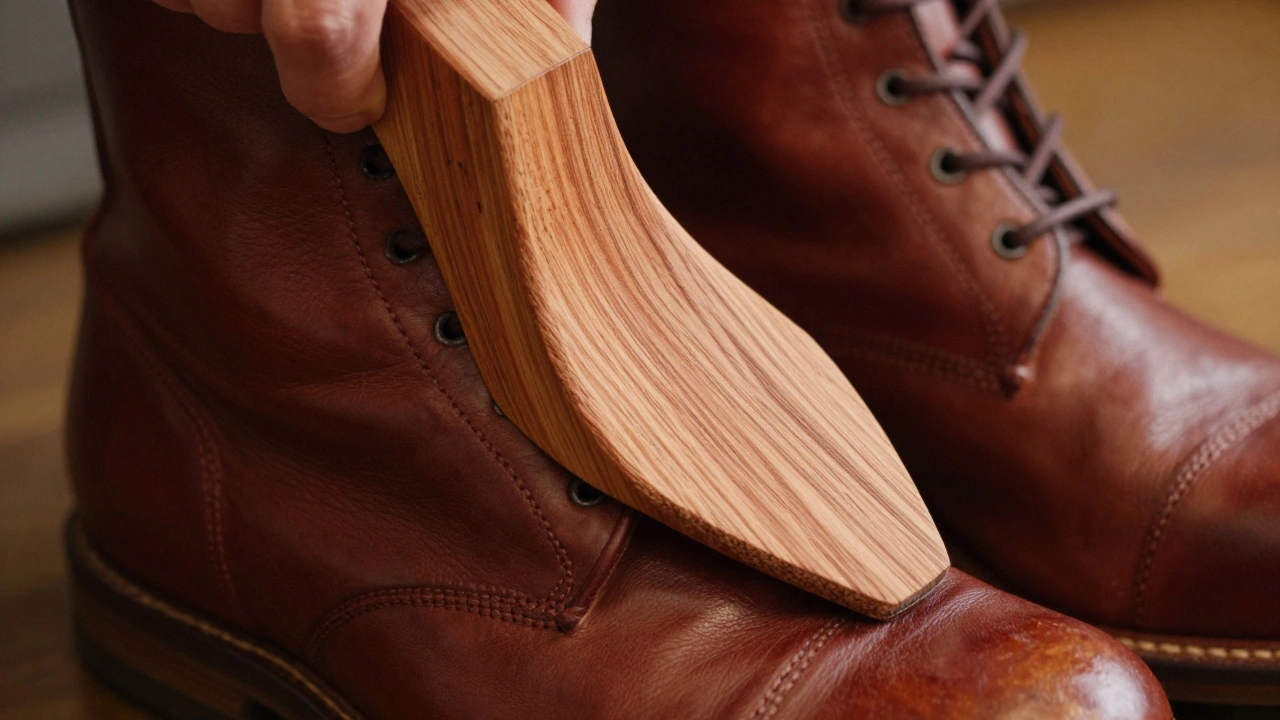
If you're serious about your footwear, the storage container is actually secondary to what you put inside the shoe. Cedar Shoe Trees are aromatic wood inserts designed to maintain the shape of a shoe and absorb moisture from the lining. In Ireland, these aren't just a luxury; they're a necessity.
When you wear your shoes through a drizzly day in Cork, the leather absorbs moisture and sweat. If you put those shoes straight into a box, that moisture stays trapped in the toe box and heel. A cedar tree does two things: it pulls that moisture out of the leather to prevent rotting, and it supports the structure so the leather doesn't collapse or develop deep creases. Plus, the natural scent of cedar helps neutralize the odors that come with wearing leather in wet conditions.
Pro tip: Never put shoes in a box-or even on a rack-until they have had at least 24 hours to dry naturally. Putting damp shoes in a closed environment is the fastest way to ruin the internal lining and create a permanent damp smell that no amount of polish can fix.
Strategic Storage Based on Irish Seasons
Your storage strategy should shift as the calendar turns. During the wet winter months, the priority is dehumidification. If you have a dedicated wardrobe or a boot room, using a small dehumidifier can protect not just your shoes, but your entire collection of leather goods. Avoid storing shoes in basements or under-stairs cupboards, as these are typically the dampest parts of an Irish home.
When summer hits and you're swapping your heavy boots for lighter loafers, don't just toss the boots in a box and shove them under the bed. Clean them first. Use a damp cloth to remove salt and grime from the roads (especially if you've been walking near the coast where salt air is prevalent), condition the leather with a quality cream, and then place them in breathable bags. This prevents the leather from drying out too much in the warmer months while ensuring no winter grime is eating away at the material.
Common Storage Mistakes to Avoid
One of the biggest errors people make is using airtight plastic containers. It seems logical-keep the water out-but it's actually a recipe for disaster. Leather needs to exchange air with its surroundings. Plastic traps any residual moisture inside, which can lead to a chemical reaction called "hydrolysis" where the polyurethane in some sole materials begins to crumble.
Another mistake is overcrowding your shoe rack. When shoes are pressed tightly against each other, air cannot circulate. This creates pockets of stagnant air where mold can thrive. Give your shoes some space. If you're short on room in a small apartment in Dublin, consider vertical shelving that allows air to flow around each pair.
Maintaining the Leather Between Storage
Storage is only half the battle. To ensure your shoes survive the transition from the box to the street, you need a solid maintenance routine. Regular polishing doesn't just make shoes look sharp for a night out at a pub in Temple Bar; it creates a protective barrier. Wax-based polishes help repel the inevitable Irish rain, making the leather less likely to absorb water in the first place.
If your shoes do get soaked through, avoid the temptation to put them on a radiator to dry faster. High, direct heat can shrink the leather and cause it to crack. Instead, stuff them with newspaper or a cedar tree and let them dry slowly at room temperature. Once dry, apply a leather conditioner to restore the oils that the water may have stripped away.
Can I use plastic shoe boxes if I keep them open?
Yes, as long as the lids are not sealed. If the box is open, the air can circulate, and you get the dust protection of a box without the moisture trapping. However, a fabric bag is still superior for leather.
How often should I take my shoes out of storage to check them?
In a damp climate like Ireland, it's a good idea to check your stored leather every 2-3 months. Check for any signs of mold or dryness and give the leather a light buffing to keep it supple.
Will cedar trees really stop mold in my shoes?
They don't magically kill all mold, but they significantly reduce the risk by absorbing the moisture that mold needs to grow. They are one of the most effective tools for leather preservation in high-humidity areas.
Is it okay to store shoes in the original box if I use silica gel packets?
Silica packets can help absorb a small amount of moisture, but they have a limit. Once the packet is saturated, it stops working. In the long run, breathability is a more sustainable solution than relying on small chemical desiccants.
What is the best way to store rain-soaked leather boots?
Wipe off the mud, remove the laces and insoles if possible, and stuff them with cedar trees or crumpled newspaper. Leave them in a well-ventilated area away from direct heat sources until completely dry before placing them on a rack.
Next Steps for Your Footwear Collection
If you've realized your shoes are currently suffocating in cardboard boxes, start by moving them to an open-air system. Invest in a set of cedar trees for your most expensive pairs and swap out those cardboard boxes for cotton bags. If you live in a particularly damp area of the coast or the west of Ireland, a small dehumidifier in your closet will be the best investment you make for your wardrobe. Keep the leather conditioned, let them breathe, and they'll carry you through many more rainy Irish winters.