
Irish Workplace Footwear Checker
Not sure if those sandals are a career move or a misstep? Answer the questions below to get an instant verdict based on current Irish workplace norms.
Verdict:
...Key Factors & Tips
You’re walking into a meeting on Grand Canal Dock, the rain has finally stopped for five minutes, and you’re wondering if those stylish sandals are going to cost you credibility. It’s a question that pops up every spring when the temperature nudges above 15 degrees and everyone starts itching to ditch their boots. The short answer? It depends. But "it depends" isn’t very helpful when you’re standing in front of your mirror trying to decide between loafers and slides. Let’s break down exactly when open-toed shoes are okay in Irish workplaces, where they’re a hard no, and how to pull them off without looking like you’re heading to a pub crawl instead of a boardroom.
The State of Office Dress Codes in Ireland
Irish workplace culture has shifted dramatically over the last decade. Ten years ago, showing toes in a Dublin financial district office was about as likely as seeing snow in July. Today, thanks largely to the tech sector boom and a general move toward comfort-first policies, the rules have loosened. However, this shift isn’t uniform across the island. In Dublin, particularly in the Silicon Docks area around Google and Meta offices, wearing open-toed shoes is often perfectly acceptable. Conversely, walk into a law firm on Dame Street or a traditional bank branch in Cork city centre, and you might still get a raised eyebrow.
The key driver here is industry. If you work in creative agencies, tech startups, or media, your colleagues are probably already wearing Birkenstocks or high-quality leather sandals. But if you’re in finance, legal services, or corporate consulting, the expectation leans heavily toward closed-toe professionalism. It’s not just about tradition; it’s about client perception. When you’re meeting clients from conservative industries, your footwear signals attention to detail. A scuffed sandal can look sloppy, whereas a polished loafer looks intentional.
| Sector | Typical Dress Code | Open-Toe Status | Notes |
|---|---|---|---|
| Tech & Startups | Casual / Smart Casual | Generally Accepted | Focus on clean, modern designs. Avoid flip-flops. |
| Finance & Banking | Business Formal | Rarely Accepted | Stick to pumps, oxfords, or loafers. Toes should be covered. |
| Legal Services | Business Formal | No | Traditional expectations remain strong in firms like Arthur Cox or Matheson. |
| Creative & Media | Smart Casual | Yes | Fashion-forward sandals are common. Pedicure matters. |
| Healthcare (Admin) | Smart Casual | Depends | Check hospital policy. Clinical staff must wear closed-toe safety shoes. |
| Retail & Hospitality | Varied | Often No | Safety regulations often require closed-toe shoes for floor staff. |
Why Weather and Geography Matter
Let’s be real about the Irish climate. We don’t have consistent heatwaves. You might have one week of glorious sunshine in May followed by three weeks of drizzle. This inconsistency makes investing in a dedicated pair of summer work shoes tricky. Many people try to stretch their summer sandals through autumn, only to find themselves with wet socks during a sudden downpour near Grafton Street.
This geographical reality influences shoe choices. Because we rarely experience sustained tropical temperatures, open-toed shoes are seen more as a seasonal accessory than a daily staple. This means when you do wear them, they need to be spotless. There’s no hiding muddy feet behind a layer of humidity. Furthermore, the uneven cobblestones in cities like Galway or Limerick can be brutal on thin-strapped heels. If you’re commuting via Luas or bus, practicality trumps aesthetics. A sturdy block heel or a flat mule is far safer than a stiletto on a wet tram track.
The "Smart Casual" Loophole
Most Irish companies have moved to a "smart casual" dress code, but what does that actually mean for your feet? This is where most people get it wrong. Smart casual doesn’t mean gym clothes; it means looking put-together while being comfortable. For footwear, this usually translates to leather or suede materials. Plastic jelly sandals or rubber flip-flops generally fail the smart casual test, even in relaxed environments.
Think about brands available locally. A pair of well-maintained Birkenstock Arizonas with a proper footbed is increasingly accepted in creative hubs. They signal durability and eco-consciousness, values that resonate strongly in the current Irish market. On the other hand, cheap synthetic sandals that squeak on office floors will undermine your professional image instantly. The rule of thumb: if it looks like it belongs on a beach in Alicante, leave it at home unless your boss explicitly says otherwise.
Gender Norms and Double Standards
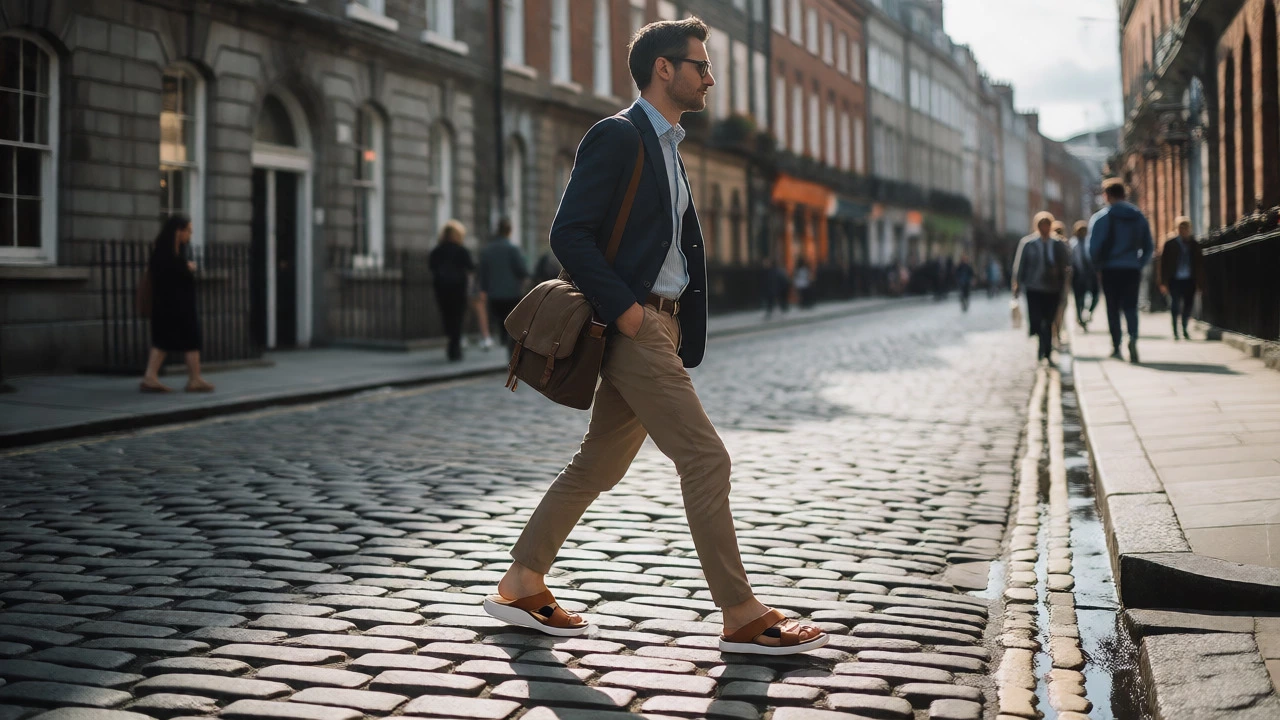
It’s worth addressing the elephant in the room: gender. Historically, women have faced stricter scrutiny regarding visible toes than men. While this gap is closing, biases persist. Women wearing open-toed shoes are often judged on pedicure standards, while men wearing similar styles might be labeled as "eccentric" rather than unprofessional. In male-dominated fields like construction management or engineering, men rarely wear open-toed shoes due to safety protocols and cultural norms. However, in design studios or marketing teams in Dublin’s Smithfield area, you’ll see men in sleek leather sandals without anyone batting an eye.
If you’re a man considering open-toed shoes, ensure they are structured and minimal. Think minimalist leather slides rather than bulky sport sandals. For women, the expectation remains higher on grooming. Chipped nail polish or unkempt toenails are noticeable distractions in close-quarters meetings. Keep it neutral-clear gloss, nude, or classic red-and you’ll avoid unnecessary attention.
Practical Tips for Wearing Open-Toed Shoes in Irish Offices
If you’ve decided to wear open-toed shoes, here’s how to do it right without compromising your professional reputation:
- Know Your Audience: Before wearing new sandals, check who you’re meeting. Internal team meetings? Likely fine. Client pitch to a legacy insurance company? Play it safe with closed toes.
- Maintain Pedicures: This cannot be overstated. Visible feet mean visible maintenance. Schedule regular pedicures or keep up with home care. Dry, cracked heels are a distraction.
- Choose Quality Materials: Invest in leather or high-quality synthetic alternatives. Brands like Clarks, ECCO, or local Irish artisans offer durable options that withstand our damp weather better than fast fashion.
- Watch the Straps: Thin, delicate straps can look fragile. Wider straps provide support and look more substantial. Avoid anything that looks like swimwear.
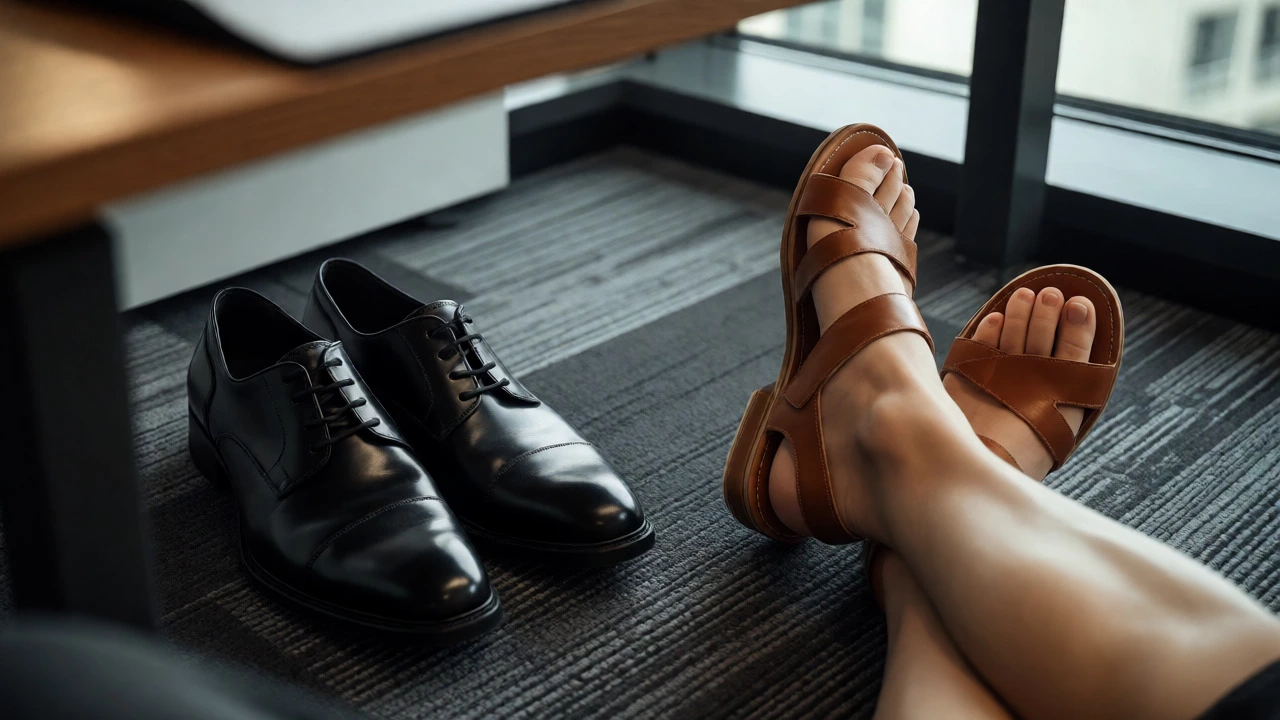
- Carry a Backup: Keep a pair of flats or loafers under your desk. If the weather turns or you realize the vibe is too formal, you can switch quickly. This is especially useful if you commute by bike along the Royal Canal.
When Safety Overrides Style
In certain sectors, open-toed shoes aren’t just unprofessional-they’re dangerous. If you work in labs, kitchens, warehouses, or any environment with heavy machinery, closed-toe footwear is mandatory. This isn’t about etiquette; it’s about compliance with Health and Safety Authority guidelines. Even in administrative roles within these facilities, you may be required to wear closed-toe shoes for site visits. Always check your specific employee handbook. Ignoring safety rules for style points is a quick way to lose respect from colleagues who value protocol.
The Verdict: Read the Room
There is no universal yes or no for open-toed shoes in Ireland. The context dictates everything. If you’re working in a forward-thinking tech startup in Dublin, go ahead and enjoy the breeze. If you’re aiming for partner status in a conservative law firm, stick to pumps. Observe your senior colleagues. What are they wearing? When do they take off their jackets? These subtle cues tell you more than any written policy ever could.
Ultimately, professionalism is about respect-for yourself, your role, and your environment. If your footwear distracts from your competence, change it. If it boosts your confidence and fits the culture, wear it proudly. Just maybe leave the flip-flops for the weekend trips to Bray Head.
Are open-toed shoes unprofessional for women in Irish offices?
Not necessarily. In many modern Irish workplaces, especially in tech, media, and creative industries, open-toed shoes are widely accepted. However, in traditional sectors like banking, law, or government, closed-toe shoes are still the standard. The key is ensuring the shoes are high-quality, clean, and paired with well-groomed feet.
Can men wear sandals to work in Dublin?
Men can wear sandals in casual or smart-casual environments, such as tech startups or creative agencies. However, in formal business settings, men are expected to wear closed-toe shoes like oxfords, derbies, or loafers. Sporty sandals or flip-flops are generally considered too informal for any office setting.
What type of open-toed shoe is most professional?
The most professional open-toed options include leather mules, structured sandals with wide straps, and peep-toe pumps. Choose neutral colors like black, navy, beige, or brown. Avoid overly decorative elements, excessive glitter, or flimsy plastic materials.
Do I need a pedicure to wear open-toed shoes to work?
While not legally required, good hygiene and grooming are essential. Unkempt toenails or dry skin can detract from a professional appearance. Regular maintenance, whether at home or with a professional, ensures your feet look neat and tidy, which aligns with professional standards.
Is it okay to wear open-toed shoes in winter in Ireland?
Technically, yes, if the office is heated and your outfit suits it. However, it’s uncommon and may draw attention. Most people reserve open-toed shoes for late spring through early autumn. Wearing them in December might seem out of touch with the season unless you’re in a very relaxed creative environment.