
12-Hour Shift Survival Calculator
Shift Configuration
Protection Checklist
Your Risk Assessment
Risk Score (0-100)
Picture this: It’s a rainy Tuesday evening in Dublin. You’re working the closing shift at a busy supermarket on O’Connell Street or serving tables in a packed pub in Cork city center. Your feet are throbbing, your lower back is stiff, and you’ve been on your feet for nearly twelve straight hours. You aren’t alone. Across Ireland, from the bustling hospitality sector in Galway to the logistics warehouses in the Midlands, thousands of workers face grueling shifts that demand constant standing. But is actually being on your feet for 12 hours bad for your long-term health? The short answer is yes, but with the right strategy-specifically regarding footwear and movement-it doesn’t have to wreck your body.
The Physical Toll of Prolonged Standing
Standing still might seem easier than walking, but physiologically, it puts immense pressure on your skeletal and muscular systems. When you stand for extended periods, gravity pulls your spine down, compressing the discs between your vertebrae. Over a 12-hour shift, this compression can lead to chronic lower back pain, a common complaint among Irish retail and healthcare workers.
Your legs take a beating too. Blood has to fight against gravity to return to your heart. Without regular movement, blood pools in your lower extremities, leading to swelling (edema) and varicose veins. This is particularly noticeable in Ireland’s damp climate, where temperature fluctuations can exacerbate circulation issues. You might notice your ankles puffing up by the time you clock out at 8 PM after starting at 8 AM. If ignored, this poor circulation can lead to more serious conditions like deep vein thrombosis (DVT), although rare, it is a risk for those who stand statically for hours.
Then there’s the impact on your joints. Knees, hips, and ankles bear the brunt of your body weight. Unlike sitting, which locks joints in place, standing requires constant micro-adjustments to maintain balance. These tiny muscle contractions tire out quickly, leading to what experts call 'static fatigue.' By hour eight, your muscles are screaming, and your posture likely slumps, transferring even more strain to your spine.
Why Footwear Is Your First Line of Defense
If you have to stand for 12 hours, your choice of work shoes isn't just about comfort; it's a medical necessity. In Ireland, where cobblestones in historic cities like Limerick and uneven pavements are common, the ground surface adds another layer of difficulty. Hard, unyielding surfaces amplify the shock waves traveling up your legs with every step or shift in weight.
You need shoes that offer three critical features: cushioning, arch support, and stability. Cheap fashion sneakers often lack the structural integrity needed for a full shift. Look for brands that specialize in occupational footwear. Many Irish workers swear by European brands known for ergonomic design, such as ECCO or Clarks, which have strong retail presence in Dublin and Cork. However, for heavy-duty industrial work, brands like Safety Jogger or Caterpillar provide robust protection and all-day comfort.
The material matters too. Leather breathes better than synthetic mesh, which is crucial if you're working in a warm kitchen or a crowded shop floor. Wet feet lead to blisters, and blisters ruin your day. Ensure your shoes fit properly-not too tight, not too loose. A good rule of thumb: your toes should have room to wiggle, and the heel shouldn't slip when you walk.
| Feature | Why It Matters | What to Avoid |
|---|---|---|
| Cushioning | Absorbs shock from hard floors | Flat, thin soles |
| Arch Support | Reduces strain on plantar fascia | Completely flat insoles |
| Breathability | Keeps feet dry and prevents odor | Non-porous plastics |
| Slip Resistance | Prevents falls on wet tiles | Suede or smooth rubber soles |
The Role of Orthotic Insoles
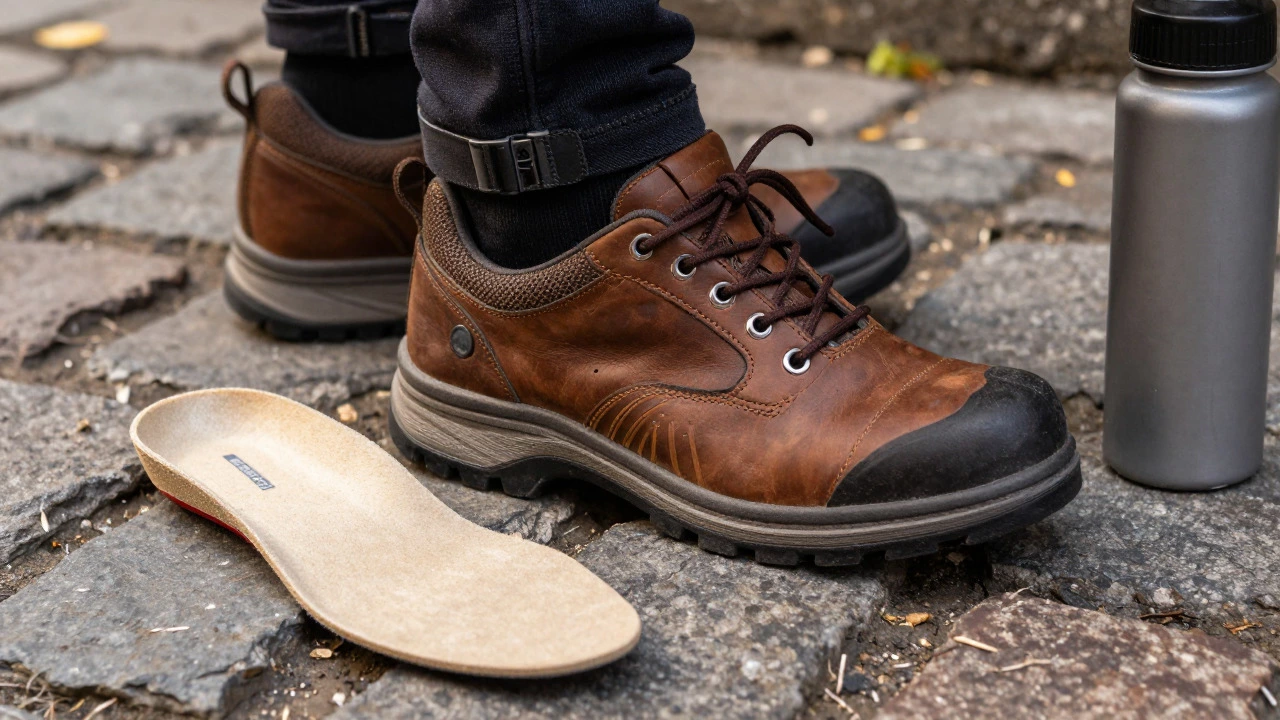
Even the best pair of work shoes may not be enough for everyone. This is where custom or over-the-counter orthotic insoles come into play. In Ireland, pharmacies like Boots or LloydsPharmacy often carry a range of supportive insoles. For many, adding a high-quality gel or memory foam insert transforms an uncomfortable shoe into a viable work tool.
If you have specific foot conditions like flat feet or high arches, consider visiting a podiatrist. While the cost might seem steep upfront, preventing chronic foot pain can save you money on future medical treatments. Some Irish employers, especially in large retail chains like Dunnes Stores or Tesco Ireland, may offer wellness programs that include assessments for ergonomic needs. It’s worth asking your HR department if they provide subsidies for proper footwear or insoles.
Movement Strategies: Don’t Just Stand Still
One of the biggest mistakes people make is standing perfectly still. Static standing is worse for your circulation than walking. Make a conscious effort to shift your weight from one leg to the other, rock gently on your heels, or take small steps if your job allows it. If you work in a store, use breaks to walk around rather than sitting down immediately. Sitting can cause blood to pool in your legs just as much as standing, and getting up again can be painful.
Incorporate simple stretches during your shift. Calf raises, ankle rolls, and gentle hamstring stretches can keep your muscles limber. If you’re behind a counter, try placing a footrest under the desk to alternate elevating each foot. This reduces the load on your lower back and improves venous return. Small changes in behavior can significantly reduce end-of-shift fatigue.
Nutrition and Hydration for Endurance
Your body needs fuel to sustain long shifts. Dehydration worsens muscle cramps and fatigue. Keep a water bottle with you and sip regularly. In Ireland’s cooler climate, you might not feel thirsty, but you’re still losing fluids through sweat and respiration. Avoid excessive caffeine, which can dehydrate you further. Instead, opt for herbal teas or electrolyte drinks if your shift is particularly intense.
What you eat also matters. Heavy, greasy meals can make you feel sluggish. Opt for balanced snacks like nuts, fruit, or yogurt during breaks. Stable blood sugar levels help maintain energy and focus, reducing the mental fatigue that often accompanies physical exhaustion.

When to Seek Medical Advice
Pain is your body’s warning signal. If you experience persistent numbness, tingling, or sharp pain in your feet, legs, or back, don’t ignore it. Consult a GP or a physiotherapist. Early intervention can prevent minor issues from becoming chronic disabilities. In Ireland, accessing private physiotherapy can be expensive, but many clinics offer sliding scale fees or package deals for regular sessions. Additionally, some trade unions, such as SIPTU (Services Industrial Professional and Technical Union), provide advice and resources for members dealing with work-related injuries.
Know your rights under Irish employment law. The Safety, Health and Welfare at Work Act 2005 requires employers to assess risks to employees' health and safety. If your job involves prolonged standing, your employer should provide appropriate rest facilities, anti-fatigue mats, and suitable footwear allowances. If you’re suffering due to poor working conditions, speak to your line manager or union representative.
Practical Tips for Irish Workers
- Invest in Quality: Spend more on shoes. They last longer and protect your health.
- Rotate Footwear: If possible, have two pairs of work shoes and alternate them daily. This allows the materials to recover their shape and cushioning.
- Use Anti-Fatigue Mats: If you stand in one spot, ask your employer for an anti-fatigue mat. These are standard in many Irish kitchens and retail checkouts now.
- Elevate Legs After Work: When you get home, lie down and prop your legs up against a wall for 10-15 minutes. This helps drain excess fluid and reduces swelling.
- Stretch Daily: Make stretching part of your evening routine to keep muscles flexible.
How long can you safely stand in a day?
There is no single safe limit, as it depends on individual fitness, footwear, and activity level. However, most ergonomists recommend limiting continuous static standing to 4-6 hours without significant breaks or movement. For 12-hour shifts, incorporating regular movement, stretching, and proper footwear is essential to mitigate risks.
Are compression socks helpful for standing all day?
Yes, compression socks can be very beneficial. They apply gentle pressure to your legs, helping blood flow back to the heart and reducing swelling and fatigue. Many Irish nurses and retail workers use them. Choose the right compression level (usually 15-20 mmHg for mild support) and ensure they fit correctly.
What are the best work shoes available in Ireland?
Popular choices include ECCO, Clarks, and Skechers for general comfort, and Safety Jogger or Caterpillar for industrial settings. Brands like Hoka One One are gaining popularity for their maximalist cushioning. Visit local stores in Dublin, Cork, or online retailers like Brown Thomas or Sports Direct to try them on.
Can standing for 12 hours cause permanent damage?
Prolonged standing without proper support can lead to chronic conditions like varicose veins, plantar fasciitis, and osteoarthritis. While not always permanent, these conditions can significantly impact quality of life. Early prevention through proper footwear, movement, and ergonomics is key.
Does my employer have to provide work shoes in Ireland?
It depends on the role. For safety-critical roles requiring protective footwear (e.g., steel-toed boots), employers must provide them free of charge under safety regulations. For general retail or hospitality, it varies by company policy. Check your contract or ask HR about footwear allowances.