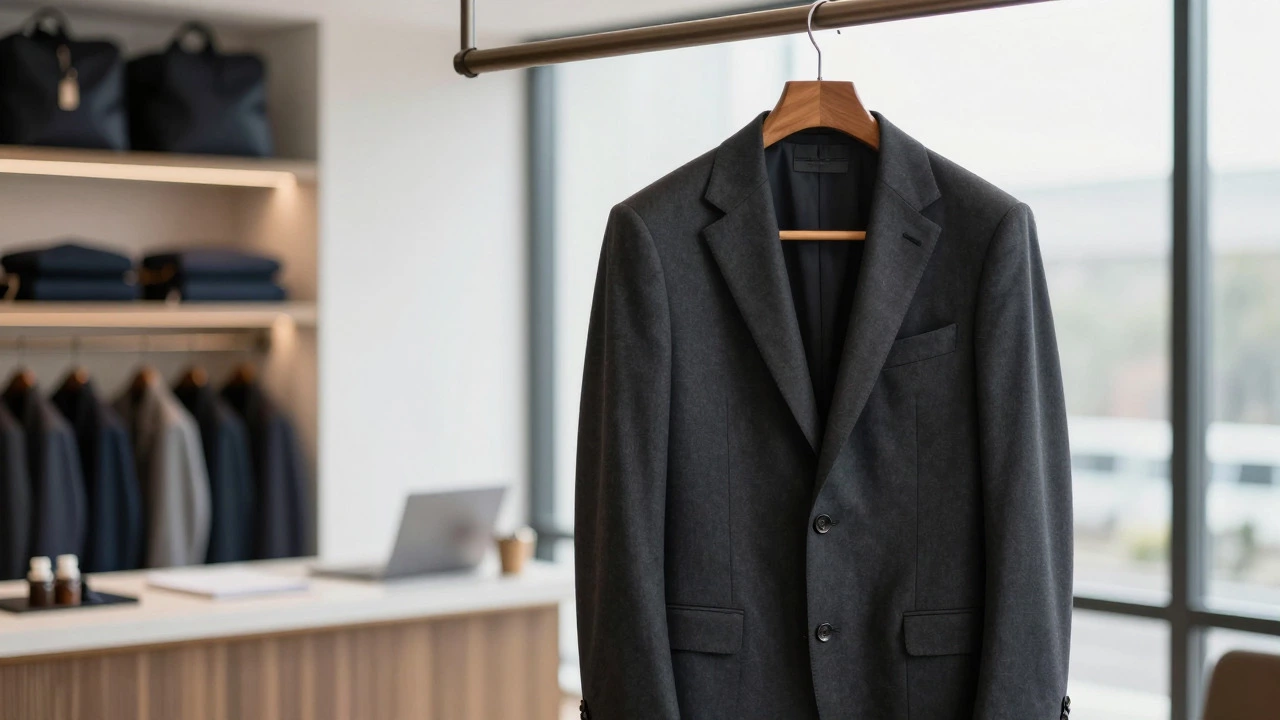
Is This Suit Worth €300? Interactive Quality Checker
Inspect the Suit
Select the features you observe on the suit tag or by inspection.
Recommendation:
Select suit features on the left to see if it's worth €300 in the Irish market.
Walking down Grafton Street or browsing the racks in Dundrum Town Centre, you’ve likely seen that familiar tag: €300 (roughly $325 USD). It’s the magic number for off-the-rack suits in Ireland. But here is the real question on your mind: Is $300 a good price for a suit? The answer isn’t a simple yes or no. In the Irish market, where high street brands compete with heritage tailors, that price point sits right on the fence between "cheap fast fashion" and "entry-level quality." If you buy it blindly, you might end up with fabric that pills after one wedding guest appearance. If you know what to look for, you can snag a sharp look that lasts for years.
The Irish Context: Why Location Matters
Shopping for suits in Ireland comes with specific challenges and opportunities. We don’t have the massive scale of US outlets like T.J. Maxx or Marshalls. Our retail landscape is dominated by high-street chains like Marks & Spencer, Jack Wills, and Ted Baker, alongside department stores like Brown Thomas and Dunnes Stores. When you pay €300 here, you are paying for convenience and brand recognition, not necessarily superior craftsmanship.
Consider the weather. An Irish winter is damp, cold, and windy. A cheap suit made from thin polyester will feel clammy and offer zero protection against the drizzle coming off the Liffey. You need wool blends that breathe but retain warmth. At the €300 price point, you are often getting a mix of synthetic fibers. While this keeps the cost down, it compromises comfort during those long evenings at a pub in Temple Bar or a business meeting in the Docklands. You want a suit that handles humidity without sticking to your back.
What You Get for €300: Breaking Down the Cost
To understand if the price is fair, we need to look at what goes into the garment. At this level, you are typically looking at a fused construction. This means the lining is glued to the outer fabric rather than stitched. It’s faster to produce and cheaper, but it has a downside: bubbling. After a few dry cleansings, the glue breaks down, and the lapels start to warp.
Let’s compare two common scenarios in the Irish market:
| Feature | Budget High-Street (<€150) | Mid-Range (€250-€350) | Premium/Entry Bespoke (>€600) |
|---|---|---|---|
| Fabric | High Polyester/Acrylic | Wool Blend (70% Wool, 30% Poly) | 100% Super 110s+ Wool |
| Construction | Fused (Glued) | Fused or Half-Canvas | Full Canvas (Hand Stitched) |
| Lining | Synthetic, Non-Breathable | Viscose/Polyester Mix | Bemberg Cupro or Silk |
| Buttons | Plastic | Corn Mother-of-Pearl or High-Quality Resin | Genuine Horn or Mother-of-Pearl |
| Fit Options | Standard Only | Regular/Slim/Large | Custom Tailoring Available |
If you find a suit at Jack Wills or Reiss for €300, check the label. If it says "100% Polyester," walk away. That is overpriced for the material. However, if it’s a wool blend with half-canvas construction, you’re getting decent value. Brands like Charles Tyrwhitt often run sales where their mid-tier suits drop into this range, offering better durability than their competitors.
Where to Shop in Ireland for the Best Value
You don’t have to settle for the first thing you see. Knowing where to look in cities like Dublin, Cork, and Galway can save you money or get you more bang for your buck.
- Dunnes Stores: Surprisingly, their premium line often offers better fabric quality for less than €300. The cuts are traditional, so they might not be as slim as the latest trends, but the wool content is usually higher.
- Marks & Spencer: Their "Premium" range hits the €300 mark. Look for their stretch wool options. They fit well out of the box and hold up reasonably well to dry cleaning.
- Outlet Malls: Visit the Designer Outlet Kilkenny. Located just south of Dublin, it houses brands like Hugo Boss, Ralph Lauren, and Burberry. You can often find last-season styles for €300 that would normally cost €800+. This is arguably the best way to get high-quality materials at this price point.
- Local Tailors: If you buy a €150 suit from a discount retailer, spend an extra €50-€70 at a local tailor in your neighborhood (think small shops in Ranelagh or Rathmines). Taking in the waist and hemming the trousers transforms a generic shape into something that looks custom-made.
Red Flags: When €300 is Too Much
Not all €300 suits are created equal. Here is how to spot a rip-off while shopping in Dublin or online:
- The Lapel Roll: Pinch the lapel. If it feels stiff and cardboard-like, it’s heavily fused. A better suit should have some give and natural drape. If it doesn’t roll naturally, it will look artificial under the bright lights of a wedding venue like the Merrion Hotel.
- Button Holes: Look closely at the sleeve buttons. Are they sewn shut with decorative holes, or are the actual buttonholes machine-stitched? Machine-stitched buttonholes indicate a higher level of care. Decorative only suggests mass production.
- Shine Test: Rub the fabric gently with your thumb. If it instantly shines or looks greasy, the finish is poor. High-quality wool resists shine until it has been worn extensively.
- Zipper Quality: A YKK zipper is standard, but it should glide smoothly. If it catches, the internal construction is likely rushed.
Alternatives: Should You Spend More?
If you wear suits weekly for work in the financial district, €300 might be too little. You’ll replace the suit every year due to wear and tear. In that case, consider saving up for a €500-€700 suit from a brand like Suitsupply (available online or via pop-ups) or visiting a bespoke tailor in Smithfield. Yes, it costs more upfront, but the cost-per-wear drops significantly because the canvas construction allows the suit to mold to your body and survive multiple cleanings.
However, if you need a suit for a single event-a graduation, a funeral, or a wedding-€300 is a perfectly reasonable investment. Just ensure you prioritize fit over brand name. A well-fitted €200 suit looks better than a baggy €500 designer piece.
Practical Tips for the Irish Buyer
Buying a suit in Ireland requires a bit of strategy. First, time your purchase. Retailers clear stock before Christmas and in January. You can often find €400 suits marked down to €250. Second, don’t ignore the shirt. Pairing a €300 suit with a crisp, white cotton shirt from a local boutique elevates the entire look. Finally, consider the maintenance. Dry cleaning is expensive in Ireland (around €15-€20 per suit). Buy suits with stain-resistant treatments if you plan to wear them frequently in social settings where pints and plates are involved.
In summary, is $300 (approx. €275) a good price? Yes, if you choose wisely. Avoid pure synthetics, check the construction, and use local tailors to perfect the fit. With the right approach, you can look sharp, feel comfortable, and respect your wallet-all within the vibrant fashion scene of Ireland.
Where can I buy a suit for under €300 in Dublin?
You can find suits under €300 at Dunnes Stores, Marks & Spencer, and Jack Wills during sales. For higher-end brands at this price, visit the Designer Outlet Kilkenny, which features discounted items from labels like Hugo Boss and Ralph Lauren.
Is a €300 suit worth it for a wedding in Ireland?
Yes, provided you prioritize fit and fabric. Look for wool blends rather than polyester to handle the variable Irish weather. Spending an additional €50-€70 on alterations ensures the suit fits perfectly, making it look much more expensive than its price tag.
What is the difference between a fused and canvas suit?
A fused suit uses glue to attach the lining, which is cheaper but prone to bubbling over time. A canvas suit uses layers of stitching, allowing the fabric to move naturally and last longer. At the €300 price point, most suits are fused, but some entry-level brands offer half-canvas options.
Should I buy a suit online or in-store in Ireland?
For a first-time buyer, in-store is better to assess fit and fabric quality. Try on suits at major retailers like Brown Thomas or Marks & Spencer to understand your measurements. Once you know your size, you can safely order online from retailers that offer free returns, such as ASOS or Mr Porter.
How do I maintain a suit bought for €300?
Avoid frequent dry cleaning, as it wears out the fabric. Spot clean stains when possible and air out the suit after wearing. Use wide wooden hangers to maintain the shoulder shape. Store it in a breathable garment bag to protect it from dust and moths, especially during humid months.