Boot Width Fit Checker
Answer these questions about how your current boots feel to find out if you should be shopping for Standard (AD/D) or Wide (EE) widths.
Current Fit Symptoms
Visual Guide
See how different widths accommodate foot shape
Quick Reference:
- B: Narrow
- D/AD: Medium/Standard
- EE/E: Wide
- EEE: Extra Wide
💡 Pro Tip
If you're between sizes, choose leather boots as they stretch slightly over time. Synthetic materials won't stretch, so always go with the wider option.
Standing in the fitting room of a high street store in Dublin, you’ve just tried on a pair of sturdy leather boots. They look great, but when you lace them up, your feet feel like they’re being squeezed into a vice. You check the box and see “D” or maybe nothing at all. Meanwhile, your friend tries on the same style in an “EE” width, and she’s walking out comfortably. If you’ve ever wondered what those letters mean and whether you need a standard fit or something wider, you aren’t alone. In Ireland, where our weather demands robust footwear and our shopping habits range from browsing Brown Thomas to hunting down bargains at O’Neills, understanding these labels is key to getting the right pair.
What Do AD and EE Actually Mean?
To understand which boot fits you, you first need to decode the sizing system used by most major brands. These letters represent the width of the shoe, not the length. While length is measured in numbers (like UK 6 or US 9), width is measured alphabetically. The scale usually starts narrow and gets wider as you move down the alphabet.
For women’s footwear, the standard progression typically looks like this:
- B: Narrow
- D: Medium or Standard (This is often labeled as AD in some European contexts or simply as the default width)
- EE (or E): Wide
- EEE: Extra Wide
When you see “AD,” it’s often a slight variation in labeling depending on the brand’s origin. In many cases, especially with brands that sell heavily in the US and Europe, “D” is considered the medium or average width. Some manufacturers use “AD” to denote a slightly narrower-than-medium fit, or it might be a specific internal code for their “standard” cut. However, for the average shopper, if you are comparing “AD” (or D) against “EE,” the main takeaway is simple: AD/D is the regular fit, and EE is the wide fit.
If you have always struggled with shoes that pinch your toes or rub your pinky toe, you likely need to move up from the standard D/AD width to an EE width. Conversely, if your standard shoes feel loose around the heel or you find yourself needing to tighten the laces excessively, you might actually have narrower feet and should stick with B or C widths, though these are harder to find in mainstream Irish retail.
Why Width Matters More Than You Think
It’s easy to ignore width because most people focus entirely on the length number. But wearing the wrong width can cause real problems, especially here in Ireland where we spend a lot of time walking outdoors. Whether you’re navigating the cobblestones of Galway’s Latin Quarter or hiking through the Wicklow Mountains, ill-fitting boots can lead to blisters, bunions, and general foot fatigue.
Standard width boots (D/AD) are designed for an average foot shape. This means the forefoot has a moderate amount of space, and the heel cup is snug. If your foot is naturally wider across the ball or has a higher instep, a standard boot will compress your foot. This compression forces your toes together, which can exacerbate conditions like bunions or hammertoes over time.
Wide width boots (EE) provide extra room across the forefoot and often a slightly higher volume overall. This doesn’t mean the boot is sloppy; a well-made wide boot still supports the arch and holds the heel securely. It just gives your foot the horizontal space it needs to spread out naturally when you walk. For many women in Ireland who work long shifts on their feet-whether in healthcare, retail, or hospitality-switching to an EE width can be a game-changer for daily comfort.
How to Test if You Need EE Width
You don’t need a professional podiatrist to figure out if you need wide-fit boots. There are several simple tests you can do at home or in-store to determine your width needs.
| Symptom | Standard Fit (AD/D) | Wide Fit (EE) |
|---|---|---|
| Toes touching the sides | Common | Rare |
| Feeling pressure on the pinky toe | Frequent | Minimal |
| Foot feels “stacked” or compressed | Yes | No |
| Heel slips out despite tight lacing | Possible (if foot is too wide for the last) | Less likely |
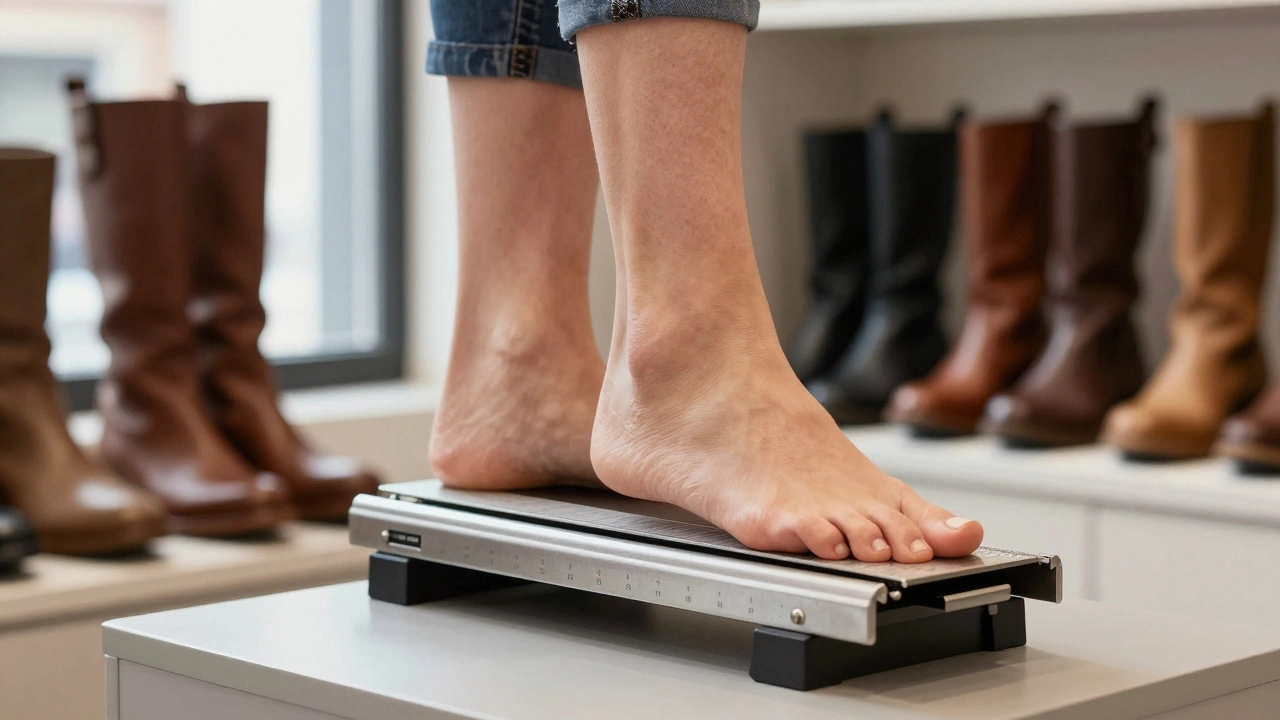
The best way to test is the “Brannock Device” method, which you’ll find in larger shoe stores like Sports Direct or specialized boutiques in areas like Temple Bar. Stand on the device and have someone measure both the length and the width of your foot. If the width measurement falls into the “Wide” category, you should look for EE sizes.
Another practical test is the “Finger Test.” When you try on a boot, stand up and put weight on your foot. Try to slide one finger between your heel and the back of the boot. If you can’t get a finger in, or if your toes are jammed against the front, the boot is too small or too narrow. In a properly fitting wide boot, your toes should have about a thumb’s width of space in front of them, and there should be no bulging material over the top of your foot.
Shopping for Wide Boots in Ireland
Finding EE width boots in Ireland used to be a challenge, but the market has improved significantly. High street brands now offer more inclusive sizing, and online retailers make it easier to compare options without leaving your house.
In physical stores, brands like Clarks are renowned for their wide-fit options. You’ll often find Clarks boots in EE and even EEE widths in stores across the country, from Cork to Belfast. Other reliable brands include Ecco, which offers natural leather boots that stretch and mold to wider feet, and New Balance, known for its athletic-inspired comfort and wide availability in EE sizes.
If you prefer buying online, websites like ASOS and Zalando allow you to filter specifically for “Wide Fit.” This saves time and ensures you don’t accidentally order a standard D width that won’t fit. Always check the return policy before purchasing, as fit can vary between brands. For example, an EE in one brand might feel like a D in another due to differences in the “last” (the mold used to shape the shoe).
For more traditional Irish styles, such as brogues or Chelsea boots, look for local cobblers or specialist shops in cities like Kilkenny or Limerick. Some independent shoemakers can customize widths to suit your exact measurements, offering a bespoke solution that mass-market brands can’t match.

Material Matters: Leather vs. Synthetic
The material of your boot plays a huge role in how it fits over time. If you’re on the border between AD and EE, the material might tip the scales.
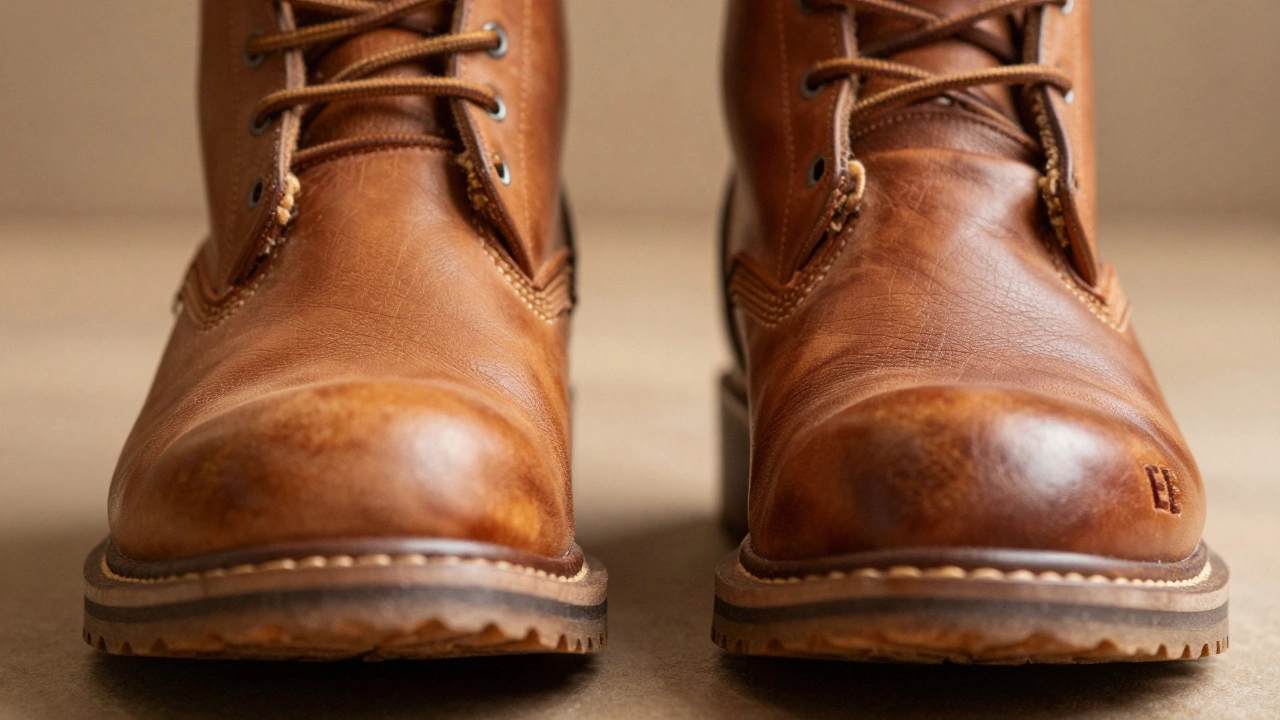
Genuine leather, particularly full-grain leather, has the ability to stretch and conform to your foot. A standard D width leather boot might feel snug at first but could loosen up after a few wears. This makes leather a good option for people with slightly wider feet who don’t want to commit to a dedicated wide size immediately. However, synthetic materials like faux leather or rubber (common in rain boots) do not stretch. If you buy a synthetic boot in a standard width and it’s tight, it will stay tight. In this case, opting for an EE width from the start is the safer bet.
Consider the season too. In Ireland, winter boots often have thicker linings for warmth. This lining takes up interior space, effectively making the boot narrower. So, a boot that fits perfectly in summer might feel too tight in winter. If you plan to wear thick socks, always size up in width or choose a model specifically designed for winter use with a generous toe box.
Common Mistakes to Avoid
One of the biggest mistakes shoppers make is trying to “break in” painful boots. We’ve all heard the old saying that new shoes need breaking in. While some minor stretching is normal, severe pain is a sign of poor fit. Don’t force your feet into standard width boots hoping they’ll stretch enough to accommodate your width. This leads to long-term foot issues and wasted money.
Another mistake is ignoring the heel counter. Even if the forefoot has plenty of room in an EE width, the heel area must still be secure. If your heel slides up and down when you walk, the boot is too big in length or the width is too wide for your heel structure. Look for boots with padded heel collars and adjustable laces or straps to ensure a secure fit.
Finally, don’t assume that all “comfort” brands automatically mean wide fit. Comfort can come from cushioning, arch support, and lightweight materials, but it doesn’t necessarily mean extra width. Always check the specific width label before assuming a boot will fit your wider feet.
Is AD width the same as D width?
In most cases, yes. AD is often used interchangeably with D, representing the standard or medium width for women’s shoes. However, some brands may use AD to indicate a slightly narrower fit than D. Always check the specific brand’s size chart to be sure.
What brands in Ireland offer EE width boots?
Clarks, Ecco, New Balance, and Skechers are widely available in Ireland and offer extensive EE width options. Online retailers like ASOS and Zalando also have filters for wide-fit boots from various brands.
Should I buy a size up if I can’t find EE width?
Buying a size up increases the length, not necessarily the width. This can lead to a loose heel and tripping hazards. It’s better to find a true EE width or look for brands known for generous toe boxes rather than sizing up in length.
Do leather boots stretch to fit wider feet?
Genuine leather does stretch slightly over time, usually about half a size in width. However, it won’t transform a narrow D width into a full EE width. If you need significant extra space, start with an EE width boot made of leather for the best long-term comfort.
How do I measure my foot width at home?
Stand on a piece of paper with your foot flat. Mark the widest points of your foot (usually across the ball). Measure the distance between these marks with a ruler. Compare this measurement to a shoe width chart online to determine if you fall into the D (medium) or EE (wide) category.