Suit Quality Detective
Test your eye for detail. Can you spot the difference between a €250 fast-fashion blazer and a €1,200 bespoke masterpiece? Answer the questions below based on common indicators of quality.
Quiz Complete!
Your Final Score: 0/5
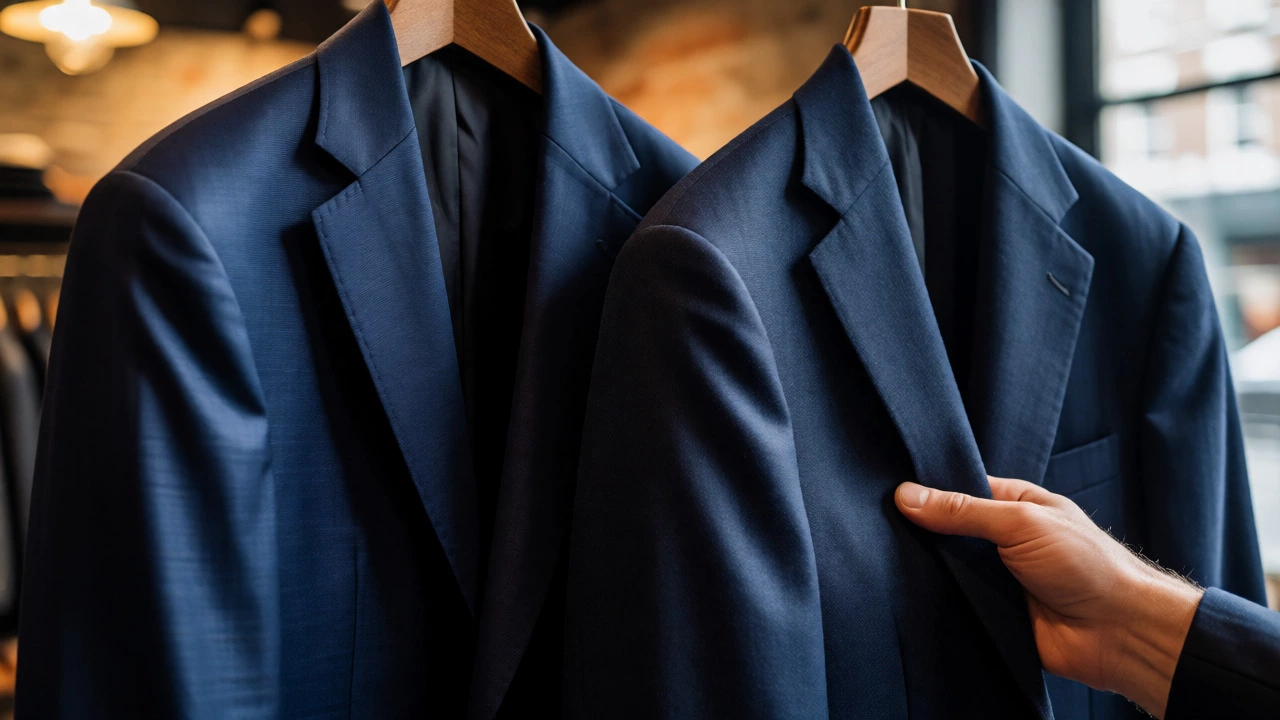
You walk into a shop on Grafton Street or browse the racks at Arnotts, and suddenly you're faced with two identical-looking navy blazers. One costs €250, the other €1,200. They look the same from ten feet away. So, what is the actual difference? Is it just branding, or is there real value hidden in that price tag? If you are buying men's suits in Ireland, knowing how to spot quality saves you money and embarrassment. You do not need to be a Savile Row tailor to tell the difference. You just need to know where to look.
The Fabric Test: Feel It Before You Buy It
Fabric is the soul of a suit. In our damp Irish climate, this matters more than anywhere else. A cheap suit often uses synthetic blends like polyester-viscose. These fabrics trap heat in summer and feel clammy when the rain hits them in winter. High-end suits use natural fibers like wool, cashmere, or linen. When you touch a good suit, it should feel dry and slightly resilient, not slippery or plasticky.
Try the "crush test." Grab a handful of the fabric near the hem and squeeze it tight for five seconds. Let go. If the wrinkles disappear almost instantly, you are looking at high-quality Super 120s or higher wool. If deep creases remain visible, the fiber has low resilience. This is common in cheaper suits sold in fast-fashion outlets across Dublin or Cork. Natural wool breathes; synthetics sweat. For an Irish office worker commuting by Luas or DART, breathability is not a luxury-it is survival.
| Feature | Cheap Suit Indicator | Expensive Suit Indicator |
|---|---|---|
| Composition Label | Polyester/Viscose Blend (e.g., 65% Poly) | 100% Wool or Wool/Cashmere Blend |
| Wrinkle Recovery | Slow recovery, sharp creases remain | Fast recovery, wrinkles vanish quickly |
| Texture | Smooth, plastic-like, shiny under light | Dry, matte finish, slight grain texture |
| Weight | Very light or unnaturally heavy | Balanced drape, substantial but comfortable |
Construction Secrets: The Inside Story
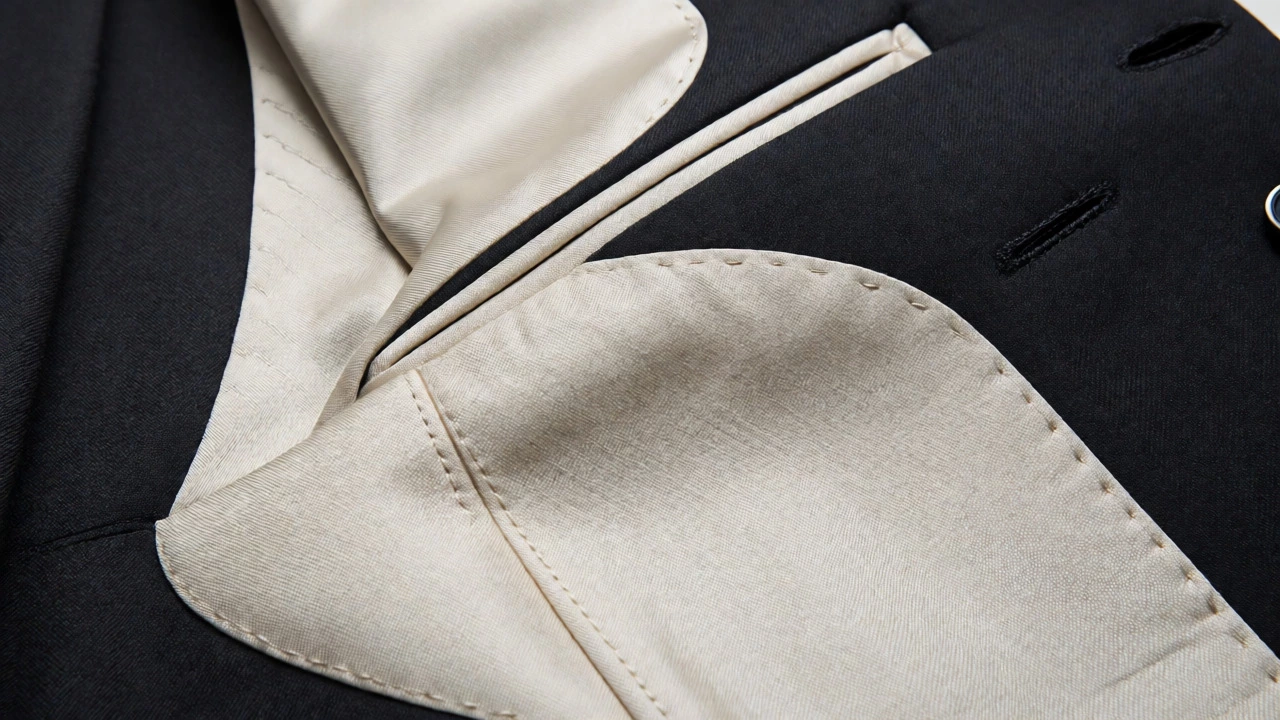
You cannot judge a book by its cover, and you cannot judge a suit by its outside. Turn the jacket inside out. Look at the lining. In a cheap suit, the lining is often cut poorly, bunching up at the shoulders or pulling at the buttons. In a well-made suit, the lining hangs freely. This allows the jacket to move with your body. If the lining is tight, you will feel restricted when you raise your arms to grab a coat rack in a busy pub.
Check the canvas. This is the layer between the outer fabric and the lining. Hold the front panel of the jacket up to the light. If you see a distinct layer that feels stiff and separate from the fabric, it might be fused (glued). Fused construction is common in suits under €400. It looks fine initially but bubbles after dry cleaning. A half-canvas or full-canvas suit has a flexible interlining that molds to your shape over time. Brands like Brooks Brothers or local tailors in Galway often highlight this feature. If the front feels solid and uniform without a separate stiff layer, it is likely fused. If it has some give and structure, it is canvassed. For long-term wear, canvassing wins every time.
Stitching Details: Count the Stitches
Look closely at the seams. Cheap suits are mass-produced with machines running at high speed. The stitches are large, uneven, and sparse. You can often see the thread pulling through the fabric. High-end suits use smaller, tighter stitches. A good rule of thumb: count the stitches per inch. A quality jacket has 12 to 14 stitches per inch. A cheap one has 8 to 10. Fewer stitches mean less durability. The seam will unravel faster if you catch it on a door handle or a bus seat.
Pay attention to buttonholes. On expensive suits, buttonholes are hand-stitched or machine-assisted with silk thread. They have a raised, three-dimensional look. Cheap buttonholes are flat, machine-cut zig-zags made from polyester thread. They fray easily. Also, check the sleeve buttons. Can you actually unbutton them? Real working cuffs are a hallmark of bespoke or high-ready-to-wear suits. Fake cuffs (stitched shut) are standard in budget options. If you plan to wear your watch frequently, working cuffs prevent the sleeve from riding up awkwardly.
Pattern Matching: The Symmetry Check
If you are buying a striped or checked suit, pattern matching is the ultimate tell. Take the lapel and align it with the chest panel. The stripes should flow continuously across the seam. If they jump or misalign by even a millimeter, the cutter did not care about precision. This happens because cutting fabric to match patterns wastes material. Cheap manufacturers save money by ignoring alignment.
Check the pockets too. Place your hands in the side pockets. The pattern on the pocket flap should align perfectly with the pattern on the hip area. Misaligned checks look sloppy and draw immediate attention. In Ireland, where we appreciate craftsmanship-from Aran sweaters to tweed jackets-this level of detail signals respect for the wearer. A mismatched pattern screams "factory floor," while perfect alignment whispers "tailor."
Fit and Alterations: The Irish Body Shape
No matter how expensive the suit, it fails if the fit is wrong. However, expensive suits are designed to be altered. Cheaper suits often lack enough fabric allowance in the seams. If you buy a €300 suit off the rack in Dundrum Town Centre, you might find only 1cm of extra fabric in the side seams. A €900 suit might offer 3-4cm. This means the expensive suit can be taken in or let out significantly without ruining the proportions.
Irish men often have broader shoulders relative to their waist compared to Asian-fit brands. Many online retailers send boxy fits that require major alterations. Always budget for a tailor. A skilled tailor in Belfast or Limerick can transform a mid-range suit into something custom-looking. But they cannot fix fundamental construction flaws. If the shoulder pads extend past your natural shoulder line, no amount of tailoring will hide it. Try the suit on before you decide. Move around. Sit down. Raise your arms. If it pulls or bunches, walk away.
Price vs. Value: Where to Shop in Ireland
Understanding the market helps you avoid overpaying. In Ireland, you have three tiers. First, fast fashion (H&M, Zara) offers suits for €150-€250. These are disposable. They last a season or two. Second, mid-market specialists (Charles Tyrwhitt, TM Lewin, or local independents like Oliver Bonas menswear) offer decent wool blends for €400-€700. Third, premium and bespoke shops (Brown Thomas, Holt Renfrew equivalents, or independent tailors) charge €1,000+.
Do not assume higher price equals better quality automatically. Sometimes you pay for rent in Dublin City Centre. A similar suit might cost less in a suburban outlet mall or online from UK-based retailers who ship duty-free to Ireland post-Brexit adjustments. Compare the specs, not just the brand logo. A €600 suit with full canvas construction is often better value than a €1,000 suit with fused construction and a famous label.
Final Checks: Hardware and Finishing
Touch the buttons. Cheap suits use plastic buttons that crack or fade. Expensive suits use horn, corozo nut, or mother-of-pearl. These materials have unique grains and feel cool to the touch. Scratch a button lightly with your fingernail. Plastic feels smooth and uniform; natural materials have subtle variations.
Inspect the stitching color. Does it match the fabric exactly, or does it contrast intentionally? Intentional contrast is a style choice. Mismatched or loose threads are defects. Check the hem of the trousers. Are they finished cleanly? A serged edge is acceptable, but a blind hem stitch is superior. It prevents fraying and looks cleaner. Finally, smell the suit. New clothes often have a chemical odor from formaldehyde resins used to prevent shrinking. High-end suits smell like wool or nothing at all. A strong chemical smell indicates lower-grade processing.
Key Takeaways
- Fabric: Choose 100% wool for durability and comfort in Irish weather. Avoid polyester blends.
- Construction: Look for canvassed jackets rather than fused ones for longevity.
- Details: Check for aligned patterns, working cuffs, and natural buttons.
- Fit: Ensure there is enough fabric allowance for future alterations.
- Value: Prioritize construction quality over brand names when shopping in Ireland.
Is it worth buying an expensive suit in Ireland?
Yes, if you wear suits regularly. The Irish climate demands breathable, durable fabrics like wool. Cheap synthetic suits degrade quickly due to humidity and rain exposure. An expensive suit lasts years, maintaining its shape and appearance, making it more cost-effective in the long run.
How much should I budget for a good suit in Dublin?
For a reliable everyday suit, aim for €400-€600. This range typically gets you 100% wool and decent construction from reputable retailers like Charles Tyrwhitt or local boutiques. Bespoke or high-end ready-to-wear suits start at €1,000+.
Can I alter a cheap suit to make it look expensive?
Only partially. Tailoring can improve the fit, which is crucial. However, it cannot fix fused construction, poor fabric quality, or misaligned patterns. A well-fitted cheap suit is better than a badly fitted expensive one, but it will still look and feel different.
What is the best fabric for suits in Ireland?
Mid-weight wool (Super 110s to 130s) is ideal. It handles the mild, wet winters and cool summers well. Avoid very heavy tweeds for office wear unless you work outdoors, and avoid lightweight tropical wools as they may not provide enough warmth in Irish spring or autumn.
Do I need a tailor for a new suit?
Almost always. Even expensive suits rarely fit perfectly off the rack. Budget €50-€100 for alterations. Key adjustments include shortening sleeves, adjusting trouser length, and taking in the waist. This service is widely available in cities like Dublin, Cork, and Galway.