Suit Quality Inspector: Cheap vs. Expensive
Select the characteristic that best describes the suit you are inspecting for each category below.
1. The Fabric Test
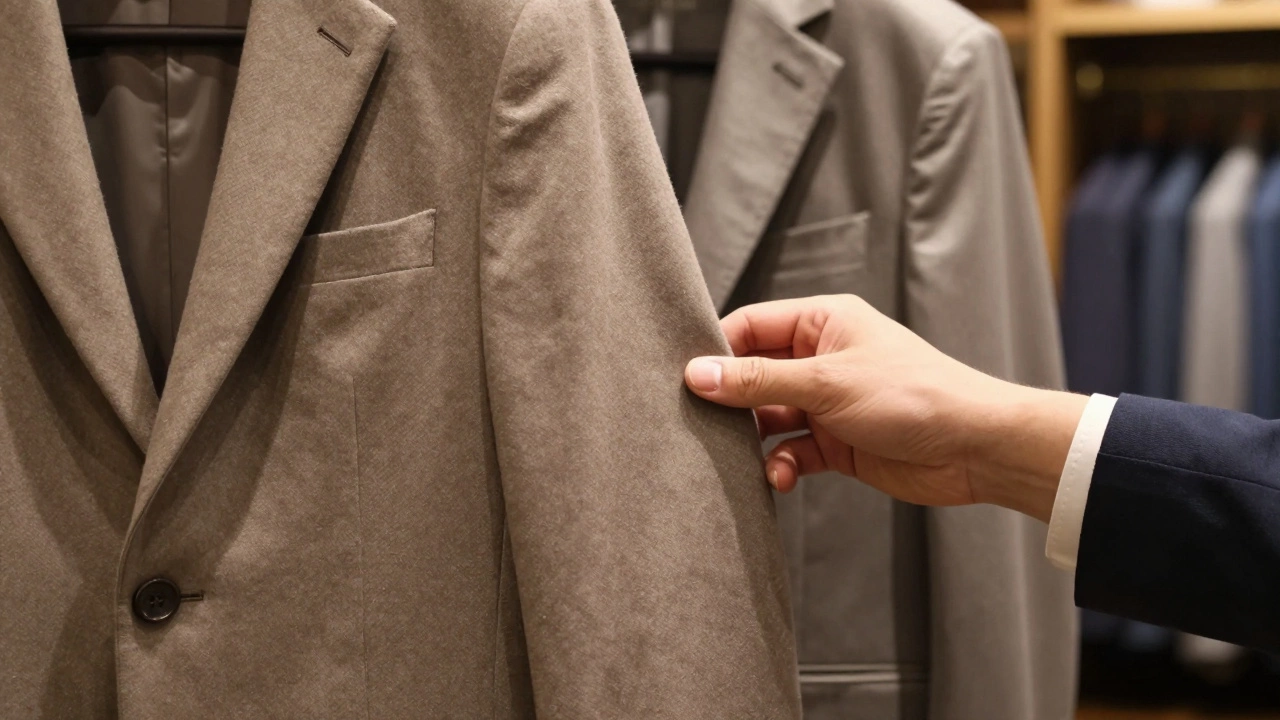
Touch the material. Does it feel slippery/shiny or soft/substantial?
2. Construction Check
Press firmly on the chest. Is it hard/stiff or soft/flexible?
3. The Lining
Look inside. Is it fully lined with synthetic material or half-lined/open?
4. Buttons & Pockets
Check buttons and breast pocket. Are they plastic/fake or horn/functional?
5. The Fit
Look at the waist. Does it hang straight like a tent or nip in at the waist?
Verdict
You’re standing in a shop on Grafton Street or browsing online from your kitchen table in Cork, staring at two suits. One costs €150, the other €800. They look almost identical in the photo. So, how do you know which one will actually fit you right and which one will fall apart after three wears? In Ireland, where we balance casual pub culture with formal business meetings and wedding seasons that stretch from May to October, knowing the difference between a cheap suit and an expensive suit is more than just about saving money-it’s about confidence.
Buying a suit isn’t rocket science, but it does require a keen eye for detail. A cheap suit might get you through the door, but an expensive suit keeps you comfortable while you’re there. Here is exactly what to look for when you are shopping for men’s suits in Ireland, whether you are hunting for bargains in Dun Laoghaire or investing in a bespoke piece in Dublin city centre.
The Fabric Test: Wool vs. Polyester
The first thing you need to check is the material. This is the single biggest indicator of quality. Run your hand over the fabric. If it feels slippery, shiny, or plasticky, walk away. That is likely polyester or a synthetic blend. These materials don’t breathe. Imagine wearing that suit to a funeral in Galway during a warm summer day or a conference in Dublin Castle; you will be sweating within twenty minutes. Synthetic fabrics trap heat and moisture against your skin, making you uncomfortable and prone to odors.
A high-quality suit is made from Wool, specifically natural fibers like Super 100s to Super 150s wool. Wool breathes. It regulates temperature, keeping you cool in the office and warm when you step out into the brisk Irish wind. When you touch good wool, it should feel soft but substantial, not thin or flimsy. Look for the label inside the jacket. It should say "100% Wool" or "Virgin Wool." Avoid terms like "Wool Mix" or "Polyester Blend" if you want durability. A cheap suit uses cheap fabric because it costs less to produce, but it sacrifices comfort and longevity. An expensive suit invests in natural fibers that last for years, not months.
Construction: Fused vs. Canvas
This is the technical part that most people miss, but it defines the shape of the suit. Take the jacket off the hanger and press firmly on the chest area. Does it feel hard and stiff, like a cardboard box? Or does it feel soft and flexible?
Cheap suits use Fused Construction, which means a layer of glue holds the inner lining to the outer fabric. Over time, especially with dry cleaning (which is common here given our damp climate), that glue breaks down. You’ll see bubbles forming under the fabric, known as "delamination." The lapels will start to curl, and the jacket will lose its structure. It looks old before its time.
Expensive suits use Canvas Construction, often referred to as half-canvas or full-canvas tailoring. Instead of glue, a layer of horsehair canvas is stitched between the fabric and the lining. This allows the jacket to move with your body. It molds to your shape over time, creating a personalized fit. Press the chest again-if it springs back gently and feels alive, you’re looking at a better-made garment. In Ireland, where weather changes rapidly, this flexibility is crucial. You need a suit that adapts, not one that fights you.
The Lining: Breathability Matters
Flip the jacket inside out. What do you see? A cheap suit usually has a fully lined interior made entirely of polyester. It looks neat but offers zero ventilation. An expensive suit often features a Half-Lined Design, where only the shoulders and upper chest are lined, leaving the rest open. This exposes the inner construction, which can look messy to the untrained eye, but it allows air to circulate freely. It also makes the jacket lighter. If you plan to wear this suit frequently, half-lining is a sign of thoughtful design. It prioritizes your comfort over a clean-looking interior. Check the stitching along the edges too. Cheap suits have loose threads and uneven seams. High-end suits have tight, consistent stitching with no loose ends.
Details: Buttons, Pockets, and Vents
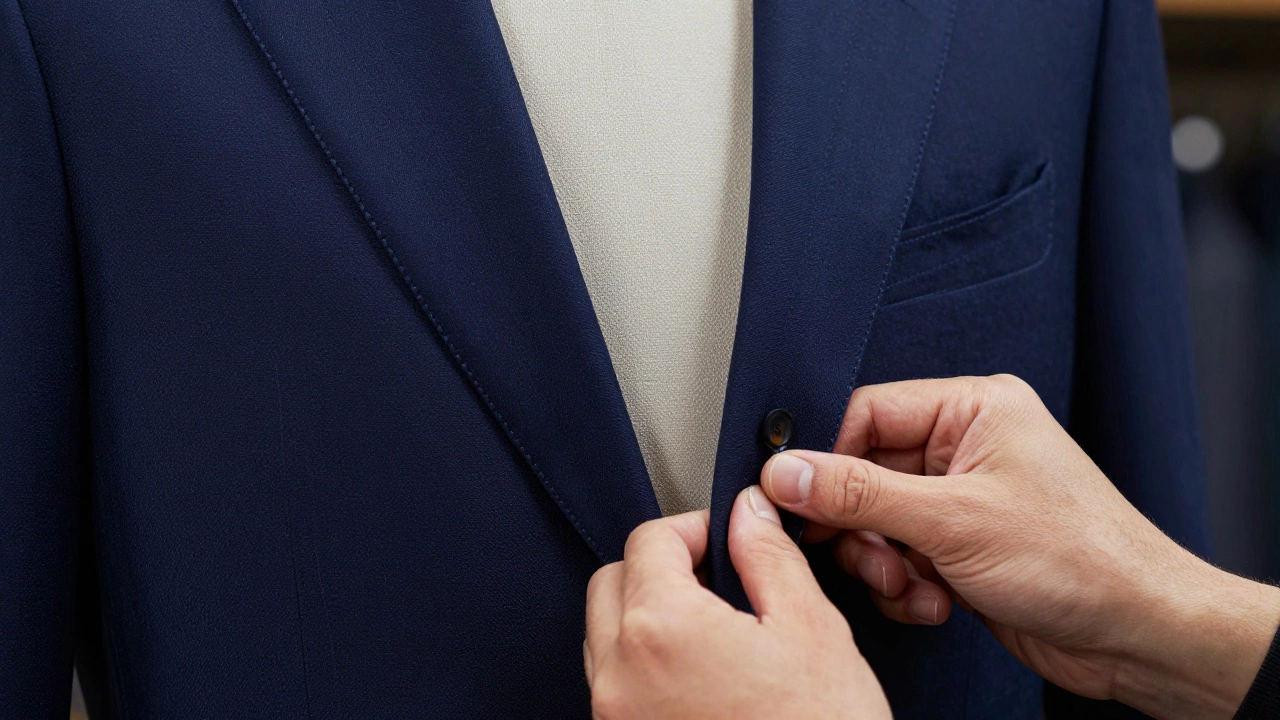
Look closely at the buttons. Are they plastic, shiny, and uniform? Plastic buttons scratch the fabric and can pop off easily. Quality suits use Horn Buttons, typically made from cow horn or similar natural materials. Horn buttons have slight variations in color and texture, and they feel smooth and heavy. They are durable and won’t damage the fabric when you button up. Also, check the buttonholes. On a cheap suit, the buttonholes are machine-stitched with thick, visible thread. On an expensive suit, they are hand-stitched or finely machine-stitched with minimal visibility. It’s a small detail, but it speaks volumes about the craftsmanship.
Next, examine the pockets. Cheap suits often have fake breast pockets-just a sewn-on flap with nothing behind it. You can’t put anything there. Expensive suits have functional breast pockets with actual depth. More importantly, check the side pockets. Are they slanted? Slanted pockets follow the natural line of your body, making it easier to slide your hands in without bunching up the fabric. Straight pockets look boxy and unnatural. Finally, look at the vents-the slits at the back of the jacket. Single vents are common, but double vents are more versatile. They allow you to sit down comfortably without the jacket riding up. In Ireland, where we spend a lot of time sitting in pubs or offices, double vents offer practical freedom of movement.
The Fit: Shoulders and Waist
No amount of expensive fabric can save a bad fit. The shoulders are the hardest part to alter, so they must be perfect off the rack. The seam of the jacket should end exactly where your shoulder bone ends. If it extends past your shoulder, the suit is too big. If it pulls tight across your upper arm, it’s too small. There should be no divots or wrinkles in the shoulder area.
Check the waist suppression. A cheap suit hangs straight down like a tent. An expensive suit is cut to follow your body’s contours. It should nip in slightly at the waist without feeling restrictive. You should be able to pinch about two inches of fabric at the sides. If you can grab a fistful, it’s too loose. If you can’t pinch anything, it’s too tight. Remember, alterations are cheaper than buying a new suit. In Dublin, you can find skilled tailors who can adjust the waist and sleeves for around €30-€50. But don’t expect them to fix the shoulders. Get the size right first.
Price Points in the Irish Market
So, what does all this cost in Ireland? Let’s break it down by price range to help you decide where to spend your euro.
| Price Range | Construction | Fabric | Best For |
|---|---|---|---|
| €100 - €250 | Fused | Polyester/Wool Blend | Occasional wear, interviews, budget weddings |
| €300 - €600 | Half-Canvas | 100% Wool | Regular business wear, frequent events |
| €700+ | Full-Canvas/Bespoke | Super 120s+ Wool | Investment pieces, tailored fit, longevity |
If you are on a tight budget, stores like Marks & Spencer or Uniqlo offer decent entry-level options. They won’t last forever, but they work for occasional use. For mid-range quality, look at brands like Ted Baker or local Irish retailers such as Brown Thomas. They offer better fabrics and construction for a moderate price. If you want the best, visit bespoke tailors in areas like Merrion Square or George’s Street. You pay more, but you get a suit made specifically for your body. It’s an investment that pays off over time.
Where to Shop in Ireland
Your location matters. Dublin offers the widest selection, from high-street chains to luxury boutiques. Cork and Galway have fewer options but still provide solid choices. If you are outside major cities, consider ordering online from reputable UK or Irish retailers, but always check return policies. Trying on a suit is essential. Don’t buy based on size alone. Bodies vary, and cuts differ between brands. A size 40R in one brand might fit like a 42R in another.
Visit physical stores whenever possible. Ask staff questions. Good salespeople will explain the construction and fabric. If they can’t answer basic questions about canvas or wool weight, go elsewhere. Knowledgeable staff indicate a store that cares about quality. Also, look for stores that offer alteration services in-house. It shows they stand behind their product and want you to look your best.
Maintenance: Keeping Your Suit Looking New
Once you buy the suit, how you care for it determines its lifespan. Never wash a wool suit in a machine. The agitation damages the fibers and shrinks the fabric. Dry clean only when necessary-once or twice a year is enough. Over-dry cleaning strips natural oils from the wool, making it brittle. Between cleans, hang the suit on a wide wooden hanger to maintain its shape. Use a clothes brush to remove dust and lint after each wear. Store it in a breathable garment bag, not plastic. Plastic traps moisture, leading to mildew-a real risk in Ireland’s humid climate.
Rotate your suits. Don’t wear the same suit two days in a row. Wool needs time to recover its shape. If you spill something, blot it immediately with a damp cloth. Don’t rub, as this spreads the stain. For minor wrinkles, steam the suit instead of ironing directly. Ironing can shine the fabric, creating permanent marks. Steam relaxes the fibers without damaging them.
Can I tell if a suit is expensive just by looking at it?
Not always. Cheap suits can mimic the look of expensive ones through clever marketing and photography. However, experienced buyers notice subtle cues like the drape of the fabric, the sharpness of the lapel roll, and the absence of bulkiness. Touch is more reliable than sight. Feel the fabric and press the chest to assess construction.
Is a cheaper suit worth it if I only wear it once a year?
Yes. If you attend few formal events, a budget-friendly fused suit from a reputable retailer is sufficient. Focus on getting the right fit through alterations rather than spending hundreds on premium fabric. Comfort and appearance matter more for rare occasions.
What is the best time to buy a suit in Ireland?
End-of-season sales in January and July offer significant discounts. Additionally, post-wedding season (November) often sees reduced prices on formalwear. Keep an eye on local promotions in Dublin and Cork during these periods for the best deals.
How long should a good suit last?
A well-made wool suit with proper care can last 10-20 years. Fused suits may degrade within 3-5 years due to delamination. Regular maintenance, including professional cleaning and storage, extends the life of any suit significantly.
Are Irish-made suits better than imported ones?
Not necessarily. While Ireland has skilled tailors, many high-quality suits come from Italy, England, and Portugal. The key is finding reputable brands regardless of origin. Local tailors offer customization advantages, but mass-produced European suits often provide excellent value for money.