High-Quality Suit Checker
Rate your suit's quality based on key indicators from the Irish suit quality guide.
Your Suit Quality
When you’re standing in front of a mirror in a Dublin office, at a wedding in Galway, or waiting for a train at Cork Kent Station, your suit says more than you think. In Ireland, where the weather shifts faster than a pub conversation and formal events are part of the social fabric-from christenings to corporate dinners-a suit isn’t just clothing. It’s a statement of respect, discipline, and quiet confidence. But how do you know if the suit you’re wearing-or planning to buy-is truly high-quality? Not all wool is equal. Not all stitching tells the same story. And in Ireland, where practicality meets tradition, the difference between a good suit and a great one comes down to details most people overlook.
Look at the fabric: It’s all about the wool
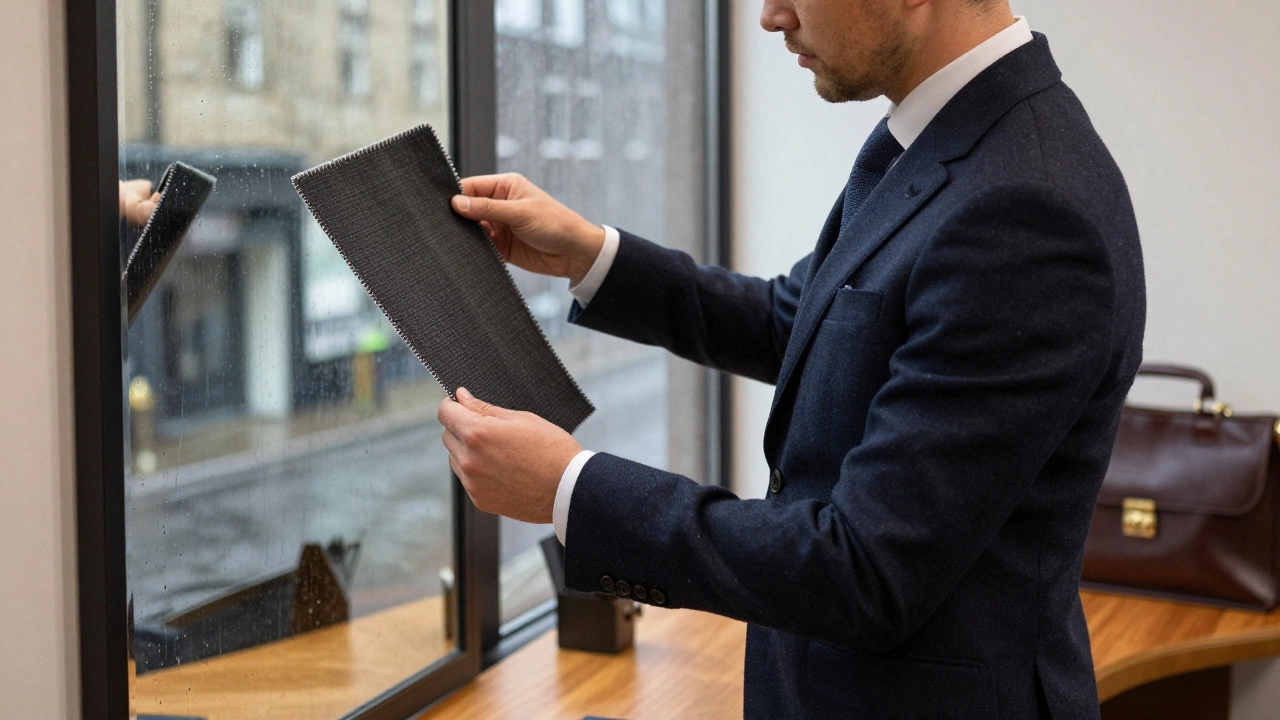
The foundation of any high-quality suit is the fabric. In Ireland, where rain is a daily companion and winters linger, you need wool that breathes, resists wrinkles, and keeps you warm without bulk. Top-tier suits use superfine wool, often from Australia or Italy, with a micron count under 19. That means the fibers are finer, softer, and more durable. Brands like Harris Tweed-handwoven in the Outer Hebrides and legally protected since 1909-are a local gold standard. If you see the Orb Mark stitched into the lining, you’re holding something made in Scotland with wool from local sheep, spun, dyed, and woven entirely by hand. It’s rugged, weather-resistant, and carries the weight of centuries of craftsmanship.
Check the weave. A tight, even twill or hopsack weave suggests quality spinning and weaving. Avoid suits with visible loops, uneven texture, or a shiny, plasticky finish-that’s often a sign of synthetic blends. A true wool suit will feel slightly rough to the touch, not slick. Hold it up to the light: if you can see through the fabric easily, it’s too thin. Good wool should feel dense, almost heavy, but still flexible.
Feel the lining: The hidden signature
Turn the jacket inside out. What you find there tells you everything. A fully lined suit with a floating canvas-made of horsehair and cotton-is the hallmark of a bespoke or high-end ready-to-wear garment. This canvas gives the jacket its shape, letting it drape naturally over your chest and shoulders. It’s what lets the suit move with you, not against you. If the lining is glued or fused to the outer fabric, you’ve got a mass-produced suit. It might look fine for a few wears, but after a season of Irish rain and dry cleaning, it’ll start to bubble and lose its structure.
Look for natural fibers in the lining: silk, bemberg (a type of rayon), or cotton. Avoid polyester linings-they trap heat, don’t breathe, and feel clammy. In Dublin’s damp winters, a breathable lining isn’t a luxury; it’s a necessity. You’ll notice the difference when you’re standing outside the Olympia Theatre after a night out, or walking from the DART to a business meeting in Ballsbridge.
Examine the stitching: Hand-stitched details matter
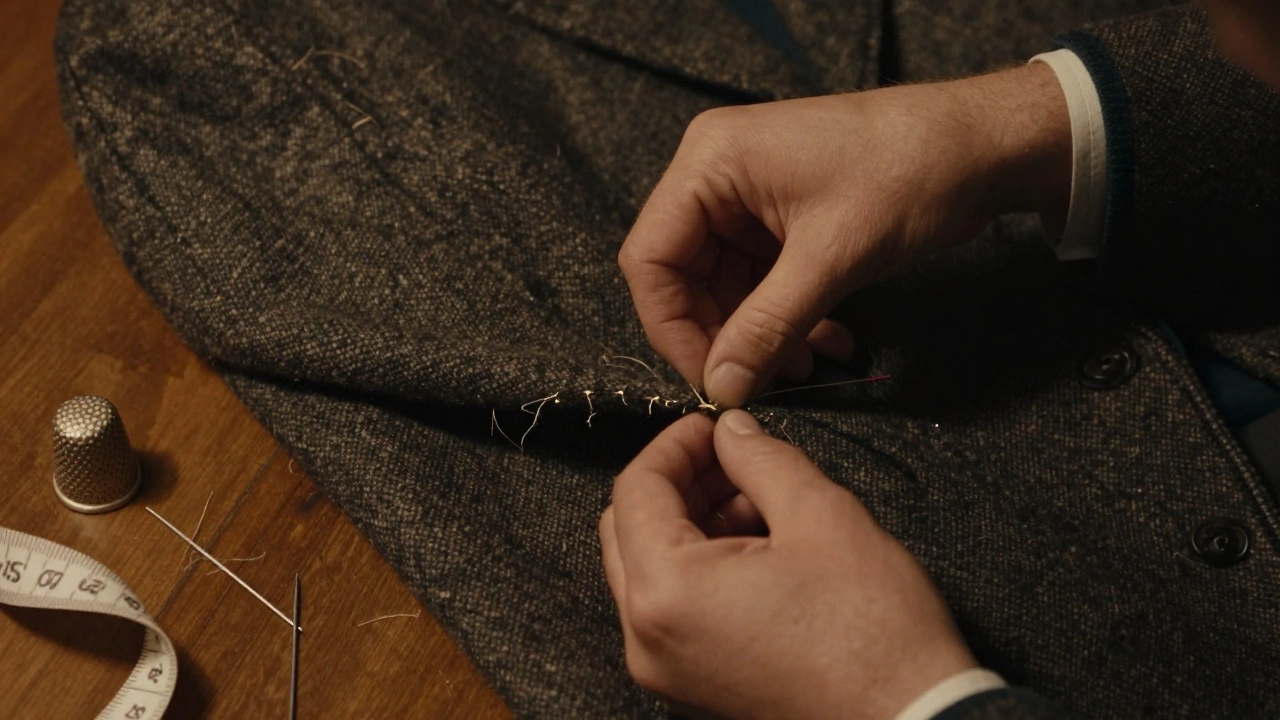
Check the lapel. A high-quality suit will have a lapel that rolls naturally, not stiffly. That’s because the stitching along the edge is hand-sewn. Look closely at the buttonholes. On a cheap suit, they’re machine-made and uniform-perfect, but lifeless. On a good one, the threads are slightly uneven, with tiny knots and a slight fraying at the ends. That’s hand-stitched buttonholes, done by a tailor’s needle. It takes 15-20 minutes per buttonhole. It’s not faster, but it’s stronger, and it lasts.
Check the sleeve buttons. On a quality suit, the buttons are functional, not decorative. You should be able to unbutton them and see the fabric underneath. If they’re sewn shut, it’s a sign the suit was made for looks, not wear. And if you see three or four buttons on the cuff, that’s a classic British tailoring cue-common in Irish suits influenced by London and Dublin’s old-school tailors like John Rocha or John O’Connell in Kildare Street.
Check the fit: Tailoring is part of Irish culture
In Ireland, fit isn’t just about size-it’s about respect. A suit that hangs too loose looks sloppy. One that’s too tight looks like you’re trying too hard. The ideal fit: shoulders should align with your own, sleeves should end at the base of your thumb, and the jacket should taper slightly at the waist without pinching.
Try this test: raise your arms. A good suit will move with you. If the fabric pulls or wrinkles around the armpit, the armhole is cut too small. If there’s too much fabric pooling, it’s too big. The best Irish tailors-like those in Porterhouse Tailors in Dublin or McGee & Co. in Limerick-will adjust the fit based on how you move. They know that Irish men don’t stand still. We walk cobblestones, carry groceries, sit in pubs for hours, and climb hills on weekends. A suit should accommodate that life, not fight it.
Inspect the buttons and pockets: Small things, big clues
Buttons on a high-quality suit are made of horn, mother-of-pearl, or corozo nut-not plastic. They’re slightly convex, not flat. Run your fingernail over them. If they feel smooth and cool, they’re natural. If they feel warm and slightly sticky, they’re synthetic.
Look at the pockets. A real patch pocket-stitched on the outside-is a sign of casual elegance, common in Irish tweed jackets. But for a formal suit, the pockets should be welted or flap-covered, and the flaps should lie flat, not puff out. If the pocket lining is visible when you open it, that’s a red flag. Quality suits have clean, finished interiors.
Also check the back vent. A single vent is classic British, common in Irish suits. Double vents are more American. A no-vent suit? That’s a fashion trend, not a quality indicator. In Ireland’s wind and rain, a single vent lets the coat move without flapping open.
Smell and feel the weight
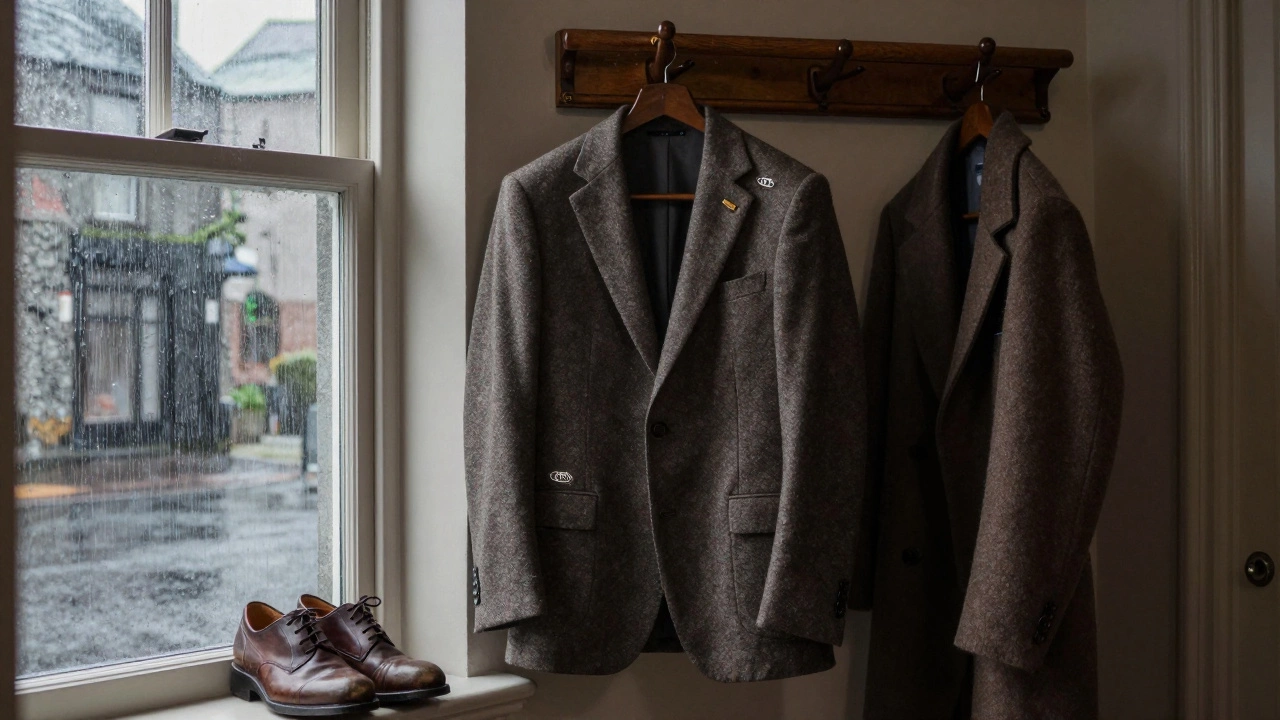
Hold the suit. A truly high-quality wool suit weighs between 280g and 350g per square meter. Anything lighter than 250g is likely for summer or vacation wear-it won’t hold up through an Irish winter. If you hold it in your hands, it should feel substantial, not flimsy. And if you bring it close to your nose, you shouldn’t smell chemicals. A good suit smells like wool, maybe a hint of lanolin, or nothing at all. Chemical odors mean cheap dyes or synthetic treatments.
Try draping it over your arm. A quality suit will hang like a second skin-smooth, without creasing badly. A low-quality one will fold sharply and stay wrinkled. That’s because the fibers haven’t been properly treated or spun. In Ireland, where you might be rushing from a meeting to a funeral, or from the airport to a wedding, you need a suit that can survive a 15-minute train ride without looking like you slept in it.
Where to buy in Ireland
You don’t need to fly to Milan to get a great suit. Dublin’s Grafton Street has McGee & Co., where you can get a made-to-measure suit for under €800. In Cork, Irish Made Suits on Oliver Plunkett Street uses Irish wool and hand-finishing. For those who want heritage, Harris Tweed jackets are available at Claddagh Tailors in Galway and Wool & Co. in Belfast (yes, Northern Ireland counts-Irish craftsmanship doesn’t stop at borders).
Don’t ignore second-hand shops. Dublin’s St. Stephen’s Green Vintage and Thrift Store on Wicklow Street often have vintage suits from the 1970s-90s-wool from England or Italy, hand-tailored, and still in excellent shape. For €150, you might walk out with a suit that outlasts anything you’d buy new at a chain store.
How long should a good suit last?
A well-made suit, worn once a week and cared for properly, should last 10-15 years. That’s not a guess. That’s what tailors in Belfast, Cork, and Dublin have seen over decades. A cheap suit lasts two seasons. A quality one? It becomes part of your story. You wear it to your first job interview. Your wedding. Your father’s funeral. Your child’s graduation. It becomes a quiet companion.
In Ireland, where we value things that endure-stone walls, old pubs, family recipes-a suit shouldn’t be disposable. It’s not just fabric and thread. It’s a piece of your identity. And if you’re going to wear it, make sure it’s made to last.
Can I wear a suit in Ireland’s rainy weather?
Yes, but only if it’s made from high-quality wool with a tight weave. Avoid lightweight or synthetic blends-they’ll soak up moisture and take forever to dry. Look for suits treated with a light water-repellent finish, or pair your suit with a good wool overcoat. Harris Tweed is especially good for Irish rain.
Is it worth getting a suit tailored in Ireland?
Absolutely. Off-the-rack suits rarely fit Irish body types well. We tend to have broader shoulders, shorter torsos, or longer arms compared to standard sizing. A local tailor in Dublin, Limerick, or Galway can adjust the shoulder width, sleeve length, and waist taper to suit your frame. It’s not expensive-many offer free alterations with purchase.
What’s the difference between bespoke and made-to-measure?
Bespoke means the suit is made from scratch using your unique measurements and pattern, with multiple fittings. Made-to-measure starts with a standard pattern and adjusts it to your body. Bespoke is more expensive (€1,500+), but offers the best fit. Made-to-measure (€600-900) is excellent value and still far better than off-the-rack.
Should I buy a suit online or in person in Ireland?
For your first suit, go in person. You need to feel the fabric, check the lining, and see how it moves. Online shopping works if you’re replacing a suit you already love and know your size. But if you’re buying something new, especially for an important event, visit a tailor. Dublin’s Porterhouse Tailors and Cork’s Irish Made Suits offer virtual consultations too.
What color suit works best in Ireland?
Dark navy or charcoal gray are the safest bets. They work for business, funerals, weddings, and even casual Friday. Avoid black unless it’s for a formal event-it can look too harsh under Irish daylight. Light gray and brown are great for spring and summer, but avoid them in winter. And never buy a suit in bright colors unless you’re heading to a music festival.