Suit Quality Inspector
Use this guide while shopping or inspecting a jacket. Check the boxes that match quality indicators. If a feature is missing or shows signs of being "cheap," leave it unchecked.
Quality Score
Based on 15 key quality indicators
Checking...
Select the checkboxes above to see your result.
You’re standing in a fitting room on Grafton Street or maybe browsing the racks at Penneys in your local shopping centre. The price tag looks good, the colour is sharp, and you think you’ve found a bargain. But five minutes later, you’re wondering if that shoulder seam will hold up after one rainy commute from Sandyford to the city centre. Knowing how to spot a cheap suit isn’t just about saving money; it’s about avoiding the embarrassment of a jacket that loses its shape before you’ve even finished your first pint.
In Ireland, where weather can shift from drizzle to downpour in an hour, your suit needs to be more than just stylish-it needs to survive. A poorly made garment won’t breathe properly in humid summer months or keep you warm when the Atlantic wind cuts through Leinster in winter. Whether you are buying for a wedding in Cork or a boardroom meeting in Dublin, understanding the subtle signs of low-quality manufacturing saves you from wasting cash on something that ends up in the charity shop bin within six months.
The Fabric Test: Touch and Look
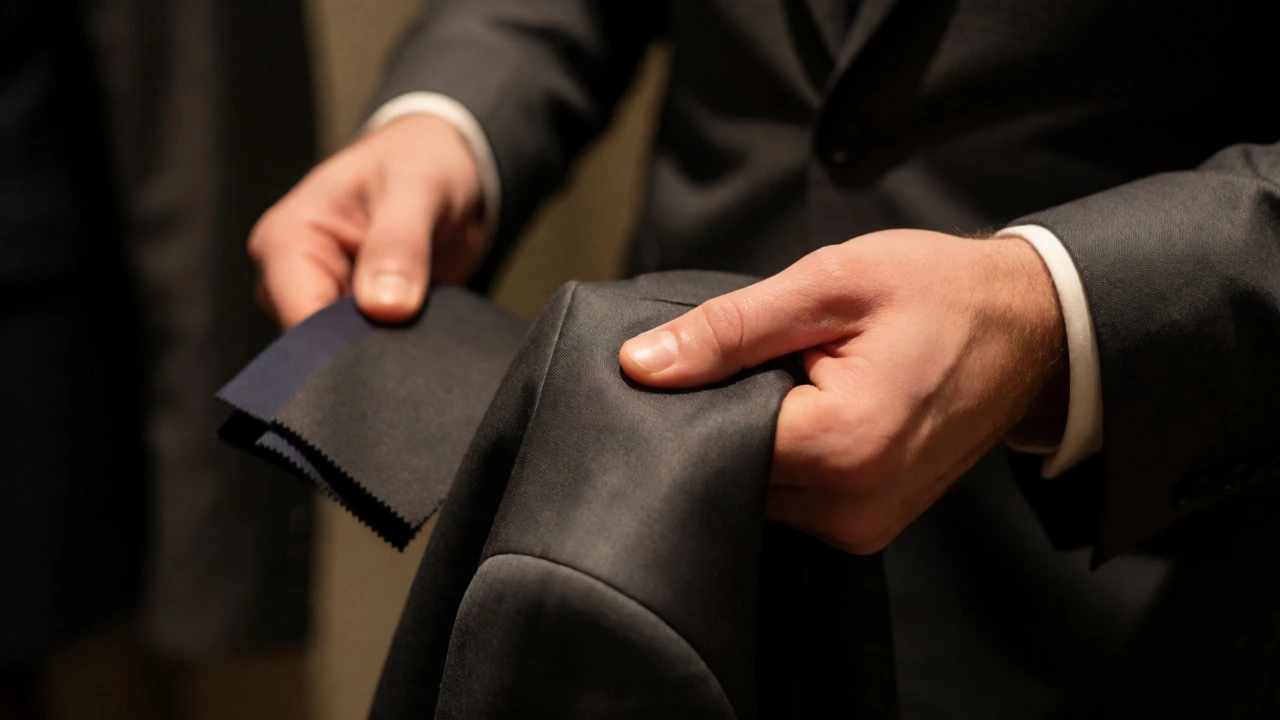
Start with the material. This is the biggest giveaway. High-end suits use natural fibres like wool, cashmere, or linen blends. Cheap suits often rely on synthetic materials like polyester or viscose because they are cheaper to produce and wrinkle less initially. But here is the catch: synthetics don’t breathe. If you wear a polyester-blend suit to a crowded pub in Temple Bar during a busy Friday night, you will feel sticky and uncomfortable almost immediately.
Try this simple test. Scrunch the fabric tightly in your fist for ten seconds and then let go. If it springs back instantly without any creases, it is likely full of synthetic fibres. Good wool should wrinkle slightly but relax back into place naturally over time. Also, look closely at the weave. Hold the jacket up to the light. If you can see through the fabric easily, or if the pattern looks printed rather than woven, walk away. In the Irish market, brands like Next or Marks & Spencer offer decent entry-level wool blends, but ultra-cheap options from discount retailers often cut corners here.
Check the Shoulders and Structure
The shoulders are the frame of your suit. If they are wrong, nothing else matters. On a cheap suit, the padding is often excessive and boxy, designed to hide poor construction rather than enhance your natural shape. Run your hand along the shoulder line. It should follow the natural slope of your body. If there is a visible step or gap between the sleeve and the shoulder pad, the fit is off, or the construction is lazy.
Another red flag is the "canvas." Higher-quality jackets have a layer of horsehair canvas inside the chest area that gives the jacket its shape and allows it to mould to your body over time. Cheap suits skip this entirely. Instead, they fuse a thin plastic interlining directly to the outer fabric using heat and glue. You can spot this by pinching the front of the jacket near the lapel. If the layers feel stiff and separate awkwardly, or if you see bubbling around the edges (especially after dry cleaning), it is fused construction. Fused jackets tend to bubble and warp quickly, especially if you are caught in a sudden Dublin rainstorm.
Inspect the Stitching and Lining
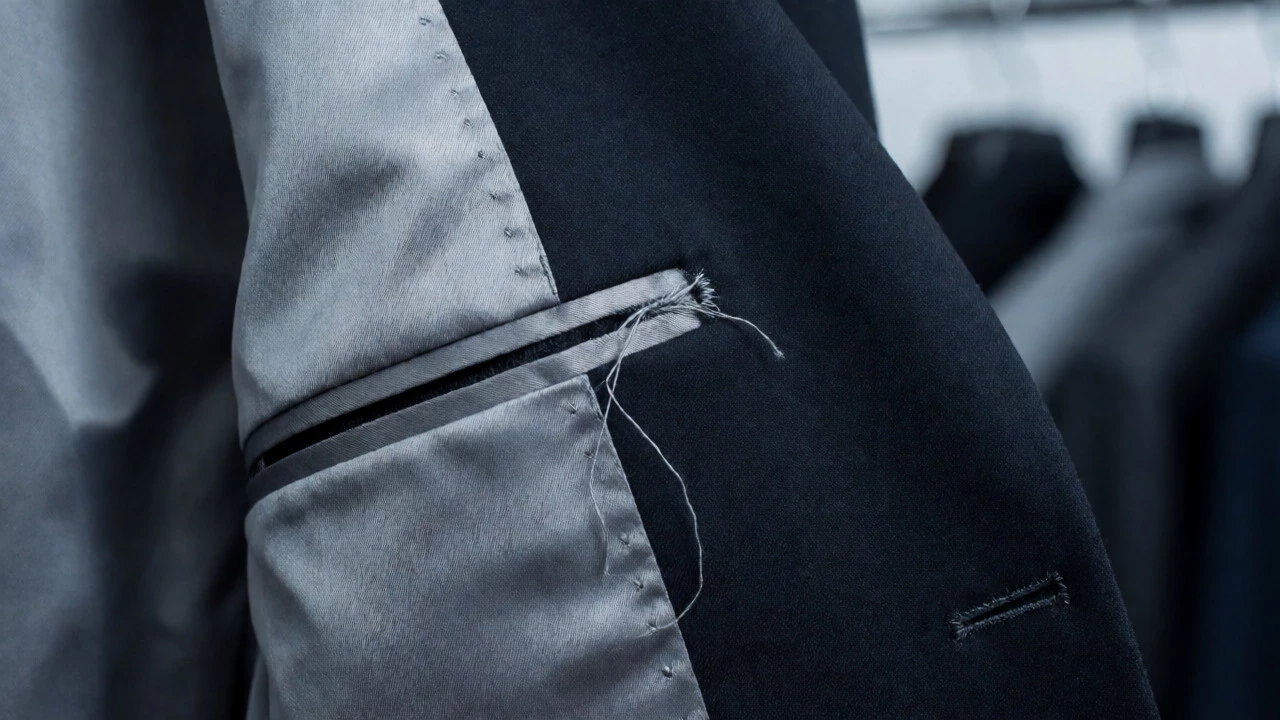
Flip the jacket inside out. The lining tells you a lot about the manufacturer’s priorities. Cheap suits often use slippery, shiny polyester linings that tear easily and trap heat. Look for Bemberg cupro or viscose linings, which are smoother and more breathable. Check the seams. Are they straight? Is there excess thread hanging everywhere? Loose threads might seem minor, but they indicate rushed factory work.
Pay attention to buttonholes. On a well-made suit, buttonholes are stitched tightly and evenly, often with silk thread. On a cheap one, they are machine-stitched with thick, rough thread that frays quickly. Try unbuttoning and re-buttoning the jacket several times. If the buttonhole stretches out or looks distorted, it won’t last long. Also, check the buttons themselves. Real horn, mother-of-pearl, or high-quality resin buttons are heavy and smooth. Plastic buttons feel light, look glossy, and crack easily. If the buttons are sewn on with only two holes instead of four, that is another cost-cutting measure that affects durability.
Fit Issues That Signal Poor Construction
Sometimes, what looks like a bad fit is actually a sign of bad making. Tailors in cities like Galway or Belfast often see customers bring in cheap suits hoping to fix issues that are structural, not just sizing problems. For example, if the sleeves hang crookedly even when the shoulder seam sits correctly, the sleeve pitch is wrong. This is common in mass-produced garments where patterns aren't adjusted for different body types.
Look at the collar. It should lie flat against your neck without gaping. If there is a gap between the collar and your shirt, the jacket was likely constructed with a generic pattern that doesn't account for posture variations. While some tailoring can fix length issues, fixing collar roll or shoulder slope on a fused, cheap suit is expensive and often impossible. You end up paying more for alterations than the suit itself cost.
| Feature | Cheap Suit Signs | Quality Suit Signs |
|---|---|---|
| Fabric | Polyester blend, shiny, no wrinkles when crushed | Wool or wool blend, matte finish, natural recovery |
| Lining | Shiny polyester, tears easily | Bemberg cupro or viscose, smooth and durable |
| Construction | Fused (glued) interlining, bubbles over time | Half-canvas or full-canvas, moulds to body |
| Buttons | Plastic, lightweight, 2-hole stitching | Horn/resin, heavy, 4-hole stitching |
| Stitching | Loose threads, uneven spacing, raw edges | Tight, even stitches, finished seams |
The Smell and Weight Factor
This sounds odd, but smell your suit. New clothes often have a chemical scent from dyes and finishing agents. High-quality manufacturers air their products properly. Cheap factories rush production, leaving behind a strong, artificial odour that lingers even after washing. If it smells like a new car interior mixed with old socks, be wary.
Weigh the jacket in your hands. Wool has weight and density. A cheap suit feels flimsy and light because the fabric is thin. Thin fabric wears out faster at the elbows and knees. Given how much we sit in offices or pubs, abrasion resistance matters. If the fabric feels papery, it will shine and bald out quickly.

Where to Buy Smart in Ireland
You don’t need to spend a fortune to get a decent suit, but you do need to know where to look. Avoid the ultra-discount bins unless you are checking them meticulously. Stores like Brown Thomas or Arnotts carry higher-end labels, but their sales can offer good value on mid-tier brands. For everyday wear, consider Irish-based tailors who offer made-to-measure services using imported Italian or British fabrics. They might charge €300-€500, but that suit will last years longer than three cheap ones.
Second-hand markets are also rising in popularity across Ireland. Vintage shops in Dublin’s Smithfield or online platforms like DoneDeal can yield hidden gems. Just apply the same checks: inspect the lining, feel the fabric, and check for moth damage, which is common in older wool garments stored improperly.
Maintenance Tips for Longevity
Once you buy a suit, care for it. Don’t dry clean it after every wear. Brush it with a horsehair brush to remove dust and restore the nap. Hang it on a wide wooden hanger to maintain the shoulder shape. Use cedar blocks to absorb moisture and deter moths, which are a real threat in damp Irish homes. Rotate your suits so each one gets a day to rest and air out. This simple habit doubles the lifespan of your wardrobe.
Is a polyester suit always bad?
Not always, but mostly yes for formal wear. Polyester doesn't breathe, causing discomfort in warm rooms or active settings. However, some modern blends with elastane offer stretch and durability for travel suits. Still, pure wool or high-percentage wool blends are superior for comfort and appearance.
Can I tailor a cheap suit to make it look expensive?
You can adjust the length of trousers and sleeves, and sometimes take in the waist. However, you cannot fix structural flaws like fused chest pieces, poor shoulder construction, or cheap fabric. Often, the cost of extensive tailoring exceeds the value of the suit itself.
What is the best fabric for Irish weather?
Mid-weight wool (around 260-280gsm) is ideal. It is warm enough for winter but breathable enough for indoor heating. Tweed is great for casual country wear but too heavy for office environments. Linen is excellent for summer weddings but wrinkles too easily for daily commuting.
Why do cheap suits bubble after dry cleaning?
This happens due to fused construction. The glue holding the interlining to the fabric weakens under heat and steam. Once it separates, air pockets form, creating unsightly bubbles that cannot be ironed flat again.
Are second-hand suits worth buying in Ireland?
Yes, if inspected carefully. Look for vintage Italian or British brands which often used higher quality materials decades ago. Check for moth holes and ensure the lining is intact. Many thrift stores in major cities stock these finds at a fraction of retail prices.