Irish Slipper Size Calculator
Measure Your Feet Properly
For the most accurate results, follow the Irish measurement method from the article:
Why getting your slipper size right matters in Ireland
In Ireland, where rain is part of the daily forecast and indoor floors are often cold, damp, or tiled, the right pair of slippers isn’t just about comfort-it’s about staying warm, dry, and safe. Many people here buy slippers online or pick up a pair from a local shop like Dunnes Stores, Penneys, or even a small-town cobbler in Galway or Cork, only to find they’re too tight, too loose, or slide around on wet kitchen tiles. That’s because most sizing guides don’t account for how Irish feet change with the seasons or how we tend to wear thick wool socks indoors during winter.
Measure your feet the Irish way
Don’t guess. Don’t rely on what size you wore last year. Your feet swell after a long day walking on cobblestones in Dublin or standing in the kitchen while making tea. Here’s how to measure properly:
- Do it in the afternoon-feet are at their largest after hours of activity.
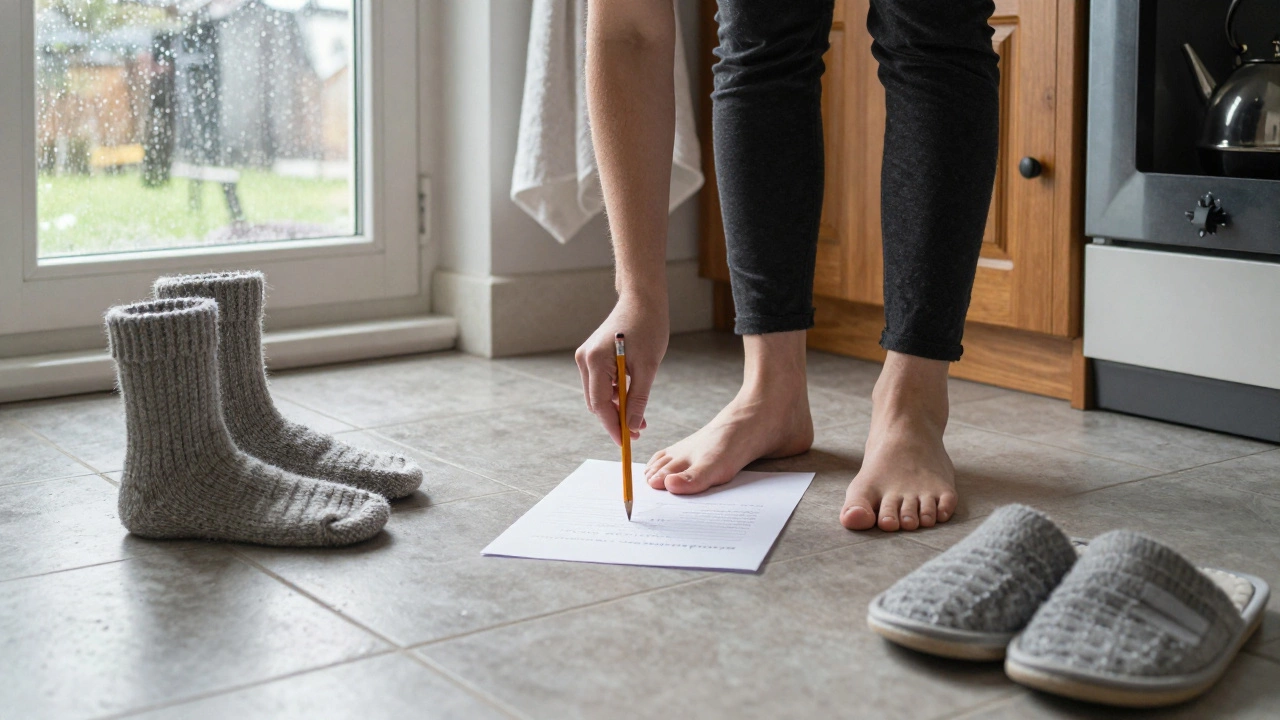
- Stand barefoot on a piece of A4 paper placed on a hard floor, just like you’d do in a Cork kitchen.
- Trace around your foot with a pencil held straight up and down-not tilted.
- Measure from the heel to the longest toe (usually the big toe or second toe) in centimetres.
- Repeat for both feet. Use the larger measurement.
Most Irish slipper brands like Clarks, Geox, and local makers such as Slippery When Wet (based in Kilkenny) use European sizing. A foot measuring 25 cm is a size 39, 26 cm is 40, and so on. If you’re between sizes, go up. Irish winters mean you’ll likely wear socks, and cramped toes lead to cold feet-and nobody wants that.
What to look for in Irish-made slippers
Not all slippers are built for Irish conditions. Look for these features:
- Non-slip soles-especially if you have polished wooden floors or tiled bathrooms. Brands like Dr. Scholl’s and Slipperific (from Belfast) offer rubberised grips that work on wet surfaces.
- Insulated lining-wool, fleece, or memory foam. Avoid thin cotton slippers. They’re fine in summer, but in December in Donegal, you’ll feel every draft.
- Water-resistant uppers-if you’re coming in from the garden or walking the dog through puddles, a little water resistance helps. Leather or treated fabric beats pure knit.
- Wide fit options-many Irish women, especially over 40, have wider feet due to genetics and years of walking on uneven terrain. Brands like Clarks and Superga offer wide sizes in their slipper lines.
Don’t trust online sizing charts blindly
Many websites list sizes based on US or UK standards, but Irish feet don’t always match those. For example, a UK size 6 slipper might fit someone with a 24 cm foot-but in Ireland, where people often wear thicker socks, that same slipper might feel tight. Always check the actual foot length in centimetres, not just the shoe size label.
Even big retailers like Amazon UK or Boots sometimes list sizes incorrectly. If you’re buying online, read reviews from Irish customers. Look for phrases like “runs small,” “perfect for thick socks,” or “slips on wet tiles.” One review from a woman in Limerick said: “Bought these thinking they’d fit my UK 7, but they were snug. Went up to 8 and now they’re perfect with my Aran wool socks.” That’s the kind of detail that saves you a return.
Try before you buy-or know the return policy
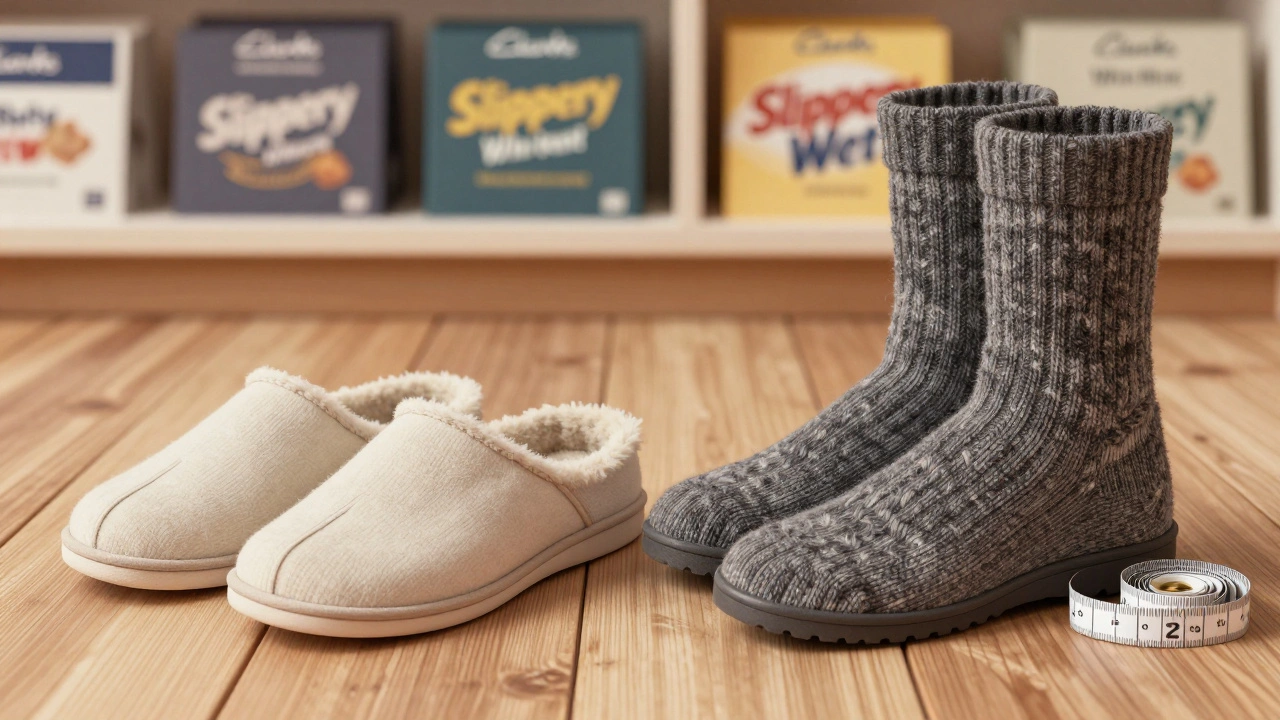
Local shops in Ireland often let you try slippers on before buying. Head to a footwear store like Clarks in Grafton Street, Penneys in Dundrum, or even a family-run shoe shop in Waterford. Ask them to let you walk on their tile floor with socks on. If the heel slips or your toes hit the front, keep looking.
If you’re buying online, check the return policy. Most Irish retailers offer free returns within 30 days. Keep the original packaging and take a photo of your feet next to the slipper before wearing them. That way, if you need to return them, you’ve got proof they weren’t worn out.
Seasonal foot changes in Ireland
Here’s something few people talk about: your feet grow slightly in winter. Cold weather causes blood vessels to constrict, and over time, your feet can expand by up to half a size. If you bought slippers in October and they felt fine, they might feel tight by February. That’s why many Irish households keep two pairs: a snug one for early winter and a roomier one for deep winter with thick socks.
Also, if you’ve had a baby, gained weight, or spent years walking on stone paths in Connemara, your feet may have changed shape. Don’t assume your old size still fits. Re-measure every 12-18 months.
Where to buy slippers in Ireland that actually fit
Here are a few trusted places across the country:
- Dunnes Stores - Offers affordable, well-reviewed slippers with non-slip soles. Look for the Clarks or Dr. Scholl’s sections.
- Penneys (Primark) - Great for budget buys. Check the sole texture before buying-some are too smooth.
- Slippery When Wet - A Kilkenny-based brand that makes slippers with Irish wool and cork soles. They offer a free sizing guide on their website.
- Clarks - Available in most major towns. Their slipper range includes wide fits and memory foam insoles.
- Local craft fairs - In Galway, Cork, or Ennis, you’ll find artisans selling hand-knitted wool slippers. Ask if they can custom-fit based on your foot measurement.
Common mistakes Irish people make
Here are the top three errors we see:
- Buying based on last year’s size - Feet change. Don’t be lazy.
- Choosing style over safety - Those cute fluffy slippers with satin soles? Great for photos. Terrible for the kitchen.
- Ignoring sock thickness - If you wear thick wool socks, you need extra space. Add 0.5-1 cm to your measurement.
Final tip: Keep a slipper size card
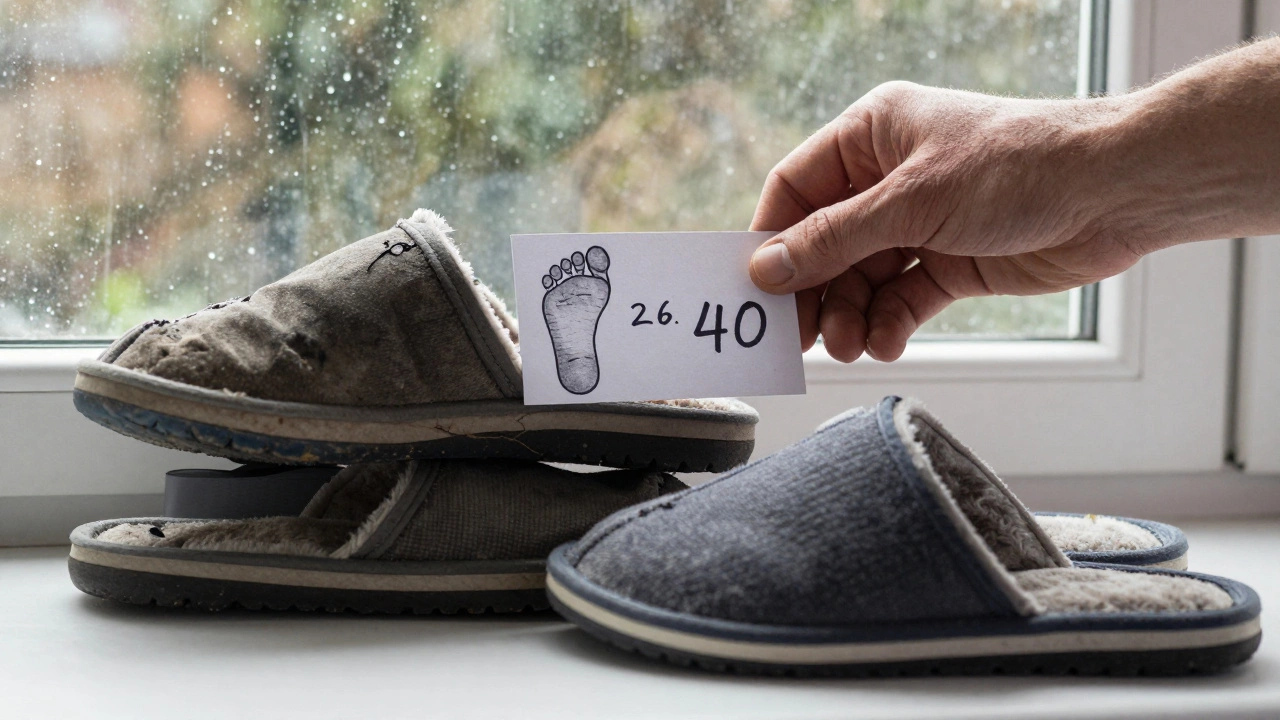
Write your exact foot measurement (in cm) and your preferred slipper size on a small card. Keep it in your wallet or taped inside your shoebox. Next time you shop, whether in Louth or Letterkenny, you’ll know exactly what to look for. No guesswork. No returns. Just warm, dry feet.
How do I know if my slippers are too small in Ireland?
If your toes curl, feel squashed, or you get numbness after 20 minutes, they’re too tight. In Ireland, where we wear thick socks indoors, even a little pressure can cause discomfort. If you can’t wiggle your toes freely or your heel lifts when you walk, it’s time to size up.
Should I buy slippers a size bigger in Ireland?
If you plan to wear wool or thermal socks, yes-go half a size up. Most Irish winters require extra insulation, and cramped feet lose heat faster. A little extra room also helps with circulation, especially if you’re sitting still for long periods.
Are there slippers made specifically for Irish weather?
Yes. Brands like Slippery When Wet and some local artisans in Galway and Waterford make slippers with water-resistant uppers, wool linings, and rubber soles designed for damp floors and chilly mornings. They’re not always in big stores, but you’ll find them at craft fairs or online through Irish-made marketplaces.
Do men and women in Ireland have different slipper sizing needs?
Women’s feet in Ireland tend to be narrower, but many women over 40 develop wider feet due to pregnancy, weight changes, or aging. Men’s feet are generally broader and longer. Always measure, don’t assume. Clarks and Geox offer both narrow and wide fits, so check the product details carefully.
Can I use my shoe size for slippers?
Not always. Slippers are designed to be looser than regular shoes. A size 8 walking shoe might be a size 7 or 7.5 in slippers. Always check the foot length in centimetres on the product page. If it’s not listed, contact the seller. In Ireland, customer service is usually good-most small shops will help you figure it out.
What to do next
Grab a piece of paper, stand barefoot on the kitchen floor, and trace your feet right now. Measure them. Write it down. Then check your current slippers-if they’re worn out, cracked, or slippery, it’s time for a new pair. With Ireland’s weather, your feet deserve better than guesswork.